 Korean Images are for illustrative purposes only, may be inaccurate, and do not guarantee the presence or absence of specific ingredients.
  Serving Images are for illustrative purposes only, may be inaccurate, and do not guarantee the presence or absence of specific ingredients.
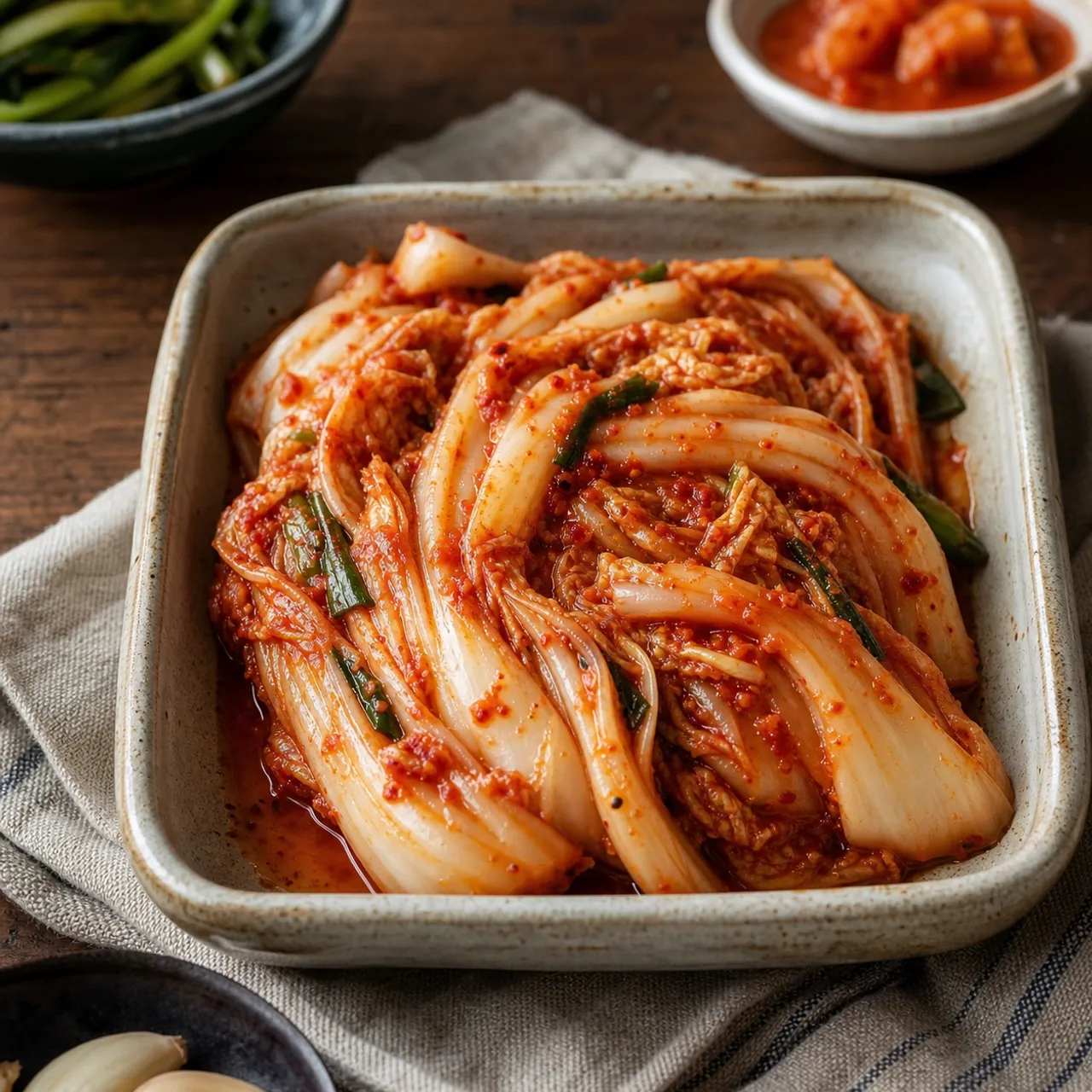
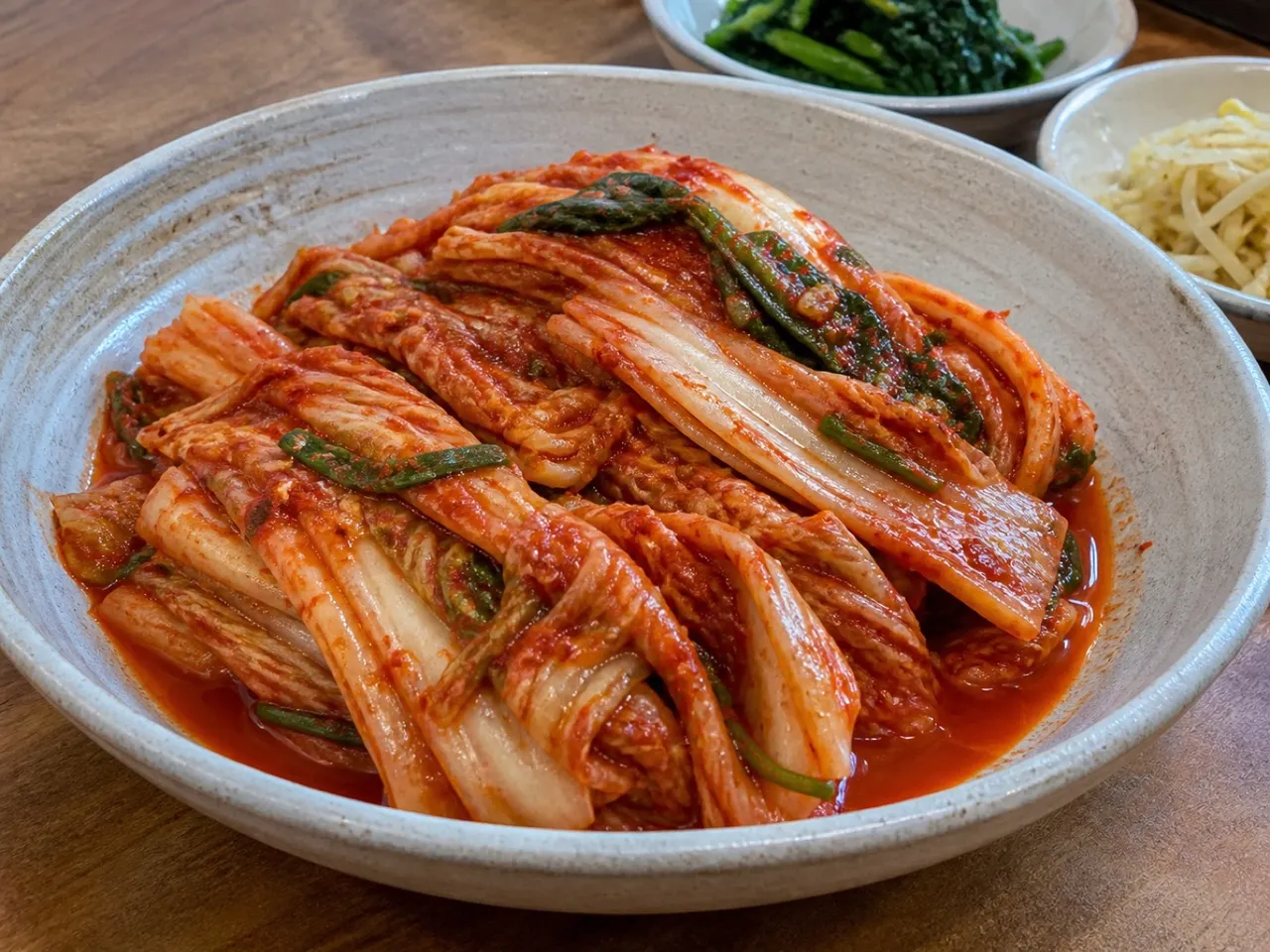
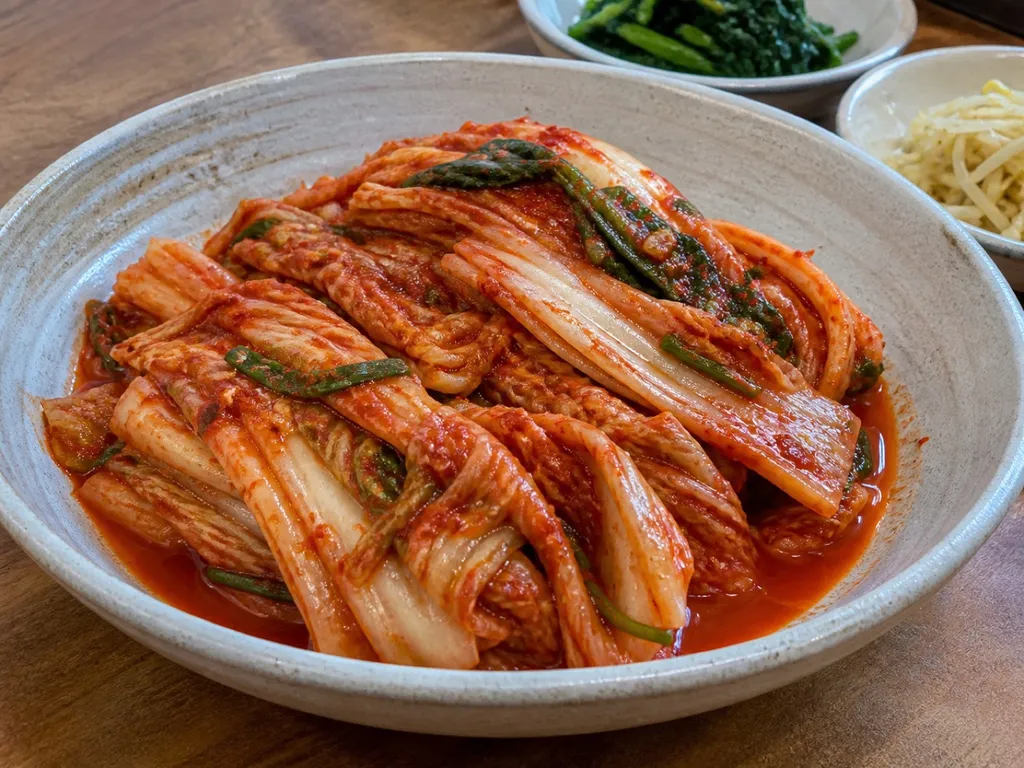
 Baechu Kimchi (Napa Cabbage Kimchi)
The iconic fermented napa cabbage that anchors nearly every Korean meal, layered with garlicky, gingery, chili-spiked seasoning.
Contains common allergens
In the app, Listahan checks these against your household automatically.
Instructions
6 steps- 1
Cut the cabbage quarters into bite-size pieces, then toss thoroughly with the coarse sea salt in a large bowl, adding a splash of water, and let sit for 1.5 to 2 hours, turning every 30 minutes until the leaves are fully wilted and bend without snapping.
- 2
Rinse the salted cabbage three times under cold running water to wash off excess salt, then drain in a colander for 20 minutes, squeezing gently to remove water.
- 3
Make the paste by whisking 1/4 cup water with 1 Tbsp glutinous rice flour over low heat until it thickens into a porridge, then cool and stir in the gochugaru, fish sauce, grated ginger, minced garlic, and 1 Tbsp sugar.
- 4
Wearing gloves, massage the seasoning paste into every piece of cabbage along with 2 cups of julienned Korean radish and 4 sliced scallions until evenly coated and glistening red.
- 5
Pack the kimchi tightly into a clean glass jar, pressing down to eliminate air pockets and leaving 1 inch of headspace, then seal loosely and ferment at room temperature for 1 to 2 days until pleasantly sour and bubbly.
- 6
Transfer the jar to the refrigerator, where the kimchi will keep developing flavor for weeks; serve cold as a banchan or use in stews and fried rice.
 Images are for illustrative purposes only, may be inaccurate, and do not guarantee the presence or absence of specific ingredients.
 Listahan Family Score™
65/100
Works for many families
Score reflects how well this recipe fits a typical busy household. In the app, your Family Score is personalized to your household's allergens, kids, and pantry.
Nutrition
per serving30
Calories
2 g
Protein
6 g
Carbs
1 g
Fat
Estimated per serving. Actual values depend on the brands and portions you use.
Listahan cooking guide
Chef notes & practical guide
Technique notes, ingredient swaps, serve-alongside ideas, storage guidance, and equipment for this recipe.
Cultural context
Baechu Kimchi is the iconic napa cabbage kimchi, the fermented staple at the center of nearly every Korean meal. Salted cabbage is coated in a paste of gochugaru, garlic, ginger, and fish sauce, then left to ferment into something sour, spicy, and alive. Making it, kimjang, is a communal tradition passed through generations.
Listahan note
This version brines the cabbage properly for the right texture, then coats it in a savory gochugaru paste and lets it ferment to your preferred sourness.
Technique cues
- Brine the cabbage until the stems bend without snapping for the right texture.
- Rinse off the brine and drain well so the paste clings, not slides.
- Ferment at room temperature briefly, then refrigerate to slow it to taste.
Kitchen flow
- Parallel prep
- Brine the cabbage for hours, making the paste while it sits.
- Make-ahead
- This is make-ahead by nature; it ferments over days and keeps for weeks.
- Leftover move
- Turn aged, sour kimchi into kimchi jjigae or kimchi fried rice.
- Cleanup rhythm
- Wear gloves for the paste; rinse the salting tub well.
Ingredient brief
Role, handling, and swap guidance for each key ingredient.
Napa cabbage
Main
Purpose: Its layered leaves hold the paste and ferment into the signature texture.
Handling: Quarter, salt-brine until pliable, then rinse and drain.
Adaptation: Use this cabbage; others ferment differently.
Gochugaru
Heat and color
Purpose: Provides the red color and the characteristic spice.
Handling: Mix into a paste with the aromatics.
Adaptation: Adjust the amount for heat; use coarse Korean flakes.
Fish sauce
Umami and ferment driver
Purpose: Adds savory depth and feeds the fermentation.
Handling: Blend into the paste.
Adaptation: Use a vegan kelp-and-soy brine for a plant-based kimchi.
Garlic and ginger
Aromatics
Purpose: Give kimchi its pungent, warming backbone.
Handling: Grate finely into the paste.
Adaptation: Adjust to taste; both are essential.
Technique notes
- Get the brining right; under-brined cabbage stays stiff and over-brined turns limp.
- Pack the jar tightly and press out air to ferment evenly.
- Taste daily and refrigerate once it reaches the sourness you like.
Ingredient swaps
- Vegan direction
- Replace fish sauce with a kelp-and-soy or miso brine.
- Milder direction
- Use less gochugaru for a gentler kimchi.
- Lower-sodium note
- Rinse the brined cabbage thoroughly to control the final salt.
Serve alongside
- Steamed white rice
- Grilled pork belly
- Tofu
- Korean soups and stews
- Barley tea
- Soju
- Cold water
Serving suggestions only — check pairings for your household's allergens.
Storage & reheating
- Refrigerate in a sealed jar; it keeps for weeks and grows more sour.
- No reheating; eat cold, or cook aged kimchi into stews and rice.
- Freezing is not recommended, as it ruins the crisp texture.
Equipment
- Large tub for brining
- Mixing bowl
- Gloves
- Airtight jar or container
Make this household-aware
Listahan Pro checks this recipe against your household's allergens, finds pantry-aware swaps, builds the shopping list, and helps you plan the week around it.
Plan it in Listahan
Add Baechu Kimchi (Napa Cabbage Kimchi) to your week, check it against your household's allergens, and build the shopping list automatically.
More Korean recipes
 Korean Lens Verified Images are for illustrative purposes only, may be inaccurate, and do not guarantee the presence or absence of specific ingredients.
 Dakgalbi (Spicy Stir-fried Chicken)
Diced chicken marinated in a gochujang-based sauce, stir-fried with sweet potatoes, cabbage, perilla leaves, and tteok.
 Korean Lens Verified Images are for illustrative purposes only, may be inaccurate, and do not guarantee the presence or absence of specific ingredients.
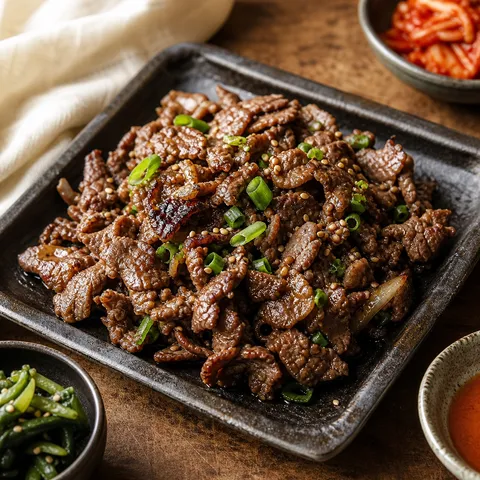
 Bulgogi (Marinated Beef BBQ)
Thinly sliced, marinated beef ribeye or sirloin grilled or stir-fried. Sweet, savory, and tender.
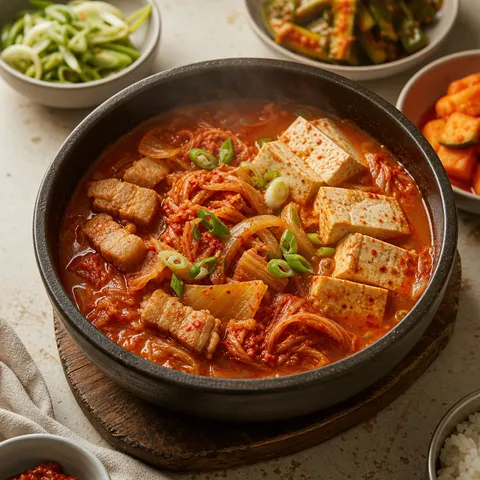 Korean Lens Verified Images are for illustrative purposes only, may be inaccurate, and do not guarantee the presence or absence of specific ingredients.
 Kimchi Jjigae (Kimchi Stew)
A classic, comforting stew made with aged kimchi, pork or seafood, scallions, onions, and diced tofu.