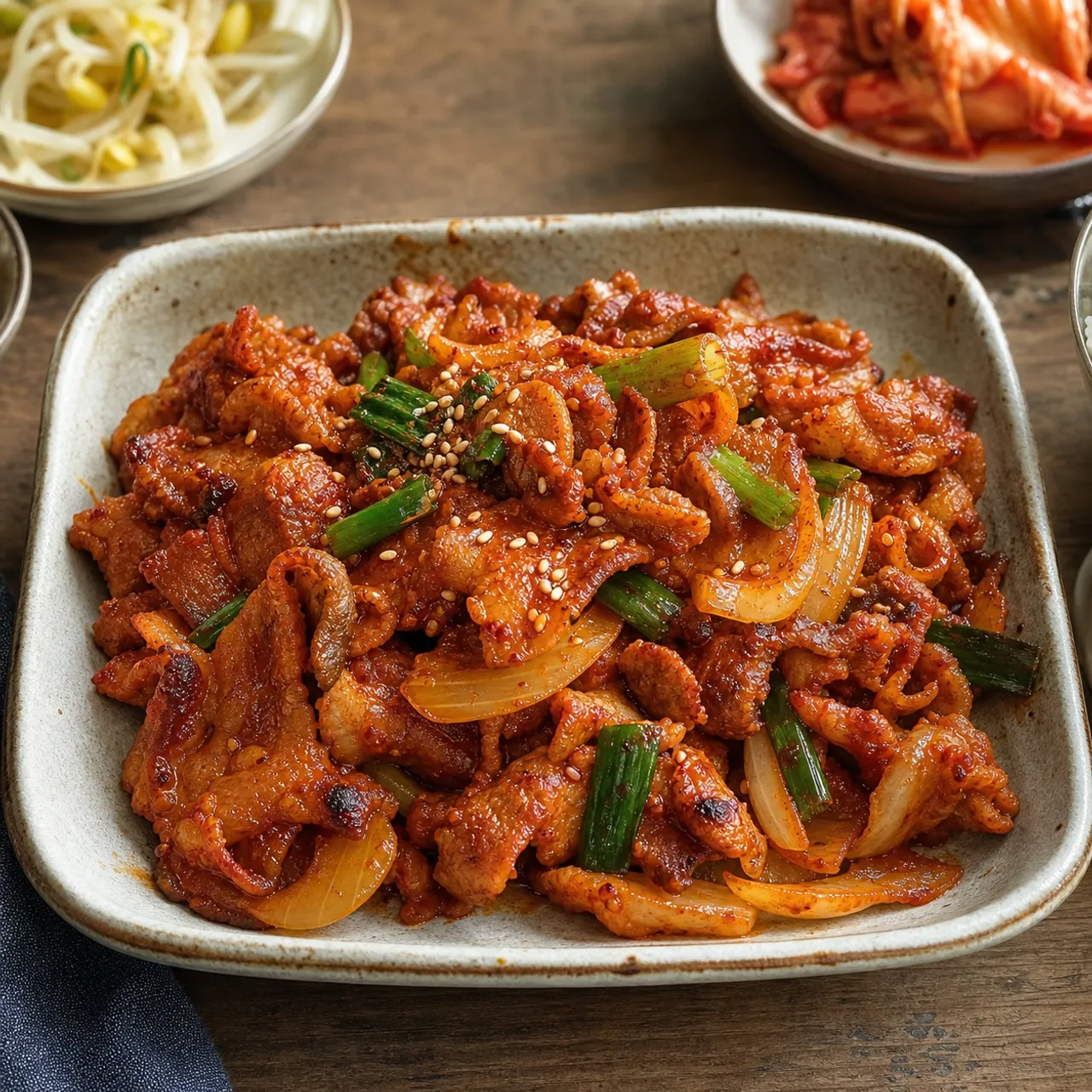
 Korean Images are for illustrative purposes only, may be inaccurate, and do not guarantee the presence or absence of specific ingredients.
 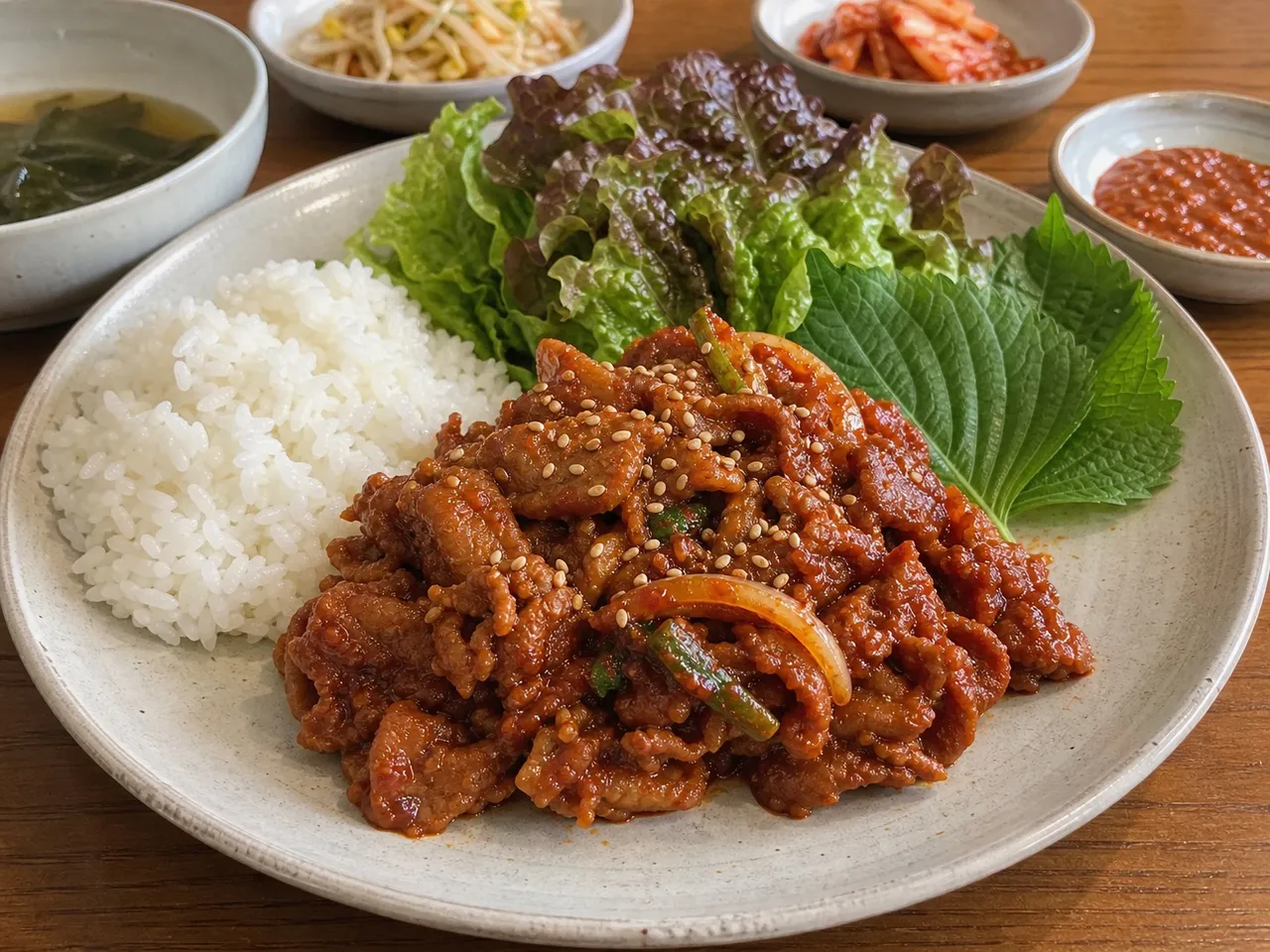 Serving Images are for illustrative purposes only, may be inaccurate, and do not guarantee the presence or absence of specific ingredients.
 Jeyuk Bokkeum (Spicy Pork Bulgogi)
Thinly sliced pork marinated in a spicy gochujang sauce and stir-fried with onions and green onions.
Contains common allergens
In the app, Listahan checks these against your household automatically.
Good to know
- Ready in under 30 minutes
Matched from this dish's own ingredients and timing. Browse more: 30-minute meals
Instructions
6 steps- 1
Whisk together the gochujang, gochugaru, soy sauce, sugar, rice syrup, minced garlic, and ginger in a large bowl to form a thick, sticky marinade.
- 2
Add the thinly sliced pork shoulder to the bowl and massage the marinade into the meat until every piece is vibrantly red. Let it marinate for at least 15 minutes.
- 3
Heat a large skillet over medium-high heat with a little cooking oil. Add the sliced onions and sauté for 1 minute.
- 4
Add the marinated pork to the skillet, spreading it out into a single layer to get a nice sear. Cook for 5-7 minutes, tossing frequently until the pork is cooked through and the sauce is caramelized.
- 5
Stir in the chopped scallions and sesame oil, tossing for 30 more seconds.
- 6
Garnish with toasted sesame seeds and serve immediately with steamed rice and lettuce wraps.
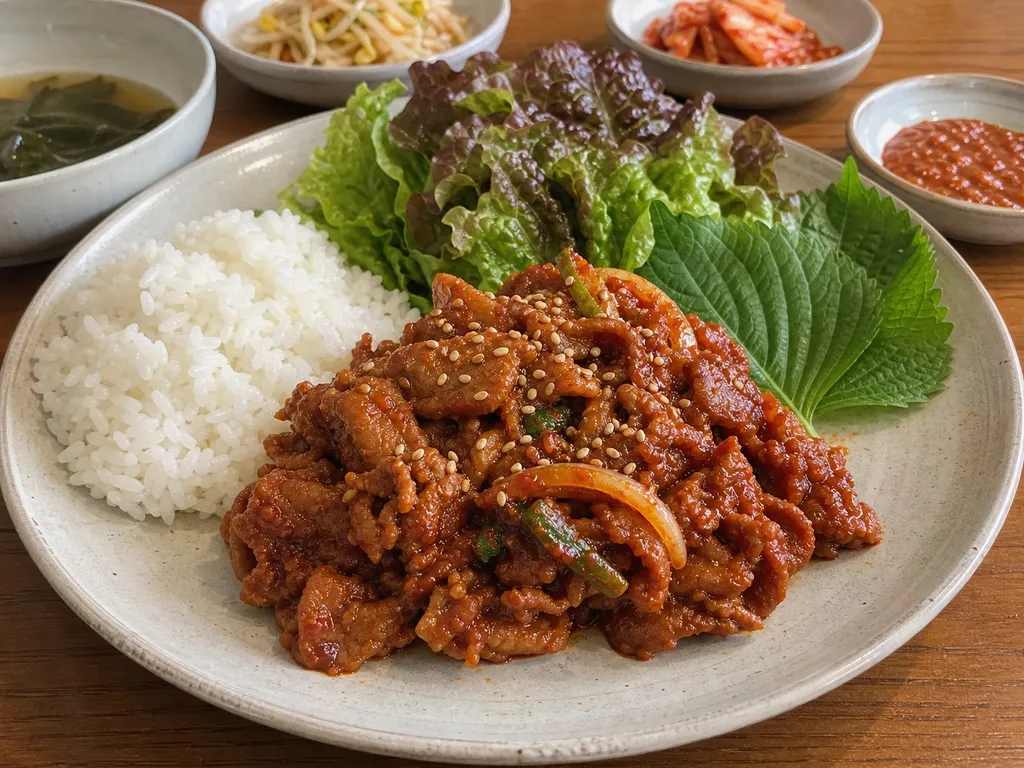 Images are for illustrative purposes only, may be inaccurate, and do not guarantee the presence or absence of specific ingredients.
 Listahan Family Score™
64/100
Works for many families
Score reflects how well this recipe fits a typical busy household. In the app, your Family Score is personalized to your household's allergens, kids, and pantry.
Nutrition
per serving545
Calories
48 g
Protein
22 g
Carbs
29 g
Fat
Estimated per serving. Actual values depend on the brands and portions you use.
Listahan cooking guide
Chef notes & practical guide
Technique notes, ingredient swaps, serve-alongside ideas, storage guidance, and equipment for this recipe.
Cultural context
Jeyuk bokkeum, also called dwaeji bulgogi, is a everyday Korean home and lunch-counter favorite: thin pork stir-fried in a sweet-spicy gochujang marinade. It is the spicy pork cousin of the soy-marinated beef bulgogi and is a default order at casual Korean diners served over rice with lettuce for wrapping.
Listahan note
This version marinates the thin pork in a thick gochujang paste for at least 15 minutes, then sears it in a single layer so the sugars caramelize rather than steam the meat gray.
Technique cues
- Massaging the marinade into the meat until every piece is vibrantly red works the seasoning in and helps the pork hold a glossy coat as it cooks.
- Spreading the pork in a single layer over medium-high heat lets the rice syrup and sugar caramelize into a sticky sear instead of the meat boiling in its own juices.
- The scallions and sesame oil go in for only the last 30 seconds so they stay fresh and fragrant rather than wilting into the sauce.
Kitchen flow
- Parallel prep
- Whisk the marinade and slice the onion and scallions while the pork sits coated and absorbing seasoning.
- Make-ahead
- Marinate the pork in the morning or overnight; it only deepens in flavor and color.
- Leftover move
- Chop leftover pork into kimchi fried rice or pile it into a tortilla for a quick Korean-style wrap.
- Cleanup rhythm
- Soak the marinade bowl right away so the sticky gochujang does not dry on, and wipe the pan warm.
Ingredient brief
Role, handling, and swap guidance for each key ingredient.
thin-sliced pork shoulder or belly
Main protein
Purpose: Thin slices take on the marinade fast and sear quickly, the heart of the dish.
Handling: Slice thin against the grain and massage the marinade in so each piece is coated.
Adaptation: Thin-sliced chicken thigh works for a lighter version; reduce the cook time slightly.
gochujang
Spicy base
Purpose: The fermented chili paste gives the marinade its body, sweetness, and signature depth.
Handling: Whisk it with the other seasonings into a thick paste before the pork goes in.
Adaptation: More gochugaru with a spoon of miso and extra sugar approximates the paste.
rice syrup
Sweetener and glaze
Purpose: It gives the sauce a glossy, sticky caramelization that plain sugar cannot.
Handling: Add it to the marinade so it coats the meat and lacquers during the sear.
Adaptation: Corn syrup or honey works; honey browns faster, so watch the heat.
minced ginger
Aromatic
Purpose: It brightens the rich pork and adds a warm note under the chili.
Handling: Mince finely so it disperses evenly through the marinade.
Adaptation: A little ginger paste works; ground ginger is harsher, so use sparingly.
sesame oil
Finishing aroma
Purpose: Added at the end it lends the toasted nuttiness that defines the dish's finish.
Handling: Stir in during the last 30 seconds so the aroma survives.
Adaptation: Perilla oil gives a comparable Korean fragrance.
Technique notes
- Marinate at least 15 minutes, longer if you can; the gochujang needs time to penetrate the thin slices.
- Resist crowding the pan so the sugars sear; cook in two batches rather than steaming all the meat at once.
- Add the sesame oil and scallions off the main heat at the very end so they perfume the dish instead of frying.
Ingredient swaps
- Gluten-free direction
- Use tamari for the soy sauce and a certified gluten-free gochujang; the marinade behaves the same.
- Lower-sodium direction
- Halve the soy sauce and lean on the gochujang and a touch more sugar for balance.
- Sesame-free direction
- Finish with perilla oil and skip the sesame-seed garnish for the same nutty close.
Serve alongside
- Steamed short-grain rice
- Crisp lettuce leaves for ssam wraps
- Ssamjang dipping paste
- Kongnamul muchim (seasoned soybean sprouts)
- Soju, neat
- Cold light lager
- Makgeolli (rice wine)
Serving suggestions only — check pairings for your household's allergens.
Storage & reheating
- Refrigerate cooked pork for up to 3 days in a sealed container.
- Reheat in a hot skillet just until sizzling so the edges re-caramelize without drying out.
- Freeze the raw marinated pork for up to 2 months and thaw overnight before searing for the best texture.
Equipment
- Large heavy skillet or griddle
- Mixing bowl for marinating
- Spatula or tongs
- Kitchen scissors for cutting at the table
Make this household-aware
Listahan Pro checks this recipe against your household's allergens, finds pantry-aware swaps, builds the shopping list, and helps you plan the week around it.
Plan it in Listahan
Add Jeyuk Bokkeum (Spicy Pork Bulgogi) to your week, check it against your household's allergens, and build the shopping list automatically.
More Korean recipes
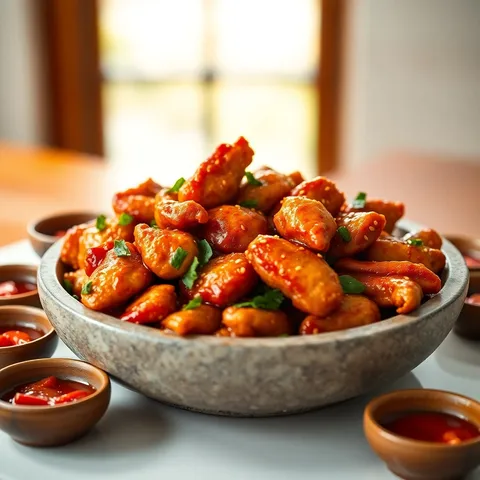 Korean Lens Verified Images are for illustrative purposes only, may be inaccurate, and do not guarantee the presence or absence of specific ingredients.
 Dakgalbi (Spicy Stir-fried Chicken)
Diced chicken marinated in a gochujang-based sauce, stir-fried with sweet potatoes, cabbage, perilla leaves, and tteok.
 Korean Lens Verified Images are for illustrative purposes only, may be inaccurate, and do not guarantee the presence or absence of specific ingredients.
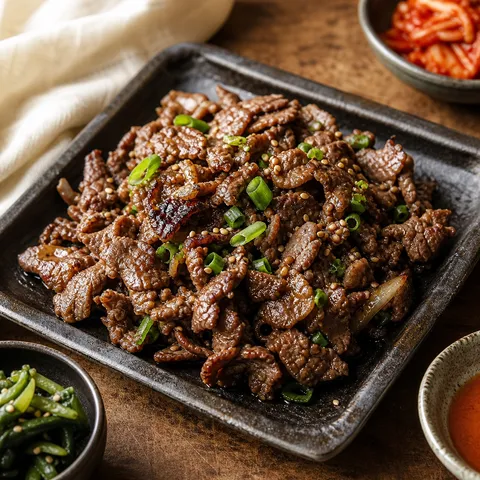
 Bulgogi (Marinated Beef BBQ)
Thinly sliced, marinated beef ribeye or sirloin grilled or stir-fried. Sweet, savory, and tender.
 Korean Lens Verified Images are for illustrative purposes only, may be inaccurate, and do not guarantee the presence or absence of specific ingredients.
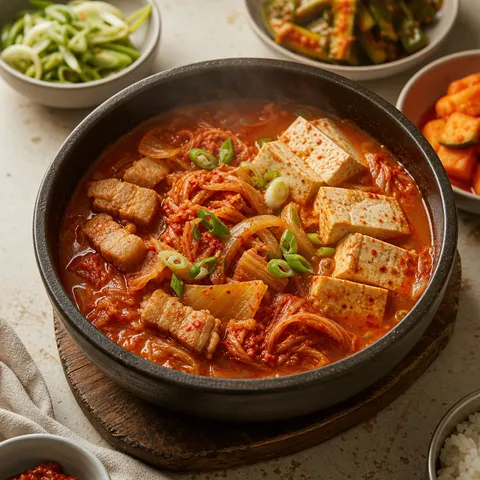
 Kimchi Jjigae (Kimchi Stew)
A classic, comforting stew made with aged kimchi, pork or seafood, scallions, onions, and diced tofu.