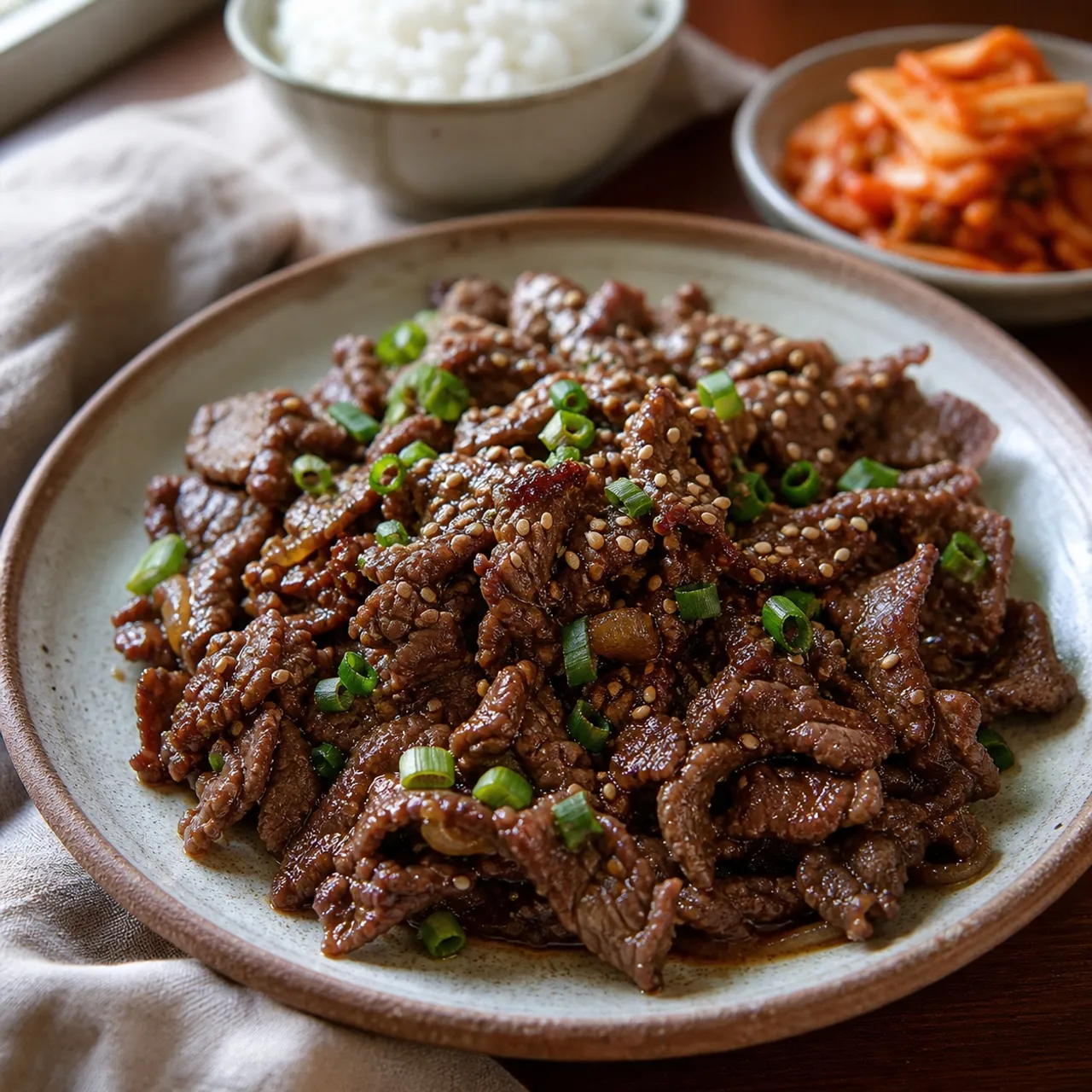
 Meat & Pork Images are for illustrative purposes only, may be inaccurate, and do not guarantee the presence or absence of specific ingredients.
 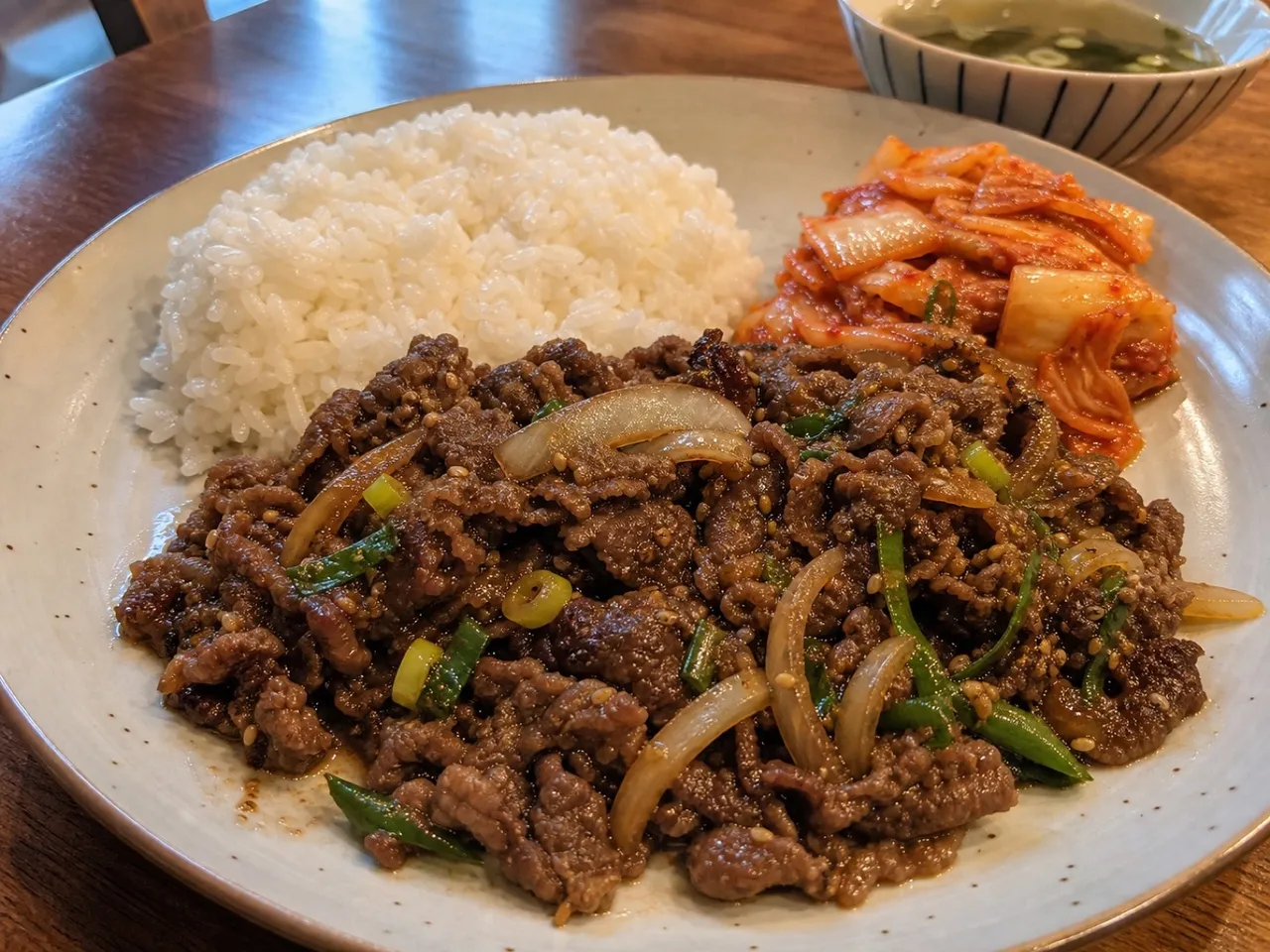 Serving Images are for illustrative purposes only, may be inaccurate, and do not guarantee the presence or absence of specific ingredients.
 Korean Beef Bulgogi
Thinly sliced beef marinated in a sweet-savory soy, pear, and sesame sauce, then seared hot for caramelized, smoky-sweet bites.
Contains common allergens
In the app, Listahan checks these against your household automatically.
Instructions
6 steps- 1
If slicing the beef yourself, freeze it for 30 minutes first so you can cut it paper-thin against the grain.
- 2
In a bowl, whisk together the grated pear, soy sauce, brown sugar, sesame oil, garlic, ginger, half the green onions, and black pepper to make the marinade.
- 3
Add the sliced beef and toss to coat thoroughly, then marinate for at least 30 minutes, or up to overnight in the refrigerator for deeper flavor.
- 4
Heat the neutral oil in a large skillet or wok over high heat until nearly smoking. Working in batches to avoid crowding, spread the beef in a single layer and sear undisturbed for 1 to 2 minutes until caramelized, then stir and cook 1 minute more.
- 5
Crowding the pan causes the meat to steam rather than char, so cook in two or three batches and keep the heat high.
- 6
Transfer to a platter, garnish with the remaining green onions and sesame seeds, and serve over steamed rice with lettuce wraps.
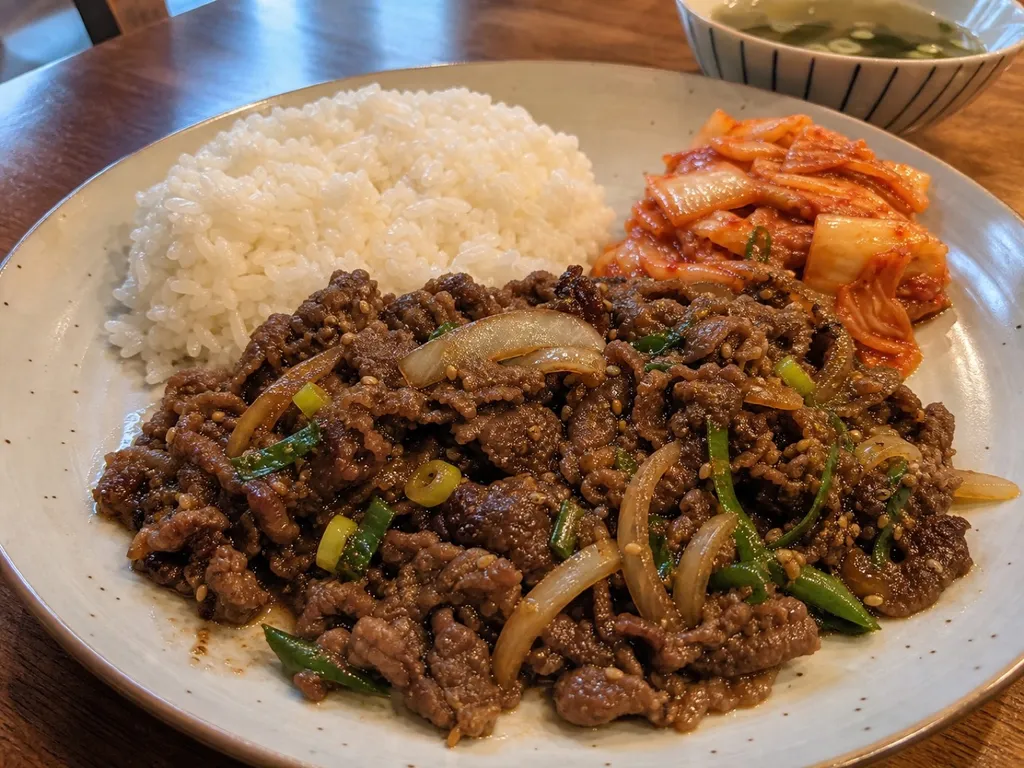 Images are for illustrative purposes only, may be inaccurate, and do not guarantee the presence or absence of specific ingredients.
 Listahan Family Score™
61/100
Works for many families
Score reflects how well this recipe fits a typical busy household. In the app, your Family Score is personalized to your household's allergens, kids, and pantry.
Nutrition
per serving135
Calories
3 g
Protein
14 g
Carbs
8 g
Fat
Estimated per serving. Actual values depend on the brands and portions you use.
Listahan cooking guide
Chef notes & practical guide
Technique notes, ingredient swaps, serve-alongside ideas, storage guidance, and equipment for this recipe.
Cultural context
Bulgogi, meaning fire meat, is one of Korea's most beloved dishes, thin slices of beef marinated in a sweet-savory blend of soy, sugar, garlic, sesame, and often pear, then grilled or seared hot and fast. Its roots reach back centuries to skewered grilled meats of the Korean peninsula, refined over time into the marinade-forward dish known today. The grated pear is the quiet signature, both tenderizing the beef and adding a clean sweetness.
Listahan note
This version slices the beef thin against the grain, marinates it in the classic soy-sesame-pear blend, then sears it in a screaming-hot pan so the edges caramelize. It keeps the marinade balanced so the beef tastes savory first, sweet second.
Technique cues
- Slice the beef as thin as possible against the grain, freezing it briefly first to firm it up for clean cuts.
- Include grated pear in the marinade, since its enzymes tenderize the beef and its sweetness is part of the authentic flavor.
- Cook the meat in a single hot layer in batches so it sears and caramelizes rather than stewing in its own juices.
Kitchen flow
- Parallel prep
- Freeze the beef briefly and mix the marinade while it firms, then slice and marinate in one efficient stretch.
- Make-ahead
- Marinate the sliced beef up to a day ahead so the flavor penetrates deeply and the pear can work on the meat.
- Leftover move
- Pile leftover bulgogi into a rice bowl with a fried egg and kimchi, or roll it into lettuce wraps.
- Cleanup rhythm
- Cook in batches in one pan and deglaze with a splash of water between rounds to keep the fond from burning.
Ingredient brief
Role, handling, and swap guidance for each key ingredient.
ribeye or sirloin
main beef cut
Purpose: Well-marbled beef stays tender through the fast high-heat sear and carries the marinade well.
Handling: Slice paper-thin against the grain after a short stint in the freezer.
Adaptation: Thinly sliced flank or pre-sliced shabu-shabu beef works.
soy sauce
marinade base
Purpose: It provides the salty, savory backbone the whole marinade is built around.
Handling: Combine with the sugar, garlic, and sesame to make the marinade.
Adaptation: Tamari for gluten-free, or coconut aminos for lower sodium.
Asian pear
tenderizer and sweetness
Purpose: Its enzymes break down the beef gently and it adds a clean, fruity sweetness central to bulgogi.
Handling: Grate it finely into the marinade.
Adaptation: Bosc pear, apple, or kiwi can substitute, though kiwi tenderizes faster so use less.
sesame oil
aromatic finish
Purpose: It gives the dish its distinctive toasty, nutty aroma that defines Korean grilled meats.
Handling: Add to the marinade and finish with a few drops at the end.
Adaptation: Use a smaller amount of toasted sesame oil if the flavor is too strong, but there is no true substitute.
green onions
aromatic and garnish
Purpose: They add a fresh, sharp note that cuts the richness of the marinated beef.
Handling: Slice some into the marinade and reserve the rest for garnish.
Adaptation: Thinly sliced regular onion in the marinade, chives for garnish.
Technique notes
- Get the pan ripping hot before the beef goes in, since a cooler pan releases liquid and you lose the caramelized edges.
- Do not over-marinate past a day, as the pear and acid can turn the thin beef mushy.
- Finish with toasted sesame seeds and a drizzle of fresh sesame oil so the aroma hits at the table.
Ingredient swaps
- Gluten-free direction
- Swap soy sauce for tamari and check that any added gochujang is gluten-free.
- Lower-sodium direction
- Use coconut aminos and cut the added sugar slightly, leaning on the pear for sweetness.
- Lower-sugar direction
- Reduce the sugar and let the grated pear carry most of the sweetness.
Serve alongside
- Steamed short-grain rice
- Kimchi
- Quick cucumber salad
- Sesame spinach namul
- Korean lager
- Barley tea
- Sparkling water with yuzu
Serving suggestions only — check pairings for your household's allergens.
Storage & reheating
- Refrigerate cooked bulgogi for up to three days. Reheat quickly in a hot pan to keep the caramelized edges. Marinated raw beef can be frozen for up to two months; thaw in the fridge before searing.
Equipment
- Cast iron or heavy skillet
- Sharp knife for thin slicing
- Box grater for the pear
- Mixing bowl for marinating
Make this household-aware
Listahan Pro checks this recipe against your household's allergens, finds pantry-aware swaps, builds the shopping list, and helps you plan the week around it.
Plan it in Listahan
Add Korean Beef Bulgogi to your week, check it against your household's allergens, and build the shopping list automatically.
More Meat & Pork recipes
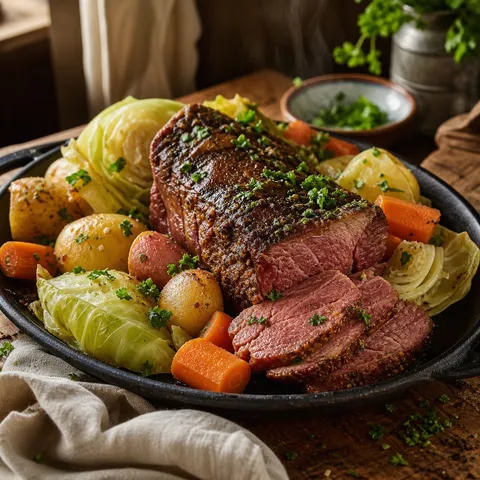 Meat & Pork Lens Verified Images are for illustrative purposes only, may be inaccurate, and do not guarantee the presence or absence of specific ingredients.
 Corned Beef and Cabbage
A classic Irish-American simmer of brined corned beef brisket with cabbage, carrots, and potatoes, served with mustard.
 Meat & Pork Lens Verified Images are for illustrative purposes only, may be inaccurate, and do not guarantee the presence or absence of specific ingredients.
 Swedish Meatballs
Warmly spiced beef and pork meatballs in a velvety sour cream gravy, served over egg noodles with a spoonful of lingonberry jam.
 Meat & Pork Lens Verified Images are for illustrative purposes only, may be inaccurate, and do not guarantee the presence or absence of specific ingredients.
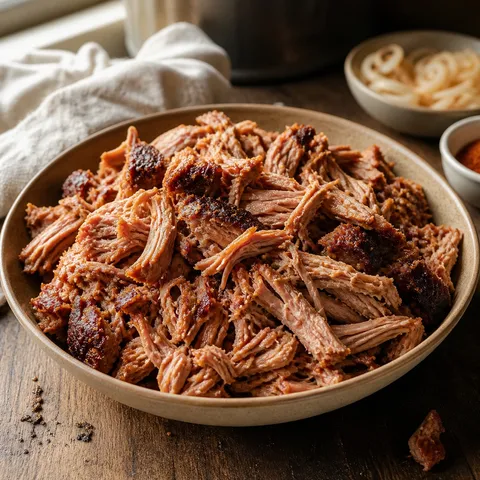
 Slow Cooker Pulled Pork
Fork-tender pork shoulder slow-cooked with a smoky-sweet spice rub until it shreds effortlessly, perfect piled on buns with barbecue sauce.