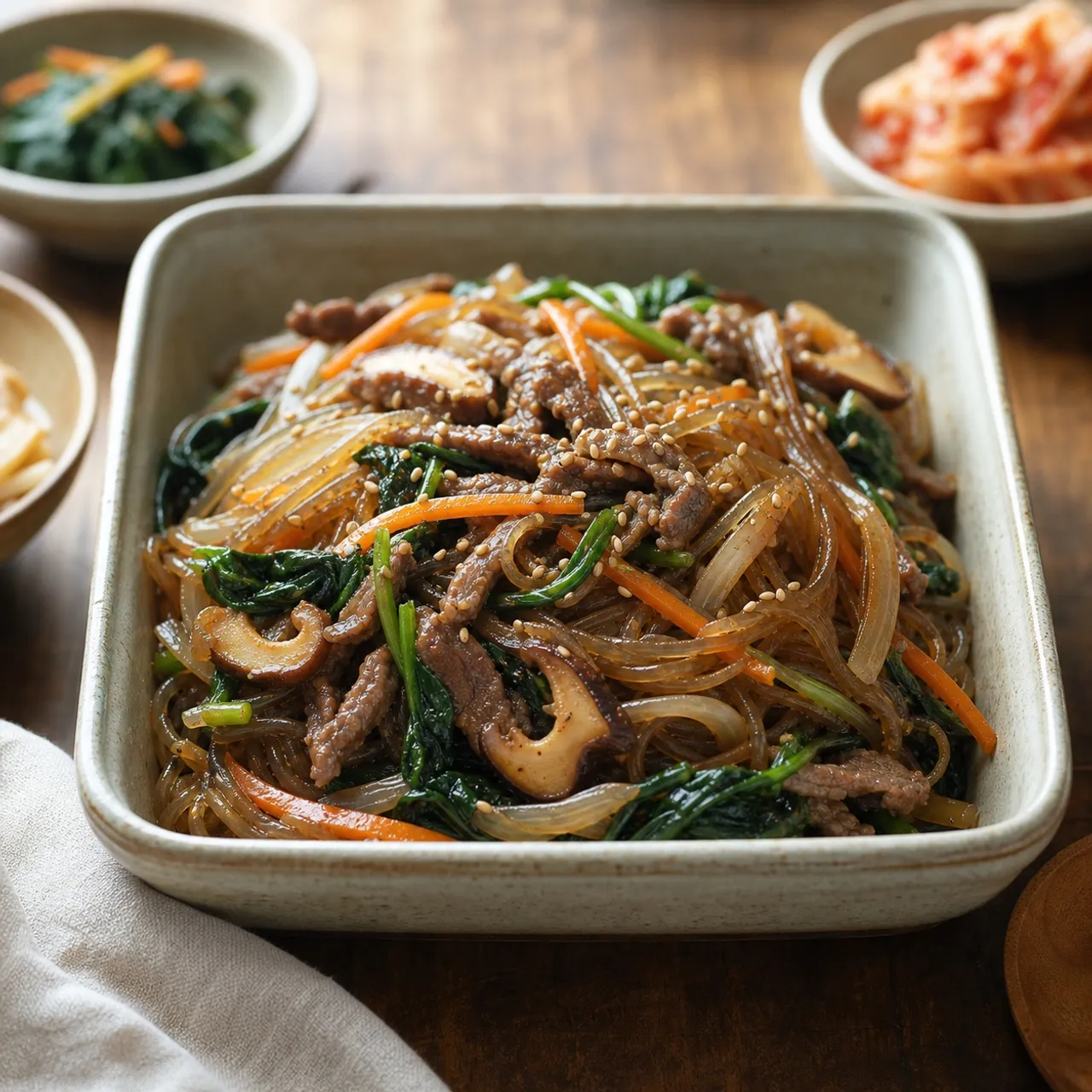
 Korean Images are for illustrative purposes only, may be inaccurate, and do not guarantee the presence or absence of specific ingredients.
 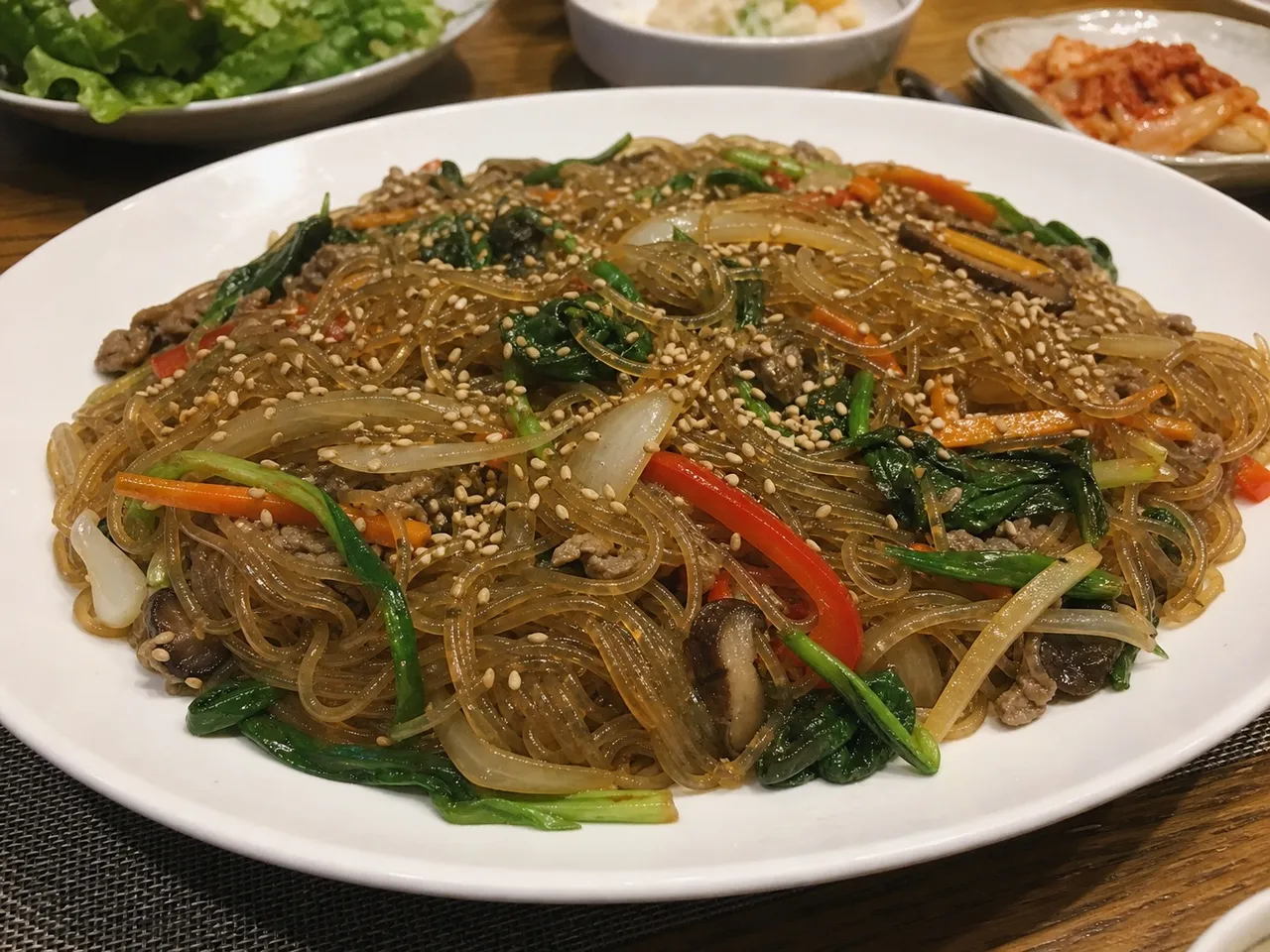 Serving Images are for illustrative purposes only, may be inaccurate, and do not guarantee the presence or absence of specific ingredients.
 Japchae (Stir-Fried Glass Noodles)
A sweet and savory dish of stir-fried glass noodles (dangmyeon) and vegetables that is popular in Korean cuisine.
Contains common allergens
In the app, Listahan checks these against your household automatically.
Instructions
6 steps- 1
Bring a large pot of water to a boil. Add the dangmyeon and boil for 7-8 minutes until soft and chewy. Drain, rinse quickly under cold water, cut with kitchen shears into 6-inch lengths, and toss with 1 tbsp of sesame oil.
- 2
Blanch the spinach for 30 seconds, plunge into cold water, squeeze dry, and season with a pinch of salt and sesame oil.
- 3
In a large skillet over medium-high heat, lightly oil and sauté the onions, carrots, and mushrooms individually, seasoning each with a small pinch of salt, until tender (about 2 minutes each). Remove to a large mixing bowl.
- 4
Marinate the julienned beef with 1 tbsp soy sauce and a pinch of sugar, then stir-fry in the same skillet for 3 minutes until fully cooked. Add to the bowl.
- 5
Prepare a seasoning sauce by whisking together the remaining 3 tbsp soy sauce, 1 tbsp sugar, and 1 tbsp sesame oil.
- 6
Add the noodles to the bowl of vegetables and meat, pour the seasoning sauce over the top, and mix thoroughly by hand. Garnish with sesame seeds.
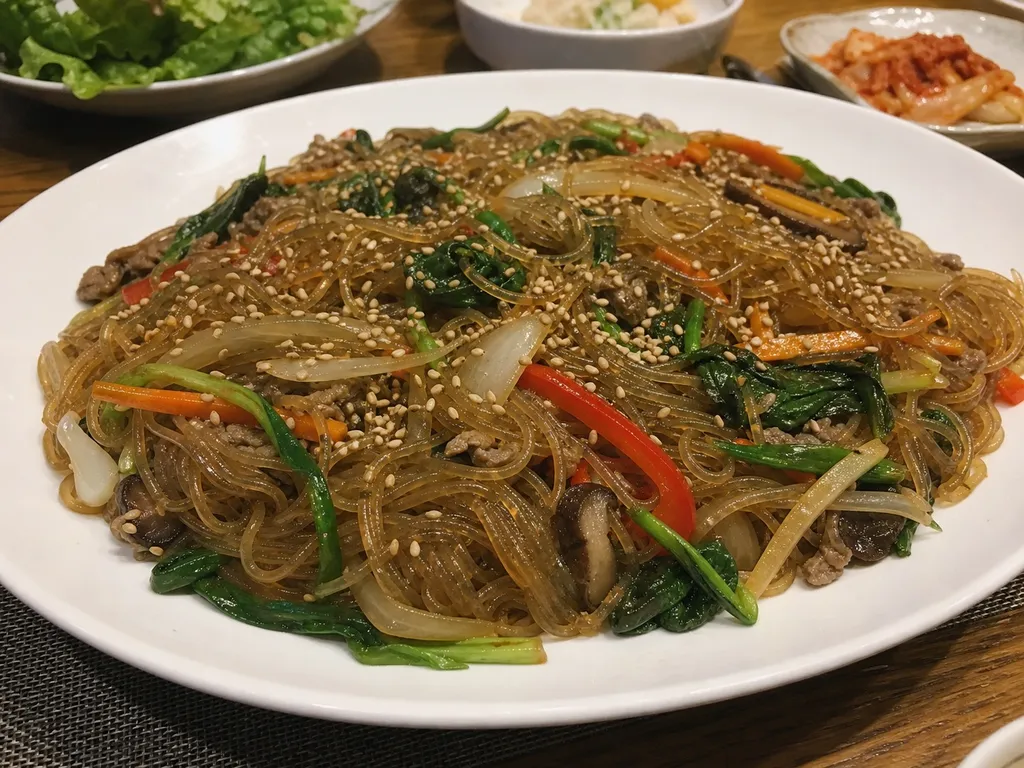 Images are for illustrative purposes only, may be inaccurate, and do not guarantee the presence or absence of specific ingredients.
 Listahan Family Score™
71/100
Good fit for most families
Score reflects how well this recipe fits a typical busy household. In the app, your Family Score is personalized to your household's allergens, kids, and pantry.
Nutrition
per serving380
Calories
23 g
Protein
14 g
Carbs
26 g
Fat
Estimated per serving. Actual values depend on the brands and portions you use.
Listahan cooking guide
Chef notes & practical guide
Technique notes, ingredient swaps, serve-alongside ideas, storage guidance, and equipment for this recipe.
Cultural context
Japchae is a dish of springy sweet-potato glass noodles tossed with sesame, soy, and a rainbow of separately cooked vegetables and beef. Originally a 17th-century royal dish made without noodles, it gained its now-essential dangmyeon later. It appears at every Korean celebration, prized for its glossy strands and balance of textures.
Listahan note
This version cooks each vegetable separately for distinct color and texture, then tosses everything with the noodles in a sesame-soy dressing so nothing turns to mush.
Technique cues
- Cook the vegetables separately so each keeps its color and crispness.
- Rinse and lightly oil the cooked noodles so they stay glossy and separate.
- Dress while warm so the sesame-soy sauce soaks in evenly.
Kitchen flow
- Parallel prep
- Cook the vegetables in sequence in one pan while the noodles boil.
- Make-ahead
- Japchae is good warm or at room temperature, so it is ideal made ahead.
- Leftover move
- Reheat leftovers in a pan with a splash of water and extra sesame oil.
- Cleanup rhythm
- Reuse one pan for each vegetable; toss everything in one big bowl.
Ingredient brief
Role, handling, and swap guidance for each key ingredient.
Dangmyeon (sweet potato noodles)
Base
Purpose: Their bouncy, translucent texture defines japchae.
Handling: Boil until just chewy, rinse, then toss with a little sesame oil.
Adaptation: These are essential; cellophane mung bean noodles are a distant backup.
Beef tenderloin
Protein
Purpose: Adds savory richness among the vegetables.
Handling: Julienne and stir-fry quickly with a little soy.
Adaptation: Omit for a vegetable-only japchae.
Spinach, carrot, onion, mushrooms
Vegetables
Purpose: Provide the color, sweetness, and variety central to the dish.
Handling: Cook each separately and season lightly.
Adaptation: Bell pepper or zucchini can join the mix.
Soy sauce and sesame oil
Dressing
Purpose: Bind the noodles and vegetables with savory, nutty flavor.
Handling: Whisk with a little sugar and toss while warm.
Adaptation: Tamari keeps it gluten-free.
Technique notes
- Do not overcook the noodles; they should stay chewy, not soft.
- Cut the noodles a few times with scissors so they are easier to eat.
- Taste and adjust the sesame-soy balance after tossing.
Ingredient swaps
- Vegan direction
- Skip the beef, add extra mushrooms, and use a gluten-free tamari.
- Gluten-free direction
- Use tamari; the noodles themselves are wheat-free.
- Lower-sodium direction
- Reduce the soy and lean on sesame oil and garlic.
Serve alongside
- Steamed white rice
- Kimchi
- Bulgogi
- Seasoned spinach
- Barley tea
- Light lager
- Cold water
Serving suggestions only — check pairings for your household's allergens.
Storage & reheating
- Refrigerate up to 4 days in a sealed container.
- Reheat in a pan with a splash of water, or serve at room temperature.
- Freezing is not recommended, as the noodles turn gummy.
Equipment
- Large skillet or wok
- Pot for noodles
- Large mixing bowl
- Kitchen scissors
Make this household-aware
Listahan Pro checks this recipe against your household's allergens, finds pantry-aware swaps, builds the shopping list, and helps you plan the week around it.
Plan it in Listahan
Add Japchae (Stir-Fried Glass Noodles) to your week, check it against your household's allergens, and build the shopping list automatically.
More Korean recipes
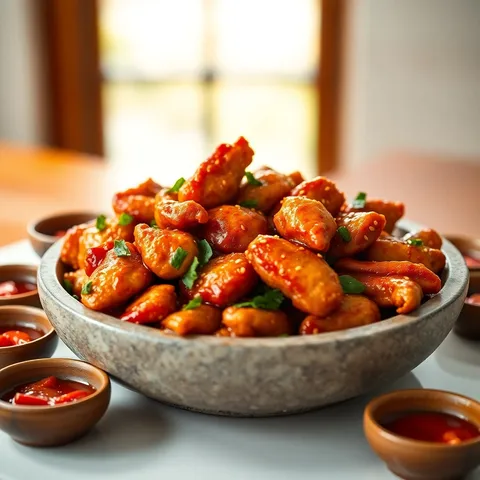 Korean Lens Verified Images are for illustrative purposes only, may be inaccurate, and do not guarantee the presence or absence of specific ingredients.
 Dakgalbi (Spicy Stir-fried Chicken)
Diced chicken marinated in a gochujang-based sauce, stir-fried with sweet potatoes, cabbage, perilla leaves, and tteok.
 Korean Lens Verified Images are for illustrative purposes only, may be inaccurate, and do not guarantee the presence or absence of specific ingredients.
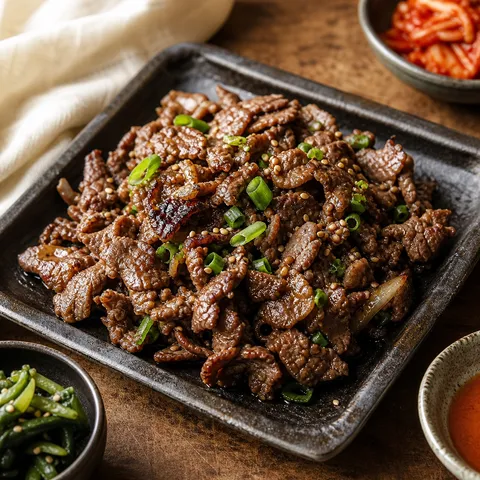
 Bulgogi (Marinated Beef BBQ)
Thinly sliced, marinated beef ribeye or sirloin grilled or stir-fried. Sweet, savory, and tender.
 Korean Lens Verified Images are for illustrative purposes only, may be inaccurate, and do not guarantee the presence or absence of specific ingredients.
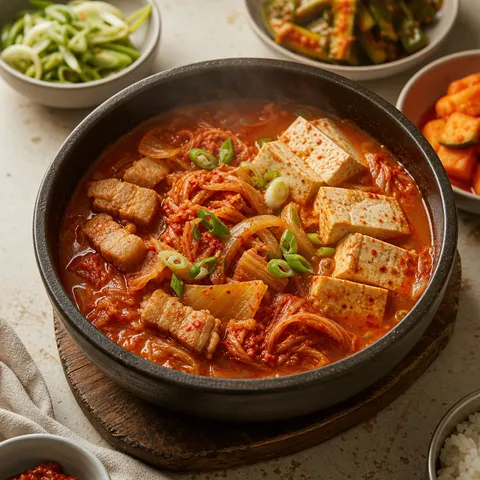
 Kimchi Jjigae (Kimchi Stew)
A classic, comforting stew made with aged kimchi, pork or seafood, scallions, onions, and diced tofu.