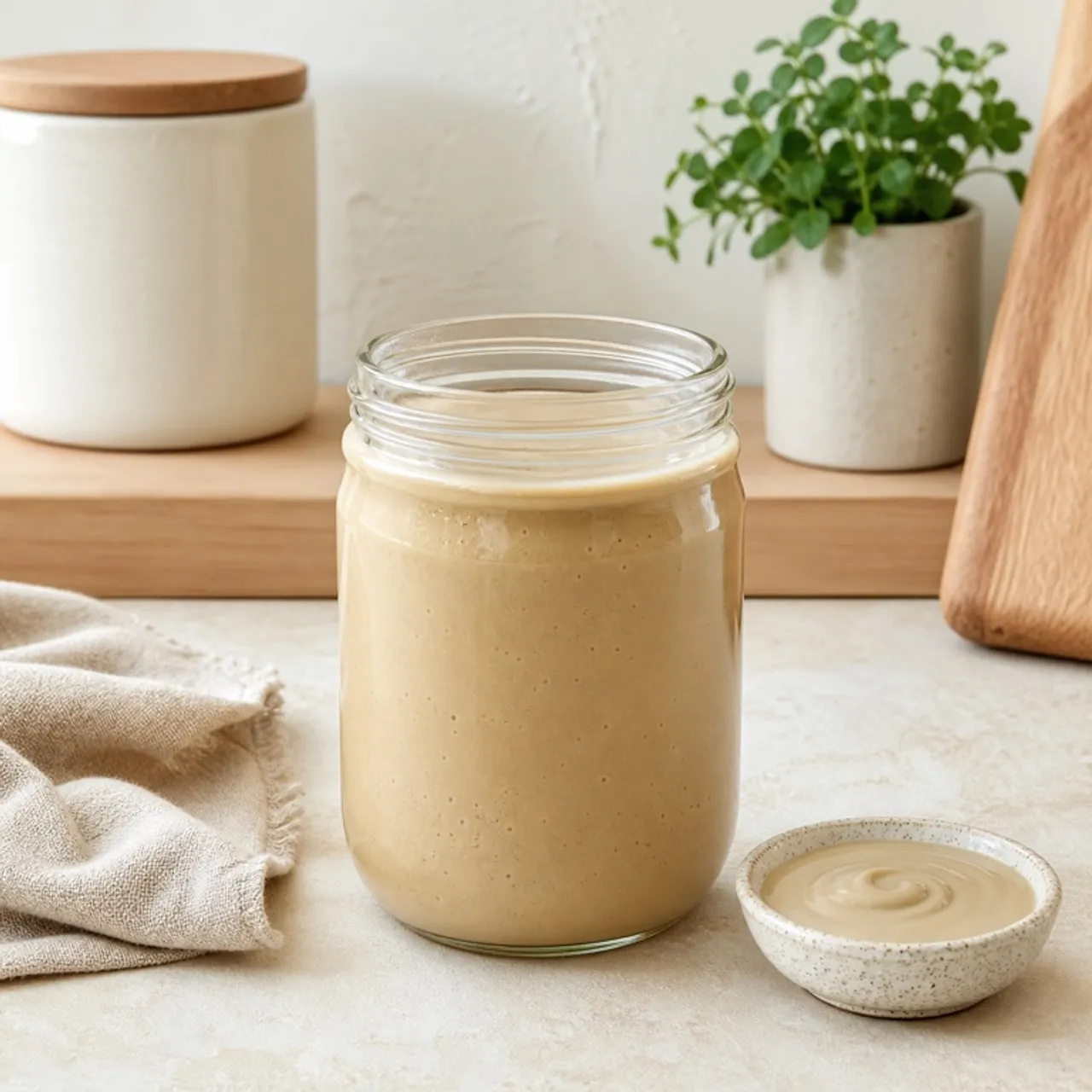
 Food Lens Images are for illustrative purposes only, may be inaccurate, and do not guarantee the presence or absence of specific ingredients.
 Food Lens · Condiments
Tahini
Rich, deeply nutty, and creamy with a pleasant bitter edge from the sesame; smooth and slightly oily; flavor deepens and becomes earthier when toasted sesame tahini is used.
Lens VerifiedTahini is a smooth paste made entirely from ground sesame seeds — not to be confused with sesame oil — with a rich, nutty, faintly bitter flavor that is essential to Middle Eastern, Eastern Mediterranean, and Israeli cooking. It is the primary ingredient in hummus, a key component of baba ganoush, and used as a sauce, dressing, and finishing drizzle on its own.
Where it comes from
Sesame seed paste has been made in the Middle East for centuries, with references in medieval Arabic culinary texts. The word 'tahini' derives from the Arabic root for grinding. As Middle Eastern cuisine became widely popular in North America from the 1970s onward — driven by Lebanese, Israeli, and broader Mediterranean restaurants — tahini moved from specialty import to mainstream supermarket staple. Today it is found in almost every large grocery chain in North America.
Varieties — Light tahini (hulled sesame seeds, smooth and milder) is the most widely available in NA and the standard for hummus. Dark tahini (unhulled sesame seeds) is more bitter and robust — used in some traditional recipes and in East Asian cooking. Japanese-style sesame paste (neri goma) is similarly made but sometimes uses toasted seeds, producing a different flavor.
In Israeli and Palestinian cooking, tahini sauce ('tehina') is served alongside nearly every grilled meat or fish dish and eaten with bread as a standalone. It is as fundamental to the region's food culture as olive oil.
In a modern kitchen — Tahini naturally separates — a layer of sesame oil rises to the top with the paste sinking below. Always stir thoroughly before use. Store tahini upside down in the refrigerator to make stirring easier, or bring to room temperature and stir vigorously. Natural tahini without stabilizers separates most — this is normal and a sign of quality.
Buying it
Available in the international or natural foods aisle of mainstream grocery stores, Middle Eastern grocery stores, and health food stores. Look for tahini with one ingredient: sesame seeds (sometimes with salt). Refrigerate after opening. Quality varies — stone-ground tahini from specialty brands tends to be smoother and more nuanced than industrial versions.
Storing it
Store in a cool, dark pantry spot; oil separation is normal, so just stir well before using. Refrigerating an opened jar slows rancidity, though it will also thicken the paste.
Keeps about 1 year in the pantry.
Out of tahini? Good swaps
- Sunflower seed butter — Milder and sweeter; use 1:1 in hummus or dressings for a nut-free option.
- Cashew butter (thinned with sesame oil) — Mix 2 tbsp cashew butter + 1 tsp sesame oil per 3 tbsp tahini; closer in richness.
- Almond butter — Sweeter and less bitter; use in salad dressings as a 1:1 swap.
General cooking guidance — always check the labels on the products you use. Listahan’s allergen checks run automatically when you plan a recipe in the app. Not medical advice.
Recipes that use tahini
Common questions about tahini
Is tahini vegan?
Tahini is generally plant-based and suitable for a vegan diet, but brands differ — confirm on the label.
What can I use instead of tahini?
Good swaps include Sunflower seed butter, Cashew butter (thinned with sesame oil), Almond butter. Each behaves a little differently — see the swaps above for notes, and always check labels for allergens.
How do I store tahini?
Store in a cool, dark pantry spot; oil separation is normal, so just stir well before using. Refrigerating an opened jar slows rancidity, though it will also thicken the paste. It keeps about 1 year in the pantry.
More condiments
See all


Make tahini about your kitchen — with Listahan Pro
Everything above is free, forever. Pro adds the Household Lens — the same food, seen for your family:
-
Checked for each member
Flags tahini per person against your household's allergies and school rules — not just a generic "contains" tag.
-
Pantry-aware
Knows whether you already have it, what is running low, and the best swap from what is in your kitchen tonight.
-
What it costs near you
A real price from the Presyo community index, so you can plan the budget — not guess.
-
Your household memory
Who likes it, plus your own private notes — brand, where you keep it, who skips it.
Allergen safety is always free — Pro adds the automation, never the safety.
Cook with tahini — safely
Plan a recipe in Listahan and the household allergen check runs automatically — every plan, every swap, every lunchbox. Safety is never paywalled.