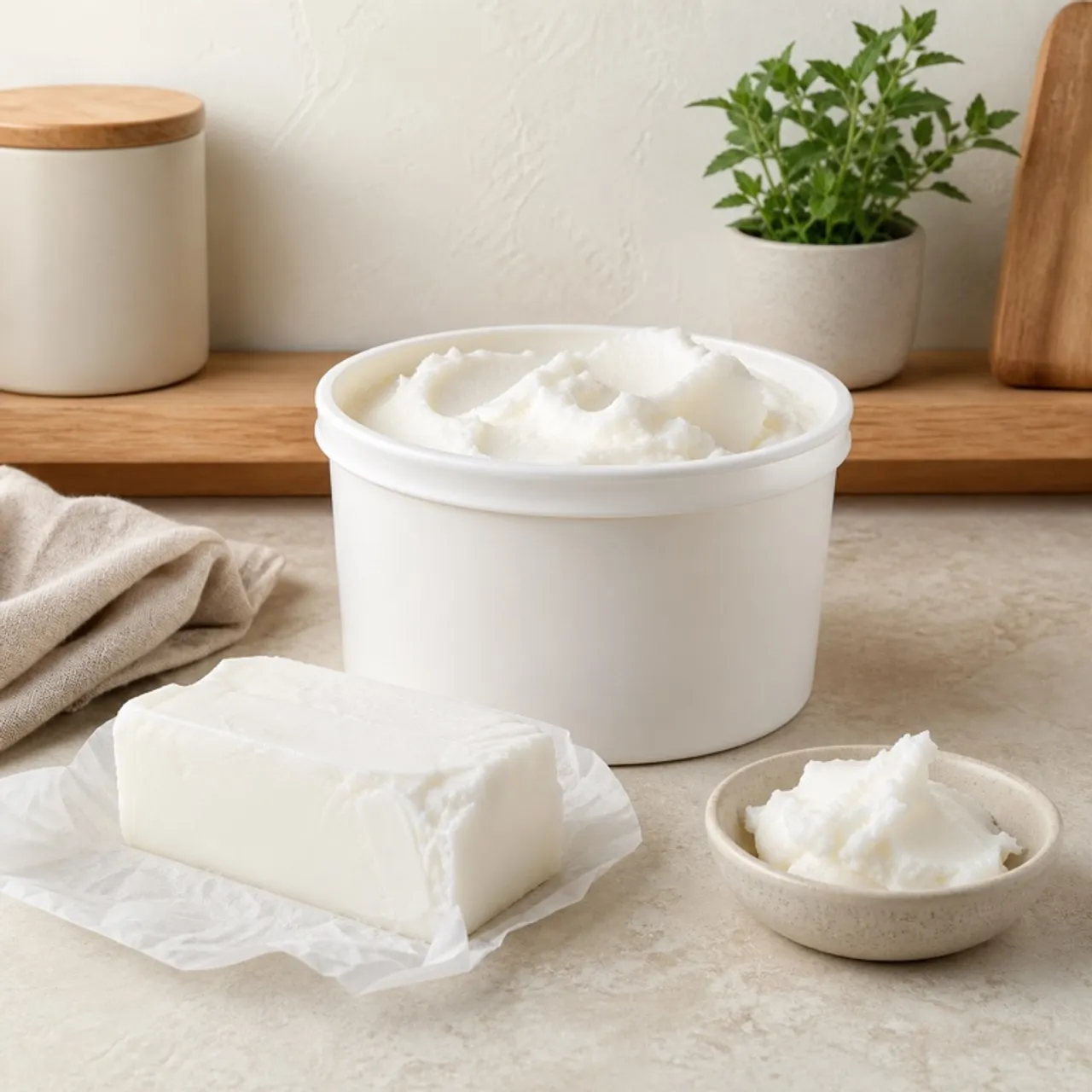
 Food Lens Images are for illustrative purposes only, may be inaccurate, and do not guarantee the presence or absence of specific ingredients.
 Food Lens · Recipe ingredients
Vegetable Shortening
Neutral and almost flavorless; purely textural — it contributes tenderness and flakiness rather than flavor
Lens VerifiedVegetable shortening is a solid, white hydrogenated vegetable fat — prized in baking for producing exceptionally flaky pie crusts, tender cookies, and crisp frying results because it contains no water.
Where it comes from
Crisco, introduced in 1911, changed North American baking overnight — a solid fat that behaved like lard but was made entirely from cottonseed oil. Marketed with cookbooks and recipe cards, it embedded itself in a generation of pie and cookie recipes. Early versions used partial hydrogenation (which created trans fats); modern formulations use fully hydrogenated or palm-based oils instead. The old recipes still work; the ingredient has quietly been reformulated.
Varieties — Standard (all-purpose baking and frying) and butter-flavored (for baking applications where butter flavor is desired without using actual butter). Modern versions use non-hydrogenated or fully hydrogenated fats to avoid trans fats.
Southern US pie culture depends heavily on shortening — all-shortening crusts are measurably flakier than all-butter, which is why many heirloom recipes specify it for pecan and sweet potato pies.
In a modern kitchen — For the flakiest crust, keep your shortening very cold and work quickly — fat that stays solid creates distinct layers; melted fat makes a tough crust.
Buying it
Look for current formulations that specify 'no trans fats.' Standard white shortening is all-purpose; butter-flavored works best in cookies and quick breads where you want that hint of richness. Keep tightly sealed to prevent absorbing odors.
Storing it
Keep vegetable shortening sealed in a cool, dark pantry spot away from heat, which can cause it to soften or turn rancid. An off, waxy smell is the sign to toss it.
Keeps about 1 year in the pantry.
Smoke point
360–410°F
commonly cited around 360-410°F for vegetable shortening, depending on the product.
Out of vegetable shortening? Good swaps
- Cold unsalted butter — 1:1 by weight; adds rich flavor but also water content, which produces a slightly less flaky but more flavorful crust
- Coconut oil (refined, solid state) — 1:1 by weight; neutral flavor, similar fat structure — works well in pie crusts and some cookies
General cooking guidance — always check the labels on the products you use. Listahan’s allergen checks run automatically when you plan a recipe in the app. Not medical advice.
Recipes that use vegetable shortening
Common questions about vegetable shortening
Is vegetable shortening vegan?
Vegetable Shortening is generally plant-based and suitable for a vegan diet, but brands differ — confirm on the label.
What can I use instead of vegetable shortening?
Good swaps include Cold unsalted butter, Coconut oil (refined, solid state). Each behaves a little differently — see the swaps above for notes, and always check labels for allergens.
How do I store vegetable shortening?
Keep vegetable shortening sealed in a cool, dark pantry spot away from heat, which can cause it to soften or turn rancid. An off, waxy smell is the sign to toss it. It keeps about 1 year in the pantry.
More recipe ingredients
See all


Make vegetable shortening about your kitchen — with Listahan Pro
Everything above is free, forever. Pro adds the Household Lens — the same food, seen for your family:
-
Checked for each member
Flags vegetable shortening per person against your household's allergies and school rules — not just a generic "contains" tag.
-
Pantry-aware
Knows whether you already have it, what is running low, and the best swap from what is in your kitchen tonight.
-
What it costs near you
A real price from the Presyo community index, so you can plan the budget — not guess.
-
Your household memory
Who likes it, plus your own private notes — brand, where you keep it, who skips it.
Allergen safety is always free — Pro adds the automation, never the safety.
Cook with vegetable shortening — safely
Plan a recipe in Listahan and the household allergen check runs automatically — every plan, every swap, every lunchbox. Safety is never paywalled.