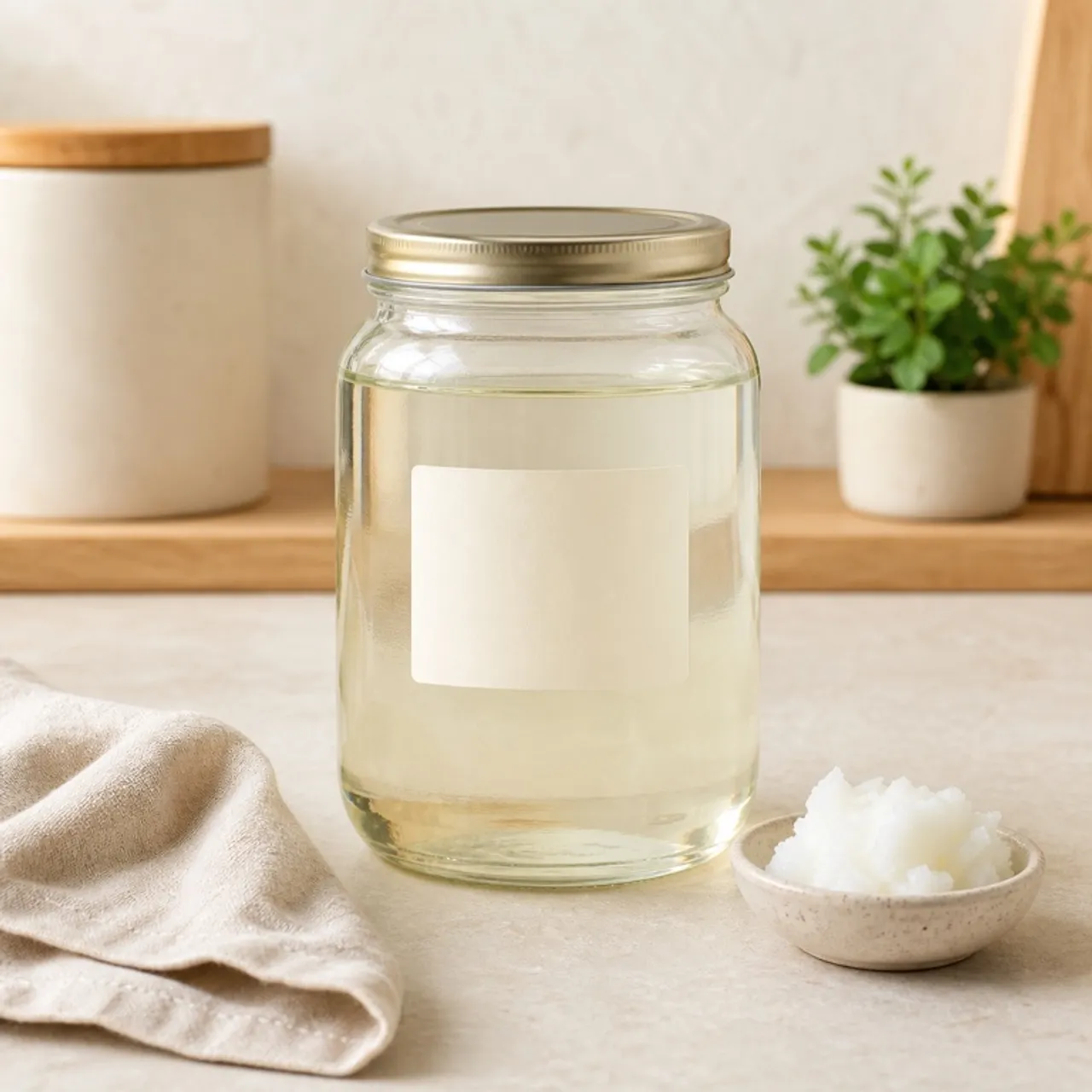
 Food Lens Images are for illustrative purposes only, may be inaccurate, and do not guarantee the presence or absence of specific ingredients.
 Food Lens · Pantry
Coconut oil
Virgin coconut oil: distinctly tropical, with a sweet, nutty coconut aroma and mild corresponding flavor that infuses whatever it cooks. Refined coconut oil: essentially neutral, with no discernible coconut flavor or aroma. Both have a clean, smooth fat mouthfeel. Unrefined oil adds a pleasant background sweetness to baked goods and granola.
Lens VerifiedCoconut oil is a plant-based fat extracted from the meat of mature coconuts, characterized by its high saturated fat content, distinctive tropical aroma, and remarkable heat stability. It exists in two primary forms — virgin (unrefined) and refined — each with different flavor intensities and culinary applications. Its solid-at-room-temperature character and long shelf life have made it both a traditional cooking fat across tropical regions and a widely discussed ingredient in modern kitchens.
Where it comes from
Coconut oil has been used as a cooking fat for thousands of years across the tropical belt — South and Southeast Asia, the Pacific Islands, and coastal East Africa — wherever the coconut palm has been a fundamental food crop.
Varieties — Virgin (or extra-virgin) coconut oil is cold-pressed from fresh coconut meat and retains a pronounced coconut aroma and flavor. Refined coconut oil is made from dried copra (coconut meat) and goes through deodorizing and bleaching to produce a neutral flavor and higher smoke point. Fractionated coconut oil remains liquid at room temperature and is most common in cosmetics and some nutritional products.
Across the Philippines, Sri Lanka, Kerala, and Pacific Island cultures, coconut oil is embedded in both cooking and daily life — used for food, hair care, and traditional medicine. In Kerala's Ayurvedic tradition, coconut oil is considered the cooking fat of choice. The oil's reputation in Western markets has oscillated between health-food enthusiasm and nutritional debate, but its culinary role in its native regions has never needed justification.
In a modern kitchen — In contemporary baking, virgin coconut oil is a useful vegan fat that adds structure when chilled and a pleasant tropical note to granola, energy balls, and coconut-forward desserts. At high heat, refined coconut oil's neutral flavor and stability make it a practical alternative to other solid fats. Its solid form at temperatures below 24°C / 76°F makes measuring and handling for baking straightforward.
Buying it
For cooking with coconut flavor, choose virgin or extra-virgin coconut oil with a fresh, clean tropical aroma — any rancid or chemical smell indicates poor quality or age. For neutral cooking, buy refined coconut oil labeled for high-heat cooking. Look for products in glass jars when possible. Solid white color indicates freshness; yellowish color can indicate age or adulteration.
Storing it
Store coconut oil sealed in a cool, dry pantry. It solidifies below about 76°F and turns liquid above that — both are normal. A sour or off smell, not the texture change, is the real sign it's gone bad.
Keeps about 1 year in the pantry.
Smoke point
350–450°F
Commonly cited around 350-450°F, with virgin coconut oil lower and refined coconut oil higher.
Out of coconut oil? Good swaps
General cooking guidance — always check the labels on the products you use. Listahan’s allergen checks run automatically when you plan a recipe in the app. Not medical advice.
Recipes that use coconut oil
Common questions about coconut oil
Is coconut oil vegan?
Coconut oil is generally plant-based and suitable for a vegan diet, but brands differ — confirm on the label.
What can I use instead of coconut oil?
Good swaps include , , , . Each behaves a little differently — see the swaps above for notes, and always check labels for allergens.
How do I store coconut oil?
Store coconut oil sealed in a cool, dry pantry. It solidifies below about 76°F and turns liquid above that — both are normal. A sour or off smell, not the texture change, is the real sign it's gone bad. It keeps about 1 year in the pantry.
More pantry
See all


Make coconut oil about your kitchen — with Listahan Pro
Everything above is free, forever. Pro adds the Household Lens — the same food, seen for your family:
-
Checked for each member
Flags coconut oil per person against your household's allergies and school rules — not just a generic "contains" tag.
-
Pantry-aware
Knows whether you already have it, what is running low, and the best swap from what is in your kitchen tonight.
-
What it costs near you
A real price from the Presyo community index, so you can plan the budget — not guess.
-
Your household memory
Who likes it, plus your own private notes — brand, where you keep it, who skips it.
Allergen safety is always free — Pro adds the automation, never the safety.
Cook with coconut oil — safely
Plan a recipe in Listahan and the household allergen check runs automatically — every plan, every swap, every lunchbox. Safety is never paywalled.