 Food Lens Images are for illustrative purposes only, may be inaccurate, and do not guarantee the presence or absence of specific ingredients.
 Food Lens · Recipe ingredients
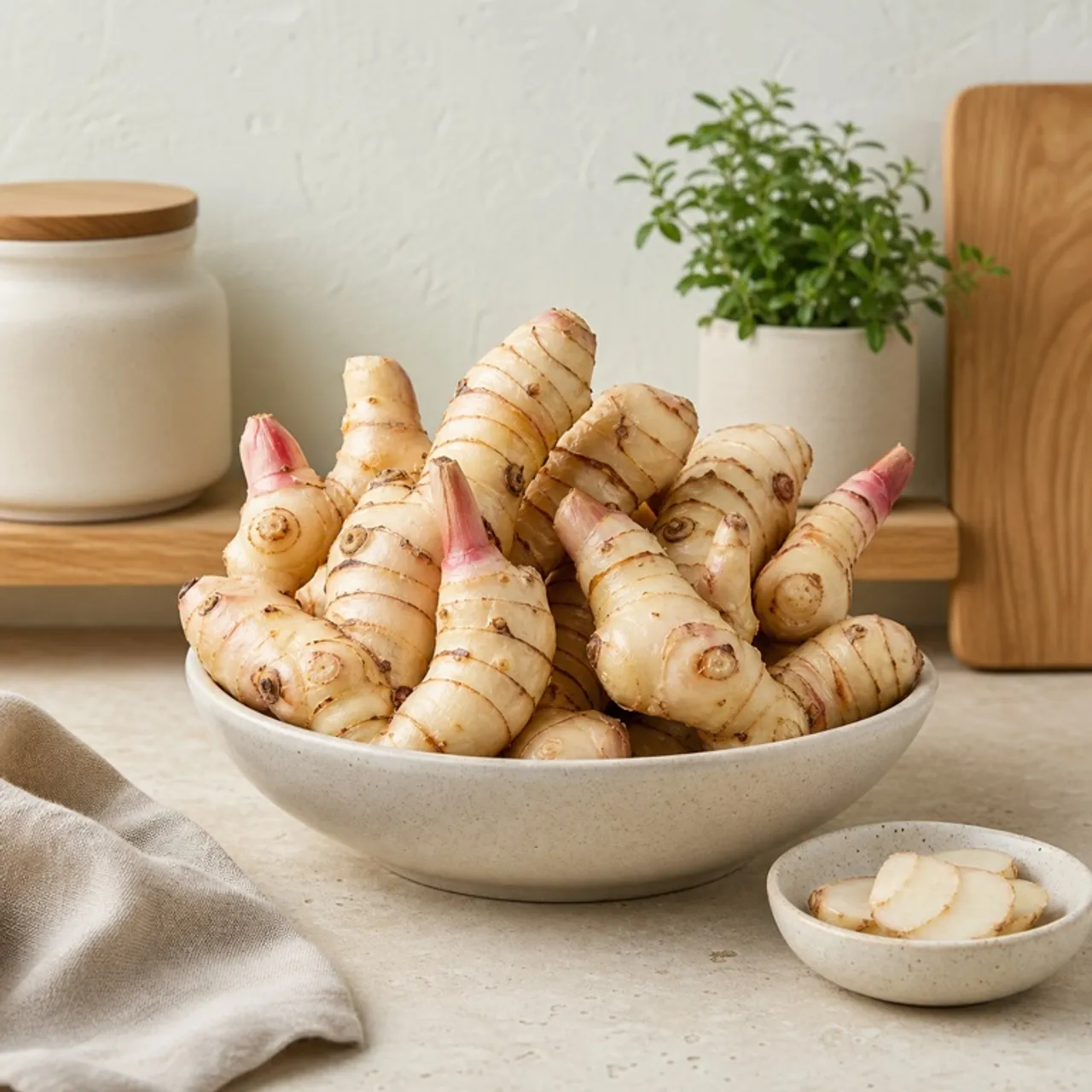
Galangal
Piney, slightly citrusy, and earthy with a mild pepperiness and a subtle medicinal quality; less heat than ginger, more resinous and complex.
Lens VerifiedGalangal is an aromatic rhizome closely related to ginger but with a distinctly different character — piney, citrusy, and slightly medicinal rather than spicy and sharp. It is foundational to Thai, Indonesian, and Malaysian cooking, where it appears in curry pastes, soups, and spice blends alongside lemongrass and kaffir lime leaves.
Where it comes from
Pinier than ginger, more mysterious than any single spice, galangal is the rhizome that Thai and Indonesian kitchens reach for when they want a fragrance that could only come from the forest floor of Southeast Asia.
Varieties — Greater galangal (Alpinia galanga) is the culinary standard in Thai and Indonesian cooking — large, pale, and mildly piney. Lesser galangal (Alpinia officinarum) is smaller, more pungent. Dried galangal slices and galangal powder (laos powder) are common in European markets.
Galangal is one of the holy trinity of Southeast Asian aromatics alongside lemongrass and kaffir lime, and its absence noticeably changes the character of Thai and Indonesian cooking.
In a modern kitchen — Fresh galangal freezes extremely well — peel and slice before freezing so you can grab pieces as needed without thawing the whole root.
Buying it
Look for fresh galangal at Asian grocery stores. Choose firm roots with tight, smooth skin. Frozen galangal slices work well in cooked applications. Dried galangal slices and powder are available at specialty spice shops.
Storing it
Keep dried or powdered galangal in an airtight container away from heat and light to preserve its aroma. If using fresh galangal, wrap it well and refrigerate, or freeze whole pieces for months without losing potency.
Keeps about 21 days in the fridge.
Out of galangal? Good swaps
- fresh ginger — The most common substitute; sharper and spicier than galangal; use in equal amounts but expect a hotter, less piney result
- galangal powder (laos powder) — Dried and ground form; milder; use 1 tsp powder per 1 tbsp fresh chopped
- ginger + a squeeze of lime juice — The lime adds a citrus brightness that approximates galangal's fresher notes
General cooking guidance — always check the labels on the products you use. Listahan’s allergen checks run automatically when you plan a recipe in the app. Not medical advice.
Recipes that use galangal
Common questions about galangal
Is galangal vegan?
Galangal is generally plant-based and suitable for a vegan diet, but brands differ — confirm on the label.
What can I use instead of galangal?
Good swaps include fresh ginger, galangal powder (laos powder), ginger + a squeeze of lime juice. Each behaves a little differently — see the swaps above for notes, and always check labels for allergens.
How do I store galangal?
Keep dried or powdered galangal in an airtight container away from heat and light to preserve its aroma. If using fresh galangal, wrap it well and refrigerate, or freeze whole pieces for months without losing potency. It keeps about 21 days in the fridge.
More recipe ingredients
See all


Make galangal about your kitchen — with Listahan Pro
Everything above is free, forever. Pro adds the Household Lens — the same food, seen for your family:
-
Checked for each member
Flags galangal per person against your household's allergies and school rules — not just a generic "contains" tag.
-
Pantry-aware
Knows whether you already have it, what is running low, and the best swap from what is in your kitchen tonight.
-
What it costs near you
A real price from the Presyo community index, so you can plan the budget — not guess.
-
Your household memory
Who likes it, plus your own private notes — brand, where you keep it, who skips it.
Allergen safety is always free — Pro adds the automation, never the safety.
Cook with galangal — safely
Plan a recipe in Listahan and the household allergen check runs automatically — every plan, every swap, every lunchbox. Safety is never paywalled.