 Thai Images are for illustrative purposes only, may be inaccurate, and do not guarantee the presence or absence of specific ingredients.
  Serving Images are for illustrative purposes only, may be inaccurate, and do not guarantee the presence or absence of specific ingredients.
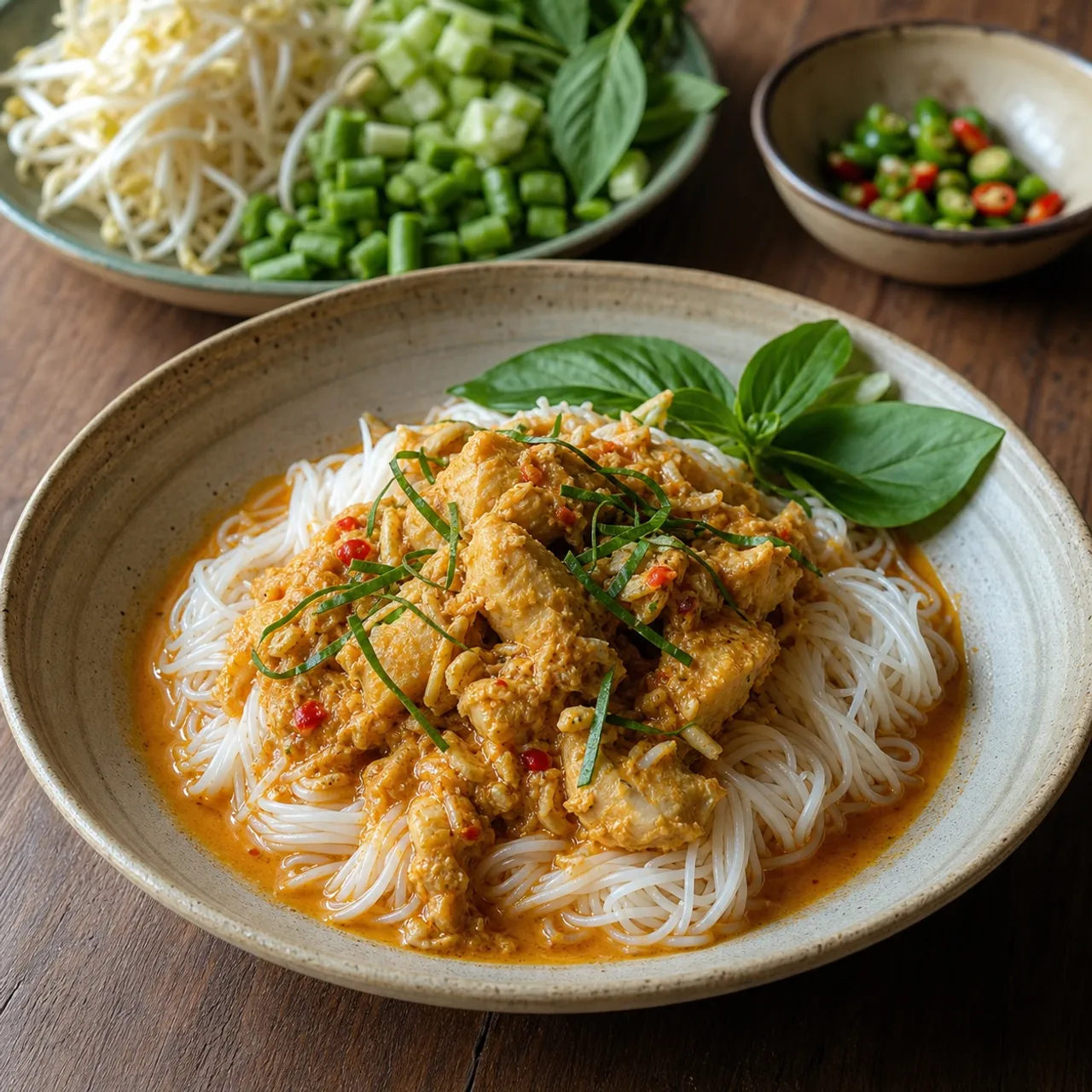
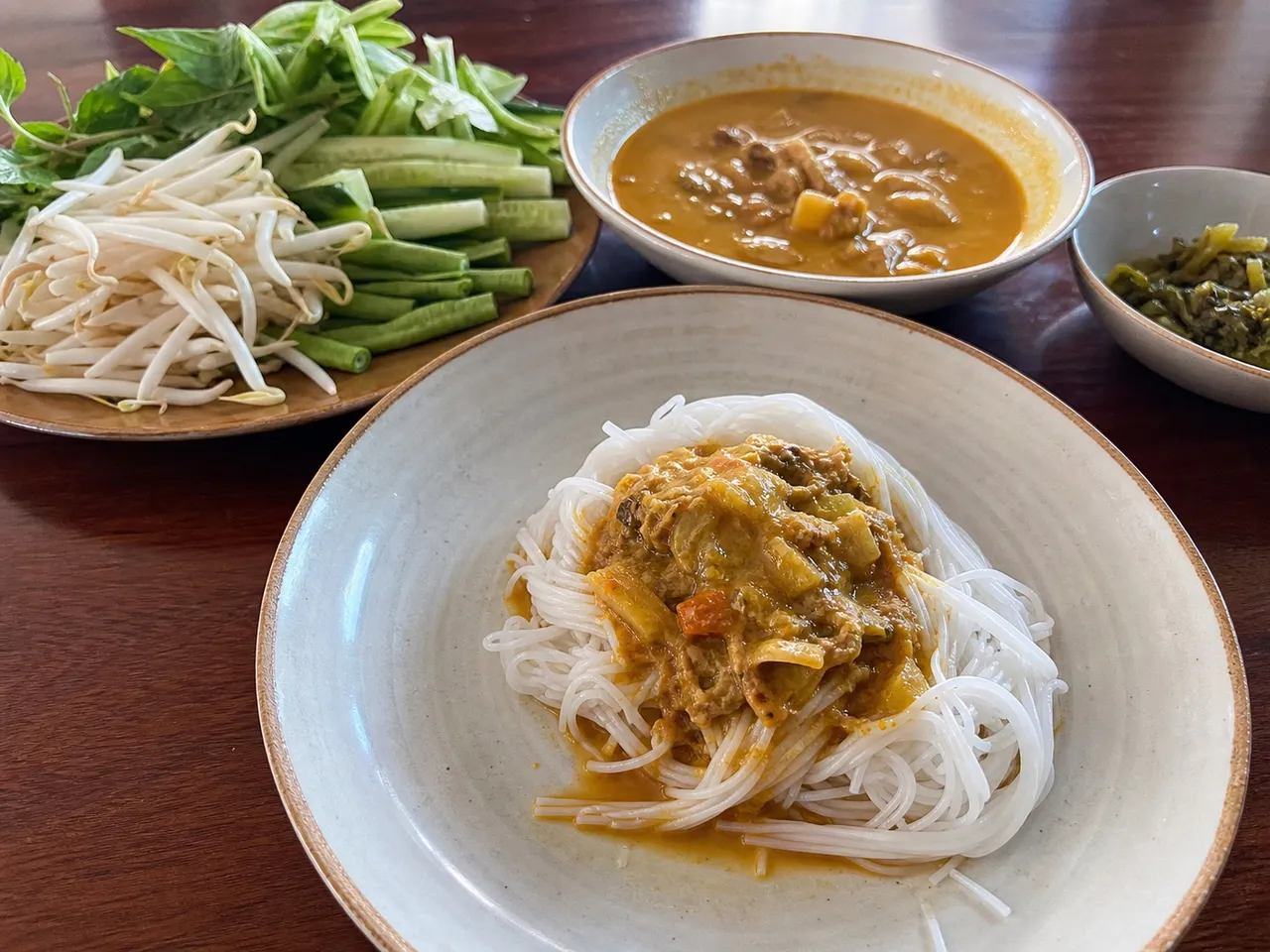
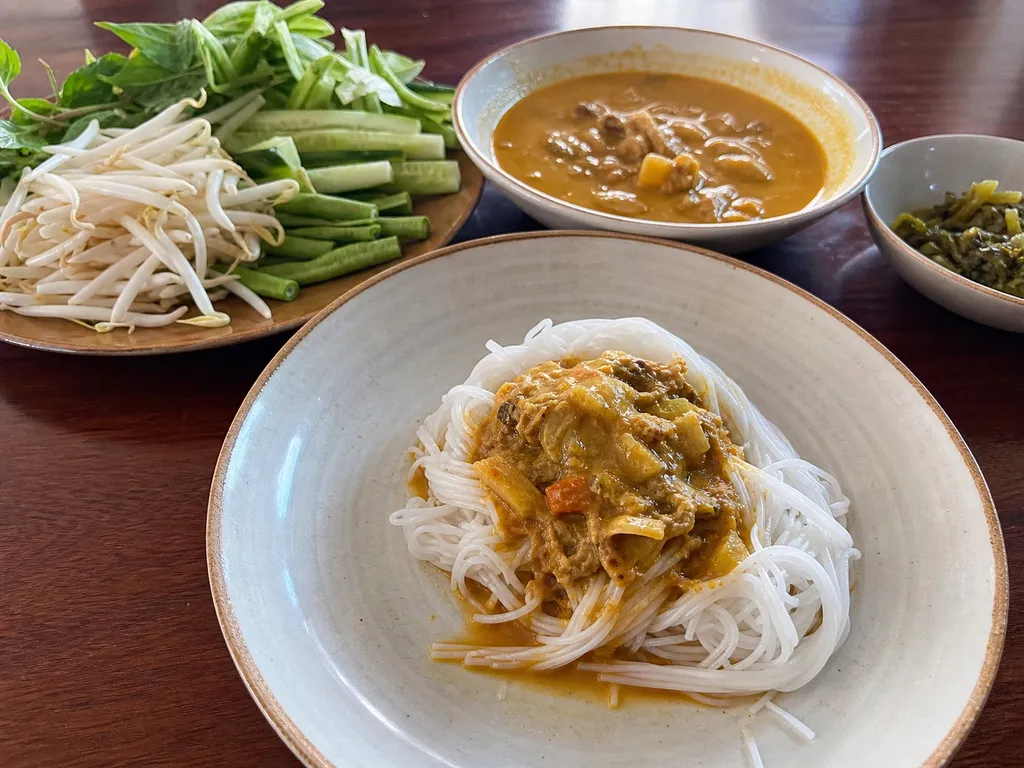
 Khanom Jeen Nam Ya
Fermented rice noodles topped with a fragrant fish curry sauce thick with galangal and lemongrass — a Southern Thai breakfast ritual eaten with fresh vegetables and herbs.
Contains common allergens
In the app, Listahan checks these against your household automatically.
Instructions
7 steps- 1
Steam or poach the fish fillet until just cooked through, about 8 minutes, then flake it finely, discarding any bones.
- 2
Pound or blend the galangal and lemongrass into the red curry paste until you have a fine, fragrant paste, adding a splash of water if needed to keep it moving.
- 3
Fry the curry paste in a splash of oil over medium heat until it splits and releases its oil and aroma, about 4 minutes.
- 4
Stir the flaked fish into the paste and mash it in with the back of a spoon so it dissolves into the sauce base rather than sitting in chunks.
- 5
Pour in the coconut milk and stock gradually, stirring to loosen the paste smoothly, then add the kaffir lime leaves and simmer uncovered for 15 minutes, stirring occasionally so it does not catch on the bottom.
- 6
Season with fish sauce and palm sugar, tasting for a balance of salty, savory, and mildly sweet, and simmer another 5 minutes until the sauce is thick enough to cling to noodles.
- 7
Blanch or rinse the khanom jeen noodles in hot water to loosen the strands, then divide into bowls, ladle the hot fish curry sauce generously over the top, and serve with a mounded plate of raw bean sprouts, cucumber, long beans, and pickled mustard greens to mix in.
 Images are for illustrative purposes only, may be inaccurate, and do not guarantee the presence or absence of specific ingredients.
 Listahan Family Score™
64/100
Works for many families
Score reflects how well this recipe fits a typical busy household. In the app, your Family Score is personalized to your household's allergens, kids, and pantry.
Nutrition
per serving775
Calories
19 g
Protein
102 g
Carbs
33 g
Fat
Estimated per serving. Actual values depend on the brands and portions you use.
Listahan cooking guide
Chef notes & practical guide
Technique notes, ingredient swaps, serve-alongside ideas, storage guidance, and equipment for this recipe.
Cultural context
Khanom jeen nam ya is fresh fermented rice noodles ladled with a rich fish curry sauce, eaten across Thailand at temples, markets, and family gatherings. The nam ya sauce is built on pounded fish, krachai (fingerroot), and curry paste simmered in coconut milk into something deep, herbal, and a little funky. It is traditionally served buffet-style with a tray of raw vegetables and herbs so each person dresses their bowl to taste.
Listahan note
This version leans on fingerroot and pounded fish for the authentic herbal depth while keeping the heat moderate. It serves the raw-vegetable platter on the side so everyone builds their own bowl.
Technique cues
- Pound or blend the cooked fish into the curry paste so it melts into the sauce instead of staying in chunks.
- Simmer the sauce gently after adding coconut milk so it stays smooth and does not split.
- Rinse the fresh rice noodles in warm water and serve them loosely coiled so the sauce coats every strand.
Kitchen flow
- Parallel prep
- Poach the fish and pound the paste while the raw-vegetable platter is washed and arranged.
- Make-ahead
- The nam ya sauce improves overnight, so make it a day ahead and reheat gently before serving.
- Leftover move
- Spoon leftover sauce over rice or fresh greens, or thin it into a quick noodle soup.
- Cleanup rhythm
- Soak the blender and pot right away, since the curry oils set sticky once cool.
Ingredient brief
Role, handling, and swap guidance for each key ingredient.
fresh rice noodles
main starch
Purpose: Soft fermented rice noodles are the canvas the rich curry sauce clings to.
Handling: Rinse in warm water and arrange in loose nests on each plate.
Adaptation: Dried rice vermicelli soaked until tender stands in when fresh khanom jeen is unavailable.
white fish
sauce protein
Purpose: Poached and pounded fish gives the sauce its body and savory backbone.
Handling: Poach until flaky, then pound or blend into the paste until smooth.
Adaptation: Canned mackerel or tofu can stand in for a faster or vegetarian sauce.
fingerroot
signature aromatic
Purpose: Krachai gives nam ya its distinctive earthy, peppery aroma that sets it apart from other curries.
Handling: Peel and pound into the curry paste along with the other aromatics.
Adaptation: Fresh ginger plus a little galangal approximates the note if fingerroot is unavailable.
red curry paste
flavor base
Purpose: Curry paste brings the layered chili and aromatic depth that anchors the sauce.
Handling: Fry briefly in oil to bloom before adding liquid.
Adaptation: A milder homemade paste keeps it gentle for kids.
coconut milk
richness
Purpose: Coconut milk smooths the sauce and carries the herbal, fishy flavors.
Handling: Add gradually and simmer gently to keep it from splitting.
Adaptation: Light coconut milk works for a thinner, lighter sauce.
fish sauce
savory salt
Purpose: Fish sauce deepens the umami and seasons the sauce to its proper salty balance.
Handling: Add toward the end and taste before adjusting.
Adaptation: Light soy with salt covers a fish-sauce-free version, though the funk is milder.
Technique notes
- Bloom the curry paste in oil before adding liquid so the aromatics fully open up.
- Keep the simmer low after the coconut milk goes in, since a hard boil can break the sauce into oil and curd.
- Serve the noodles at room temperature and the sauce hot so the contrast feels right in the bowl.
Ingredient swaps
- Vegetarian direction
- Replace fish with mashed firm tofu and use soy sauce in place of fish sauce for a plant-based nam ya.
- Fish-sauce-free direction
- Season with light soy and salt to keep the savory depth without fish sauce.
- Lower-heat direction
- Halve the curry paste and add extra coconut milk for a milder, kid-friendly sauce.
Serve alongside
- Raw vegetable platter (long beans, bean sprouts, cabbage)
- Pickled mustard greens
- Hard-boiled eggs
- Fresh Thai basil and mint
- Jasmine tea
- Coconut water
- Thai iced tea
Serving suggestions only — check pairings for your household's allergens.
Storage & reheating
- Store the sauce up to three days in the fridge, keeping the noodles separate. Reheat the sauce gently on the stove and rinse the noodles in warm water fresh. The sauce freezes well; thaw and reheat slowly, while fresh noodles are best made or bought new.
Equipment
- Heavy pot
- Mortar and pestle or blender
- Fine-mesh strainer
- Serving platter for vegetables
Make this household-aware
Listahan Pro checks this recipe against your household's allergens, finds pantry-aware swaps, builds the shopping list, and helps you plan the week around it.
Plan it in Listahan
Add Khanom Jeen Nam Ya to your week, check it against your household's allergens, and build the shopping list automatically.
More Thai recipes
 Thai Lens Verified Images are for illustrative purposes only, may be inaccurate, and do not guarantee the presence or absence of specific ingredients.
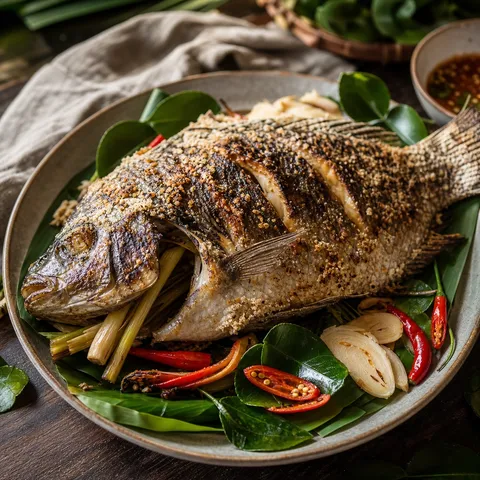
 Pla Pao
A whole salt-crusted fish stuffed with lemongrass and grilled until the skin is crackling and the flesh is silky.
 Thai Lens Verified Images are for illustrative purposes only, may be inaccurate, and do not guarantee the presence or absence of specific ingredients.
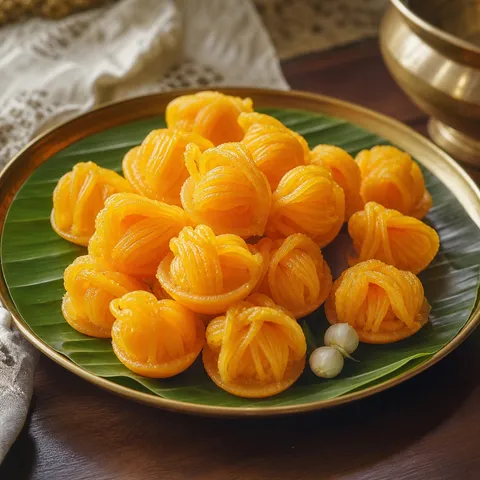
 Thong Yip
Petite golden flowers pressed from egg yolk and sugar, simmered in jasmine-scented syrup until set — a centuries-old Thai royal confection as beautiful as it is sweet.
 Thai Lens Verified Images are for illustrative purposes only, may be inaccurate, and do not guarantee the presence or absence of specific ingredients.
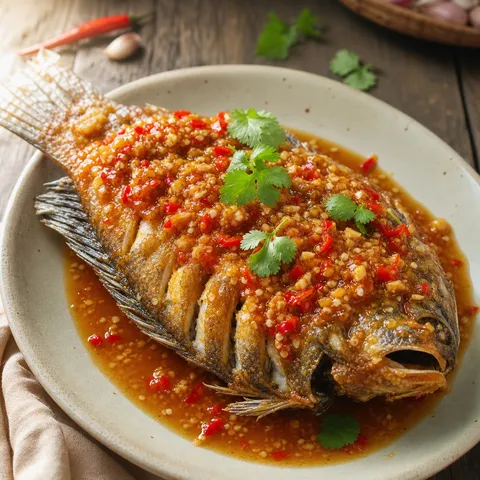
 Pla Rad Prik
Whole fish fried to a shatteringly crisp shell, then blanketed in a sticky, sweet-hot chili-tamarind sauce with garlic and basil — dramatic, punchy, and made for sharing.