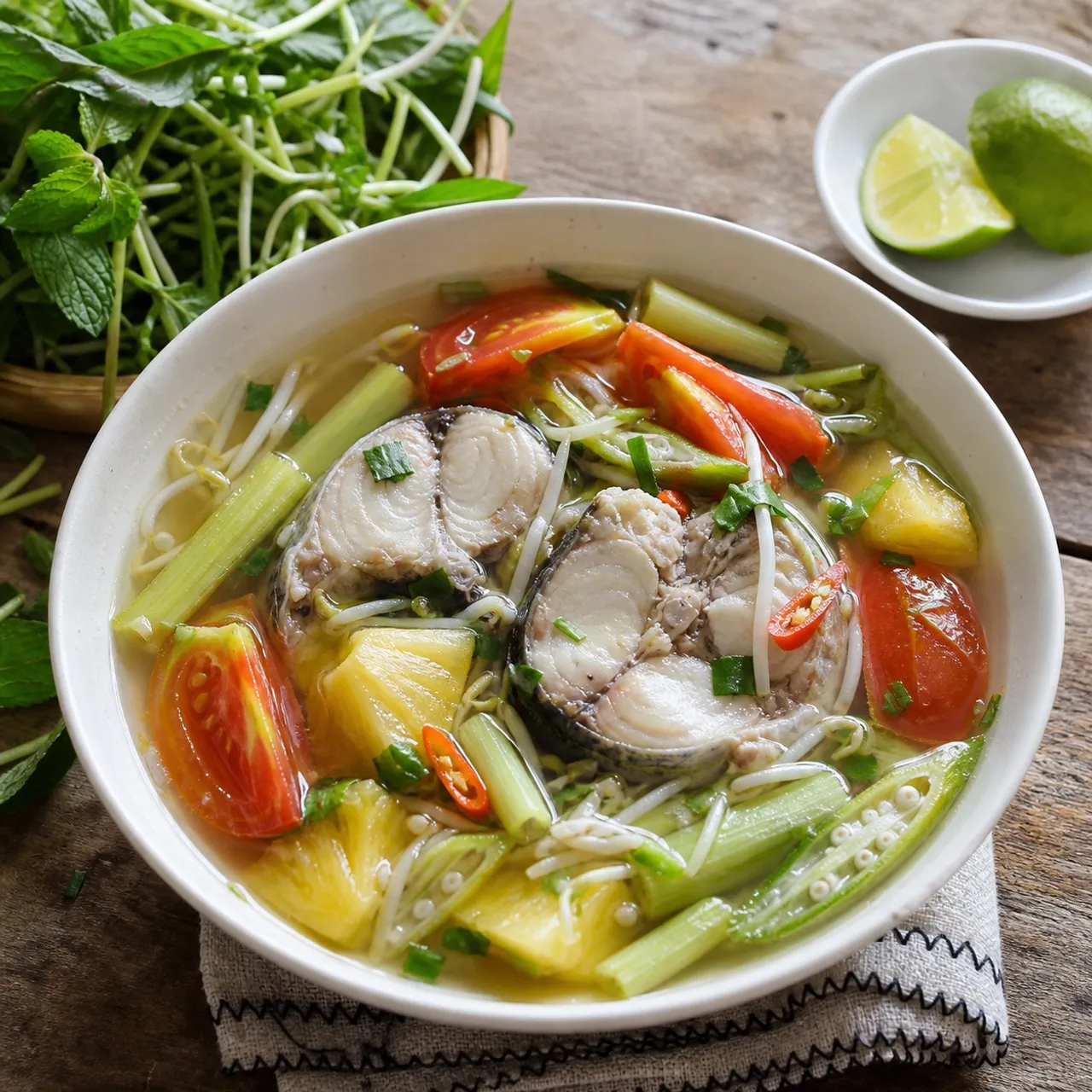
 Vietnamese Images are for illustrative purposes only, may be inaccurate, and do not guarantee the presence or absence of specific ingredients.
 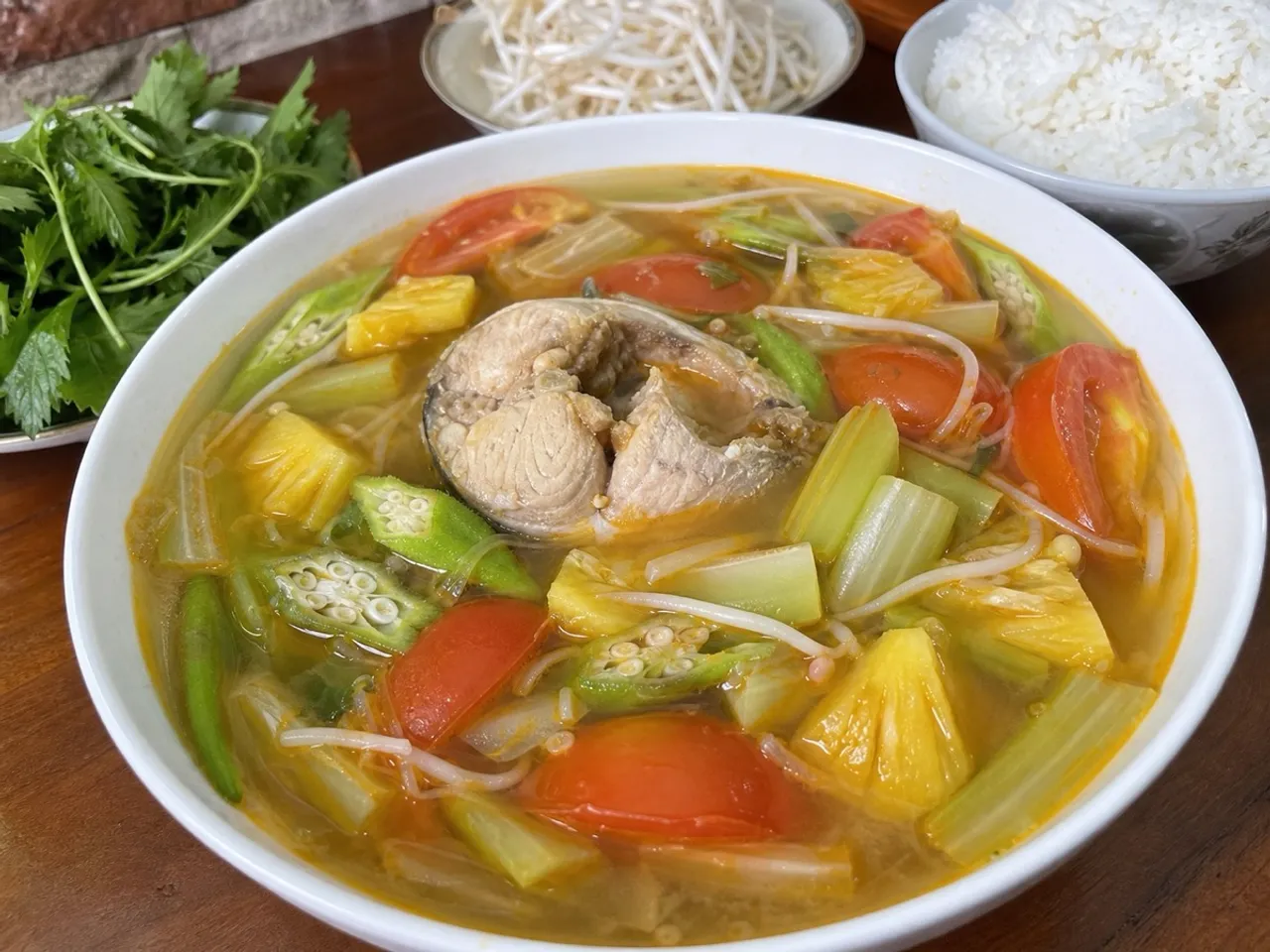 Serving Images are for illustrative purposes only, may be inaccurate, and do not guarantee the presence or absence of specific ingredients.
 Canh Chua (Vietnamese Sour Soup)
A tamarind-flavored sour soup often made with fish from the Mekong Delta.
Contains common allergens
In the app, Listahan checks these against your household automatically.
Good to know
- One-pot
Matched from this dish's own ingredients and timing. Browse more: one-pot dinners
Instructions
6 steps- 1
Prepare Tamarind: Soak tamarind paste in 1/2 cup of hot water. Mash with a spoon, then strain through a fine mesh sieve to extract the sour liquid, discarding the seeds and fibers.
- 2
Cook Fish: In a medium pot, bring 4 cups of water to a boil. Gently add the fish steaks. Simmer for 5 minutes until the fish is just cooked through. Remove the fish carefully and set aside to prevent overcooking.
- 3
Build the Broth: Add the tamarind liquid, pineapple chunks, and tomatoes to the simmering fish broth. Cook for 5 minutes until the pineapple releases its sweetness.
- 4
Season: Season the broth heavily with fish sauce and sugar. The broth must strike a perfect balance between vividly sour and pleasantly sweet.
- 5
Add Vegetables: Stir in the elephant ear stalks and okra. Simmer for just 2 minutes so they retain their crunch.
- 6
Finish and Serve: Return the fish to the pot to warm through. Turn off the heat, stir in the bean sprouts, and generously garnish with chopped rice paddy herb and sawtooth coriander. Serve immediately with steamed rice.
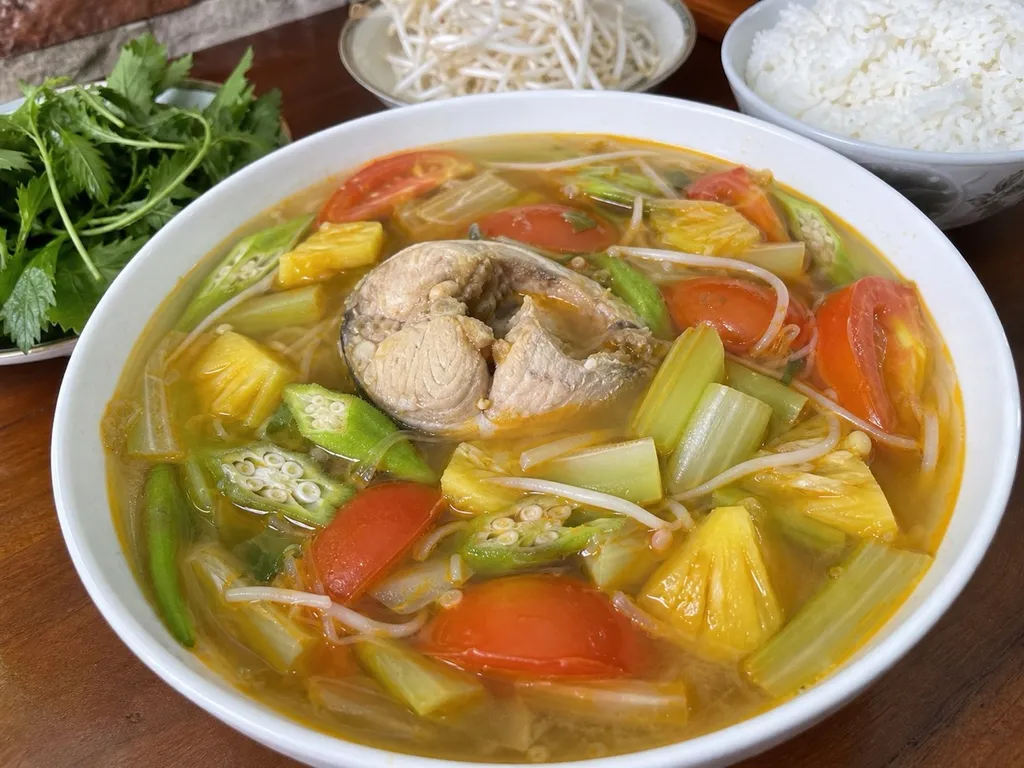 Images are for illustrative purposes only, may be inaccurate, and do not guarantee the presence or absence of specific ingredients.
 Listahan Family Score™
63/100
Works for many families
Score reflects how well this recipe fits a typical busy household. In the app, your Family Score is personalized to your household's allergens, kids, and pantry.
Nutrition
per serving250
Calories
35 g
Protein
15 g
Carbs
6 g
Fat
Estimated per serving. Actual values depend on the brands and portions you use.
Listahan cooking guide
Chef notes & practical guide
Technique notes, ingredient swaps, serve-alongside ideas, storage guidance, and equipment for this recipe.
Cultural context
Canh Chua is a defining soup of southern Vietnam, born in the Mekong Delta where tamarind grows wild and catfish swim in the flooded paddies. The soup reflects the delta's abundance: sour tamarind, sweet pineapple, and crunchy bac ha all come together in a broth that balances four flavors simultaneously. It is eaten daily across southern Vietnamese households, typically alongside a braised fish dish and steamed rice.
Listahan note
This version leans on tamarind paste for a sharp, consistent sourness and lets the pineapple provide natural sweetness so you do not need much added sugar. The fish goes in last to keep it tender rather than falling apart into the broth.
Technique cues
- Build the broth in stages: dissolve tamarind in hot water first, taste it, then add fish sauce and sugar incrementally — the sweet-sour ratio is the soul of the dish and cannot be fixed at the end once the fish is in.
- Add fish steaks only when the broth is fully seasoned and simmering, not boiling — aggressive heat breaks the delicate flesh into flakes that cloud the broth and lose their texture within minutes.
- Bac ha (elephant ear stalks) and bean sprouts go in with the heat off or just before serving; they soften quickly and should retain a faint crunch to contrast the silky fish and soft pineapple.
Kitchen flow
- Parallel prep
- While the broth base simmers, prepare all vegetables and rinse the fish. The active cooking window once broth is ready is under 10 minutes.
- Make-ahead
- Make the tamarind broth with pineapple and tomatoes up to a day ahead and refrigerate; add fish, bac ha, okra, and bean sprouts only when reheating to serve.
- Leftover move
- Leftover soup without fish reheats beautifully; strain out the cooked fish, flake it onto steamed rice as a side, and reheat the broth with fresh vegetables.
- Cleanup rhythm
- One pot throughout; rinse the strainer used for tamarind immediately as the pulp dries and sticks fast.
Ingredient brief
Role, handling, and swap guidance for each key ingredient.
tamarind paste or pulp
souring agent and flavor foundation
Purpose: Tamarind provides the deep, fruity sourness that defines canh chua and cannot be replicated by vinegar or lime alone.
Handling: Dissolve tamarind pulp in 1/4 cup hot water, press through a sieve to remove fibers and seeds before adding to the pot; paste dissolves directly.
Adaptation: Use 3 tbsp fresh lime juice plus 1 tsp sugar as an emergency substitute, though the flavor will be lighter and less complex.
white fish steaks (catfish or tilapia)
main protein
Purpose: Catfish is the traditional choice — its firm, slightly fatty flesh holds up to simmering in an acidic broth without dissolving.
Handling: Pat steaks dry and optionally season with a pinch of salt 10 minutes before cooking to firm the flesh slightly.
Adaptation: Salmon steaks or head-on shrimp work well; tofu makes the dish fully vegan if fish sauce is also replaced.
1/2 pineapple, cut into chunks
natural sweetener and texture contrast
Purpose: Pineapple provides sweetness and a slight acidity that rounds out the tamarind, while its fibrous chunks stay firm throughout cooking.
Handling: Cut into 1-inch chunks; no need to core them for soup — the core softens and adds body.
Adaptation: Canned pineapple in juice (not syrup) works; green mango chunks give a more tart, traditional delta-style result.
fish sauce
primary salt and umami
Purpose: Fish sauce provides depth and umami that plain salt cannot — it is the backbone of seasoning in the broth.
Handling: Add in stages and taste; the pineapple and tamarind both contribute acidity that amplifies saltiness.
Adaptation: Soy sauce plus a small strip of kombu achieves umami depth for a fish-free version, though the flavor profile shifts noticeably.
rice paddy herb (ngo om) and sawtooth coriander (ngo gai)
finishing herbs and fragrance
Purpose: These two herbs are inseparable from canh chua — ngo om adds a citrusy, cumin-like note and ngo gai a sharp coriander punch that bloom in the hot broth.
Handling: Tear or roughly chop and add only to individual bowls just before eating, never into the pot, so their volatile fragrance survives.
Adaptation: A mix of fresh cilantro and a little Thai basil approximates the effect; regular coriander and a few kaffir lime leaves also work.
Technique notes
- The classic restaurant test for canh chua is that the first spoonful should hit sour, sweet, savory, and a faint funk from the fish sauce in sequence — if any one note dominates, adjust before adding the fish.
- Annatto oil or a few drops of natural color are sometimes added to deepen the orange tone of the broth, a visual cue that signals the pineapple-tomato sweetness to come.
- If catfish is unavailable whole, use skin-on fillets and add them cut into large 3-inch pieces — skinless fillets will fall apart in 4 minutes of simmering and should be poached off heat.
Ingredient swaps
- Gluten-free direction
- Naturally gluten-free as written; verify that the fish sauce brand contains no added wheat (most do not, but some cheaper brands do).
- Vegan direction
- Replace fish with firm tofu and oyster mushrooms, swap fish sauce for soy sauce plus a pinch of nori flakes, and add a teaspoon of white miso for depth.
- Bac ha substitute
- If elephant ear stalks are unavailable, use celery ribs cut on the bias — they add a similar crunch and mild flavor without going mushy.
Serve alongside
- Ca Kho To (caramelized clay pot fish) for a classic southern Vietnamese pairing
- steamed jasmine rice to absorb the sour broth
- simple stir-fried morning glory with garlic
- iced jasmine tea
- light lager such as Saigon or Tiger beer
Serving suggestions only — check pairings for your household's allergens.
Storage & reheating
- Refrigerate broth (without fish) in a sealed container for up to 3 days; cooked fish deteriorates quickly and is best eaten the day of.
- Reheat broth gently over medium-low; a rolling boil will make it go cloudy and muddy the delicate flavors.
- Freezing the broth base (no fish, no fresh veg) works well for up to 2 months — it functions as a flavor-packed soup starter.
Equipment
- 4-quart or larger pot
- fine-mesh sieve for straining tamarind pulp
- sharp knife and cutting board for fish and pineapple
Make this household-aware
Listahan Pro checks this recipe against your household's allergens, finds pantry-aware swaps, builds the shopping list, and helps you plan the week around it.
Plan it in Listahan
Add Canh Chua (Vietnamese Sour Soup) to your week, check it against your household's allergens, and build the shopping list automatically.
More Vietnamese recipes
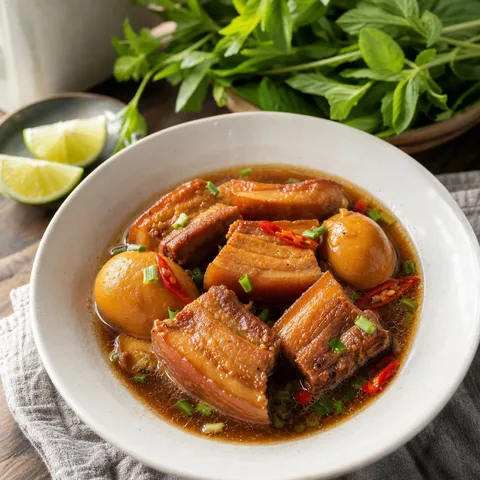 Vietnamese Lens Verified Images are for illustrative purposes only, may be inaccurate, and do not guarantee the presence or absence of specific ingredients.
 Thịt Kho Tàu (Caramelized Pork and Eggs)
Meltingly tender pork belly and hard-boiled eggs braised in a rich, sweet, and savory coconut juice caramel, perfect over steamed rice.
 Vietnamese Lens Verified Images are for illustrative purposes only, may be inaccurate, and do not guarantee the presence or absence of specific ingredients.
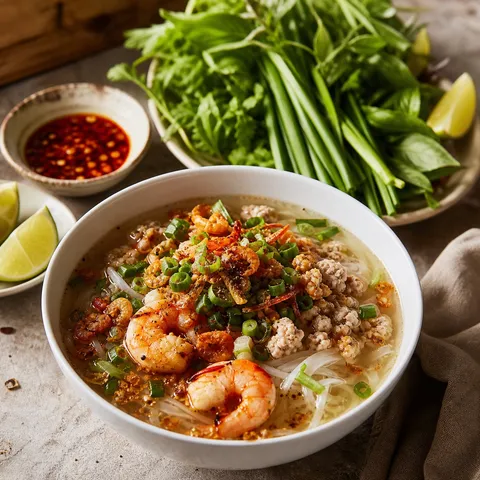
 Hủ Tiếu (Pork and Seafood Noodle Soup)
A Vietnamese pork-bone broth noodle soup loaded with ground pork, shrimp, and dried shrimp over chewy tapioca noodles, finished with garlic chives and fried garlic.
 Vietnamese Lens Verified Images are for illustrative purposes only, may be inaccurate, and do not guarantee the presence or absence of specific ingredients.
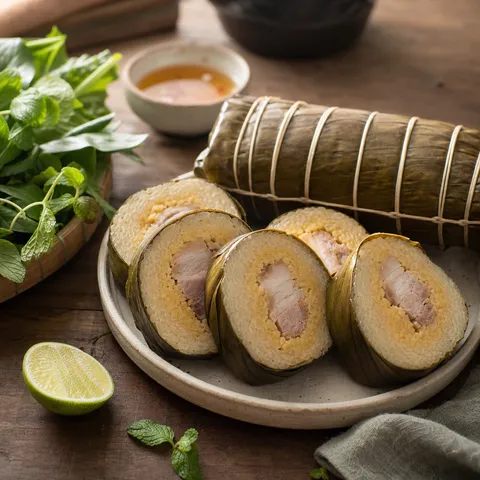
 Bánh Tét (Cylindrical Sticky Rice Cake)
The Southern equivalent of Bánh Chưng, rolled into a cylinder.