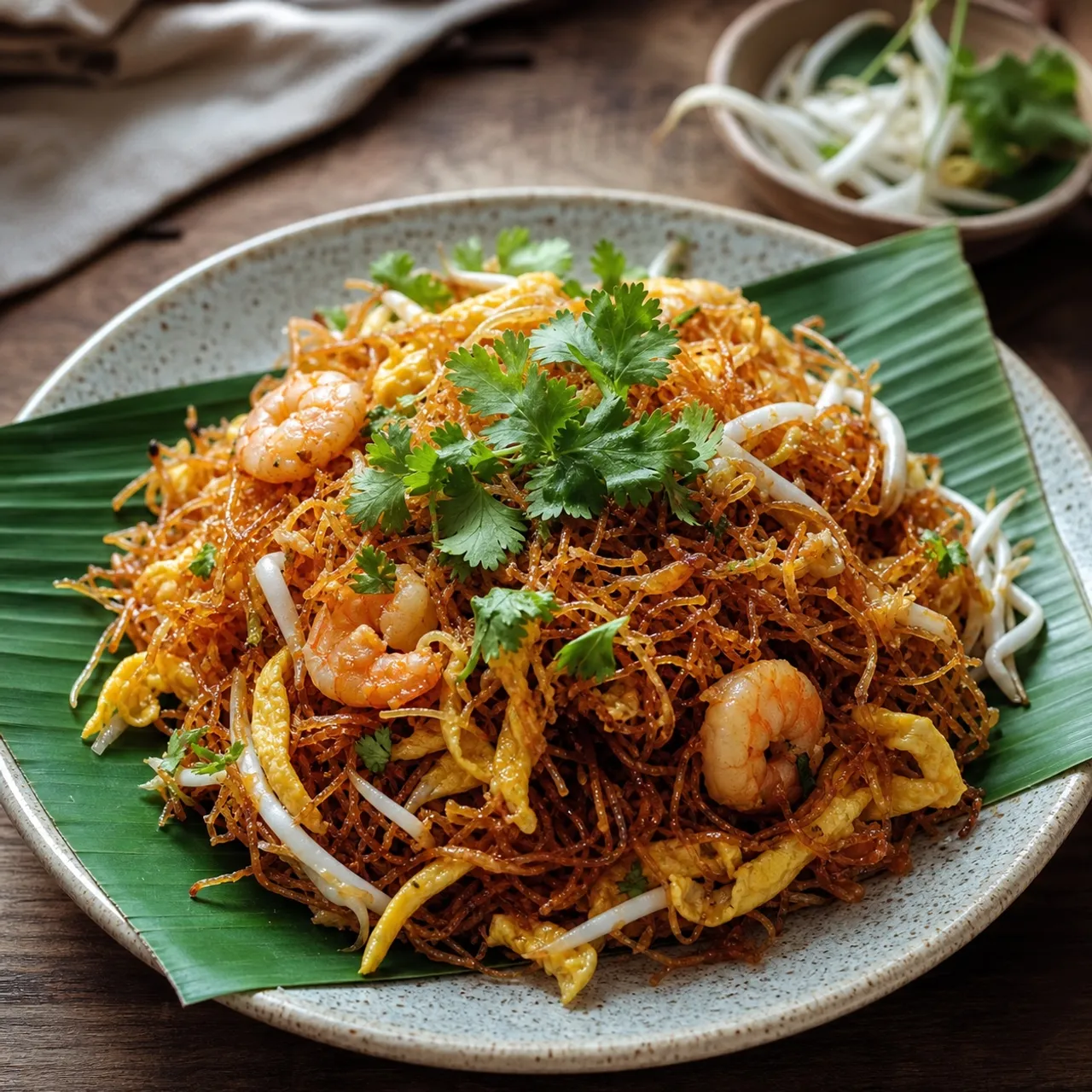
 Thai Images are for illustrative purposes only, may be inaccurate, and do not guarantee the presence or absence of specific ingredients.
 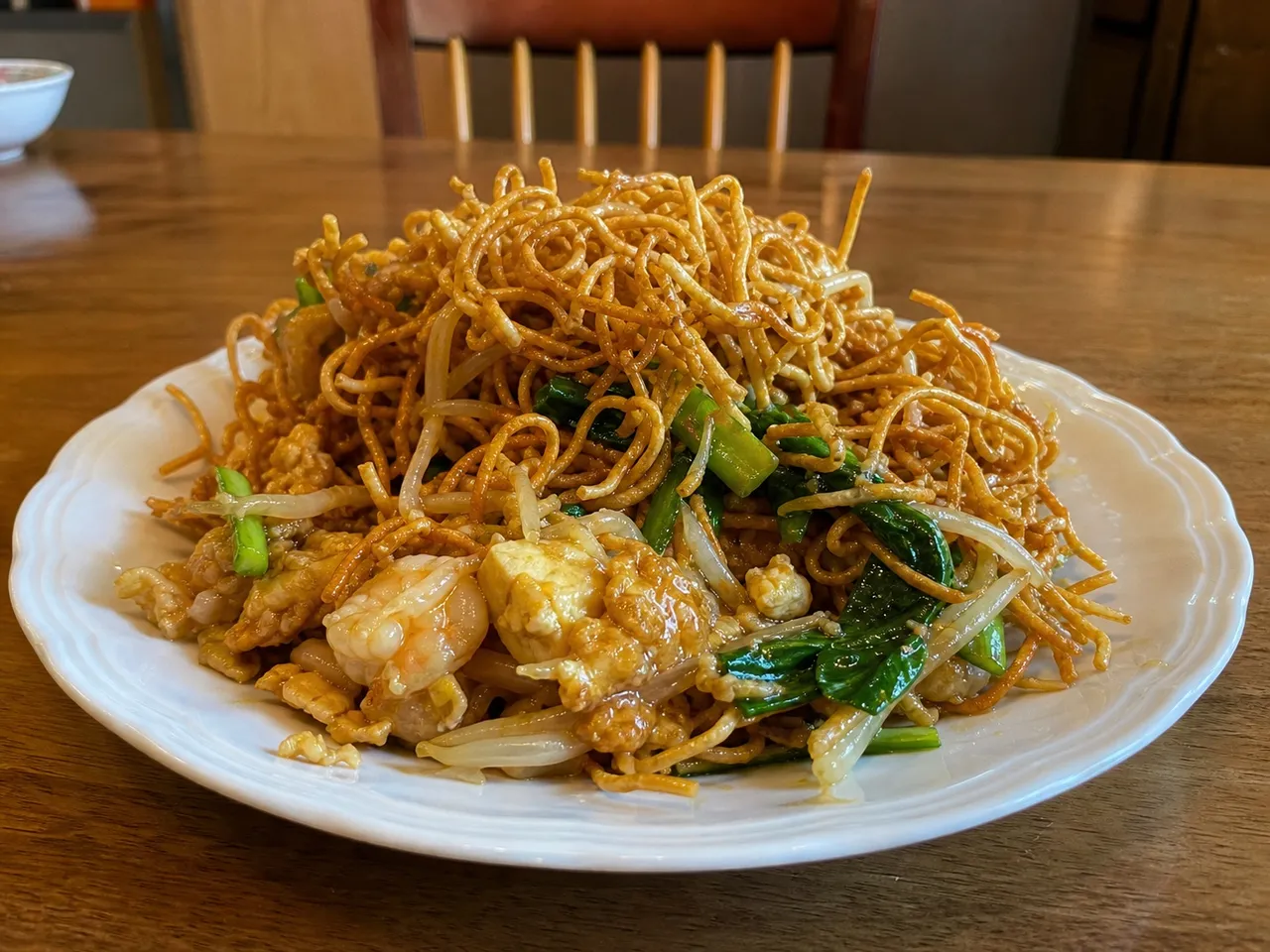 Serving Images are for illustrative purposes only, may be inaccurate, and do not guarantee the presence or absence of specific ingredients.
 Mee Krob
Hair-thin rice vermicelli fried until airy and shatteringly crisp, then tossed in a tangy tamarind-orange glaze — a festive Thai dish with a unique sweet-sour crunch.
Contains common allergens
In the app, Listahan checks these against your household automatically.
Good to know
- Crispy
Matched from this dish's own ingredients and timing. Browse more: crispy recipes
Instructions
7 steps- 1
Heat at least 2 inches of oil in a wok to 350F. Break the dry rice vermicelli into clumps and fry a small handful at a time; it will puff and turn crisp and white within seconds, so pull it out immediately with a spider and drain on paper towels.
- 2
Fry the tofu cubes in the same oil until golden and crisp, then drain. Pour off all but 2 tablespoons of oil from the wok.
- 3
Drizzle the beaten egg into the hot wok in a thin stream to form crisp lacy shreds, then remove and set aside.
- 4
In the same wok, stir-fry the garlic briefly, then add the shrimp and cook just until pink.
- 5
Add the palm sugar, tamarind paste, fish sauce, and orange juice to the wok and simmer until the sauce reduces to a thick, glossy, sticky syrup that coats the back of a spoon.
- 6
Working quickly off the heat, add the crispy noodles and fried tofu to the sauce and toss gently but thoroughly so every shard is coated without crushing the noodles.
- 7
Pile onto a platter and top with the crispy egg shreds, bean sprouts, garlic chives, and scallion, serving immediately while the noodles are still shatteringly crisp.
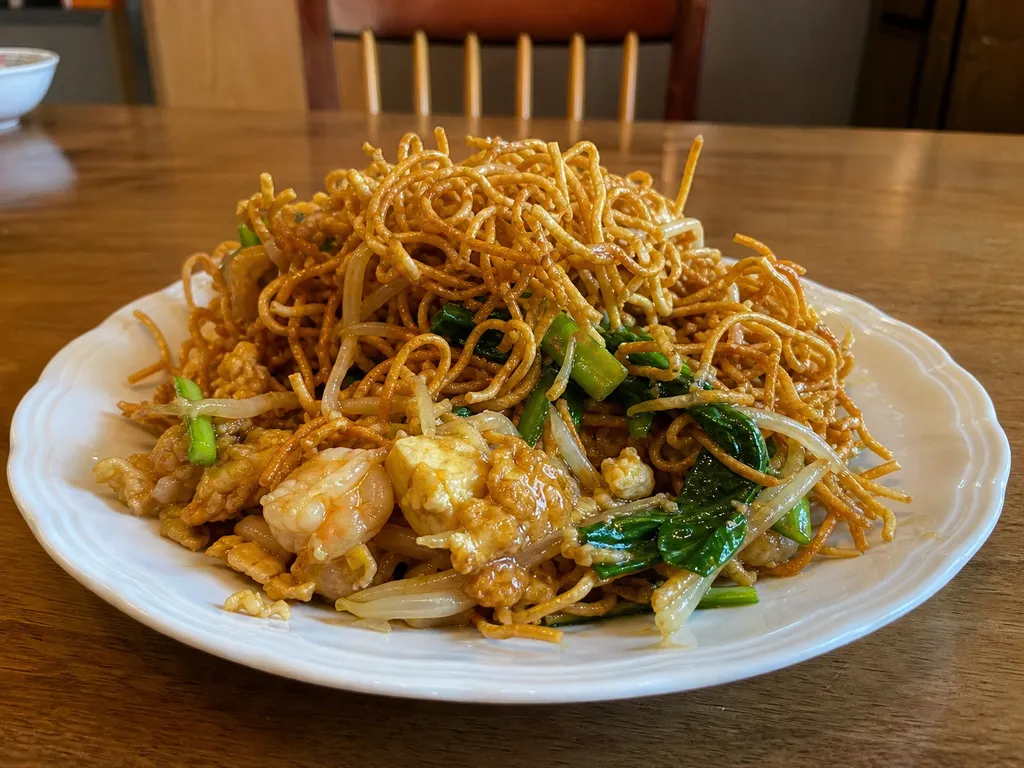 Images are for illustrative purposes only, may be inaccurate, and do not guarantee the presence or absence of specific ingredients.
 Listahan Family Score™
55/100
Works for many families
Score reflects how well this recipe fits a typical busy household. In the app, your Family Score is personalized to your household's allergens, kids, and pantry.
Nutrition
per serving290
Calories
19 g
Protein
52 g
Carbs
1 g
Fat
Estimated per serving. Actual values depend on the brands and portions you use.
Listahan cooking guide
Chef notes & practical guide
Technique notes, ingredient swaps, serve-alongside ideas, storage guidance, and equipment for this recipe.
Cultural context
Mee krob is an old Central Thai banquet dish of crisp-fried rice vermicelli tossed in a sweet-and-sour tamarind glaze. It was once a special-occasion centerpiece, prized for the contrast between shattering noodles and a sticky, citrus-bright sauce. The balance of sweet, sour, and salty in a single crackling tangle is what marks it as a piece of refined Thai cooking rather than everyday street food.
Listahan note
This version chases the textural drama: noodles fried until they puff and stay crisp, then coated in just enough glaze to flavor without going soggy. It is meant to be eaten soon after tossing while the crunch is at its peak.
Technique cues
- Fry the dry vermicelli in small handfuls in hot oil; they puff and turn pale gold in seconds, so pull them the instant they stop sizzling to avoid scorching.
- Reduce the tamarind-sugar glaze until it threads off the spoon before tossing; a syrup that is too thin soaks in and softens the noodles.
- Toss the noodles in the warm glaze quickly and lightly so they are coated but not drenched, then serve right away while they still shatter.
Kitchen flow
- Parallel prep
- Make the tamarind glaze and fry the tofu first, then fry the noodles last so the tossing happens with everything ready and the crunch fresh.
- Make-ahead
- The fried noodles and the reduced glaze can each be made a few hours ahead and stored separately; combine only just before serving.
- Leftover move
- Once tossed, mee krob softens fast; crumble any leftovers over a fresh salad as a sweet-sour crunch topping rather than reheating.
- Cleanup rhythm
- Let the frying oil cool fully, strain it through a sieve for reuse, and wipe the sticky glaze pan while it is still warm before the sugar sets hard.
Ingredient brief
Role, handling, and swap guidance for each key ingredient.
rice vermicelli
the crunch
Purpose: Dry thin rice noodles puff dramatically in hot oil into the airy, brittle base of the dish.
Handling: Keep them dry and fry in small batches; never soak them first.
Adaptation: There is no real substitute for the puff, but bean thread (glass) noodles fry to a similar crisp.
tamarind paste
sour anchor
Purpose: Its deep fruity tartness is the backbone of the sweet-sour glaze.
Handling: Loosen concentrate with a little warm water and strain out any fibers.
Adaptation: Equal parts lime juice and a touch of rice vinegar approximate the sourness if tamarind is unavailable.
palm sugar
caramel sweetness
Purpose: It gives the glaze a rounded molasses depth that white sugar alone cannot match.
Handling: Shave or chop it so it dissolves smoothly as the glaze reduces.
Adaptation: Light brown sugar is the closest everyday stand-in.
fish sauce
salty umami
Purpose: It balances the sweet and sour with savory depth so the glaze is not just candy.
Handling: Add it to the glaze near the end and taste as you go.
Adaptation: Light soy sauce keeps it pescatarian-free; use a bit more to match the saltiness.
firm tofu
savory bite
Purpose: Crisp-fried cubes add protein and a chewy contrast to the brittle noodles.
Handling: Press, cube, and fry until golden before the noodles go in.
Adaptation: Small peeled shrimp or shredded cooked chicken are traditional alternatives.
orange or tangerine zest
perfume
Purpose: A whisper of citrus oil lifts the heavy glaze and gives mee krob its signature fragrance.
Handling: Grate fine and stir in at the very end off the heat.
Adaptation: Lime zest gives a sharper but still bright citrus note.
Technique notes
- Test your oil with a single strand first; it should puff and rise within a couple of seconds, which tells you it is hot enough for clean, greaseless noodles.
- Reduce the glaze to a sticky, glossy thread and let it cool slightly before tossing so it clings to the noodles instead of pooling at the bottom.
- Add the most delicate garnishes like fresh bean sprouts and chives raw at the table so they keep their snap against the candied noodles.
Ingredient swaps
- Vegetarian direction
- Use light soy sauce instead of fish sauce and keep tofu as the protein for a fully meat-free, seafood-free plate.
- Lower-sodium direction
- Cut the fish sauce in half and lean on extra tamarind and zest so the glaze still reads bright without the salt.
- Gluten-free direction
- Confirm your fish sauce and sugar are gluten-free; the rice vermicelli base is already gluten-free, so the dish needs no flour swaps.
Serve alongside
- a plate of raw bean sprouts and Chinese chives
- green papaya salad (som tam)
- sliced cucumber with chili-lime salt
- iced jasmine tea
- fresh young coconut water
- lime soda over crushed ice
Serving suggestions only — check pairings for your household's allergens.
Storage & reheating
- Store the fried noodles and the glaze separately in airtight containers; the noodles keep crisp at room temperature for a day and the glaze refrigerates for up to a week. Do not refrigerate the tossed dish, as it goes soft quickly. Re-crisp leftover plain fried noodles in a low oven for a few minutes before tossing fresh.
Equipment
- a deep wok or heavy pot for frying the noodles
- a spider skimmer to lift the puffed noodles fast
- a wide bowl for tossing without crushing the noodles
- a fine grater for the citrus zest
Make this household-aware
Listahan Pro checks this recipe against your household's allergens, finds pantry-aware swaps, builds the shopping list, and helps you plan the week around it.
Plan it in Listahan
Add Mee Krob to your week, check it against your household's allergens, and build the shopping list automatically.
More Thai recipes
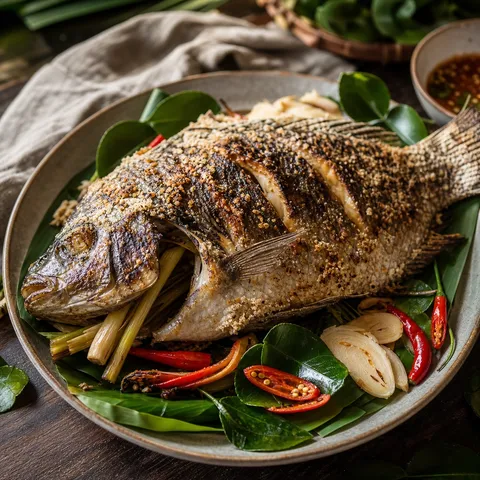 Thai Lens Verified Images are for illustrative purposes only, may be inaccurate, and do not guarantee the presence or absence of specific ingredients.
 Pla Pao
A whole salt-crusted fish stuffed with lemongrass and grilled until the skin is crackling and the flesh is silky.
 Thai Lens Verified Images are for illustrative purposes only, may be inaccurate, and do not guarantee the presence or absence of specific ingredients.
 Thong Yip
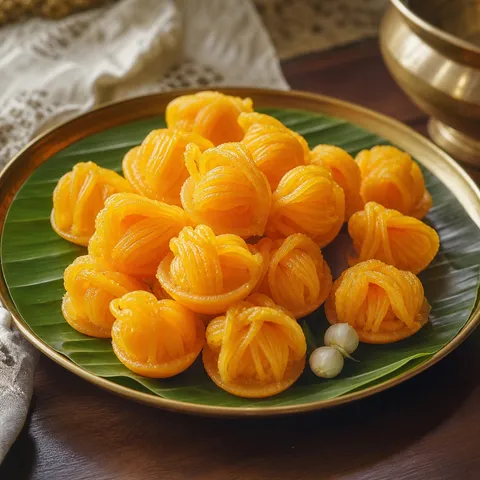
Petite golden flowers pressed from egg yolk and sugar, simmered in jasmine-scented syrup until set — a centuries-old Thai royal confection as beautiful as it is sweet.
 Thai Lens Verified Images are for illustrative purposes only, may be inaccurate, and do not guarantee the presence or absence of specific ingredients.
 Pla Rad Prik
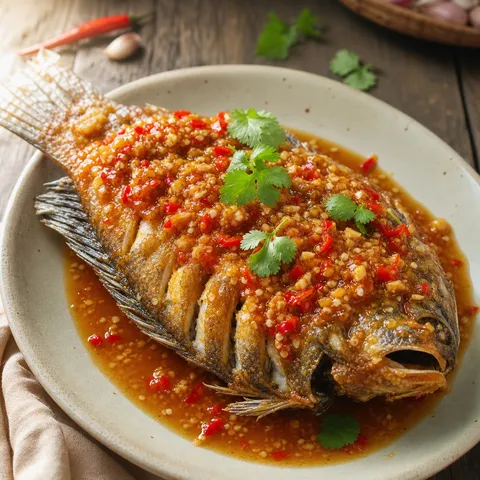
Whole fish fried to a shatteringly crisp shell, then blanketed in a sticky, sweet-hot chili-tamarind sauce with garlic and basil — dramatic, punchy, and made for sharing.