 Food Lens Images are for illustrative purposes only, may be inaccurate, and do not guarantee the presence or absence of specific ingredients.
 Food Lens · Recipe ingredients
Amchur
Sharply sour and tangy with an underlying tropical mango fruitiness. Less harsh than tamarind, more complex than plain citric acid, with a slight astringency that makes it particularly effective at cutting richness.
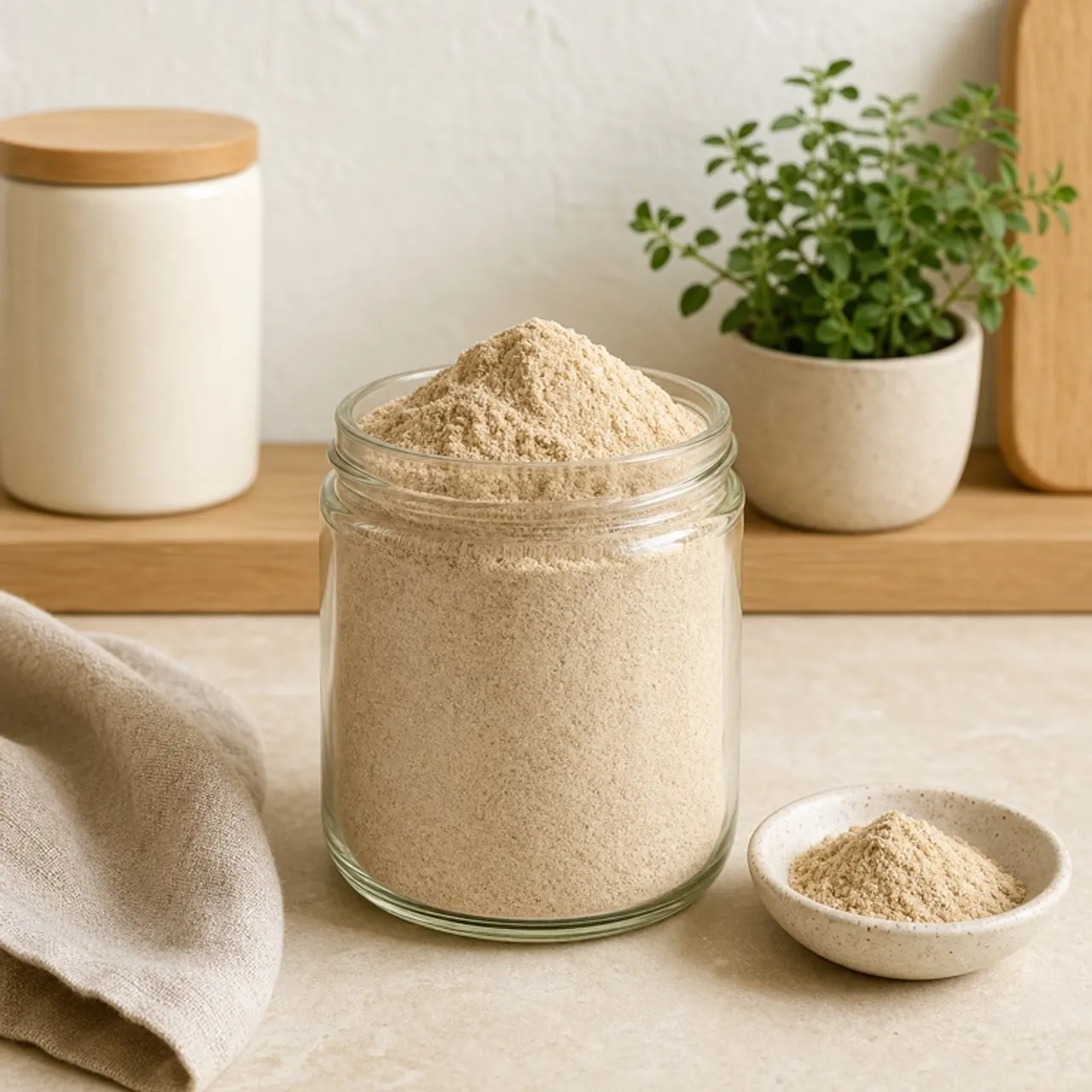
Lens VerifiedAmchur—also spelled amchoor—is a pale tan powder made from unripe green mangoes that have been sliced, sun-dried, and ground. It functions as a souring agent in Indian cooking, delivering a fruity tartness without adding moisture to a dish. Unlike lemon juice, amchur's dry form makes it ideal for spice rubs, dry-cooked dishes, and doughs where liquid would alter the texture.
Where it comes from
Originating in northern India, amchur was developed as a technique for preserving the tartness of unripe mangoes through the dry summer months when the fruit would no longer be available.
Varieties — Most commonly found as a fine powder; occasionally available as dried slices (khatai) that can be added whole and removed before serving. Color ranges from cream to light tan—very dark powder may be old.
Amchur is integral to chaat culture—the beloved category of Indian street food built on the interplay of sweet, sour, spicy, and savory. It is what gives dishes like aloo chaat and pani puri their characteristic tangy lift.
In a modern kitchen — Creative cooks outside India have begun using amchur as a finishing powder on roasted vegetables and grilled meats, drawn to its fruity-sour complexity that differs from citrus. A pinch can sharpen fruit salads or brighten a yogurt dressing.
Buying it
Choose a fine, free-flowing powder with a light tan to beige color and a distinctly fruity-sour aroma. Avoid powder that has clumped or darkened significantly, as these are signs of age or moisture exposure.
Storing it
Store amchur powder in a sealed container away from heat, light, and moisture, like other ground spices. It won't spoil unsafely but its tart, fruity flavor fades with time — a faded smell means it's due for replacing.
Keeps about 1 year in the pantry.
Out of amchur? Good swaps
General cooking guidance — always check the labels on the products you use. Listahan’s allergen checks run automatically when you plan a recipe in the app. Not medical advice.
Recipes that use amchur
Common questions about amchur
Is amchur vegan?
Amchur is generally plant-based and suitable for a vegan diet, but brands differ — confirm on the label.
What can I use instead of amchur?
Good swaps include , , , . Each behaves a little differently — see the swaps above for notes, and always check labels for allergens.
How do I store amchur?
Store amchur powder in a sealed container away from heat, light, and moisture, like other ground spices. It won't spoil unsafely but its tart, fruity flavor fades with time — a faded smell means it's due for replacing. It keeps about 1 year in the pantry.
More recipe ingredients
See all


Make amchur about your kitchen — with Listahan Pro
Everything above is free, forever. Pro adds the Household Lens — the same food, seen for your family:
-
Checked for each member
Flags amchur per person against your household's allergies and school rules — not just a generic "contains" tag.
-
Pantry-aware
Knows whether you already have it, what is running low, and the best swap from what is in your kitchen tonight.
-
What it costs near you
A real price from the Presyo community index, so you can plan the budget — not guess.
-
Your household memory
Who likes it, plus your own private notes — brand, where you keep it, who skips it.
Allergen safety is always free — Pro adds the automation, never the safety.
Cook with amchur — safely
Plan a recipe in Listahan and the household allergen check runs automatically — every plan, every swap, every lunchbox. Safety is never paywalled.