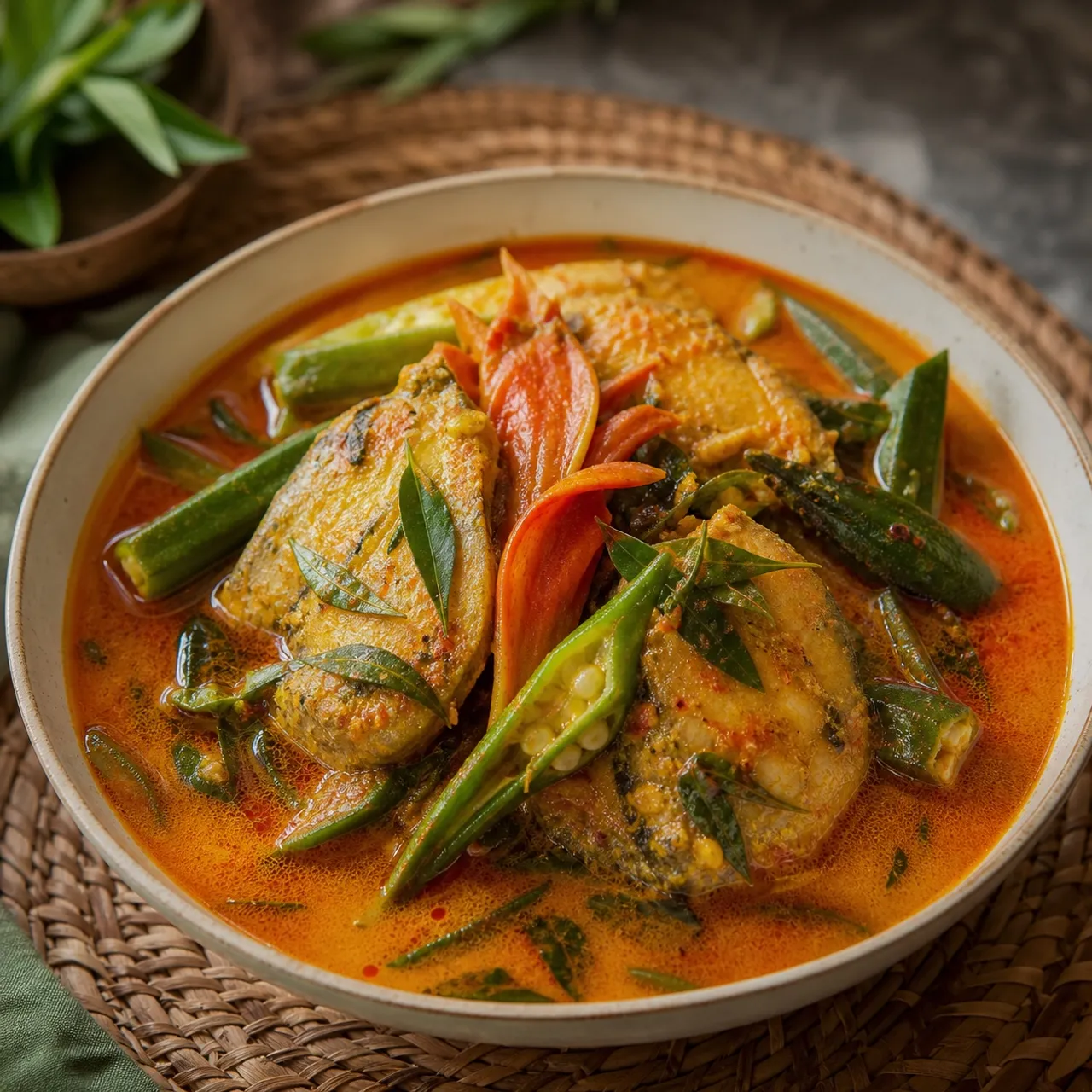
 Indonesian & Malaysian Images are for illustrative purposes only, may be inaccurate, and do not guarantee the presence or absence of specific ingredients.
 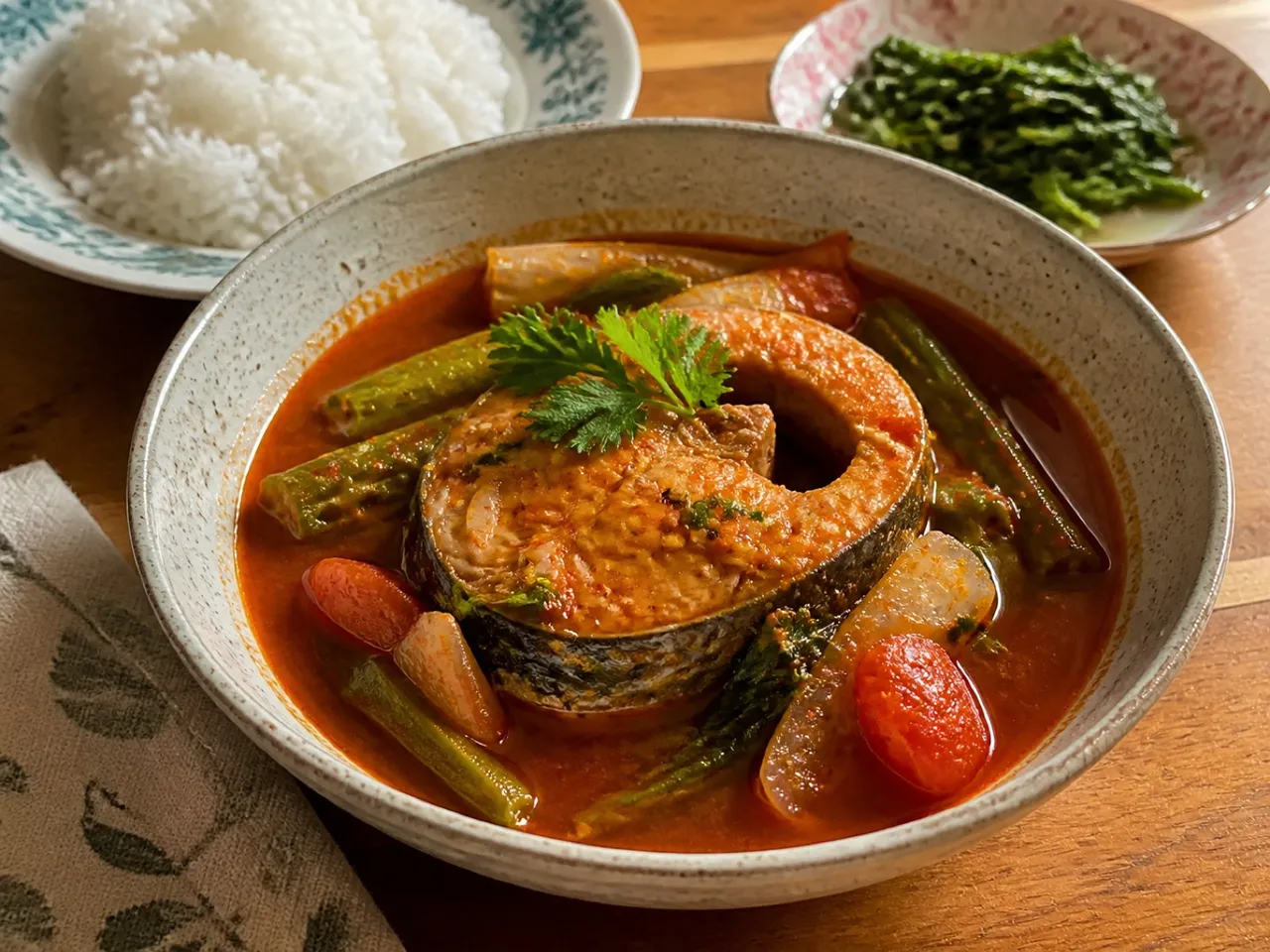 Serving Images are for illustrative purposes only, may be inaccurate, and do not guarantee the presence or absence of specific ingredients.
 Asam Pedas
A punchy tamarind fish stew with bird's eye chili and torch ginger flower — sour, spicy, and briny in equal measure, best eaten with lots of rice.
Contains common allergens
In the app, Listahan checks these against your household automatically.
Instructions
6 steps- 1
Blend dried chilies, shallots, garlic, belacan (shrimp paste), and lemongrass into a fine, fiery red paste.
- 2
Heat oil in a wok and fry the spice paste over low heat until the oil separates and it smells deeply fragrant.
- 3
Pour in the tamarind juice and add the ginger torch flower and laksa leaves, bringing the broth to a rolling boil.
- 4
Season the broth with salt and a pinch of sugar to balance the intense sourness and heat.
- 5
Gently lower the fish cutlets and whole okra into the bubbling broth.
- 6
Simmer uncovered for 8-10 minutes until the fish is flaky and cooked through. Serve hot with white rice.
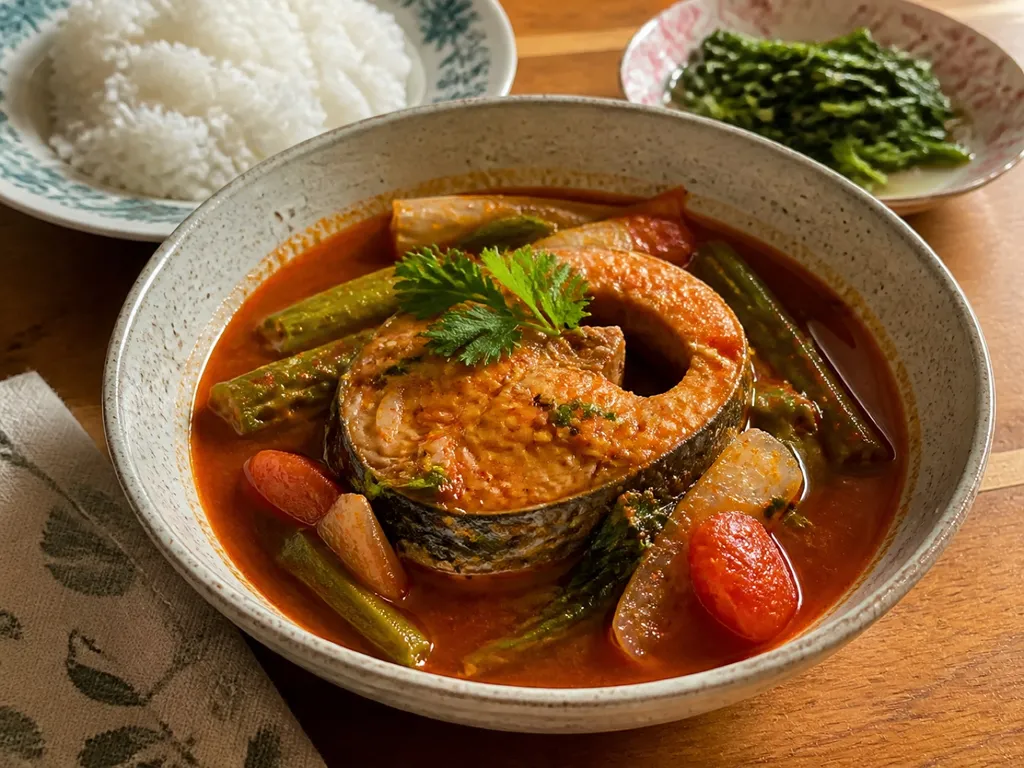 Images are for illustrative purposes only, may be inaccurate, and do not guarantee the presence or absence of specific ingredients.
 Listahan Family Score™
58/100
Works for many families
Score reflects how well this recipe fits a typical busy household. In the app, your Family Score is personalized to your household's allergens, kids, and pantry.
Nutrition
per serving360
Calories
32 g
Protein
5 g
Carbs
23 g
Fat
Estimated per serving. Actual values depend on the brands and portions you use.
Listahan cooking guide
Chef notes & practical guide
Technique notes, ingredient swaps, serve-alongside ideas, storage guidance, and equipment for this recipe.
Cultural context
Asam Pedas — literally 'sour and spicy' in Malay — is a tamarind-based fish stew cooked throughout the Malay peninsula and parts of Sumatra, with Johor and Melaka claiming the most celebrated versions. The dish trades the richness of coconut-milk curries for a sharp, acidic broth built from tamarind pulp, dried chilies, and torch ginger flower, making it one of the few Southeast Asian fish stews where the brightness of the souring agent, not fat, is the dominant note. The torch ginger flower (bunga kantan) is not widely available outside Southeast Asia but is part of what makes an authentic Asam Pedas instantly identifiable.
Listahan note
This version uses widely available tamarind paste and substitutes lemongrass for the torch ginger when the flower is unavailable, while keeping the dish's defining sour-heat balance intact.
Technique cues
- Simmer the tamarind broth for 10 minutes before adding the fish — pre-reducing the broth concentrates the sour base so the final dish is deeply flavored rather than thin and watery.
- Add the fish only in the last 8-10 minutes and do not stir aggressively; fish breaks apart in acid-heavy broths and thick fillets need to be left undisturbed to cook evenly.
- Taste the broth for the sour-sweet-spicy balance before adding fish: it should be noticeably sour and mildly spicy at the broth stage, because the fish will temper it as it cooks.
Kitchen flow
- Parallel prep
- Soak tamarind and dried chilies simultaneously while blending the spice paste, so all three are ready when the pot hits the stove.
- Make-ahead
- The tamarind broth (without fish) can be made up to 2 days ahead and refrigerated; add fresh fish only when reheating to serve.
- Leftover move
- Leftover broth without fish makes an excellent base for laksa or a quick sour soup with tofu and vermicelli noodles.
- Cleanup rhythm
- Wipe tamarind stains from the pot immediately while warm; dried tamarind residue requires soaking to remove.
Ingredient brief
Role, handling, and swap guidance for each key ingredient.
firm white fish fillet
main protein
Purpose: A firm fish like Spanish mackerel, stingray, or catfish holds up in the acidic tamarind broth without disintegrating.
Handling: Cut into large pieces (3-4 inches) and pat dry; small cuts will break apart in the broth.
Adaptation: Salmon steaks work well for North American availability and hold their structure in acidic broths; the flavor is richer but pleasant.
tamarind paste
souring agent and broth base
Purpose: Tamarind is the defining flavor of Asam Pedas — its complex, fruity sourness is different from lime or vinegar and cannot be replicated by simpler substitutes.
Handling: Dissolve tamarind paste in warm water to the consistency of thin tomato paste before adding to the pot.
Adaptation: Tamarind concentrate at half the quantity mixed with a teaspoon of lime juice approximates the depth if paste is unavailable.
dried chilies
heat and body
Purpose: Rehydrated dried chilies add moderate, smoky heat and thicken the broth slightly once blended into the spice paste.
Handling: Soak in hot water for 15 minutes, drain, and blend with shallots and garlic into a smooth paste.
Adaptation: Sambal oelek at 2 tablespoons provides comparable heat with less smokiness; reduce to 1 tablespoon for a milder dish.
torch ginger flower (bunga kantan)
floral aromatic
Purpose: The torch ginger flower adds a perfumed, rose-like fragrance that is the signature of Melaka-style Asam Pedas and sets it apart from generic tamarind fish stew.
Handling: Halve the bud and add it to the pot whole during the broth simmer; remove before serving or leave in for visual effect.
Adaptation: Two stalks of lemongrass bruised and added to the broth give citrusy fragrance in place of the floral note.
okra
vegetable texture and natural thickener
Purpose: Okra is a classic Asam Pedas addition; its mucilage naturally thickens the tamarind broth and adds a mild sweetness that balances the acidity.
Handling: Add whole with stem ends trimmed in the last 5 minutes so they stay firm rather than dissolving.
Adaptation: Eggplant cut into wedges replaces okra for those who dislike the slimy texture; it takes 2-3 extra minutes to cook through.
Technique notes
- A tablespoon of palm sugar stirred into the broth near the end rounds out the sharpness of the tamarind without making the dish sweet — it is the counterbalance that separates a finessed Asam Pedas from one that just tastes aggressively sour.
- If the broth tastes too thin, stir in a teaspoon of toasted, ground coriander — it adds body and an earthy note without changing the flavor direction.
- The oil should separate slightly on the surface of the finished dish; if the broth looks fully emulsified, the spice paste was not cooked long enough before adding liquid and the dish will lack depth.
Ingredient swaps
- Gluten-free direction
- The recipe is naturally gluten-free; verify that any store-bought tamarind paste does not contain added wheat starch.
- Lower-heat direction
- Reduce dried chilies by half and replace with a mild red bell pepper in the spice paste for color without heat — suitable for children.
- Allergen-direction swap
- For shellfish allergy, avoid versions that add dried shrimp paste (belacan) to the spice paste and confirm all condiments used are seafood-free.
Serve alongside
- Steamed jasmine rice
- Blanched kangkung (water spinach) with garlic
- Crispy fried tofu cubes
- Iced water with pandan leaves
- Bandung (rose milk drink) to cool the heat
Serving suggestions only — check pairings for your household's allergens.
Storage & reheating
- Refrigerate for up to 2 days; the fish will continue to absorb the tamarind flavor and the broth will deepen.
- Reheat gently over low heat with the lid on; high heat will break the fish apart further and the broth may reduce too much — add a splash of water if needed.
Equipment
- Wide, shallow saucepan or skillet so fish pieces cook evenly without crowding
- Blender for the spice paste
- Ladle with a wide bowl for skimming and serving the broth
Make this household-aware
Listahan Pro checks this recipe against your household's allergens, finds pantry-aware swaps, builds the shopping list, and helps you plan the week around it.
Plan it in Listahan
Add Asam Pedas to your week, check it against your household's allergens, and build the shopping list automatically.
More Indonesian & Malaysian recipes
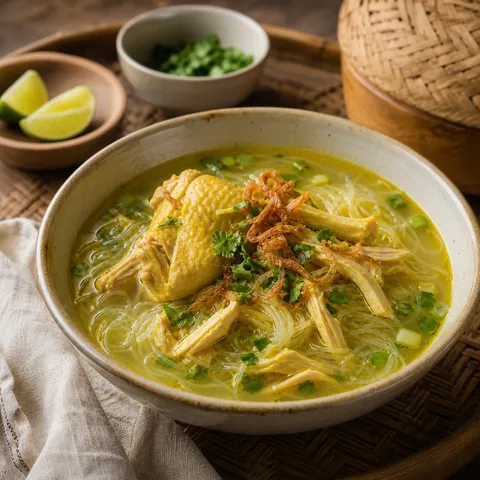 Indonesian & Malaysian Lens Verified Images are for illustrative purposes only, may be inaccurate, and do not guarantee the presence or absence of specific ingredients.
 Soto Ayam
A golden, turmeric-spiced Indonesian chicken soup with glass noodles, crispy shallots, and lime — light, herbal, and deeply comforting.
 Indonesian & Malaysian Lens Verified Images are for illustrative purposes only, may be inaccurate, and do not guarantee the presence or absence of specific ingredients.
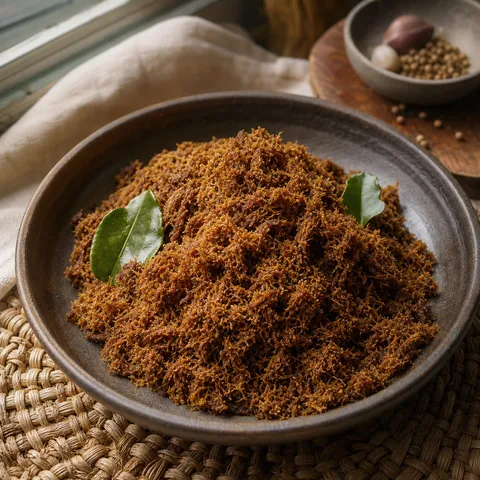
 Beef Serunding
Dry-fried spiced beef floss toasted with coconut and lemongrass until golden and fragrant — a rich, crumbly condiment that transforms plain rice.
 Indonesian & Malaysian Lens Verified Images are for illustrative purposes only, may be inaccurate, and do not guarantee the presence or absence of specific ingredients.
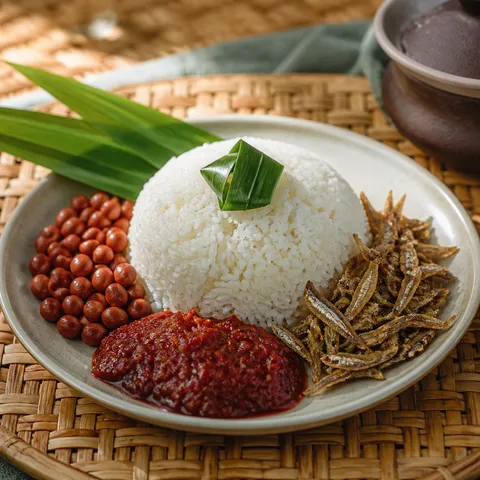
 Nasi Lemak
Malaysia's national comfort dish — fragrant coconut rice paired with sambal, crispy anchovies, roasted peanuts, and a soft-boiled egg.