 Vegan Images are for illustrative purposes only, may be inaccurate, and do not guarantee the presence or absence of specific ingredients.
  Serving Images are for illustrative purposes only, may be inaccurate, and do not guarantee the presence or absence of specific ingredients.
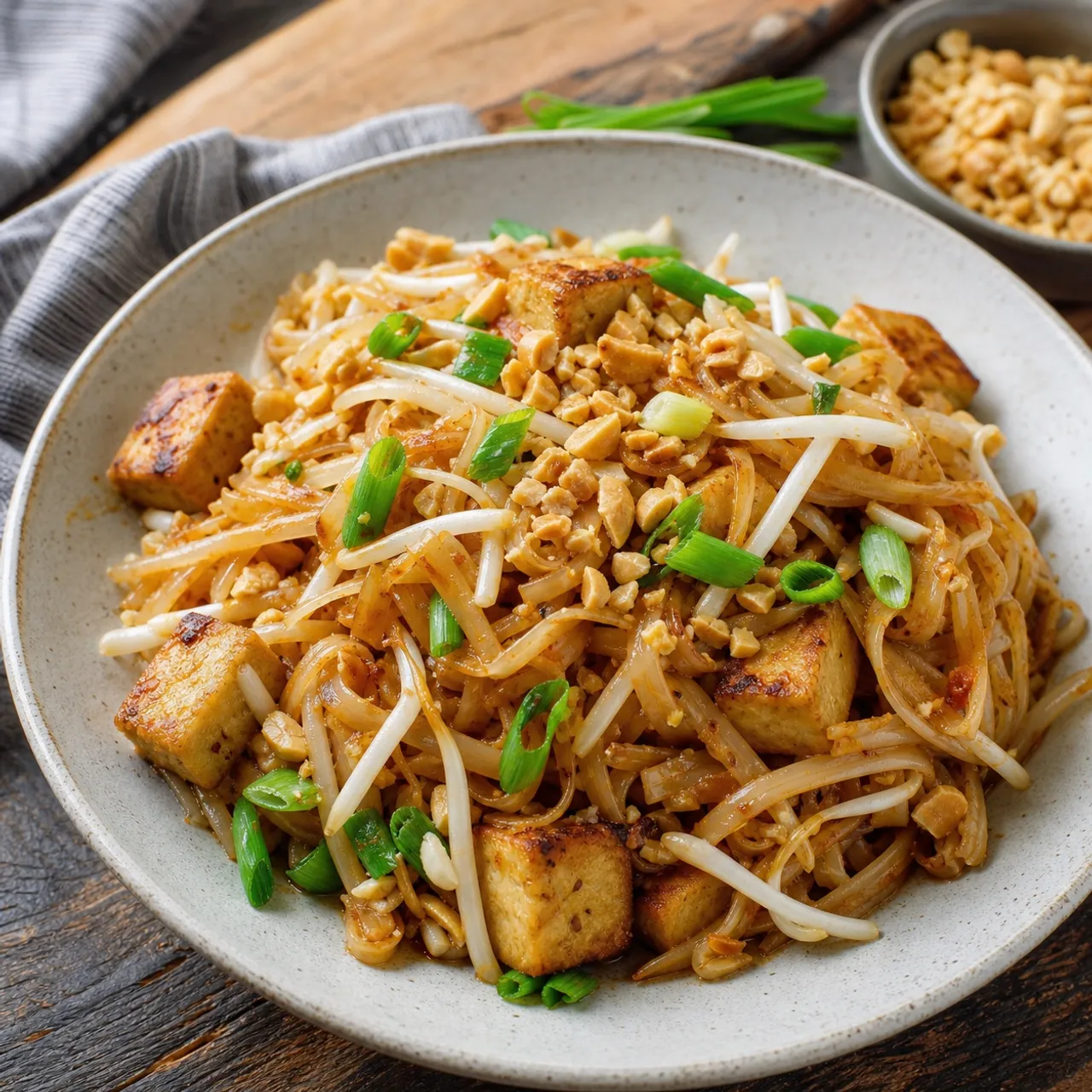
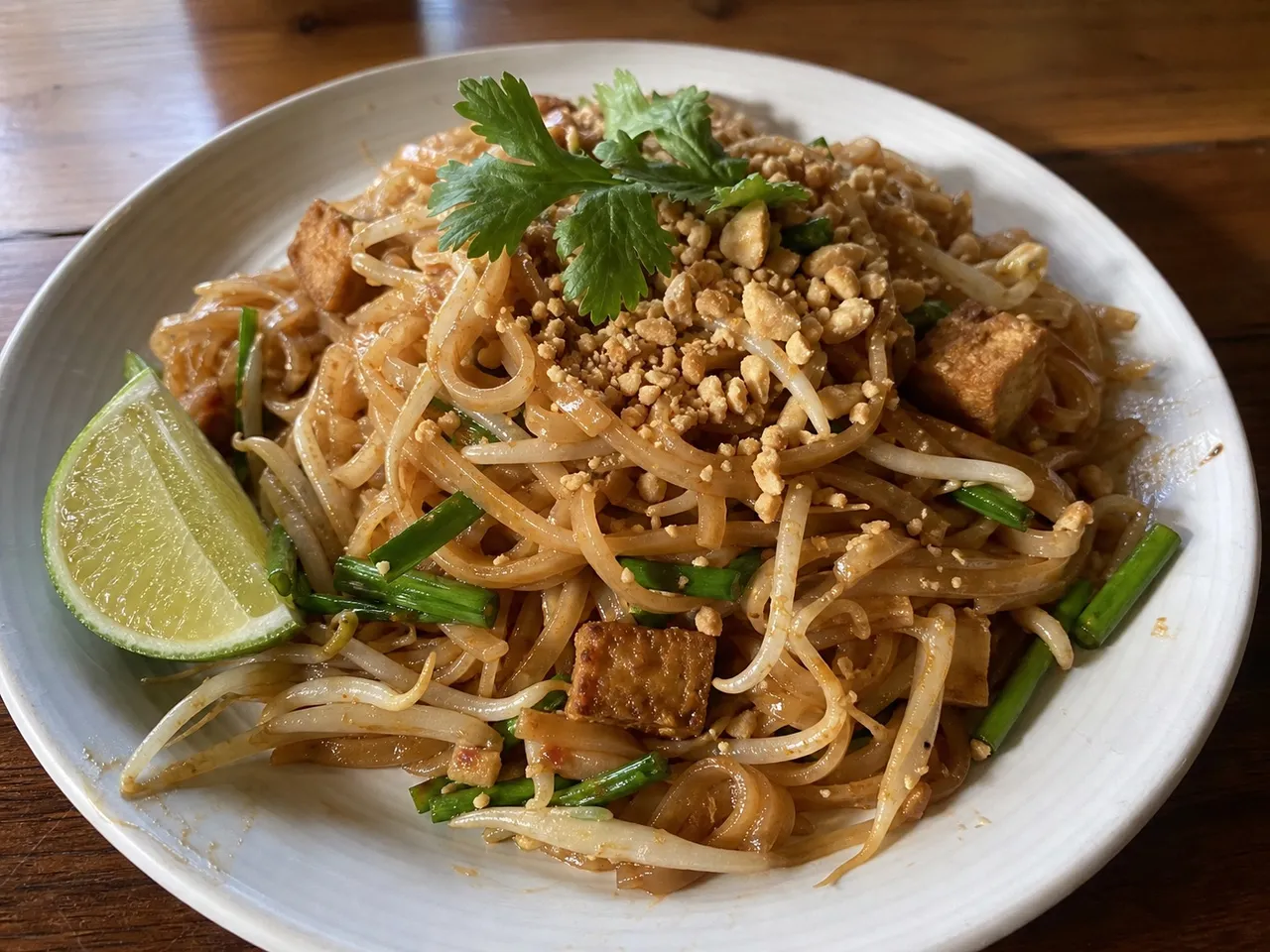
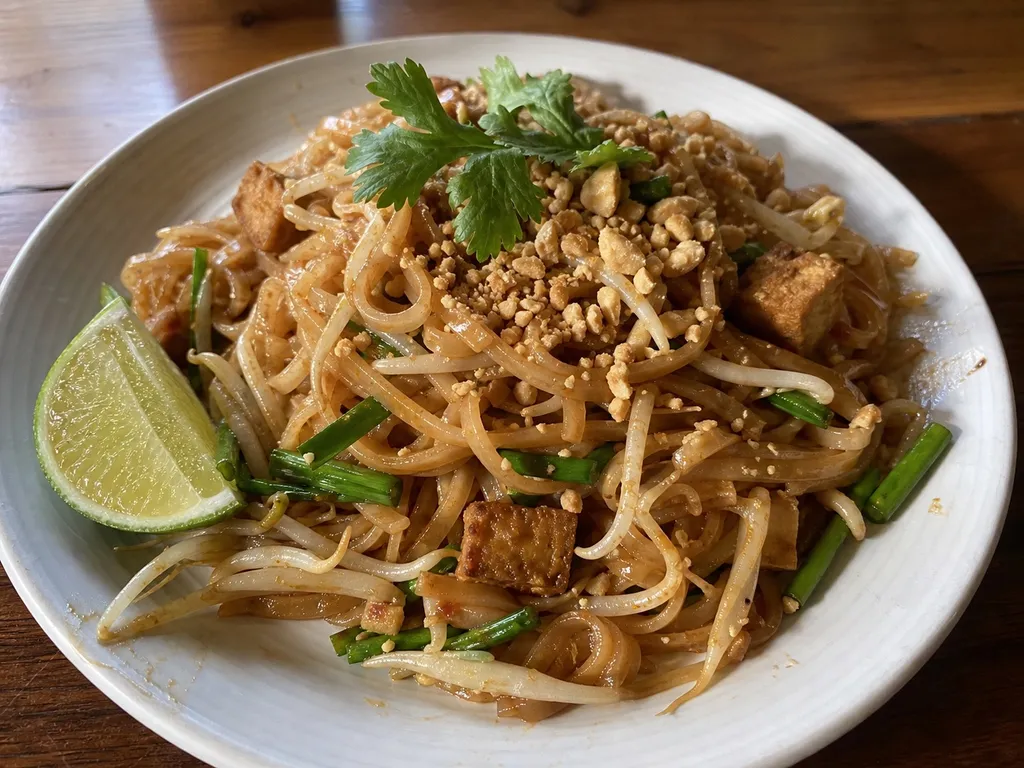
 Vegan Pad Thai
Experience the sweet and tangy magic of this plant-based Pad Thai, featuring tender rice noodles and crispy tofu tossed in a classic tamarind sauce. Finished with crunchy peanuts, it's an irresistible weeknight favorite!
Contains common allergens
In the app, Listahan checks these against your household automatically.
Good to know
- Ready in under 30 minutes
Matched from this dish's own ingredients and timing. Browse more: 30-minute meals
Instructions
7 steps- 1
Soak the rice noodles in warm water for 20 to 25 minutes until pliable but still slightly firm, then drain.
- 2
Whisk together the tamarind paste, soy sauce, and brown sugar in a small bowl to make the sauce.
- 3
Heat 1 tablespoon oil in a wok or large skillet over medium-high heat and pan-fry the tofu cubes for 5 to 6 minutes, turning occasionally, until golden and crisp on several sides; remove and set aside.
- 4
Add the remaining oil to the wok along with the garlic and shallots and stir-fry for 1 minute until fragrant.
- 5
Add the drained noodles and the tamarind sauce, tossing constantly with tongs for 2 to 3 minutes until the noodles turn glossy and are just tender.
- 6
Return the tofu to the wok along with the bean sprouts and green onions and toss for another minute.
- 7
Divide between bowls, top with crushed peanuts, and serve with lime wedges for squeezing.
 Images are for illustrative purposes only, may be inaccurate, and do not guarantee the presence or absence of specific ingredients.
 Listahan Family Score™
76/100
Good fit for most families
Score reflects how well this recipe fits a typical busy household. In the app, your Family Score is personalized to your household's allergens, kids, and pantry.
Nutrition
per serving400
Calories
15 g
Protein
55 g
Carbs
14 g
Fat
Estimated per serving. Actual values depend on the brands and portions you use.
Listahan cooking guide
Chef notes & practical guide
Technique notes, ingredient swaps, serve-alongside ideas, storage guidance, and equipment for this recipe.
Cultural context
Pad Thai is Thailand's most famous noodle dish, promoted as a national food in the 1930s and 40s and built on a balance of sweet, sour, salty, and savory. The traditional version relies on fish sauce and dried shrimp, so the vegan adaptation rebuilds that salty-savory depth with soy sauce, tamarind, and a touch of miso. The result keeps the signature tangy-sweet glaze that defines the dish.
Listahan note
This version uses tamarind paste for the authentic sour note rather than just vinegar, since tamarind is what makes pad thai taste like pad thai. It crisps the tofu first and tosses everything fast over high heat so the noodles stay springy.
Technique cues
- Soak the rice noodles in warm rather than boiling water until just pliable, because fully cooked noodles turn to mush once they hit the hot pan.
- Have every ingredient prepped and within reach before you start, since the actual stir-frying happens in just a few high-heat minutes.
- Push the noodles to one side and let the sauce bubble and reduce briefly before tossing, so it glazes rather than waters down the dish.
Kitchen flow
- Parallel prep
- Soak the noodles and crisp the tofu while you whisk the sauce and chop the garnishes, so the final stir-fry is a fast assembly.
- Make-ahead
- Mix the sauce and press and cube the tofu a day ahead; both keep refrigerated and cut the cooking down to minutes.
- Leftover move
- Reheat leftovers in a hot pan with a splash of water and a fresh squeeze of lime to revive the noodles and brighten the flavor.
- Cleanup rhythm
- Deglaze the sticky pan with hot water right after plating so the caramelized sauce lifts off instead of hardening on.
Ingredient brief
Role, handling, and swap guidance for each key ingredient.
flat rice noodles
the base
Purpose: Wide rice noodles soak up the tangy sauce while keeping a springy chew.
Handling: Soak in warm water until flexible but not soft, then drain.
Adaptation: Thinner rice vermicelli works, or use any flat noodle you have.
tamarind paste
signature sour note
Purpose: Tamarind gives the distinctive tangy backbone that defines pad thai's flavor.
Handling: Whisk into the sauce with soy and sugar until smooth.
Adaptation: A mix of lime juice and a little brown sugar approximates it if tamarind is unavailable.
extra-firm tofu
protein
Purpose: Crisped tofu adds a savory, chewy bite in place of the traditional shrimp.
Handling: Press, cube, and pan-fry until golden before adding to the noodles.
Adaptation: Tempeh or edamame work; chickpeas make it soy-free if paired with coconut aminos.
soy sauce
salty umami
Purpose: It replaces fish sauce as the salty-savory base of the glaze.
Handling: Combine with tamarind and sugar into a balanced sauce before cooking.
Adaptation: Tamari keeps it gluten-free; a dash of miso deepens the umami further.
bean sprouts and crushed peanuts
crunch and finish
Purpose: Fresh sprouts and peanuts add the cool crunch and nutty finish that make the dish feel complete.
Handling: Add sprouts at the very end and scatter peanuts over the plated dish.
Adaptation: Crushed cashews or sunflower seeds replace peanuts for a peanut-free version.
Technique notes
- Balance the sauce by tasting before cooking and adjusting until it hits sweet, sour, and salty at once, which is the whole art of pad thai.
- Cook in a single batch only if your pan is large; otherwise split it, since a crowded pan steams the noodles soft.
- Finish every plate with a fresh lime wedge and extra peanuts, since the bright acid at the table is part of the dish.
Ingredient swaps
- Peanut-free option
- Garnish with crushed cashews, sunflower seeds, or toasted coconut instead of peanuts to keep it peanut-free.
- Gluten-free direction
- Use tamari in place of soy sauce; rice noodles are naturally gluten-free, so the whole dish stays celiac-safe.
- Soy-free option
- Use coconut aminos and chickpeas in place of soy sauce and tofu for a fully soy-free plate.
Serve alongside
- Fresh spring rolls
- Green papaya salad
- Steamed edamame
- Cucumber salad with chili
- Thai iced tea made with oat milk
- Coconut water
- Lime soda
Serving suggestions only — check pairings for your household's allergens.
Storage & reheating
- Refrigerate leftovers in an airtight container for up to three days. Reheat in a hot pan with a splash of water rather than the microwave to keep the noodles from clumping. This dish does not freeze well because the rice noodles turn mushy on thaw.
Equipment
- Wok or large nonstick skillet
- Bowl for soaking noodles
- Tofu press or towel
- Tongs for tossing
Make this household-aware
Listahan Pro checks this recipe against your household's allergens, finds pantry-aware swaps, builds the shopping list, and helps you plan the week around it.
Plan it in Listahan
Add Vegan Pad Thai to your week, check it against your household's allergens, and build the shopping list automatically.
More Vegan recipes
 Vegan Lens Verified Images are for illustrative purposes only, may be inaccurate, and do not guarantee the presence or absence of specific ingredients.
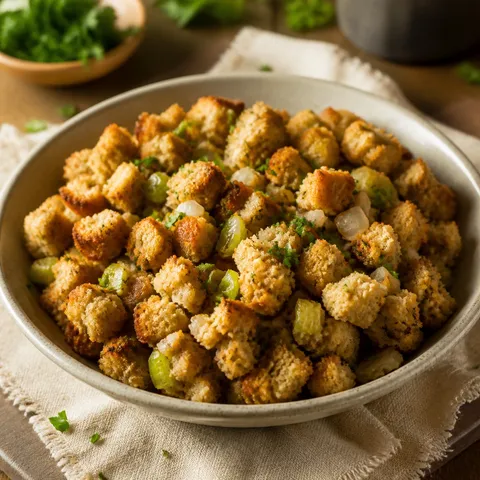
 Vegan Stuffing
A classic holiday side dish made with vegetable broth and herbs.
 Vegan Lens Verified Images are for illustrative purposes only, may be inaccurate, and do not guarantee the presence or absence of specific ingredients.
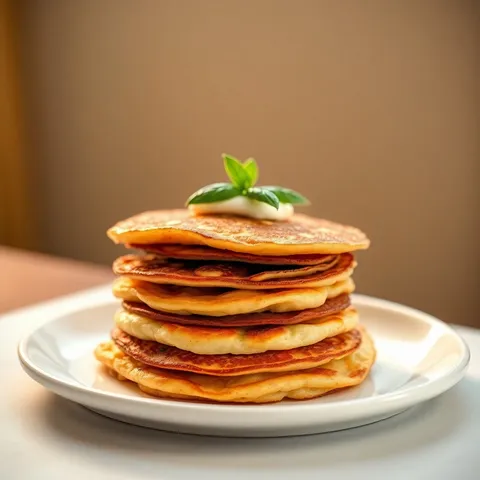
 Vegan Pancakes
Wake up to these incredibly fluffy and golden vegan pancakes, kissed with vanilla and ready to soak up your favorite maple syrup. A perfect weekend breakfast treat made entirely from plant-based ingredients!
 Vegan Lens Verified Images are for illustrative purposes only, may be inaccurate, and do not guarantee the presence or absence of specific ingredients.
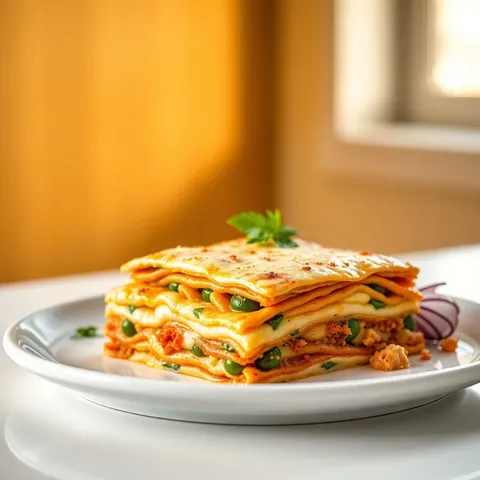
 Vegan Lasagna
Indulge in generous layers of tender pasta, robust marinara, and a remarkably creamy tofu ricotta. This show-stopping baked lasagna is the ultimate crowd-pleasing centerpiece!