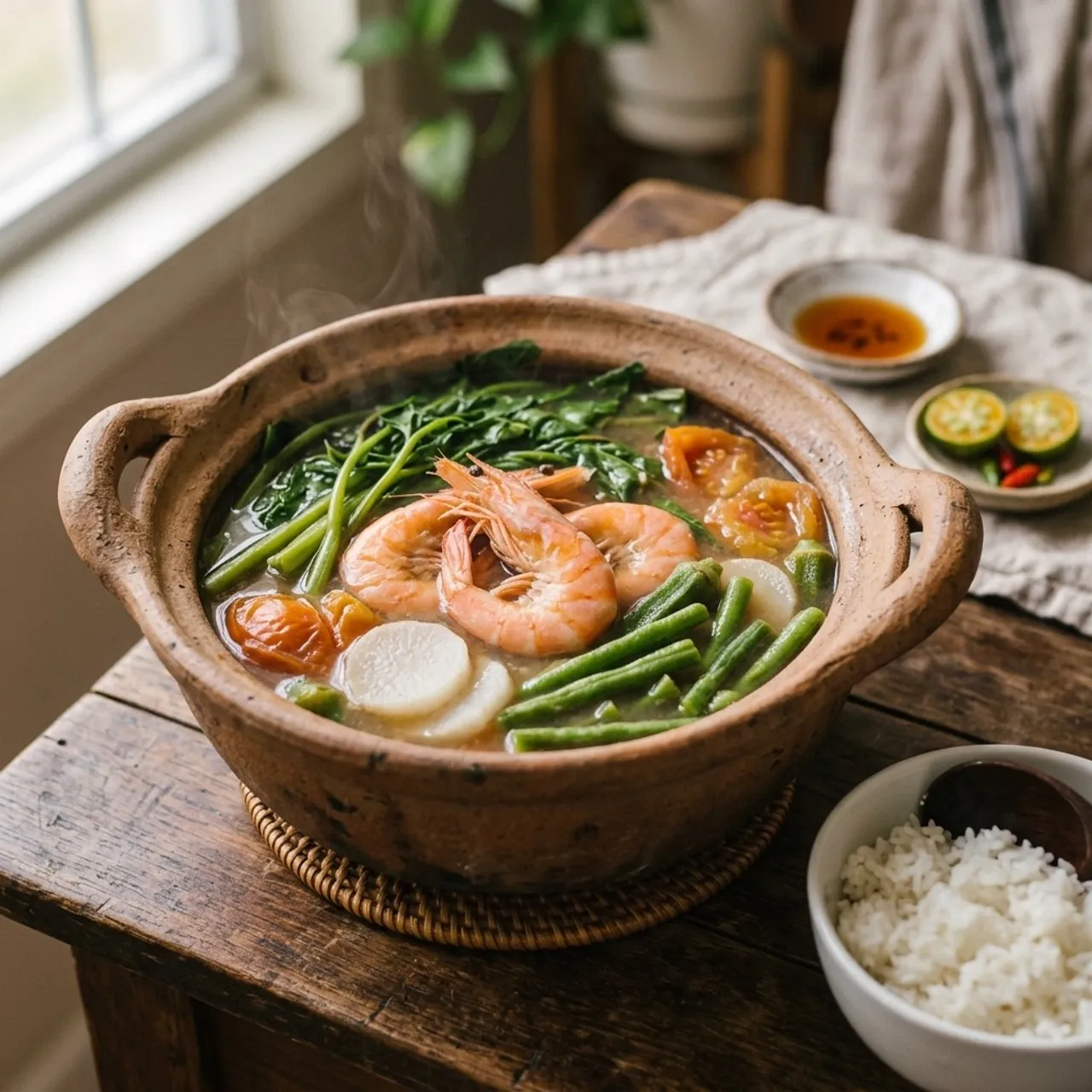
 Filipino Images are for illustrative purposes only, may be inaccurate, and do not guarantee the presence or absence of specific ingredients.
 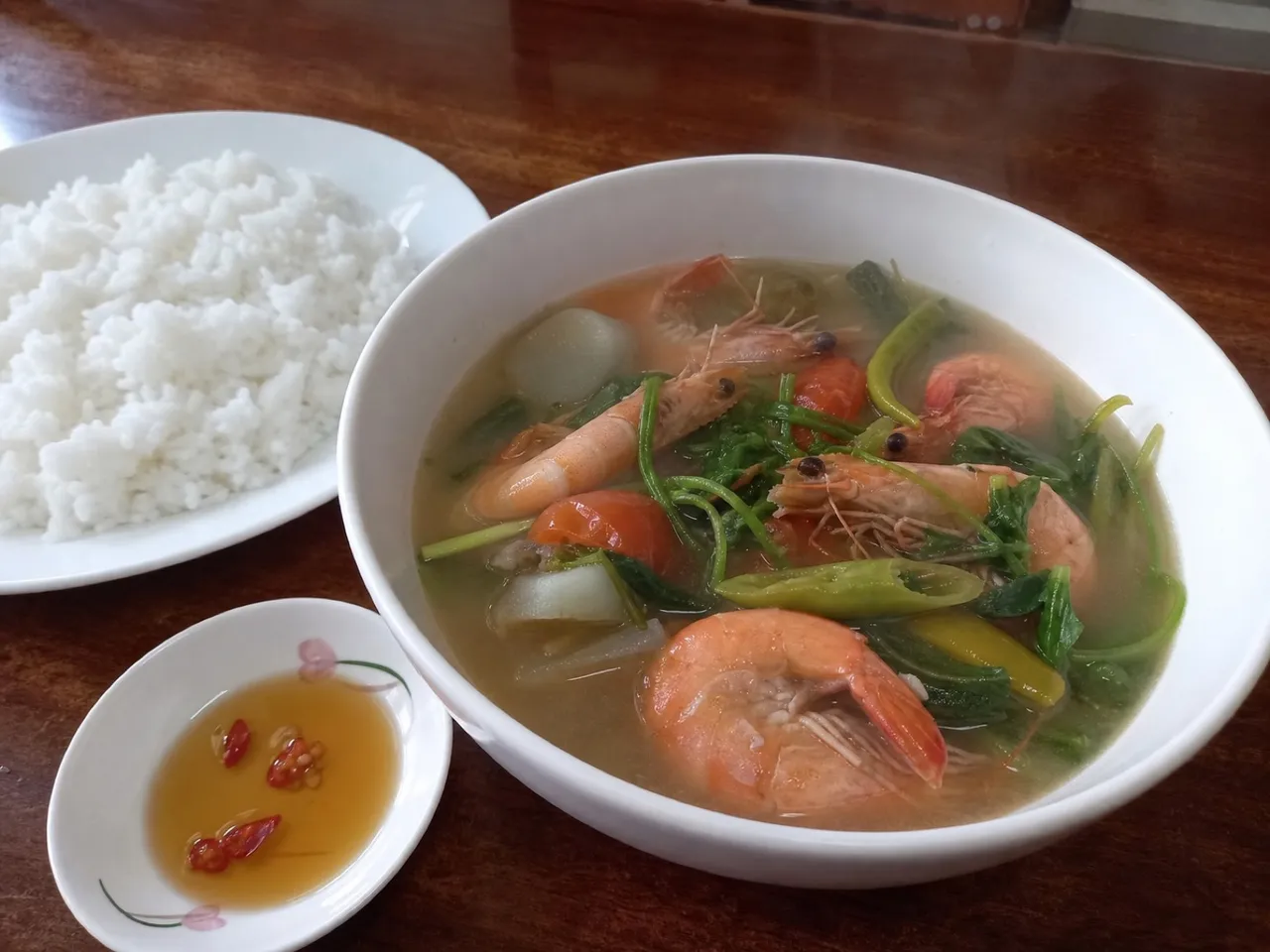 Serving Images are for illustrative purposes only, may be inaccurate, and do not guarantee the presence or absence of specific ingredients.
 Sinigang na Hipon
A bright, sour tamarind soup brimming with plump shrimp and crisp-tender vegetables that defines Filipino comfort food.
Contains common allergens
In the app, Listahan checks these against your household automatically.
Good to know
- One-pot
Matched from this dish's own ingredients and timing. Browse more: one-pot dinners
Instructions
6 steps- 1
In a large pot, bring the water, onion, and tomatoes to a boil, then simmer for 10 minutes, pressing the tomatoes against the side to release their juices.
- 2
Add the daikon rounds and cook for 6-8 minutes until just tender when pierced with a fork.
- 3
Stir in the tamarind mix and fish sauce, then add the long beans and finger chilies and simmer for 4 minutes.
- 4
Slide in the shrimp and cook for 3-4 minutes, just until they turn pink and curl, being careful not to overcook them.
- 5
Add the water spinach, push it under the broth, and turn off the heat so the residual warmth wilts it in about 1 minute.
- 6
Taste and adjust the sourness and saltiness with more tamarind or fish sauce, then ladle into bowls and serve piping hot with steamed rice.
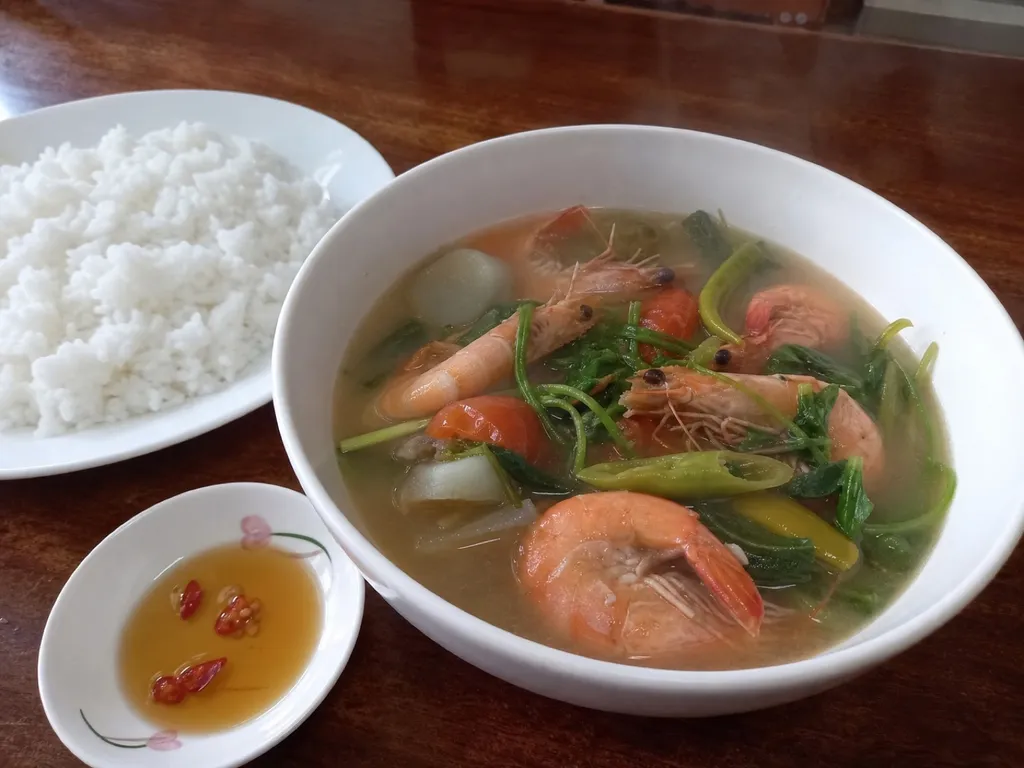 Images are for illustrative purposes only, may be inaccurate, and do not guarantee the presence or absence of specific ingredients.
 Listahan Family Score™
53/100
Works for many families
Score reflects how well this recipe fits a typical busy household. In the app, your Family Score is personalized to your household's allergens, kids, and pantry.
Nutrition
per serving195
Calories
42 g
Protein
6 g
Carbs
1 g
Fat
Estimated per serving. Actual values depend on the brands and portions you use.
Listahan cooking guide
Chef notes & practical guide
Technique notes, ingredient swaps, serve-alongside ideas, storage guidance, and equipment for this recipe.
Cultural context
Sinigang na Hipon is the shrimp version of the Filipino sour soup, lighter and quicker than the pork variety. Shrimp cook in minutes, so the broth comes together fast, bright with tamarind and full of vegetables. Cooking the shrimp shell-on deepens the broth with extra sweetness.
Listahan note
This version builds a tamarind broth with the vegetables first, then adds shell-on shrimp at the very end so they stay plump and the broth tastes sweet and clean.
Technique cues
- Add the shrimp last; they cook in just a couple of minutes.
- Cook the shrimp shell-on for a sweeter, deeper broth.
- Add leafy greens off the heat to keep them bright.
Kitchen flow
- Parallel prep
- Simmer the vegetables in the tamarind broth while you prep the shrimp.
- Make-ahead
- Make the vegetable broth ahead; add shrimp only when serving.
- Leftover move
- Reheat the broth gently and add fresh shrimp to avoid overcooking.
- Cleanup rhythm
- One pot; strain any shells before storing.
Ingredient brief
Role, handling, and swap guidance for each key ingredient.
Shrimp
Main protein
Purpose: Sweet and quick-cooking, they keep the soup light.
Handling: Leave shell-on for more flavor and add at the very end.
Adaptation: Peeled shrimp cook even faster but give a milder broth.
Tamarind mix or pulp
Souring agent
Purpose: Provides the signature sour backbone.
Handling: Add gradually and taste.
Adaptation: Fresh tamarind or green mango gives a brighter sour.
Daikon radish
Hearty vegetable
Purpose: Sweetens the broth and adds body.
Handling: Slice into rounds and simmer until tender.
Adaptation: Turnip works.
Water spinach (kangkong)
Leafy finish
Purpose: Adds fresh green color and bite.
Handling: Add off the heat to keep it green.
Adaptation: Spinach or bok choy works.
Technique notes
- Do not overcook the shrimp; pull them as soon as they turn pink.
- Build the sourness in stages and taste as you go.
- Drop the greens in off the heat for color and bite.
Ingredient swaps
- Pork-version direction
- Use pork belly for sinigang na baboy, extending the simmer.
- Fresh-souring direction
- Use fresh tamarind or green mango and salt to control sodium.
- Shellfish-free direction
- Use firm white fish instead of shrimp.
Serve alongside
- Steamed white rice
- Fish sauce with calamansi and chili
- Grilled fish
- Sauteed greens
- Cold water
- Calamansi juice
- Iced tea
Serving suggestions only — check pairings for your household's allergens.
Storage & reheating
- Refrigerate up to 2 days; shrimp are best eaten fresh.
- Reheat the broth gently and avoid re-boiling the shrimp.
- Freezing is not recommended.
Equipment
- Soup pot
- Ladle
- Skimmer
- Cutting board
Make this household-aware
Listahan Pro checks this recipe against your household's allergens, finds pantry-aware swaps, builds the shopping list, and helps you plan the week around it.
Plan it in Listahan
Add Sinigang na Hipon to your week, check it against your household's allergens, and build the shopping list automatically.
More Filipino recipes
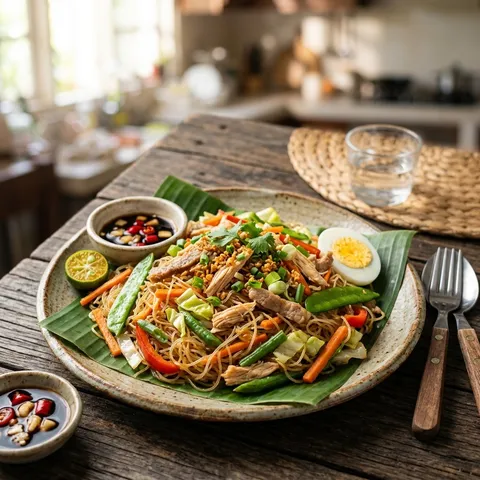 Filipino Lens Verified Images are for illustrative purposes only, may be inaccurate, and do not guarantee the presence or absence of specific ingredients.
 Pancit Bihon
Thin rice vermicelli stir-fried with chicken, shrimp, and vegetables in a savory soy-citrus sauce, a fixture at every Filipino celebration.
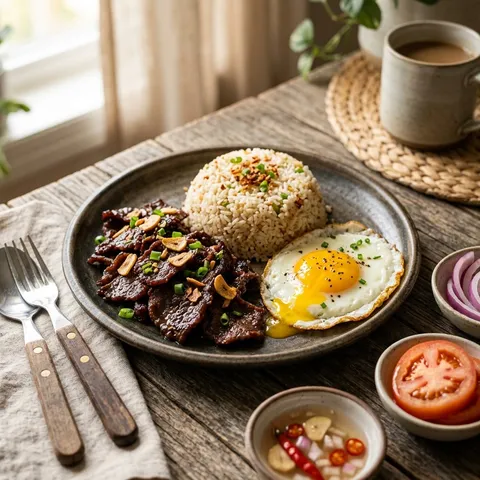 Filipino Lens Verified Images are for illustrative purposes only, may be inaccurate, and do not guarantee the presence or absence of specific ingredients.
 Tapsilog
A hearty breakfast combo of marinated beef (tapa), garlic fried rice (sinangag), and a fried egg (itlog).
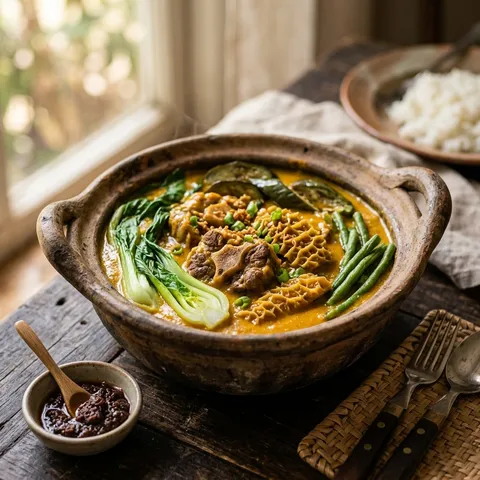 Filipino Lens Verified Images are for illustrative purposes only, may be inaccurate, and do not guarantee the presence or absence of specific ingredients.
 Kare-Kare
A rich peanut stew typically made with oxtail and vegetables, served with shrimp paste.