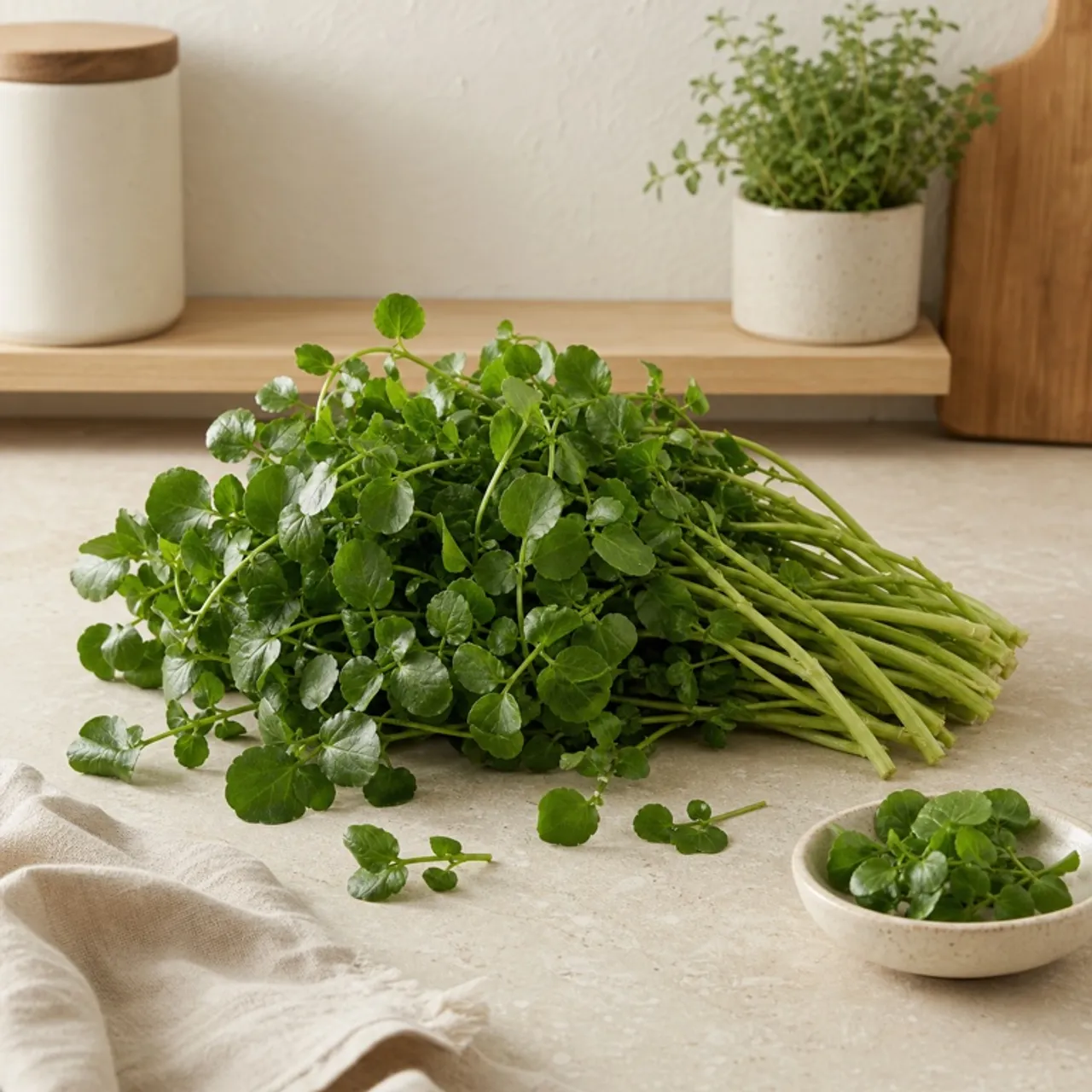
 Food Lens Images are for illustrative purposes only, may be inaccurate, and do not guarantee the presence or absence of specific ingredients.
 Food Lens · Produce
Watercress
Peppery, slightly bitter, and intensely fresh with a clean, green aroma; the heat dissipates when cooked, leaving a mild, grassy sweetness.
Lens VerifiedWatercress is a fast-growing aquatic herb with small, rounded dark-green leaves and a sharp, peppery bite that sets it apart from most leafy greens. It thrives in cool, running water and has been eaten since antiquity for its intense, fresh flavor. In the kitchen it functions equally well as a salad green, a garnish, a soup base, and a sandwich filling.
Where it comes from
Watercress has been foraged from European and Asian streams since ancient times and was one of the first vegetables to be commercially farmed in England in the early 19th century.
Varieties — True watercress (Nasturtium officinale) is the most widely available; upland cress is a drier, more robust cousin sometimes sold as a substitute. Baby watercress is milder and suited to delicate salads.
Watercress sandwiches are an iconic part of British afternoon tea tradition. In Chinese cooking, watercress is frequently blanched and served as a side vegetable or simmered in pork-bone soups.
In a modern kitchen — Restaurant chefs use watercress purée as a vivid green sauce for fish and lamb. It has found a place in cold-pressed juices and smoothies for its assertive, green-vegetal punch.
Buying it
Choose bunches with crisp, deep-green stems and no yellowing or wilting leaves. Avoid any with slimy stems or a strong sulfurous smell. Pre-washed bags are convenient but lose their crispness faster than fresh bunches.
Storing it
Watercress is delicate and wilts fast — keep it in the fridge wrapped loosely in a damp paper towel, or stems-down in a glass of water covered with a bag. Use it within a few days, before the leaves turn yellow or slimy.
Keeps about 4 days in the fridge.
In season
Peak season is April–June & September, though it's available year-round.
Watercress favors cooler growing periods, but greenhouse and regional supply keep it available year-round.
Out of watercress? Good swaps
General cooking guidance — always check the labels on the products you use. Listahan’s allergen checks run automatically when you plan a recipe in the app. Not medical advice.
Recipes that use watercress
Common questions about watercress
Is watercress vegan?
Watercress is generally plant-based and suitable for a vegan diet, but brands differ — confirm on the label.
What can I use instead of watercress?
Good swaps include , , . Each behaves a little differently — see the swaps above for notes, and always check labels for allergens.
How do I store watercress?
Watercress is delicate and wilts fast — keep it in the fridge wrapped loosely in a damp paper towel, or stems-down in a glass of water covered with a bag. Use it within a few days, before the leaves turn yellow or slimy. It keeps about 4 days in the fridge.
More produce
See all


Make watercress about your kitchen — with Listahan Pro
Everything above is free, forever. Pro adds the Household Lens — the same food, seen for your family:
-
Checked for each member
Flags watercress per person against your household's allergies and school rules — not just a generic "contains" tag.
-
Pantry-aware
Knows whether you already have it, what is running low, and the best swap from what is in your kitchen tonight.
-
What it costs near you
A real price from the Presyo community index, so you can plan the budget — not guess.
-
Your household memory
Who likes it, plus your own private notes — brand, where you keep it, who skips it.
Allergen safety is always free — Pro adds the automation, never the safety.
Cook with watercress — safely
Plan a recipe in Listahan and the household allergen check runs automatically — every plan, every swap, every lunchbox. Safety is never paywalled.