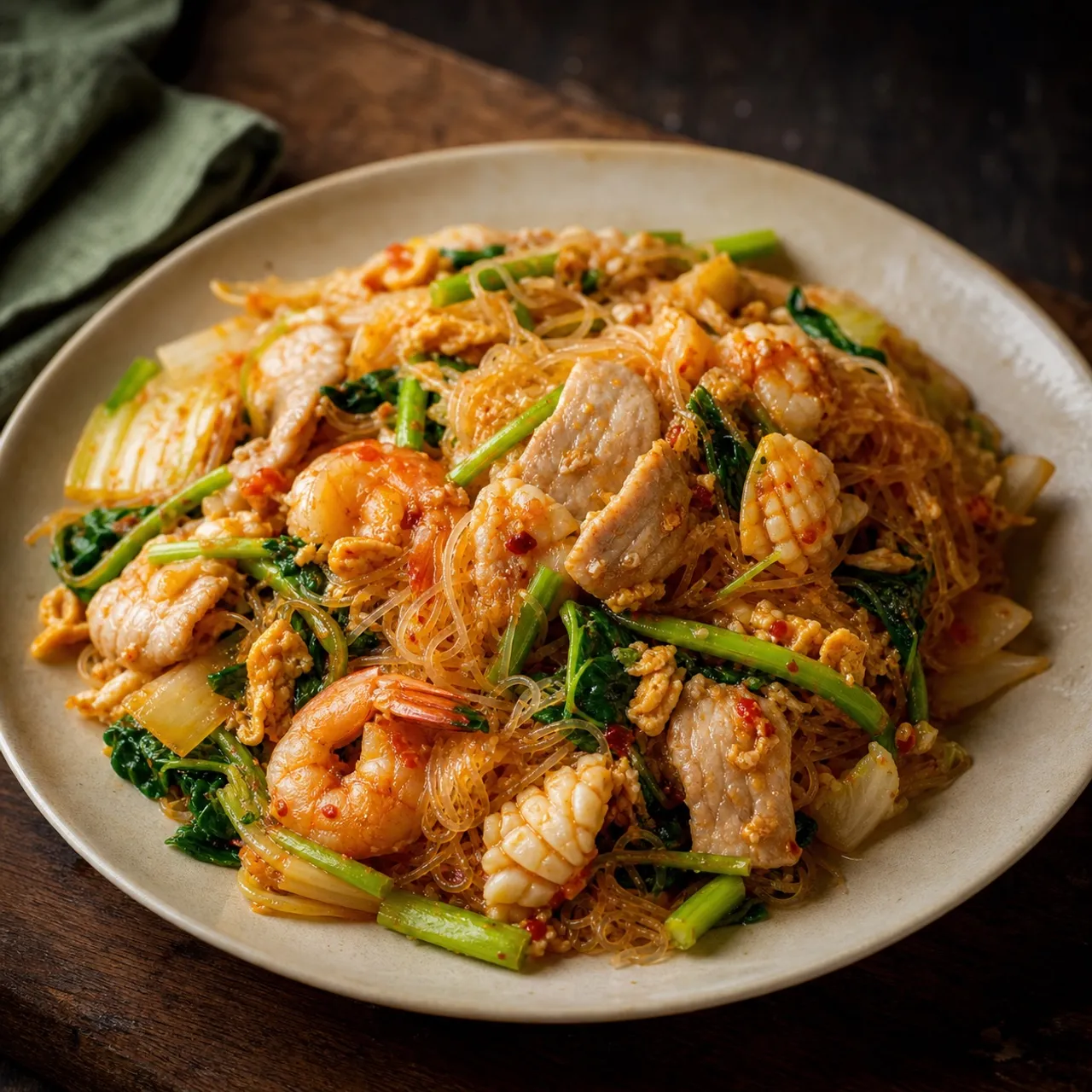
 Thai Images are for illustrative purposes only, may be inaccurate, and do not guarantee the presence or absence of specific ingredients.
 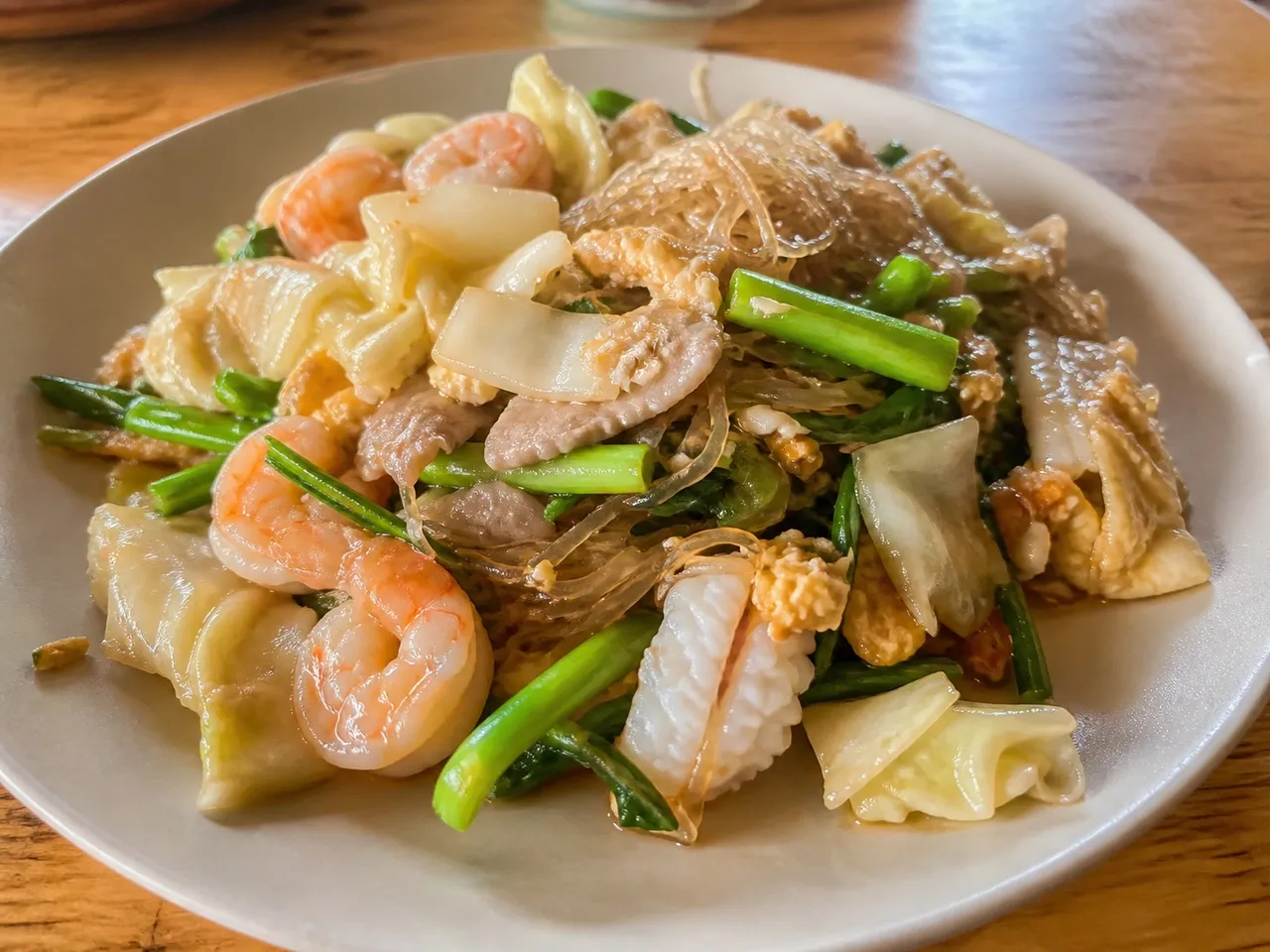 Serving Images are for illustrative purposes only, may be inaccurate, and do not guarantee the presence or absence of specific ingredients.
 Suki Hang
Thai sukiyaki without the broth — glass noodles, vegetables, and meat stir-fried dry with a tangy, slightly sweet suki sauce that clings to every strand.
Contains common allergens
In the app, Listahan checks these against your household automatically.
Good to know
- Ready in under 30 minutes
Matched from this dish's own ingredients and timing. Browse more: 30-minute meals
Instructions
7 steps- 1
Soak the glass noodles in warm water for 10 minutes until pliable but still with a slight bite, then drain well and snip into shorter lengths with scissors.
- 2
Heat oil in a wok over high heat and fry the garlic for a few seconds until fragrant, then crack in the egg and scramble quickly, breaking it into small curds.
- 3
Add the sliced protein and stir-fry over high heat until just cooked through and no longer pink.
- 4
Add the napa cabbage and morning glory, tossing constantly over high heat so they wilt quickly while keeping some crunch.
- 5
Add the drained glass noodles and toss everything together, letting the noodles absorb any residual moisture in the wok.
- 6
Whisk the suki sauce, lime juice, soy sauce, and sugar together and pour over the noodles, tossing vigorously so the sauce clings to every strand without pooling at the bottom.
- 7
Plate immediately and finish with a scatter of cilantro, serving with extra suki sauce on the side for dipping.
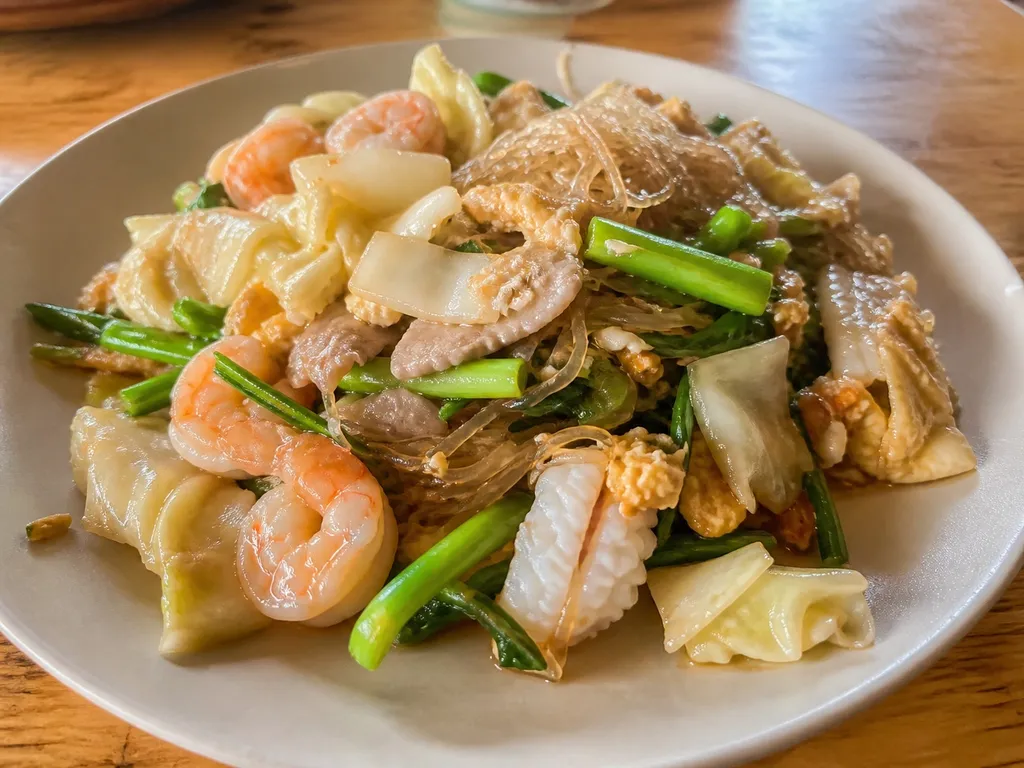 Images are for illustrative purposes only, may be inaccurate, and do not guarantee the presence or absence of specific ingredients.
 Listahan Family Score™
59/100
Works for many families
Score reflects how well this recipe fits a typical busy household. In the app, your Family Score is personalized to your household's allergens, kids, and pantry.
Nutrition
per serving445
Calories
32 g
Protein
36 g
Carbs
19 g
Fat
Estimated per serving. Actual values depend on the brands and portions you use.
Listahan cooking guide
Chef notes & practical guide
Technique notes, ingredient swaps, serve-alongside ideas, storage guidance, and equipment for this recipe.
Cultural context
Suki hang is the dry, stir-fried version of Thai suki, a dish that evolved from the hot-pot tradition into a plated noodle-and-protein stir-fry tied together by a tangy fermented bean-curd sauce. The hang, meaning dry, sets it apart from the soup version, with glass noodles, egg, mixed proteins, and vegetables wokked together and glazed in the signature pink-red nam jim suki. That dipping sauce, built on fermented tofu, chili, and sesame, is what makes suki taste like suki.
Listahan note
This version builds the dish around the fermented bean-curd sauce so it tastes distinctly like Thai suki rather than a generic stir-fry. It keeps the proteins mixed and flexible the way a suki plate usually is.
Technique cues
- Make the suki sauce first so its fermented-tofu and sesame flavors are ready to glaze the dish at the end.
- Cook the egg into the noodles so it coats the strands and helps the sauce cling.
- Add the sauce off direct high heat at the finish so it glazes without scorching the fermented tofu.
Kitchen flow
- Parallel prep
- Blend the suki sauce and soak the noodles while you slice the proteins and vegetables.
- Make-ahead
- The suki sauce keeps for a week refrigerated, so make it ahead and stir-fry to order.
- Leftover move
- Reheat leftovers in a hot pan with a splash of water and an extra spoon of suki sauce to refresh.
- Cleanup rhythm
- Soak the pan and the sauce blender right away so the sticky glaze and sesame lift cleanly.
Ingredient brief
Role, handling, and swap guidance for each key ingredient.
glass noodles
main starch
Purpose: Glass noodles soak up the tangy suki sauce and give the dish its slippery body.
Handling: Soak in warm water until pliable, then drain before stir-frying.
Adaptation: Thin rice vermicelli works but softens faster.
shrimp
protein
Purpose: Shrimp add sweet, briny bites typical of a mixed suki plate.
Handling: Peel, devein, and add near the end so they stay plump.
Adaptation: More chicken or squid covers a shellfish allergy.
chicken
protein
Purpose: Sliced chicken gives a tender, mild protein that rounds out the mix.
Handling: Slice thin across the grain so it cooks fast.
Adaptation: Pork or extra tofu works just as well.
egg
binder
Purpose: Egg coats the noodles and helps the sauce cling to everything.
Handling: Scramble into a cleared space in the pan, then fold through.
Adaptation: Omit for an egg-free version and add a little more sauce for cohesion.
fermented bean curd
signature sauce base
Purpose: Fermented tofu is the defining tangy, funky note of the suki sauce.
Handling: Mash and blend with chili, garlic, lime, and sesame paste into a smooth sauce.
Adaptation: Store-bought Thai suki sauce saves time with the same character.
Chinese celery
aromatic vegetable
Purpose: Chinese celery adds the fresh, slightly bitter herbal note classic to suki.
Handling: Cut into short lengths and add near the end to keep its crunch.
Adaptation: Regular celery leaves and a little cilantro approximate it.
Technique notes
- Cook the proteins in stages so the shrimp do not overcook while the chicken finishes.
- Toss the sauce in at the very end so it coats rather than burns, since fermented tofu scorches easily.
- Taste and adjust the sauce for the sweet-sour-funky balance before it ever hits the pan.
Ingredient swaps
- Shellfish-free direction
- Drop the shrimp and use extra chicken or squid so no shellfish is in the dish.
- Vegetarian direction
- Use tofu and mushrooms for protein and confirm the suki sauce uses no shrimp paste.
- Gluten-free direction
- Check that the fermented bean curd and any soy in the sauce are wheat-free, using tamari where needed.
Serve alongside
- Steamed jasmine rice
- Stir-fried morning glory
- Cucumber salad
- Tom yum soup
- Thai iced tea
- Chrysanthemum tea
- Cold lager
Serving suggestions only — check pairings for your household's allergens.
Storage & reheating
- Refrigerate up to two days in a sealed container. Reheat in a hot pan with a splash of water and a little extra sauce, since the noodles tighten as they sit. Freezing is not recommended because the glass noodles turn gummy on thaw.
Equipment
- Wok or large skillet
- Blender or mortar and pestle for the sauce
- Wide spatula
- Fine-mesh strainer
Make this household-aware
Listahan Pro checks this recipe against your household's allergens, finds pantry-aware swaps, builds the shopping list, and helps you plan the week around it.
Plan it in Listahan
Add Suki Hang to your week, check it against your household's allergens, and build the shopping list automatically.
More Thai recipes
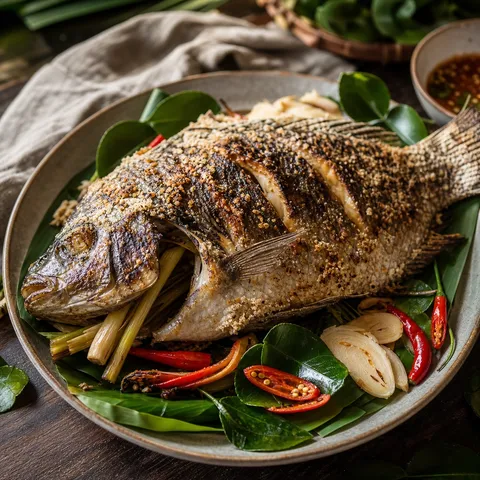 Thai Lens Verified Images are for illustrative purposes only, may be inaccurate, and do not guarantee the presence or absence of specific ingredients.
 Pla Pao
A whole salt-crusted fish stuffed with lemongrass and grilled until the skin is crackling and the flesh is silky.
 Thai Lens Verified Images are for illustrative purposes only, may be inaccurate, and do not guarantee the presence or absence of specific ingredients.
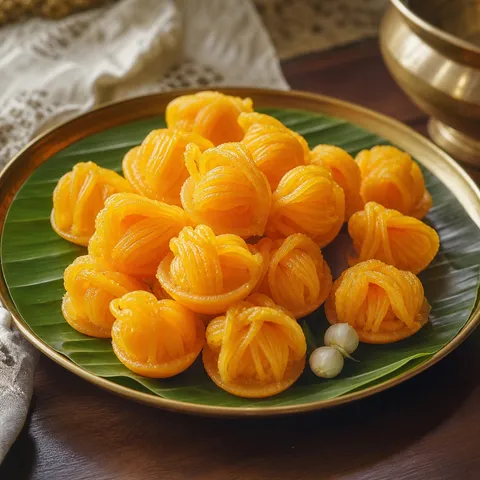
 Thong Yip
Petite golden flowers pressed from egg yolk and sugar, simmered in jasmine-scented syrup until set — a centuries-old Thai royal confection as beautiful as it is sweet.
 Thai Lens Verified Images are for illustrative purposes only, may be inaccurate, and do not guarantee the presence or absence of specific ingredients.
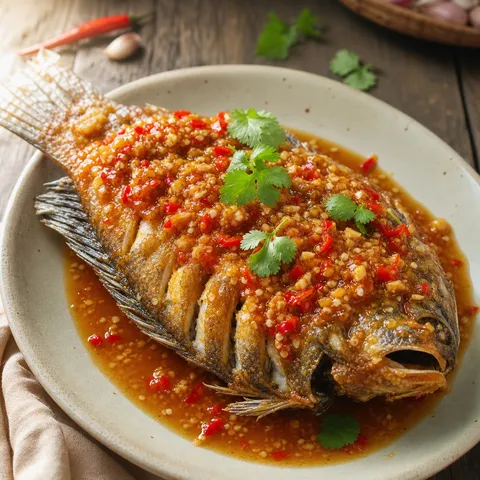
 Pla Rad Prik
Whole fish fried to a shatteringly crisp shell, then blanketed in a sticky, sweet-hot chili-tamarind sauce with garlic and basil — dramatic, punchy, and made for sharing.