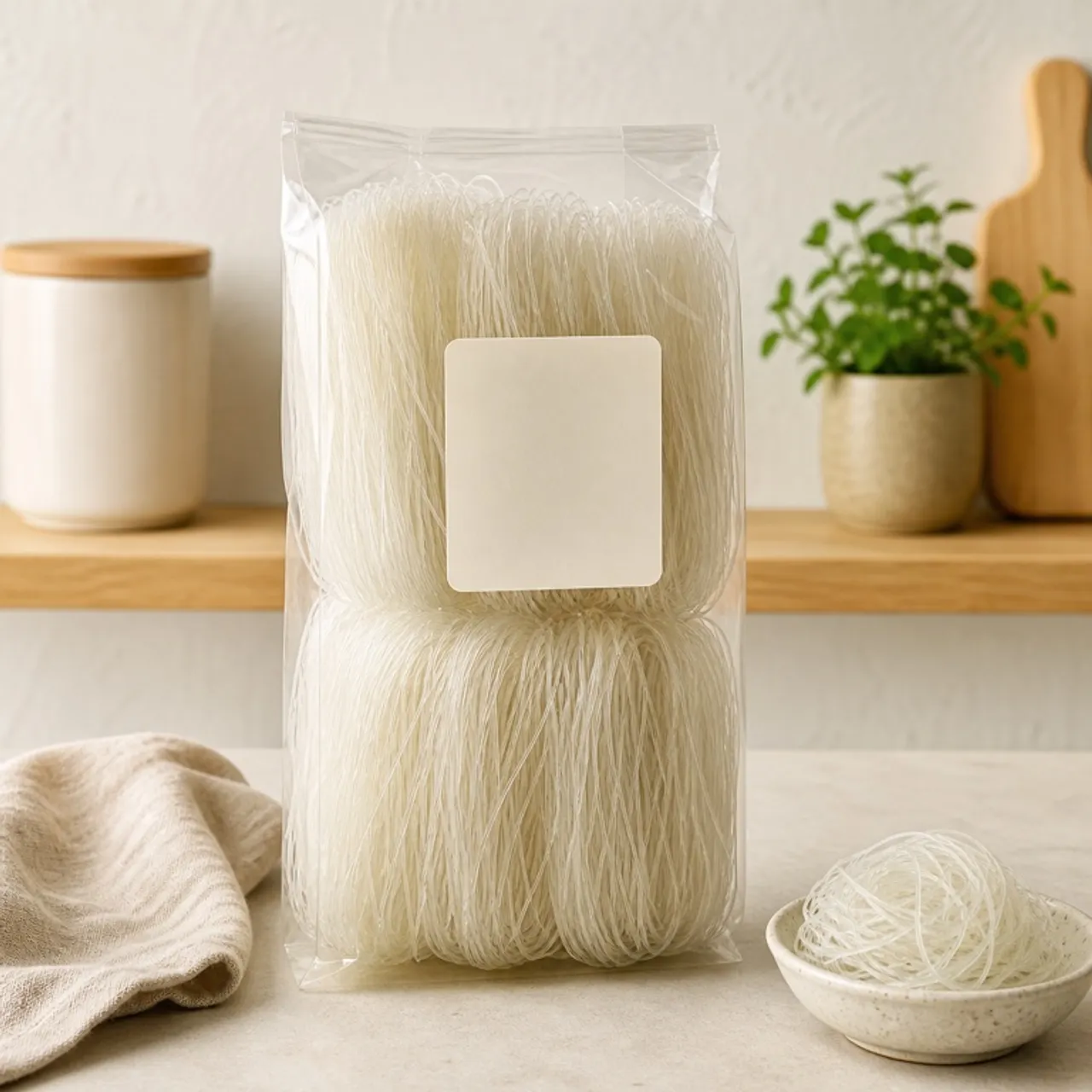
 Food Lens Images are for illustrative purposes only, may be inaccurate, and do not guarantee the presence or absence of specific ingredients.
 Food Lens · Recipe ingredients
Glass Noodles
Virtually flavorless on their own — slippery, slightly chewy, and translucent; their appeal is texture and their ability to carry surrounding sauces and flavors beautifully.
Lens VerifiedGlass noodles are thin, translucent noodles made most commonly from mung bean starch, with a slippery, almost silky texture and virtually no flavor of their own — they are culinary chameleons, absorbing whatever sauce or broth they are cooked in. Also called cellophane noodles, bean thread noodles, or vermicelli, they appear across Chinese, Korean, Japanese, Thai, Vietnamese, and Filipino cooking.
Where it comes from
Glass noodles made from mung bean starch have been produced in China for centuries, spreading along trade routes throughout East and Southeast Asia. Each culinary culture adapted them to local ingredients and cooking styles. In North America, glass noodles became available through Asian grocery stores and are now found in many mainstream stores in the international foods or Asian noodle aisle.
Varieties — Mung bean glass noodles are most common (thinner, more translucent); Korean dangmyeon are made from sweet potato starch (thicker, chewier — used in japchae); kelp noodles (from seaweed) are a third variety sometimes called glass noodles. All require rehydration but differ in texture.
Korean japchae — glass noodles stir-fried with vegetables, beef (or tofu), sesame oil, and soy sauce — is a beloved celebration dish served at Chuseok, Lunar New Year, and birthday feasts.
In a modern kitchen — Soak in room-temperature water for 10–15 minutes before cooking (or follow package directions — some brands require boiling). Do not over-soak or they become mushy. Cut long soaked noodles with scissors before stir-frying to make them easier to toss in the wok.
Buying it
Available at most Asian grocery stores (Chinese, Korean, Vietnamese sections all carry them). Look for 'glass noodles,' 'cellophane noodles,' 'bean thread vermicelli,' or 'mung bean noodles.' Korean dangmyeon is specifically labeled as such and is thicker. Most come in dry bundles wrapped in netting.
Storing it
Store dried glass noodles in their sealed package or an airtight container in a cool, dry spot. They're brittle when dry, so keep them away from moisture until you're ready to soak or boil them.
Keeps about 1 year in the pantry.
Out of glass noodles? Good swaps
- Rice vermicelli — Similar thin noodle; slightly different texture (a bit more firm); rehydrates similarly.
- Thin rice noodles (rice sticks) — Works well in stir-fries and soups; slightly less translucent.
- Zucchini noodles (spiralized) — For a fresh, lower-carb substitute in salads; very different texture.
General cooking guidance — always check the labels on the products you use. Listahan’s allergen checks run automatically when you plan a recipe in the app. Not medical advice.
Recipes that use glass noodles
Common questions about glass noodles
Is glass noodles vegan?
Glass Noodles is generally plant-based and suitable for a vegan diet, but brands differ — confirm on the label.
What can I use instead of glass noodles?
Good swaps include Rice vermicelli, Thin rice noodles (rice sticks), Zucchini noodles (spiralized). Each behaves a little differently — see the swaps above for notes, and always check labels for allergens.
How do I store glass noodles?
Store dried glass noodles in their sealed package or an airtight container in a cool, dry spot. They're brittle when dry, so keep them away from moisture until you're ready to soak or boil them. It keeps about 1 year in the pantry.
More recipe ingredients
See all


Make glass noodles about your kitchen — with Listahan Pro
Everything above is free, forever. Pro adds the Household Lens — the same food, seen for your family:
-
Checked for each member
Flags glass noodles per person against your household's allergies and school rules — not just a generic "contains" tag.
-
Pantry-aware
Knows whether you already have it, what is running low, and the best swap from what is in your kitchen tonight.
-
What it costs near you
A real price from the Presyo community index, so you can plan the budget — not guess.
-
Your household memory
Who likes it, plus your own private notes — brand, where you keep it, who skips it.
Allergen safety is always free — Pro adds the automation, never the safety.
Cook with glass noodles — safely
Plan a recipe in Listahan and the household allergen check runs automatically — every plan, every swap, every lunchbox. Safety is never paywalled.