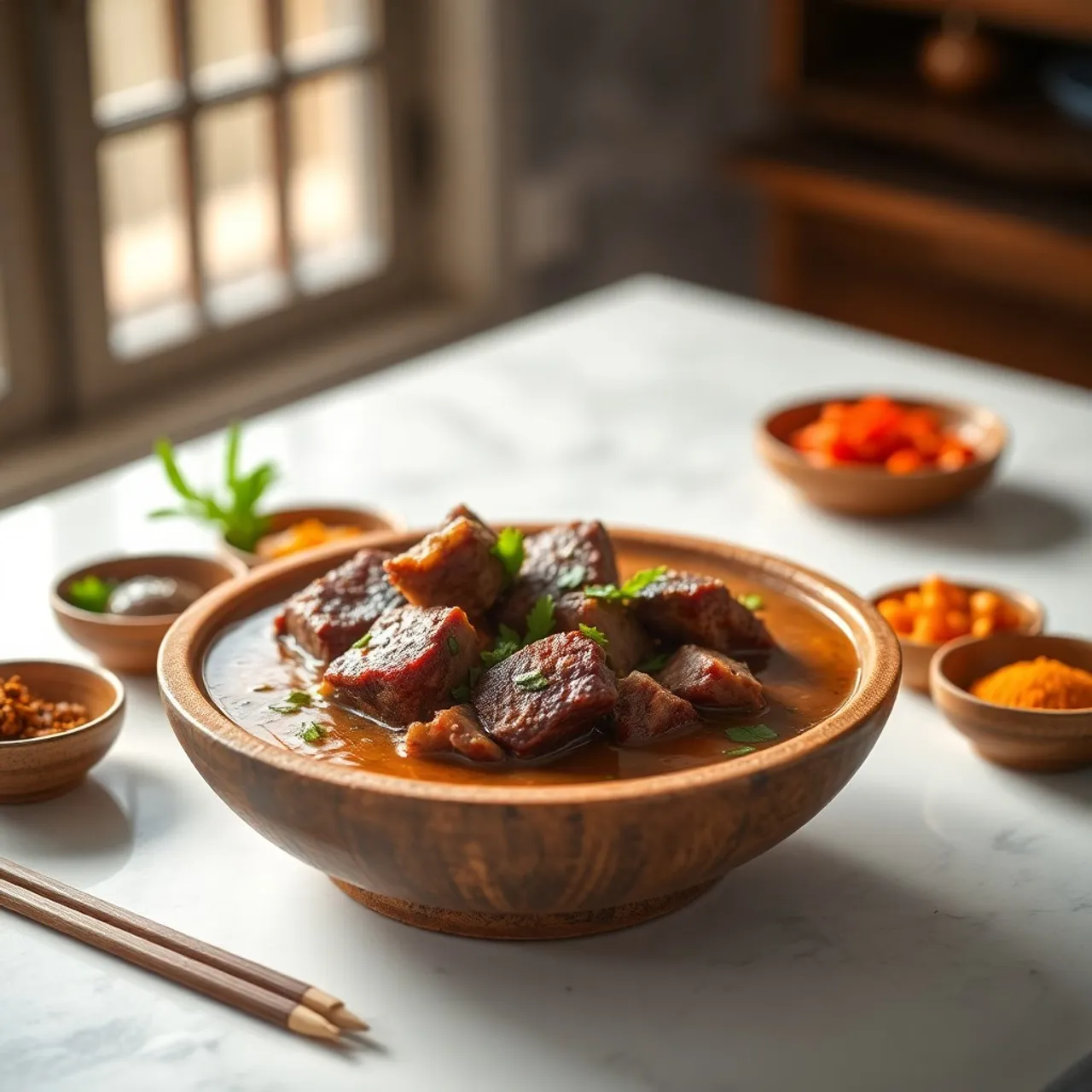
 Korean Images are for illustrative purposes only, may be inaccurate, and do not guarantee the presence or absence of specific ingredients.
 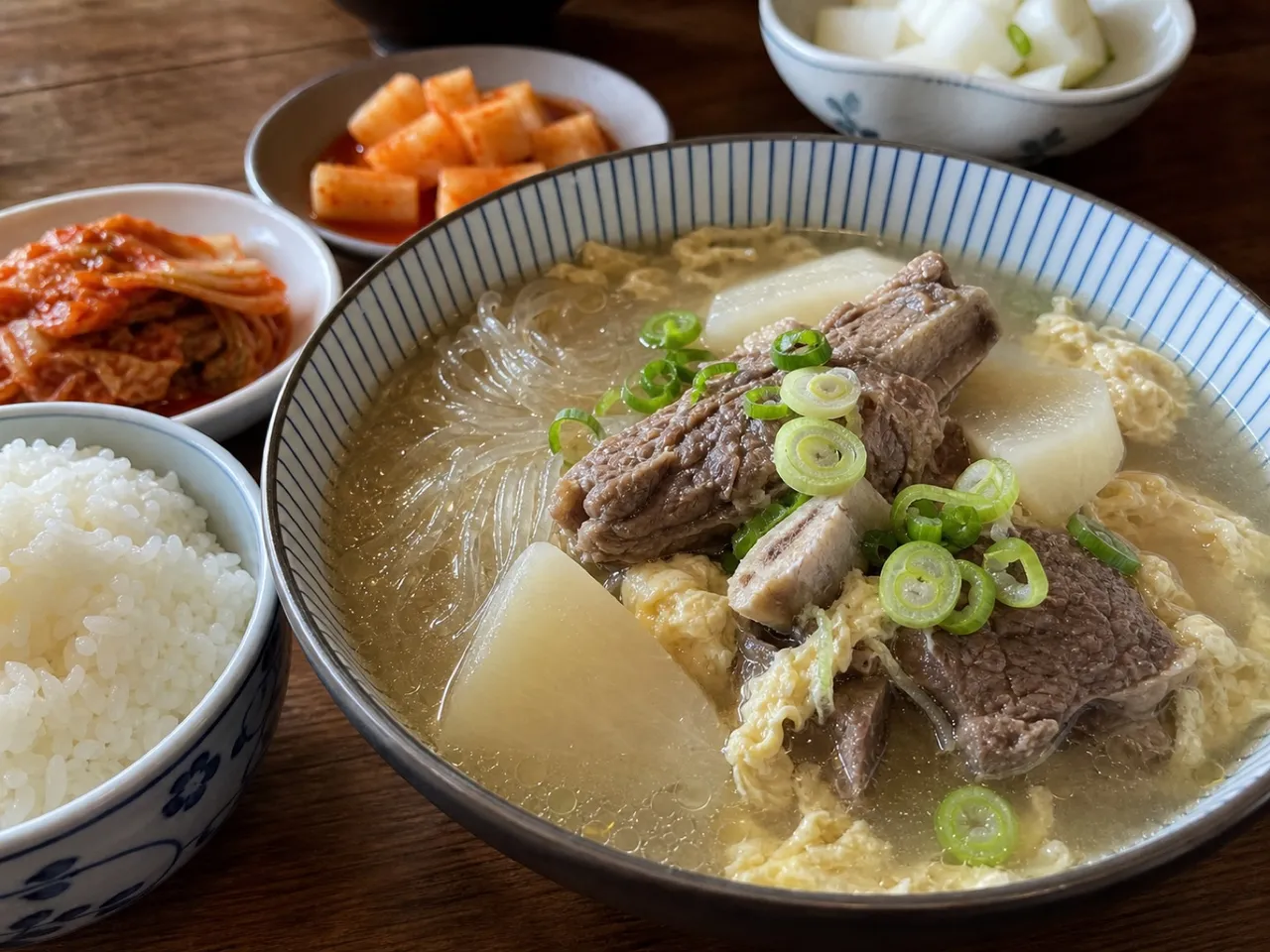 Serving Images are for illustrative purposes only, may be inaccurate, and do not guarantee the presence or absence of specific ingredients.
 Galbitang (Beef Short Rib Soup)
A nourishing and clear soup made by slowly simmering beef short ribs with daikon radish, onions, and garlic.
Contains common allergens
In the app, Listahan checks these against your household automatically.
Good to know
- One-pot
Matched from this dish's own ingredients and timing. Browse more: one-pot dinners
Instructions
6 steps- 1
Soak the beef short ribs in cold water for 1 hour to remove blood, changing the water once. Drain, then boil the ribs in fresh water for 10 minutes. Drain again and wash each rib meticulously under cold water.
- 2
In a large, clean pot, combine the washed ribs, radish blocks, whole onion, garlic, ginger, and 12 cups of water. Bring to a boil over high heat.
- 3
Reduce the heat to medium-low, cover, and simmer for 1.5 to 2 hours until the meat is tender enough to easily pull away from the bone. Skim any fat from the surface occasionally.
- 4
Remove all solids from the pot. Discard the onion, garlic, and ginger. Slice the cooked radish into bite-sized squares and return them to the clear broth along with the ribs.
- 5
Season the broth with soup soy sauce, adding salt to taste. Bring back to a gentle simmer.
- 6
Place a small handful of soaked glass noodles into each serving bowl. Ladle the boiling hot soup, ribs, and radish directly over the noodles to cook them. Top generously with chopped scallions.
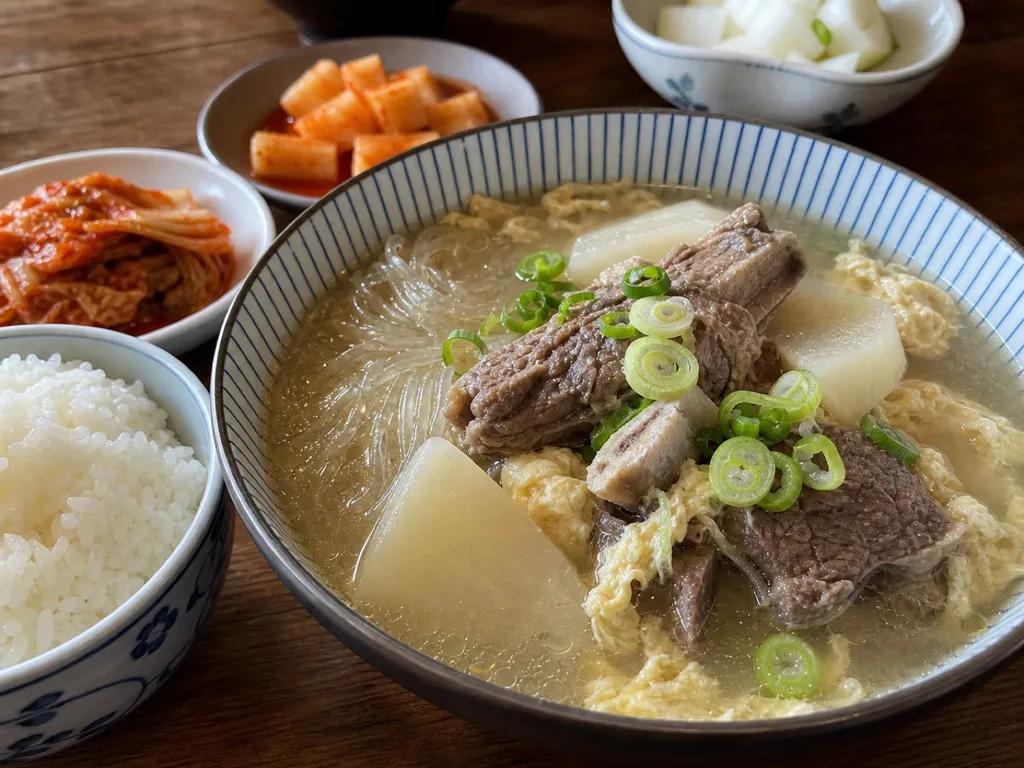 Images are for illustrative purposes only, may be inaccurate, and do not guarantee the presence or absence of specific ingredients.
 Listahan Family Score™
72/100
Good fit for most families
Score reflects how well this recipe fits a typical busy household. In the app, your Family Score is personalized to your household's allergens, kids, and pantry.
Nutrition
per serving510
Calories
47 g
Protein
19 g
Carbs
25 g
Fat
Estimated per serving. Actual values depend on the brands and portions you use.
Listahan cooking guide
Chef notes & practical guide
Technique notes, ingredient swaps, serve-alongside ideas, storage guidance, and equipment for this recipe.
Cultural context
Galbitang is a clear, refined beef short rib soup, the meat simmered until tender in a clean broth with radish and glass noodles. A dish for special occasions and recovery, it is gentler and more elegant than spicy beef soups. The clarity of the broth signals careful skimming and slow cooking.
Listahan note
This version blanches the ribs first for a clear broth, then simmers them tender with radish, finishing with glass noodles and egg ribbons.
Technique cues
- Blanch the ribs and discard the water for a clear broth.
- Simmer low and skim diligently for clarity.
- Add radish and glass noodles near the end so they stay tender.
Kitchen flow
- Parallel prep
- Blanch the ribs and prep the radish while the long simmer runs.
- Make-ahead
- Make the broth a day ahead; chill and skim the fat, then add noodles fresh.
- Leftover move
- Serve leftover broth and meat over rice for a quick gukbap.
- Cleanup rhythm
- One large pot; chill the broth so the fat lifts off cleanly.
Ingredient brief
Role, handling, and swap guidance for each key ingredient.
Bone-in short ribs
Main protein and base
Purpose: They give the broth its rich body and tender meat.
Handling: Blanch first, then simmer until fork-tender.
Adaptation: Beef shank gives a similar richness.
Korean radish (mu)
Vegetable
Purpose: Sweetens and clarifies the broth as it simmers.
Handling: Cut into large blocks and simmer with the ribs.
Adaptation: Daikon is a close substitute.
Glass noodles
Texture
Purpose: Add slippery body to the finished soup.
Handling: Soak and add near the end.
Adaptation: Omit for a lighter, clearer soup.
Soup soy sauce
Seasoning
Purpose: Seasons without darkening the clear broth.
Handling: Season to taste near the end.
Adaptation: Salt works but lacks the fermented depth.
Technique notes
- Blanching the ribs is the key to a clear, clean galbitang.
- Keep the simmer gentle for clarity and tenderness.
- Add the noodles and egg ribbons just before serving.
Ingredient swaps
- Gluten-free direction
- Use a tamari-style soup soy sauce; the glass noodles are wheat-free.
- Lighter direction
- Skip the glass noodles for a cleaner, brothier bowl.
- Lower-sodium direction
- Season gently and let diners add salt at the table.
Serve alongside
- Steamed white rice
- Kimchi
- Pickled radish
- Seasoned spinach
- Barley tea
- Cold water
- Soju
Serving suggestions only — check pairings for your household's allergens.
Storage & reheating
- Refrigerate the broth and ribs up to 3 days; add noodles fresh.
- Reheat gently and add soaked glass noodles when serving.
- Freeze the broth and ribs up to 2 months; noodles are best fresh.
Equipment
- Large stockpot
- Skimmer
- Ladle
- Fine strainer
Make this household-aware
Listahan Pro checks this recipe against your household's allergens, finds pantry-aware swaps, builds the shopping list, and helps you plan the week around it.
Plan it in Listahan
Add Galbitang (Beef Short Rib Soup) to your week, check it against your household's allergens, and build the shopping list automatically.
More Korean recipes
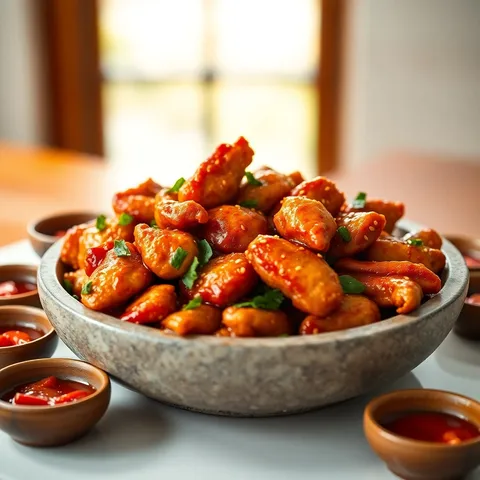 Korean Lens Verified Images are for illustrative purposes only, may be inaccurate, and do not guarantee the presence or absence of specific ingredients.
 Dakgalbi (Spicy Stir-fried Chicken)
Diced chicken marinated in a gochujang-based sauce, stir-fried with sweet potatoes, cabbage, perilla leaves, and tteok.
 Korean Lens Verified Images are for illustrative purposes only, may be inaccurate, and do not guarantee the presence or absence of specific ingredients.
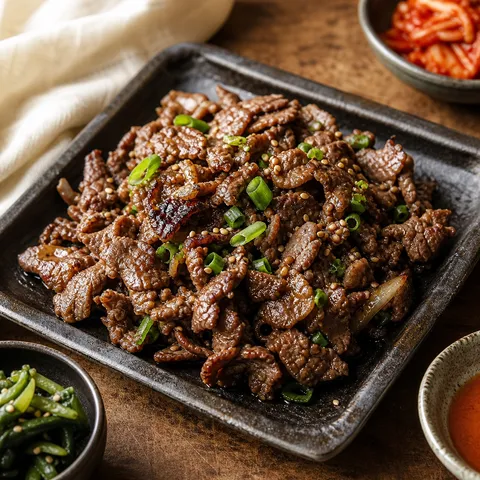
 Bulgogi (Marinated Beef BBQ)
Thinly sliced, marinated beef ribeye or sirloin grilled or stir-fried. Sweet, savory, and tender.
 Korean Lens Verified Images are for illustrative purposes only, may be inaccurate, and do not guarantee the presence or absence of specific ingredients.
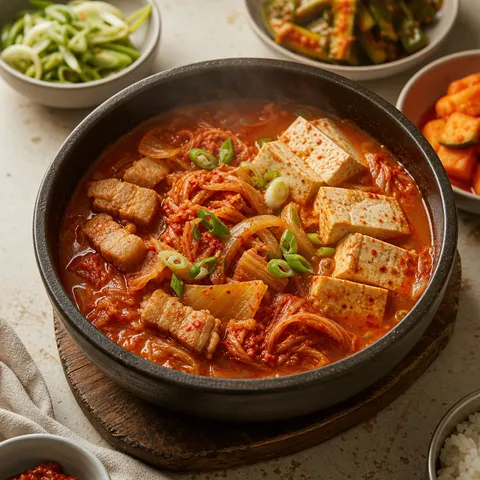
 Kimchi Jjigae (Kimchi Stew)
A classic, comforting stew made with aged kimchi, pork or seafood, scallions, onions, and diced tofu.