 Vietnamese Images are for illustrative purposes only, may be inaccurate, and do not guarantee the presence or absence of specific ingredients.
  Serving Images are for illustrative purposes only, may be inaccurate, and do not guarantee the presence or absence of specific ingredients.
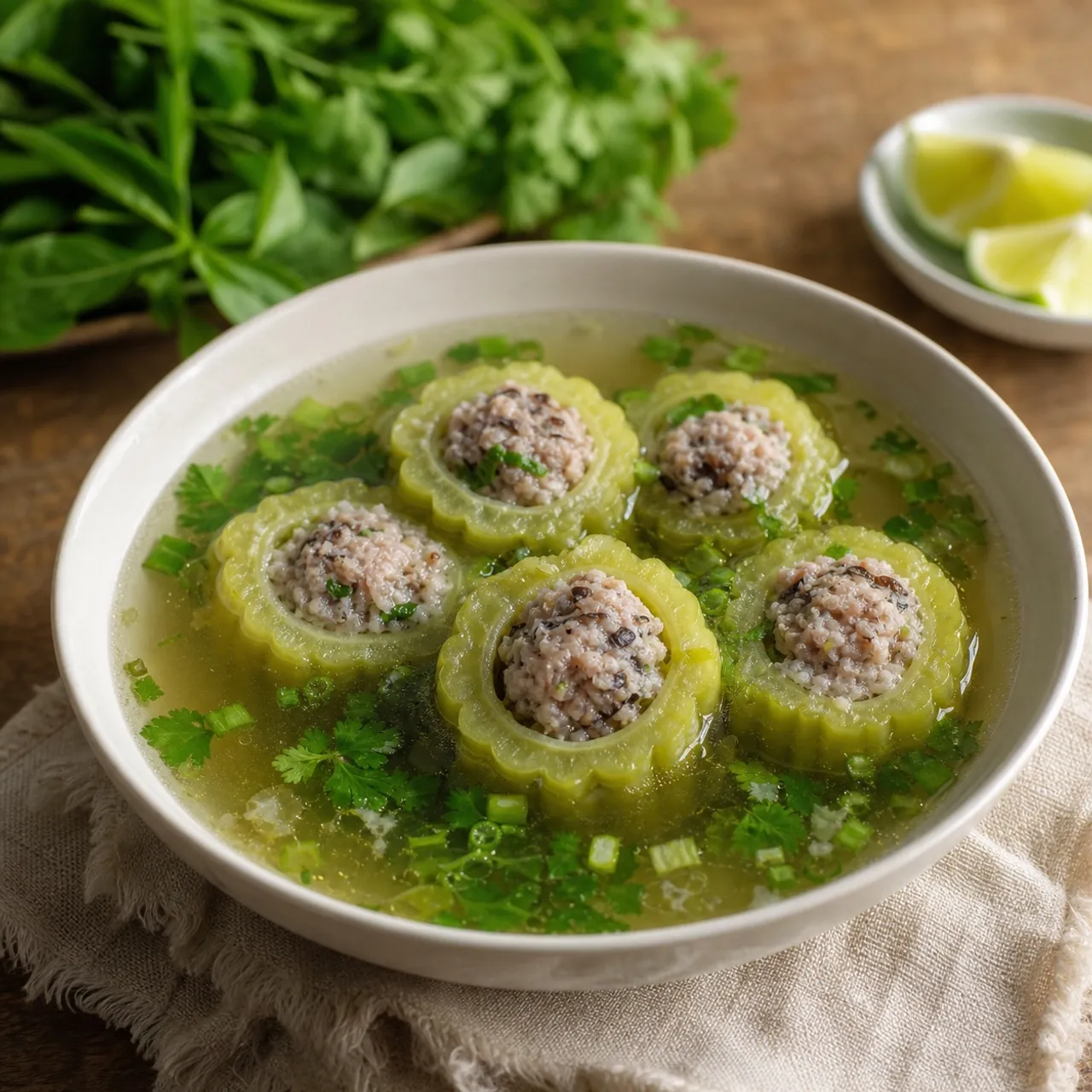
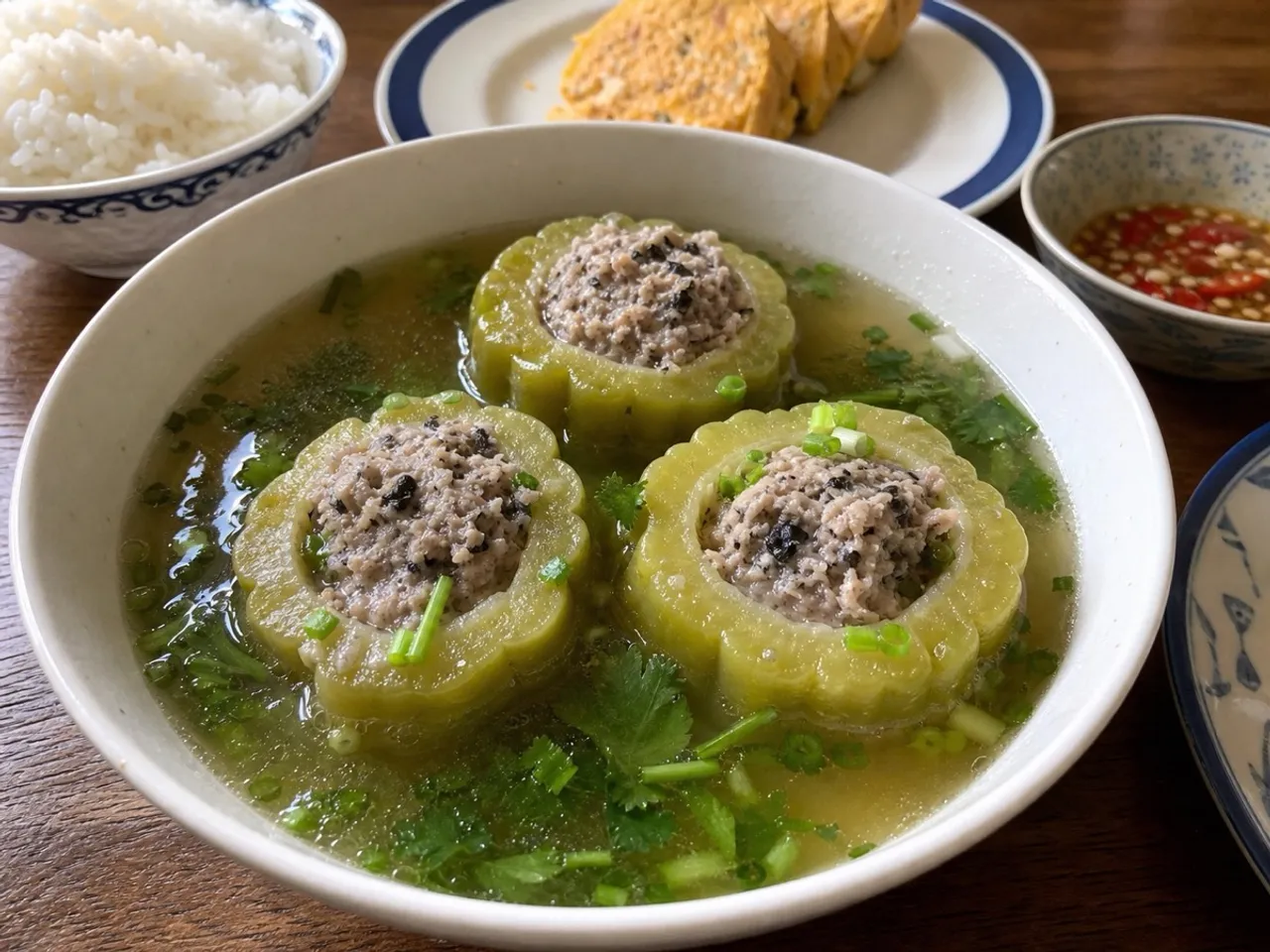
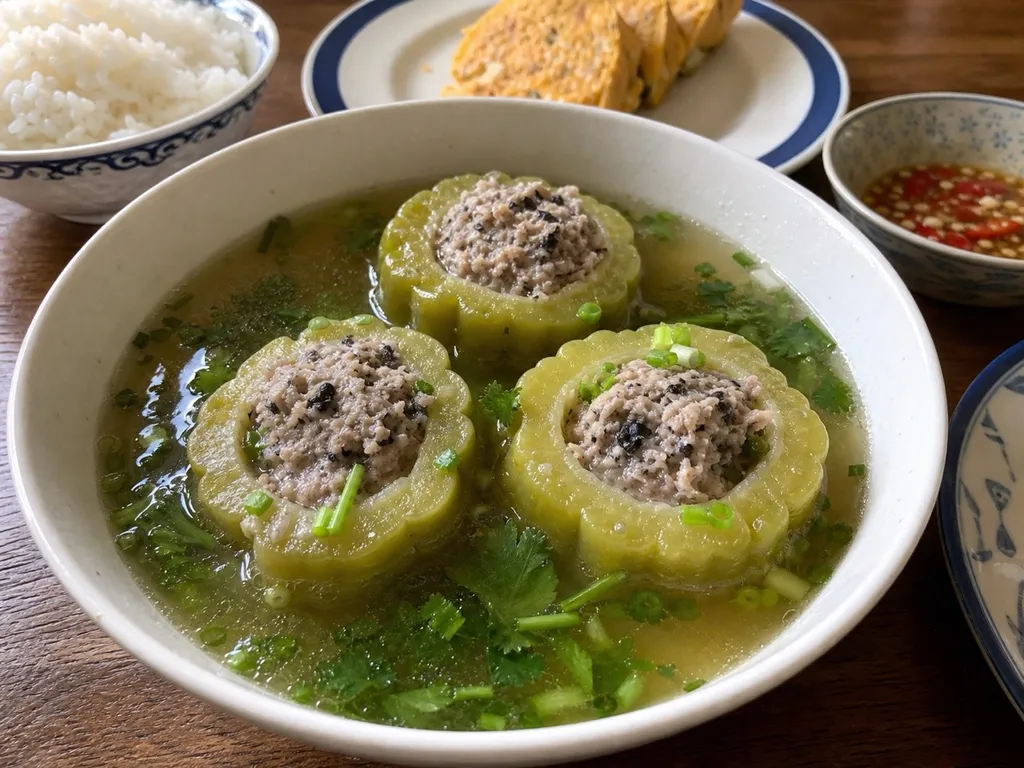
 Canh Khổ Qua Nhồi Thịt (Stuffed Bitter Melon Soup)
A soup featuring bitter melon hollowed out and stuffed with seasoned ground pork.
Contains common allergens
In the app, Listahan checks these against your household automatically.
Instructions
6 steps- 1
Prepare Bitter Melon: Cut the ends off the bitter melons and slice them crosswise into 1.5-inch thick rings. Use a small spoon to scrape out the seeds and white pith completely. Blanch the rings in boiling water for 2 minutes to reduce bitterness, then drain.
- 2
Make Filling: In a bowl, vigorously mix the ground pork, minced wood ear mushrooms, glass noodles, shallots, 1 tbsp fish sauce, and black pepper.
- 3
Stuff: Firmly pack the pork mixture into the hollowed-out centers of the bitter melon rings. Smooth the ends so the meat is flush with the vegetable.
- 4
Simmer Soup: Bring the broth to a boil in a pot. Carefully lower the stuffed bitter melon pieces into the liquid.
- 5
Cook Tender: Reduce heat to a simmer, skim any foam, and cook uncovered for 45-60 minutes. The bitter melon should become very soft and tender, yielding easily to a spoon.
- 6
Season and Serve: Season the broth with the remaining fish sauce. Ladle into bowls, ensuring everyone gets a stuffed ring and plenty of broth. Garnish with chopped scallions and cilantro.
 Images are for illustrative purposes only, may be inaccurate, and do not guarantee the presence or absence of specific ingredients.
 Listahan Family Score™
66/100
Works for many families
Score reflects how well this recipe fits a typical busy household. In the app, your Family Score is personalized to your household's allergens, kids, and pantry.
Nutrition
per serving550
Calories
57 g
Protein
22 g
Carbs
26 g
Fat
Estimated per serving. Actual values depend on the brands and portions you use.
Listahan cooking guide
Chef notes & practical guide
Technique notes, ingredient swaps, serve-alongside ideas, storage guidance, and equipment for this recipe.
Cultural context
Canh kho qua is a beloved everyday soup across southern Vietnam, where bitter melon grows abundantly in the warm climate. The bitterness of kho qua (literally 'passing through hardship') is considered cleansing in Vietnamese folk medicine, and families often serve it alongside rich braised dishes to cut through heaviness. Stuffing the melon rings with seasoned pork and glass noodles transforms the vegetable from a simple broth ingredient into the meal's centerpiece.
Listahan note
This version keeps the stuffing compact and well-bound with glass noodles and wood ear mushrooms so the filling stays inside during simmering. The broth is intentionally light to let the melon's gentle bitterness carry through.
Technique cues
- Salt the cut melon and let it sit five minutes before stuffing to draw out some surface bitterness, then rinse and pat dry — this step softens the flavor without eliminating the characteristic edge.
- Pack the ground pork mixture firmly into each ring and press the stuffing flush with the ends; a loose fill will fall apart the moment it hits the simmering broth.
- Add the stuffed rings to cold broth and bring everything up together rather than dropping them into boiling liquid — the gentler heat sets the pork evenly and keeps the rings intact.
Kitchen flow
- Parallel prep
- Soak glass noodles and wood ear mushrooms simultaneously in separate bowls. While they hydrate, slice and seed the melon rings and mix the pork filling so everything is ready to stuff at once.
- Make-ahead
- Stuff the melon rings up to 8 hours ahead and refrigerate uncovered on a plate; the cold also helps the filling firm up, which makes them easier to handle.
- Leftover move
- Slice leftover stuffed rings into coins and serve over rice with a spoonful of the broth as a saucy topping rather than reheating the soup as-is.
- Cleanup rhythm
- Wipe the cutting board and knife between the mushroom mincing and the pork prep to avoid flavor transfer; the broth pot and one mixing bowl are the only major items to wash.
Ingredient brief
Role, handling, and swap guidance for each key ingredient.
3 medium bitter melons (kho qua)
structural vessel and flavor
Purpose: The melon provides the soup's signature mild bitterness and acts as a natural cup that holds the filling together during cooking.
Handling: Cut crosswise into 2-inch rings, scoop out seeds and pith with a small spoon, lightly salt the inside, rest five minutes, then rinse.
Adaptation: Zucchini rings work as a mild, non-bitter substitute, though the dish loses its traditional character.
3/4 lb ground pork
filling body and richness
Purpose: Ground pork provides fat and binding that keeps the stuffing cohesive and flavors the broth as it cooks.
Handling: Mix with the remaining filling ingredients and stir in one direction for about a minute to develop a slightly sticky texture that holds together.
Adaptation: Ground chicken thigh works and is lower in fat; season more aggressively since chicken is leaner and blander.
1/4 cup dried wood ear mushrooms, soaked and minced
texture and binding
Purpose: Minced wood ear adds a slight crunch that contrasts the soft pork and contributes binding gelatin as the mushrooms reconstitute fully during cooking.
Handling: Soak in warm water 15-20 minutes until fully pliable, trim any tough stems, then mince finely so they disappear into the filling.
Adaptation: Dried shiitake (caps only, stems discarded) can replace wood ear; they add more umami but a softer texture.
1 oz glass noodles (cellophane noodles), soaked and cut short
binder and texture
Purpose: Softened glass noodles absorb the pork juices and swell slightly inside the filling, acting as a natural binder that prevents the stuffing from crumbling.
Handling: Soak in room-temperature water 10 minutes until pliable, then snip into half-inch lengths with scissors before mixing into the pork.
Adaptation: Finely minced firm tofu (squeezed dry) can replace glass noodles for a slightly different but effective bind.
2 tbsp fish sauce
seasoning and umami
Purpose: Fish sauce seasons the filling from the inside and enriches the broth as it seeps out during cooking, layering savory depth throughout.
Handling: Add to the pork mixture before stuffing; no separate prep needed.
Adaptation: Soy sauce plus a pinch of salt provides a similar saltiness with less fermented depth for a pescatarian or vegan direction.
4 cups pork or chicken broth
cooking medium and soup base
Purpose: A well-made broth makes the soup satisfying on its own; the stuffed melon releases pork juices into it as it simmers, building flavor naturally.
Handling: Use unsalted or lightly salted broth so you can adjust seasoning at the end after tasting; bring to a gentle simmer before adding the melon.
Adaptation: Vegetable broth works for a lighter version; add a splash of soy sauce to compensate for missing depth.
Technique notes
- A light dusting of cornstarch on the inside of each melon ring before stuffing gives the pork filling something to grip, dramatically reducing the chance of the filling sliding out in the pot.
- Taste the broth after the melon has cooked for 10 minutes; it will have absorbed seasoning from the filling, so hold off on adding more fish sauce until that point.
- Simmer, never boil — a rolling boil will cause the filling to puff and crack out of the rings; steady bubbles at medium-low keep everything intact and the broth clear.
Ingredient swaps
- Gluten-free direction
- Glass noodles are naturally gluten-free; confirm your fish sauce and broth are as well, and the dish is gluten-free without any other changes.
- Pork-free option
- Ground turkey thigh or a mix of ground shrimp and water chestnuts (minced) replaces the pork filling and keeps the texture interesting.
- Lower-bitterness approach
- If the family finds bitter melon too strong, halve the rings thinner (1-inch rings) so there is less melon per bite relative to the richer filling.
Serve alongside
- steamed jasmine rice
- ca kho to (caramelized fish in clay pot) for a traditional southern Vietnamese pairing
- stir-fried morning glory with garlic
- simple pickled bean sprouts with rice vinegar and sugar
- hot jasmine tea, which mirrors the cleansing quality of the bitter melon
- cold Vietnamese iced tea (tra da)
- light lager beer such as 333 or Saigon
Serving suggestions only — check pairings for your household's allergens.
Storage & reheating
- Refrigerate leftovers in the broth in an airtight container for up to 3 days; the melon softens further but remains edible.
- Reheat gently on the stovetop over medium-low heat; avoid the microwave which can cause the stuffing to burst out of the rings.
- Not recommended for freezing — the melon becomes mushy and the glass noodles turn gluey after thawing.
Equipment
- small spoon or melon baller for seeding the rings
- 4-quart saucepan or Dutch oven with a lid
- scissors for cutting soaked glass noodles
- ladle for serving
Make this household-aware
Listahan Pro checks this recipe against your household's allergens, finds pantry-aware swaps, builds the shopping list, and helps you plan the week around it.
Plan it in Listahan
Add Canh Khổ Qua Nhồi Thịt (Stuffed Bitter Melon Soup) to your week, check it against your household's allergens, and build the shopping list automatically.
More Vietnamese recipes
 Vietnamese Lens Verified Images are for illustrative purposes only, may be inaccurate, and do not guarantee the presence or absence of specific ingredients.
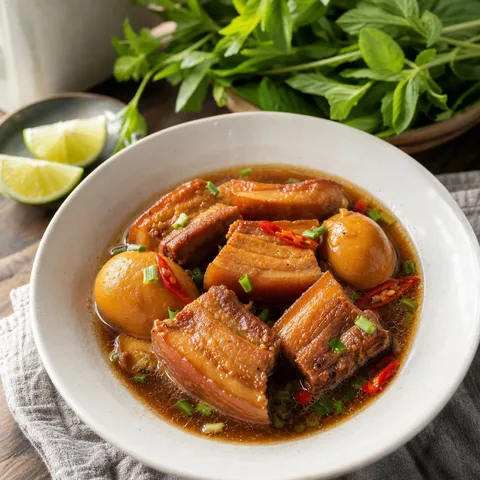
 Thịt Kho Tàu (Caramelized Pork and Eggs)
Meltingly tender pork belly and hard-boiled eggs braised in a rich, sweet, and savory coconut juice caramel, perfect over steamed rice.
 Vietnamese Lens Verified Images are for illustrative purposes only, may be inaccurate, and do not guarantee the presence or absence of specific ingredients.
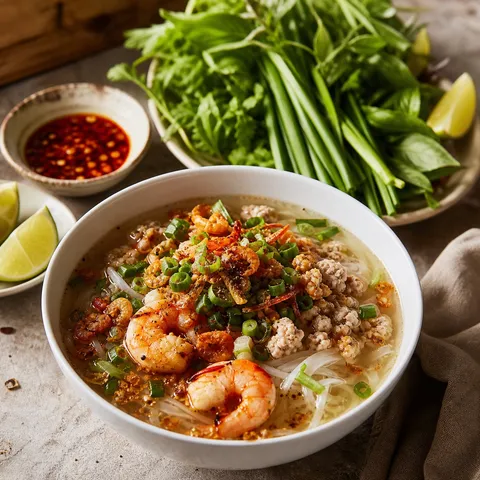
 Hủ Tiếu (Pork and Seafood Noodle Soup)
A Vietnamese pork-bone broth noodle soup loaded with ground pork, shrimp, and dried shrimp over chewy tapioca noodles, finished with garlic chives and fried garlic.
 Vietnamese Lens Verified Images are for illustrative purposes only, may be inaccurate, and do not guarantee the presence or absence of specific ingredients.
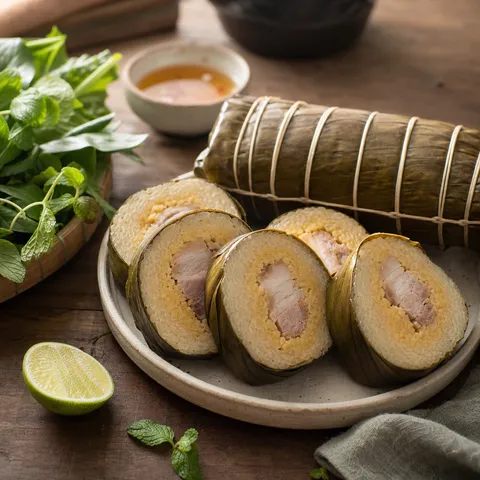
 Bánh Tét (Cylindrical Sticky Rice Cake)
The Southern equivalent of Bánh Chưng, rolled into a cylinder.