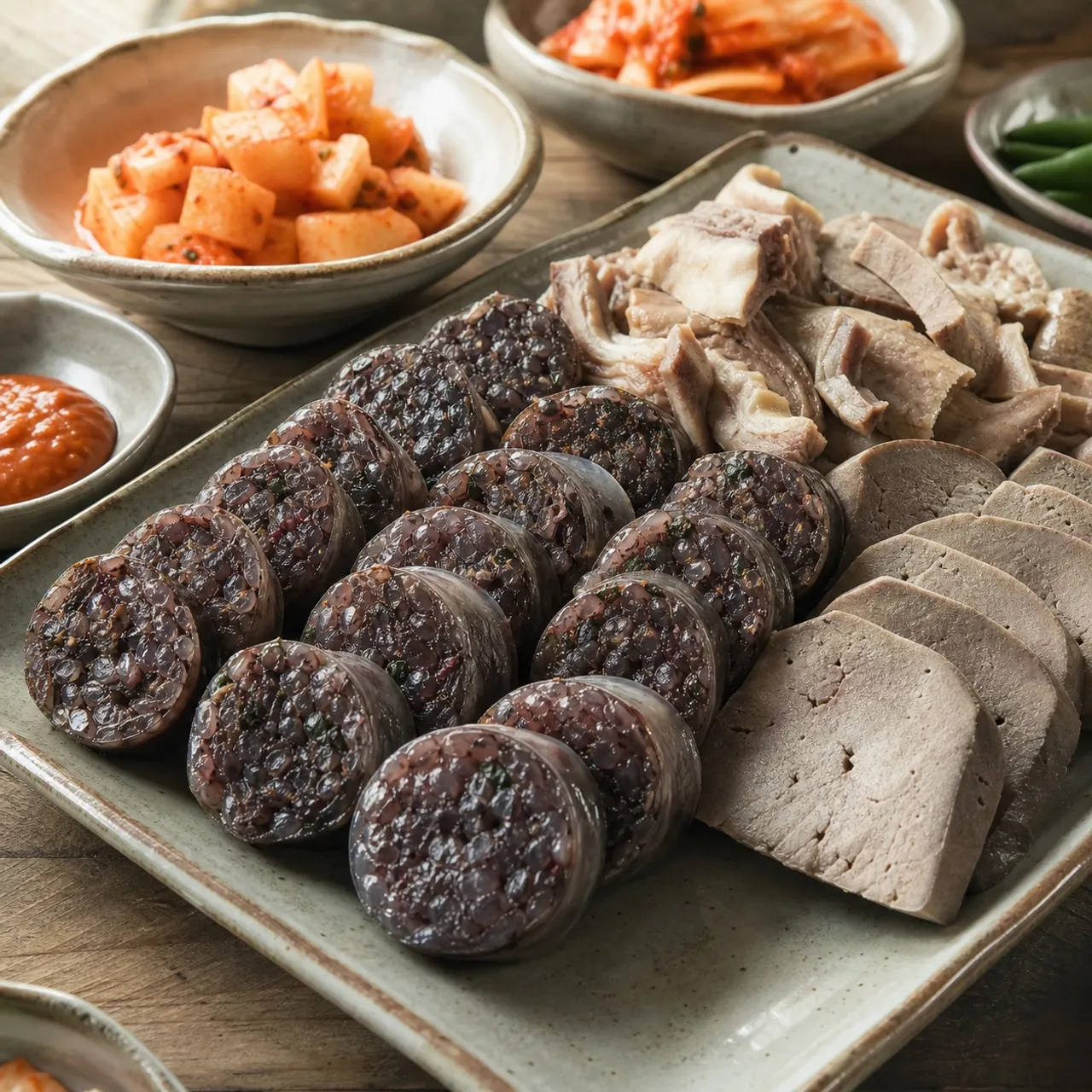
 Korean Images are for illustrative purposes only, may be inaccurate, and do not guarantee the presence or absence of specific ingredients.
 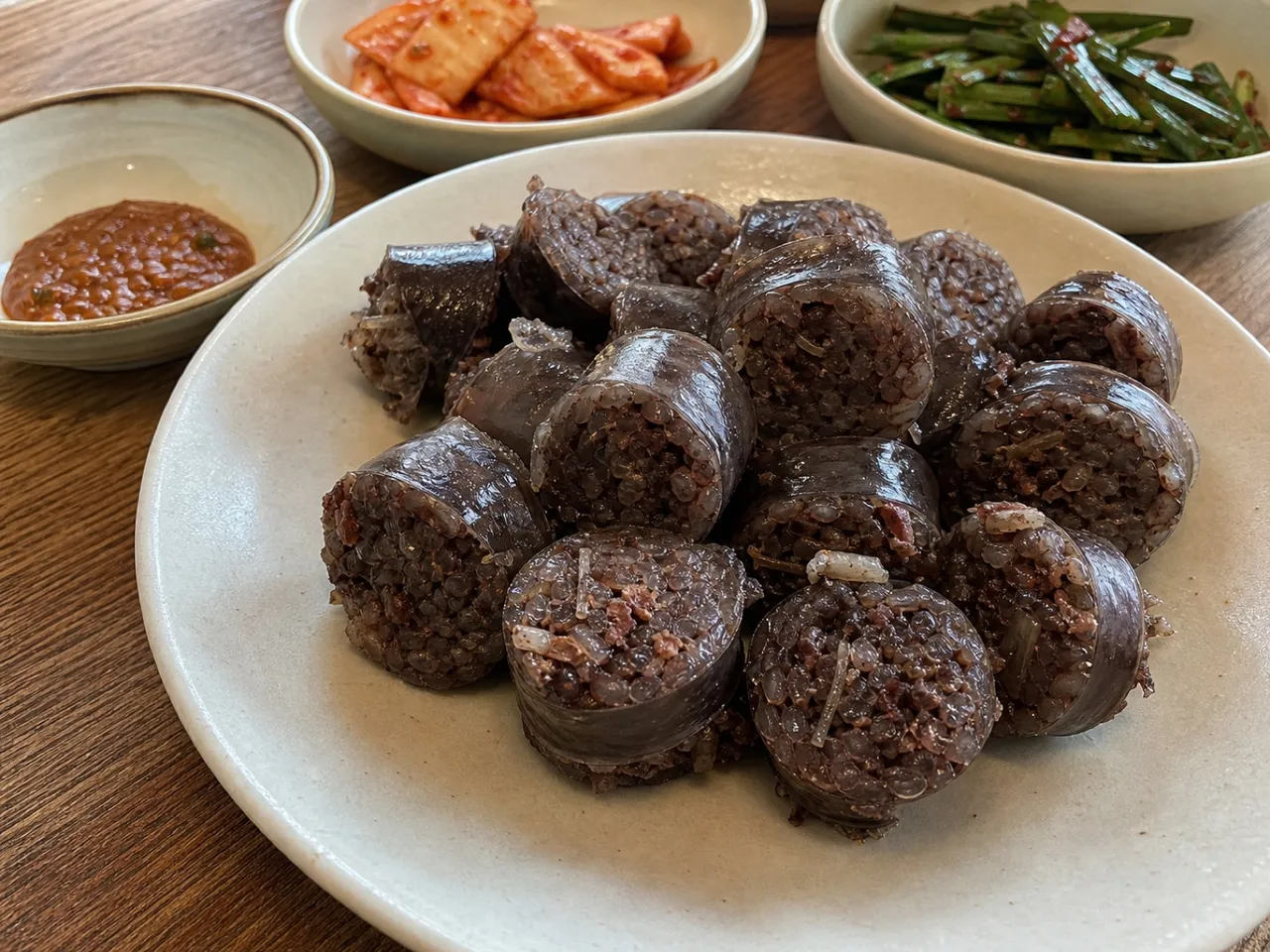 Serving Images are for illustrative purposes only, may be inaccurate, and do not guarantee the presence or absence of specific ingredients.
 Sundae (Korean Blood Sausage)
A type of blood sausage made by stuffing pig's intestines with a mixture of sweet potato noodles, barley, and pork blood.
No common allergens detected
Based on this recipe's ingredient list. Always verify with your own brands and labels.
Instructions
6 steps- 1
Thoroughly clean the pig intestines by rubbing them intensely with coarse salt and wheat flour inside and out. Rinse repeatedly under cold water until the water runs clear and there is no odor.
- 2
In a large mixing bowl, combine the soaked/chopped glass noodles, soaked glutinous rice, fresh pork blood, chopped perilla leaves, scallions, minced garlic, perilla oil, and salt. Mix until the filling is uniform.
- 3
Using a funnel or sausage stuffer, pipe the blood and noodle mixture into the cleaned intestines. Do not pack it too tightly, or it will burst during cooking. Tie off the ends securely with kitchen twine.
- 4
Fill a large steamer with water and bring to a boil. Place the stuffed sausages on the steamer rack lined with parchment paper.
- 5
Steam over medium-low heat for 45-50 minutes. Poke a few tiny holes in the casing with a needle during the first 10 minutes to release trapped air.
- 6
Let the sundae cool completely on a wire rack to firm up before slicing into 1/2-inch rounds. Serve with seasoned salt (salt mixed with gochugaru and black pepper).
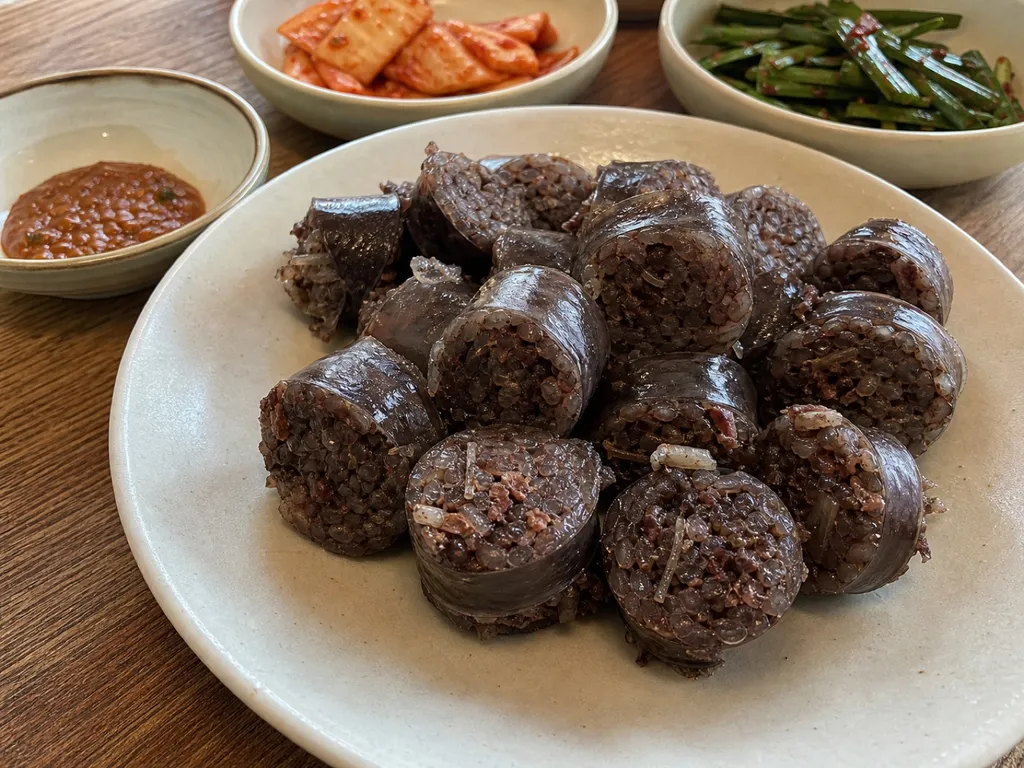 Images are for illustrative purposes only, may be inaccurate, and do not guarantee the presence or absence of specific ingredients.
 Listahan Family Score™
73/100
Good fit for most families
Score reflects how well this recipe fits a typical busy household. In the app, your Family Score is personalized to your household's allergens, kids, and pantry.
Nutrition
per serving520
Calories
27 g
Protein
60 g
Carbs
18 g
Fat
Estimated per serving. Actual values depend on the brands and portions you use.
Listahan cooking guide
Chef notes & practical guide
Technique notes, ingredient swaps, serve-alongside ideas, storage guidance, and equipment for this recipe.
Cultural context
Sundae is a Korean blood sausage, pig intestine stuffed with pork blood, glass noodles, and glutinous rice, then steamed and sliced. A popular street and market food, it is eaten with a salt-and-pepper or ssamjang dip. The mix of noodles and rice inside gives it a soft, savory, slightly chewy filling.
Listahan note
This version stuffs cleaned casings with a blood, glass-noodle, and glutinous-rice filling, steaming gently so the sausage sets without bursting.
Technique cues
- Clean the casings thoroughly; this determines the whole dish.
- Do not overstuff, as the filling expands and can burst the casing.
- Steam gently and prick any air pockets so it cooks evenly.
Kitchen flow
- Parallel prep
- Clean the casings and prep the filling before stuffing.
- Make-ahead
- Steam ahead and reheat by steaming or pan-frying slices.
- Leftover move
- Pan-fry leftover slices, or add them to a spicy tteokbokki pot.
- Cleanup rhythm
- Use one board for stuffing; the steamer rinses easily.
Ingredient brief
Role, handling, and swap guidance for each key ingredient.
Pig intestine casings
Casing
Purpose: Hold the filling and give the sausage its form.
Handling: Clean inside and out, then stuff loosely.
Adaptation: Pre-cleaned casings save considerable effort.
Pork blood
Filling base
Purpose: Binds the filling and gives sundae its character and color.
Handling: Mix with the other filling ingredients.
Adaptation: There is no real substitute; it defines the dish.
Glass noodles and glutinous rice
Filling body
Purpose: Add the soft, slightly chewy texture inside.
Handling: Chop the soaked noodles and rice finely and mix in.
Adaptation: Adjust the noodle-to-rice ratio to taste.
Perilla and scallion
Aromatics
Purpose: Add herbal freshness to the rich filling.
Handling: Chop and fold into the mixture.
Adaptation: Garlic chives can join or replace them.
Technique notes
- Thorough casing cleaning is non-negotiable.
- Stuff loosely and prick air pockets to prevent bursting.
- Serve with a salt-pepper-sesame dip, the traditional pairing.
Ingredient swaps
- Gluten-free note
- The filling is rice and starch noodles; serve with a tamari or salt-sesame dip.
- Easier direction
- Use pre-cleaned casings to skip the hardest step.
- Spicy direction
- Serve with leftover tteokbokki sauce for a spicy version.
Serve alongside
- Salt-pepper-sesame dip
- Tteokbokki
- Steamed liver and lung
- Pickled radish
- Soju
- Barley tea
- Cold water
Serving suggestions only — check pairings for your household's allergens.
Storage & reheating
- Refrigerate cooked sundae up to 3 days.
- Reheat by steaming or pan-frying slices.
- Freeze up to 2 months; thaw and steam to reheat.
Equipment
- Steamer
- Funnel or piping tool
- Mixing bowl
- Cutting board
Make this household-aware
Listahan Pro checks this recipe against your household's allergens, finds pantry-aware swaps, builds the shopping list, and helps you plan the week around it.
Plan it in Listahan
Add Sundae (Korean Blood Sausage) to your week, check it against your household's allergens, and build the shopping list automatically.
More Korean recipes
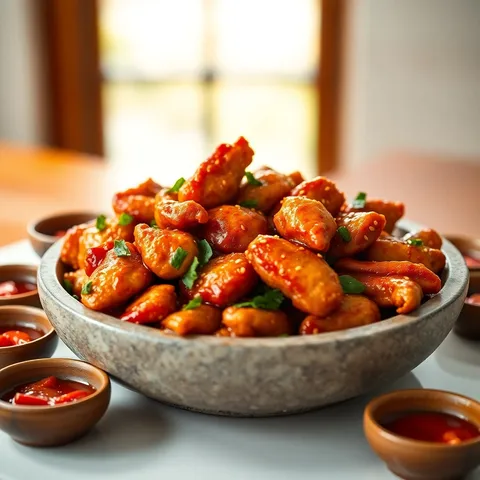 Korean Lens Verified Images are for illustrative purposes only, may be inaccurate, and do not guarantee the presence or absence of specific ingredients.
 Dakgalbi (Spicy Stir-fried Chicken)
Diced chicken marinated in a gochujang-based sauce, stir-fried with sweet potatoes, cabbage, perilla leaves, and tteok.
 Korean Lens Verified Images are for illustrative purposes only, may be inaccurate, and do not guarantee the presence or absence of specific ingredients.
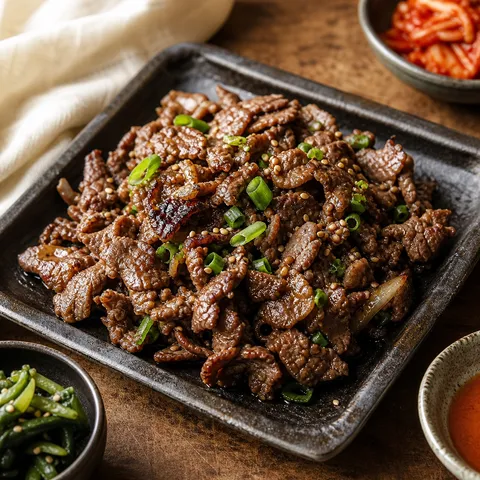
 Bulgogi (Marinated Beef BBQ)
Thinly sliced, marinated beef ribeye or sirloin grilled or stir-fried. Sweet, savory, and tender.
 Korean Lens Verified Images are for illustrative purposes only, may be inaccurate, and do not guarantee the presence or absence of specific ingredients.
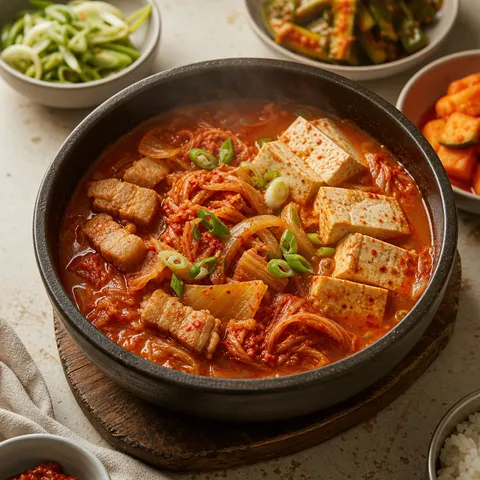
 Kimchi Jjigae (Kimchi Stew)
A classic, comforting stew made with aged kimchi, pork or seafood, scallions, onions, and diced tofu.