 Thai Images are for illustrative purposes only, may be inaccurate, and do not guarantee the presence or absence of specific ingredients.
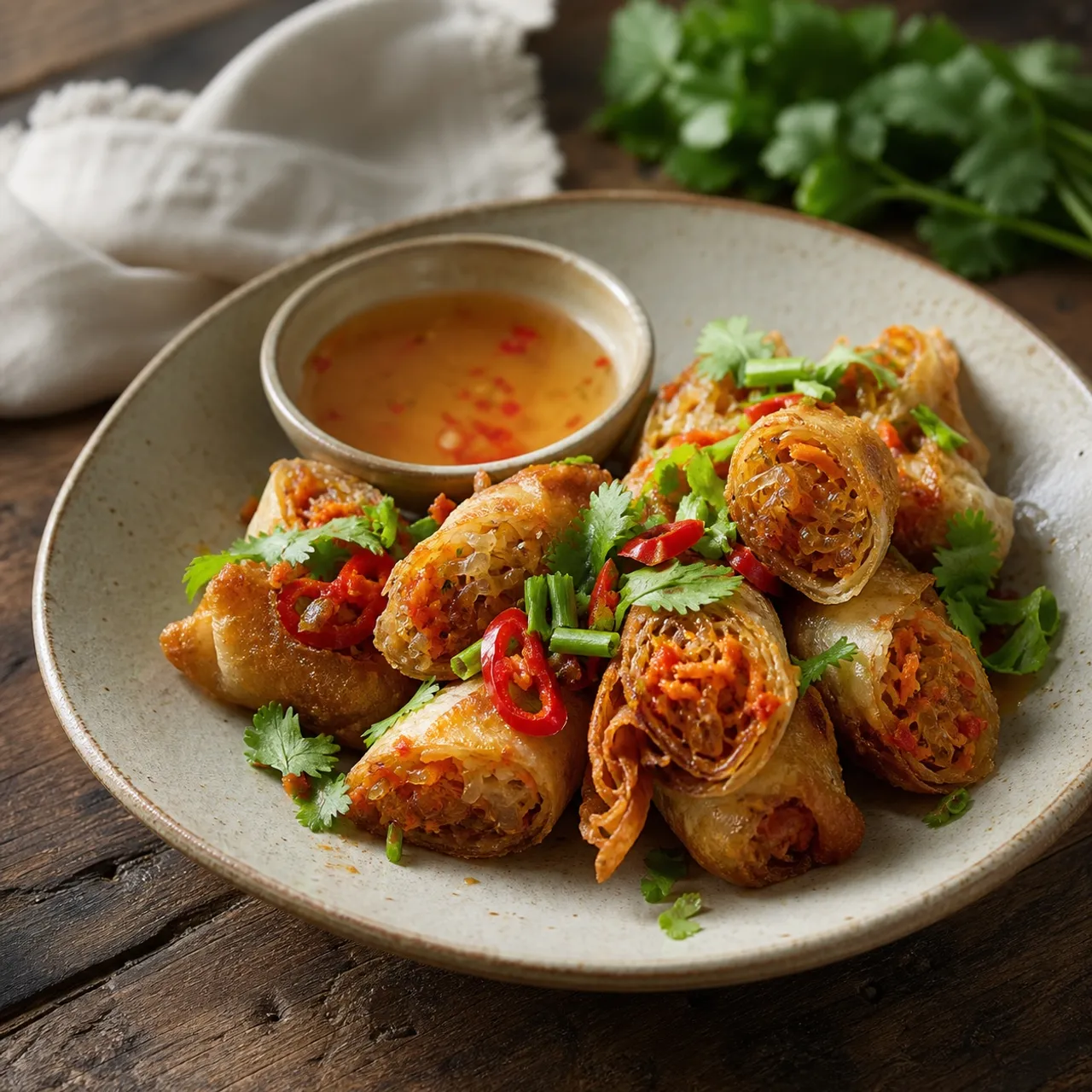
 Por Pia Tod
Golden, shatteringly crisp Thai spring rolls packed with seasoned vegetables and glass noodles.
Contains common allergens
In the app, Listahan checks these against your household automatically.
Good to know
- Crispy
Matched from this dish's own ingredients and timing. Browse more: crispy recipes
Instructions
6 steps- 1
Soak the glass noodles in warm water for 8-10 minutes until pliable, then drain and snip into 2-inch lengths with kitchen scissors.
- 2
Heat 1 tbsp oil in a wok over medium-high heat, stir-fry the garlic until fragrant, then add the cabbage and carrot and cook for 2-3 minutes until just wilted but still crisp.
- 3
Add the noodles, soy sauce, and white pepper, toss for another minute, then spread the filling on a tray to cool completely so the wrappers won't tear.
- 4
Place about 2 tbsp of filling near one corner of a wrapper, fold the corner over, fold in both sides, then roll tightly and seal the final edge with a dab of beaten egg.
- 5
Heat the 4 cups oil to 350°F in a deep pot, then fry the rolls in batches for 3-4 minutes, turning occasionally, until deep golden and crisp.
- 6
Drain on a wire rack and serve hot with sweet chili sauce.
Listahan Family Score™
70/100
Good fit for most families
Score reflects how well this recipe fits a typical busy household. In the app, your Family Score is personalized to your household's allergens, kids, and pantry.
Nutrition
per serving580
Calories
10 g
Protein
33 g
Carbs
47 g
Fat
Estimated per serving. Actual values depend on the brands and portions you use.
Listahan cooking guide
Chef notes & practical guide
Technique notes, ingredient swaps, serve-alongside ideas, storage guidance, and equipment for this recipe.
Cultural context
Por pia tod sits in Thailand's Chinese-influenced spring roll family, related to popiah traditions that moved through Southeast Asian port cities. In Thai cooking, the fried version is usually small, crisp, and snackable, with a vegetable-noodle filling and a sweet dipping sauce that balances the peppery savory interior.
Listahan note
This version keeps the filling vegetable-forward and practical for a home fryer. The main priority is moisture control: cool the filling completely, roll tightly, and fry in batches so the wrappers blister instead of turning greasy.
Technique cues
- Cool the filling on a tray, not in a bowl. Spreading it out lets steam escape so the wrappers stay intact when you roll.
- Roll firmly but do not overstuff. Two tablespoons of filling gives you a compact roll that cooks through before the wrapper gets too dark.
- A wire rack is better than paper towels after frying. It lets steam escape from the bottom, which keeps the crust crisp longer.
Kitchen flow
- Parallel prep
- Soak and snip the glass noodles while you shred the cabbage and julienne the carrot; heat the stir-fry pan only after everything is cut.
- Make-ahead
- Cook and cool the filling earlier in the day, then roll and fry close to serving so the wrappers stay crisp.
- Leftover move
- Chop leftover rolls and scatter them over jasmine rice with cucumber and extra sweet chili sauce for a quick bowl.
- Cleanup rhythm
- Set up the wire rack, tongs, and landing tray before frying, then strain the cooled oil after dinner if you plan to reuse it.
Ingredient brief
Role, handling, and swap guidance for each key ingredient.
Spring roll wrappers
Crisp outer shell
Purpose: Thin wrappers fry into the brittle, flaky layers that define por pia tod.
Handling: Keep the stack covered with a barely damp towel while rolling so the sheets do not dry and crack.
Adaptation: Rice paper gives a different chewy-crisp texture and needs a different rolling and frying approach.
Dried glass noodles (bean thread)
Filling structure
Purpose: The noodles absorb seasoning and help bind the shredded vegetables into a tidy filling.
Handling: Soak until pliable, drain well, then snip into short lengths so the rolls are easy to bite through.
Adaptation: Very thin rice vermicelli can work, but it will feel softer and less springy.
Green cabbage
Main vegetable body
Purpose: Cabbage gives sweetness, volume, and a little crunch without making the filling heavy.
Handling: Shred it finely so it wilts quickly and packs neatly into the wrapper.
Adaptation: Napa cabbage is softer and juicier, so cook it briefly and cool it well before rolling.
Carrot
Sweet crunch and color
Purpose: Carrot adds a clean sweetness that balances the soy sauce and white pepper.
Handling: Julienne it thinly so it cooks at the same pace as the cabbage.
Adaptation: Bean sprouts can replace some of the carrot for a lighter crunch, but they release more moisture.
Garlic
Aromatic base
Purpose: Garlic gives the filling its first savory note before the vegetables go in.
Handling: Stir-fry it just until fragrant, then add the vegetables before it browns too much.
Adaptation: Shallot can soften the flavor and add sweetness, though the filling will taste less direct.
Soy sauce
Salty seasoning base
Purpose: Soy sauce seasons the noodles and vegetables evenly without needing a long sauce.
Handling: Add it after the vegetables have started to wilt so it coats the filling instead of steaming the pan right away.
Adaptation: Light soy sauce keeps the filling cleaner-tasting; a small splash of mushroom soy makes it darker and deeper.
Technique notes
- The filling should taste a little stronger than you expect because the plain wrapper softens the seasoning once everything is fried together.
- If a wrapper tears, use a second wrapper around that roll rather than trying to patch the hole with egg.
- Keep the oil near 350 F and give the rolls room. Crowding drops the temperature and makes the wrappers absorb more oil before they crisp.
Ingredient swaps
- Wrapper backup
- Use square spring roll wrappers of a similar size; larger wrappers can be trimmed or rolled with a little less filling.
- No-egg sealing path
- Seal the edge with a flour-and-water paste instead of beaten egg; press the seam firmly so it does not open in the oil.
- More aromatic filling
- Add finely sliced cilantro stems or a little minced shallot with the garlic for a more fragrant filling.
- Air-fryer direction
- Brush the rolls lightly with oil and cook in a single layer; the finish will be drier and less blistered than deep-fried rolls.
Serve alongside
- Thai cucumber relish
- Jasmine rice with fried garlic
- Som tam-style green papaya salad
- Clear cabbage soup with white pepper
- Thai iced tea
- Lemongrass iced tea
- Cold Singha-style lager
Serving suggestions only — check pairings for your household's allergens.
Storage & reheating
- Refrigerate leftover rolls in a sealed container for up to 2 days; they will soften as they sit.
- Reheat on a rack in a hot oven or air fryer until the wrappers crisp again.
- Freeze uncooked rolled spring rolls in a single layer, then fry from frozen over slightly gentler heat so the centers warm before the wrappers darken.
Equipment
- Wok or wide skillet
- Kitchen scissors
- Deep heavy pot
- Wire rack set over a tray
Make this household-aware
Listahan Pro checks this recipe against your household's allergens, finds pantry-aware swaps, builds the shopping list, and helps you plan the week around it.
Plan it in Listahan
Add Por Pia Tod to your week, check it against your household's allergens, and build the shopping list automatically.
More Thai recipes
 Thai Lens Verified Images are for illustrative purposes only, may be inaccurate, and do not guarantee the presence or absence of specific ingredients.
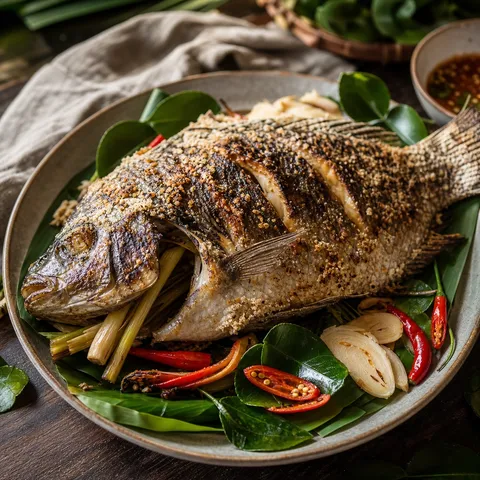
 Pla Pao
A whole salt-crusted fish stuffed with lemongrass and grilled until the skin is crackling and the flesh is silky.
 Thai Lens Verified Images are for illustrative purposes only, may be inaccurate, and do not guarantee the presence or absence of specific ingredients.
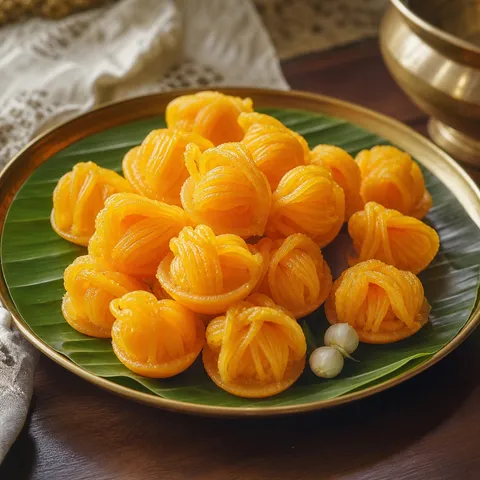
 Thong Yip
Petite golden flowers pressed from egg yolk and sugar, simmered in jasmine-scented syrup until set — a centuries-old Thai royal confection as beautiful as it is sweet.
 Thai Lens Verified Images are for illustrative purposes only, may be inaccurate, and do not guarantee the presence or absence of specific ingredients.
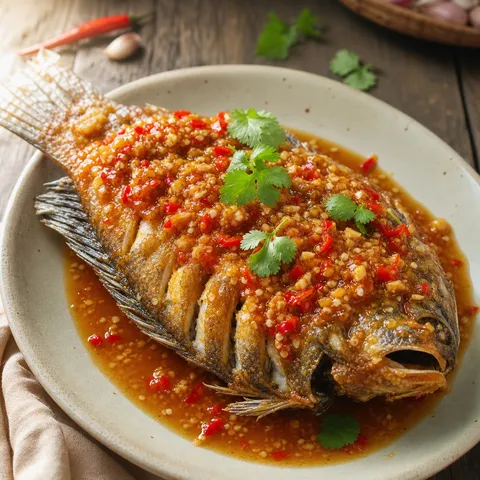
 Pla Rad Prik
Whole fish fried to a shatteringly crisp shell, then blanketed in a sticky, sweet-hot chili-tamarind sauce with garlic and basil — dramatic, punchy, and made for sharing.