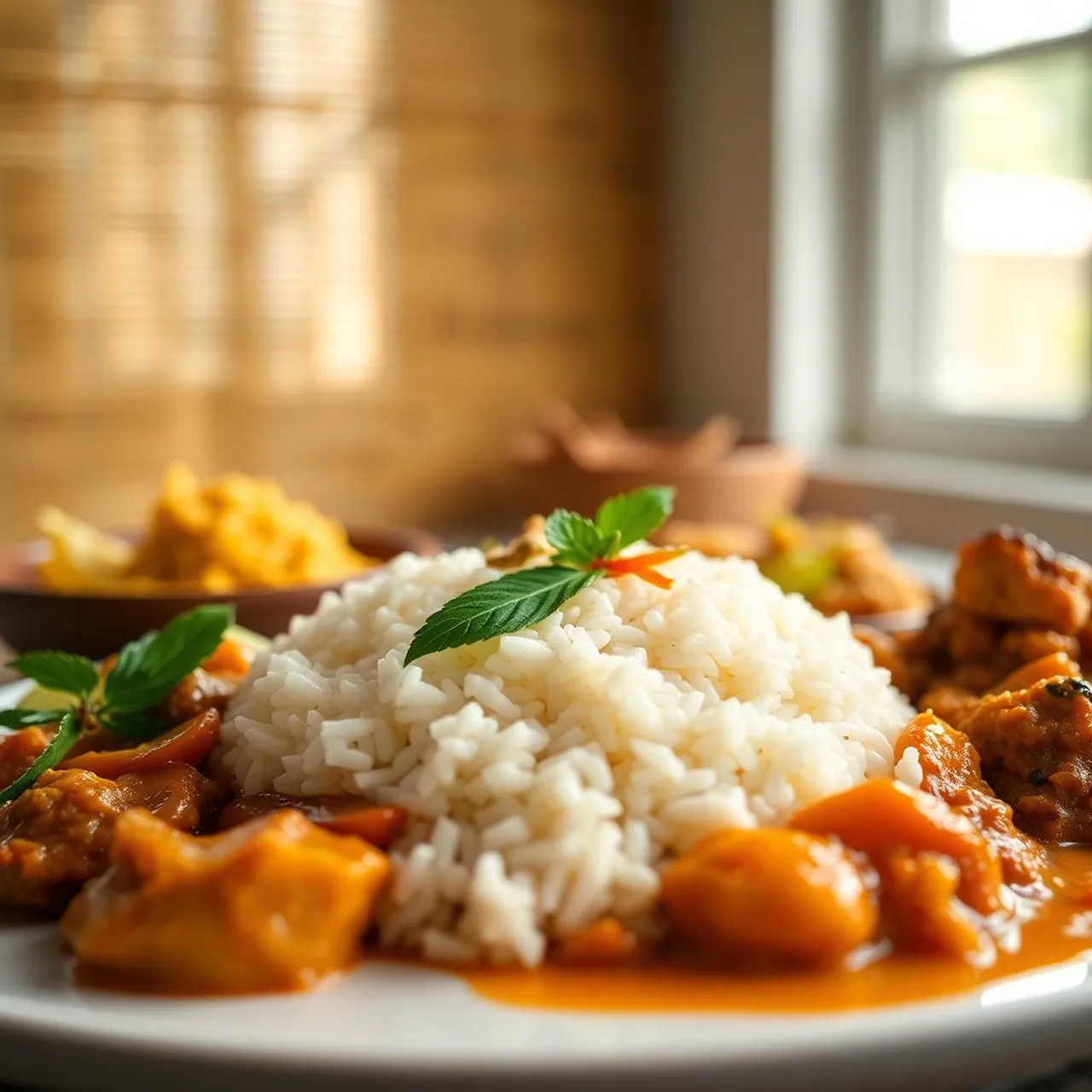
 Indonesian & Malaysian Images are for illustrative purposes only, may be inaccurate, and do not guarantee the presence or absence of specific ingredients.
 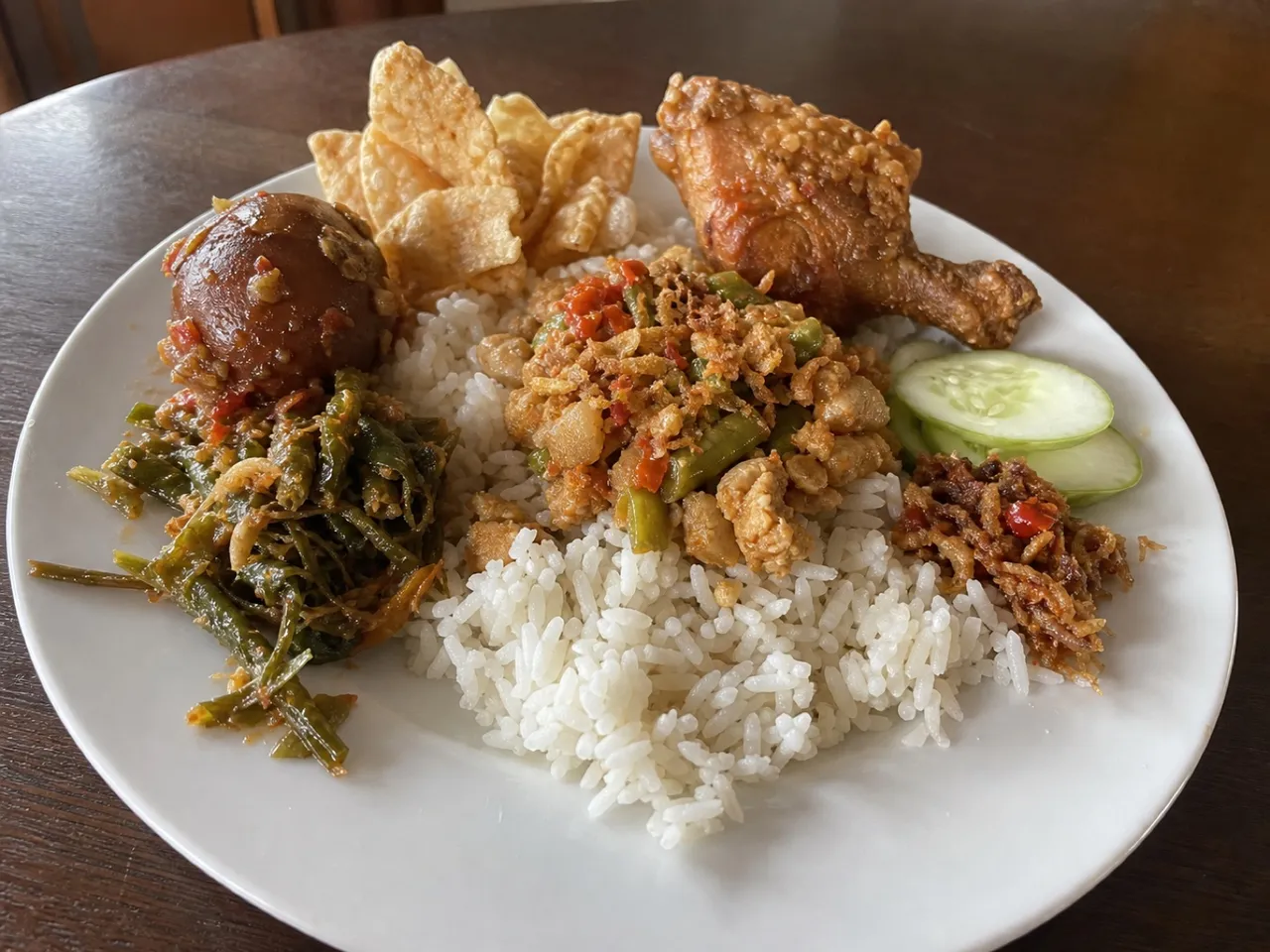 Serving Images are for illustrative purposes only, may be inaccurate, and do not guarantee the presence or absence of specific ingredients.
 Nasi Campur
A Balinese feast on one plate — steamed rice ringed with small portions of spiced meats, vegetables, and sambals, every bite different.
Contains common allergens
In the app, Listahan checks these against your household automatically.
Instructions
6 steps- 1
Prepare the individual side dishes (chicken, beef rendang, and spicy eggs) according to their respective recipes.
- 2
Quickly stir-fry the water spinach with garlic, shrimp paste, and chilies over high heat.
- 3
Scoop a neat, round mound of warm steamed white rice into the center of a large plate.
- 4
Arrange small portions of the prepared side dishes in a circle around the rice.
- 5
Add a spoonful of fiery sambal and a sprinkle of fried shallots over the rice.
- 6
Serve immediately as a complete, vibrant one-plate meal.
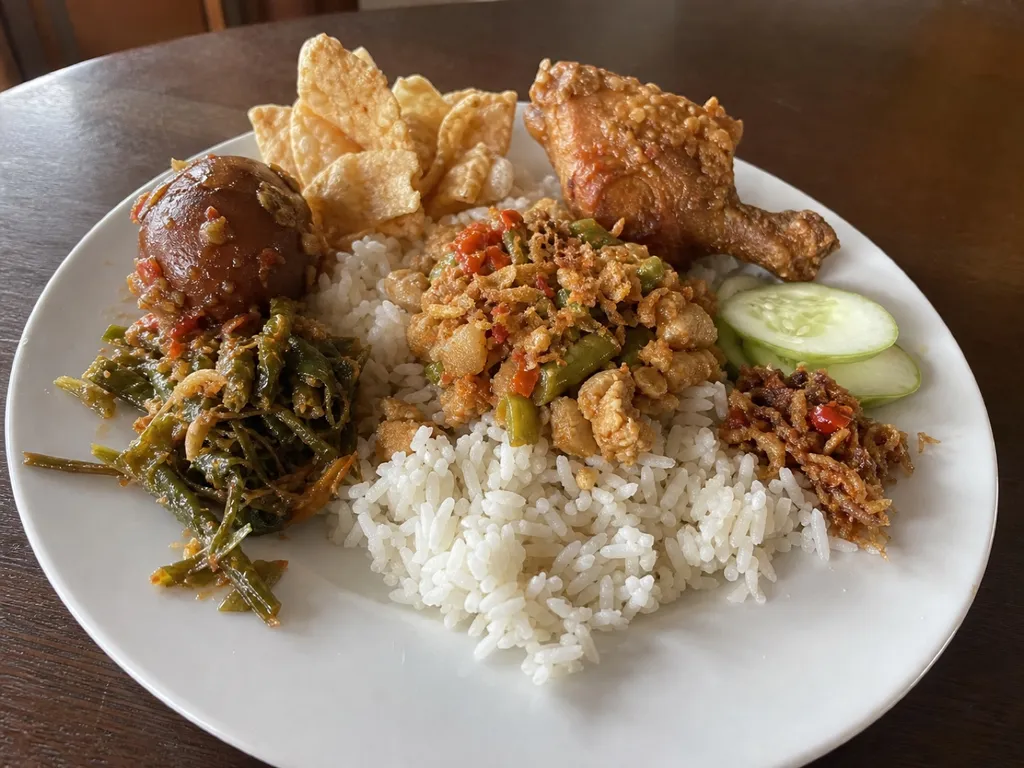 Images are for illustrative purposes only, may be inaccurate, and do not guarantee the presence or absence of specific ingredients.
 Listahan Family Score™
68/100
Works for many families
Score reflects how well this recipe fits a typical busy household. In the app, your Family Score is personalized to your household's allergens, kids, and pantry.
Nutrition
per serving1050
Calories
50 g
Protein
151 g
Carbs
24 g
Fat
Estimated per serving. Actual values depend on the brands and portions you use.
Listahan cooking guide
Chef notes & practical guide
Technique notes, ingredient swaps, serve-alongside ideas, storage guidance, and equipment for this recipe.
Cultural context
Nasi campur — 'mixed rice' — is less a single dish than a format that exists across the entire Indonesian archipelago, with each region offering its own combination of small dishes served alongside steamed rice. The Balinese version (nasi campur Bali) is perhaps the most famous internationally, featuring a base of steamed white rice surrounded by small portions of sate, lawar, fried tempe, shredded chicken, and sambal. The format mirrors the Indian thali and reflects a food culture built around abundance, variety, and communal sharing rather than single-protein plates.
Listahan note
This version assembles a home-scale nasi campur with four to five small accompaniments that can be partially made ahead, balancing protein, vegetable, and condiment components around a central mound of steamed rice.
Technique cues
- Cook each component to be slightly more assertively seasoned than you think is necessary — the components will be served in small quantities alongside plain steamed rice, so they need enough flavor to season each bite without the help of a sauce.
- Temperature contrast is important in a well-composed nasi campur: serve some components at room temperature rather than trying to keep everything hot, which reflects how it is traditionally eaten at Indonesian warungs.
- Build the plate with the rice mound in the center and arrange the accompaniments clockwise so each component is distinct and visible — nasi campur is a visual dish that should look abundant even in modest portions.
Kitchen flow
- Parallel prep
- Poach the chicken and fry the tempeh while the rice cooks; fry the shallots last since they should be freshest at serving.
- Make-ahead
- All accompaniments except the fried shallots can be made up to 2 days ahead and refrigerated; assemble the plates to order with freshly fried shallots.
- Leftover move
- Nasi campur components refrigerate and reassemble beautifully for a next-day lunch bowl; add a fried egg on top for extra richness.
- Cleanup rhythm
- Use one pot for poaching and one skillet for frying tempeh and shallots sequentially; minimize dishes by staging component cooking in order.
Ingredient brief
Role, handling, and swap guidance for each key ingredient.
steamed jasmine rice
central base
Purpose: The rice is the neutral base that unites all the assertive components and provides the bulk of the meal's calories.
Handling: Cook slightly drier than usual — the accompaniments each bring moisture, so overly sticky rice becomes too heavy.
Adaptation: Nasi uduk (coconut rice) can substitute for a richer, more fragrant base.
shredded spiced chicken
primary protein
Purpose: A simply spiced shredded chicken provides a mild, familiar protein that most eaters enjoy and that contrasts well with the sharper condiments.
Handling: Poach thighs in seasoned water with lemongrass and ginger, then shred finely and toss with fried shallot oil.
Adaptation: Sliced crispy tofu provides a vegetarian protein that works identically in the plate composition.
tempeh
secondary protein and texture
Purpose: Fried tempeh provides a nutty, firm texture contrast and is a traditional component of most nasi campur plates.
Handling: Slice thin and pan-fry in a little oil until deep golden and crispy on both sides; season with salt while hot.
Adaptation: Fried firm tofu can substitute with a milder flavor.
sambal
heat condiment
Purpose: Sambal is the essential heat element that ties the plate together — without it nasi campur can taste flat and one-dimensional.
Handling: Use a good quality sambal oelek or a quickly made fresh sambal; serve in a small amount on the side so diners can control heat.
Adaptation: Any style of sambal works — adjust heat level for your household.
fried shallots
garnish and texture
Purpose: Crispy fried shallots are scattered over the plate at the last moment to add crunch and a sweet, caramelized onion note.
Handling: Slice shallots thin and fry in neutral oil until golden; drain and cool on a paper towel — they crisp as they cool.
Adaptation: French-fried onions from a can are a perfectly acceptable shortcut for everyday meals.
Technique notes
- The visual arrangement of nasi campur is as important as the cooking — take time to plate with separate, distinct portions so the diner can appreciate each component before mixing.
- Adding a small mound of lawar (Balinese minced vegetable salad) or acar (pickled vegetables) between the richer components provides acid and crunch that refreshes the palate between bites.
- The shallot oil left from frying the shallots is liquid gold — toss it with the shredded chicken or drizzle over the rice for an extra layer of flavor that ties the plate together.
Ingredient swaps
- Vegan direction
- Replace chicken with extra tempeh and tofu, use a vegetarian sambal made without shrimp paste, and top with a fried egg substitute or just extra fried shallots.
- Gluten-free direction
- Nasi campur is naturally gluten-free when soy sauce is replaced with tamari; verify that any prepared sambal does not contain wheat-based thickeners.
Serve alongside
- Acar (pickled cucumber and carrot)
- Prawn crackers (krupuk)
- Sayur urap (vegetable salad with spiced coconut)
- Iced teh manis (sweet iced tea)
- Fresh young coconut water
Serving suggestions only — check pairings for your household's allergens.
Storage & reheating
- Individual components store separately in the refrigerator for up to 3 days; assemble plates fresh each time rather than storing assembled.
- Fried shallots store at room temperature in an airtight container for up to 1 week and maintain their crunch when kept away from moisture.
Equipment
- Medium pot for poaching chicken and cooking rice
- Nonstick or cast-iron skillet for frying tempeh and shallots
- Wide shallow bowls or plates for the composed presentation
Make this household-aware
Listahan Pro checks this recipe against your household's allergens, finds pantry-aware swaps, builds the shopping list, and helps you plan the week around it.
Plan it in Listahan
Add Nasi Campur to your week, check it against your household's allergens, and build the shopping list automatically.
More Indonesian & Malaysian recipes
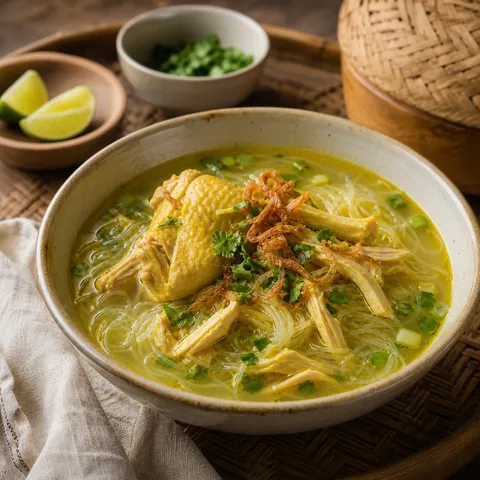 Indonesian & Malaysian Lens Verified Images are for illustrative purposes only, may be inaccurate, and do not guarantee the presence or absence of specific ingredients.
 Soto Ayam
A golden, turmeric-spiced Indonesian chicken soup with glass noodles, crispy shallots, and lime — light, herbal, and deeply comforting.
 Indonesian & Malaysian Lens Verified Images are for illustrative purposes only, may be inaccurate, and do not guarantee the presence or absence of specific ingredients.
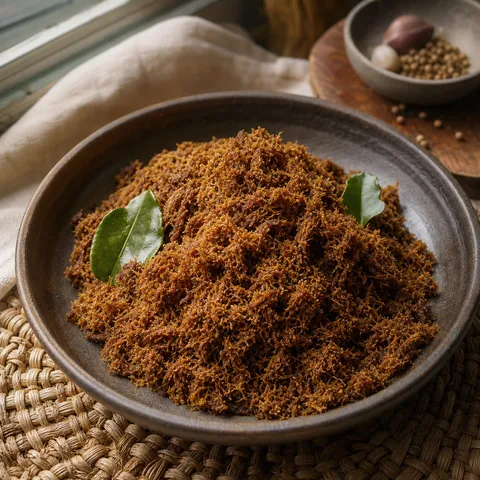
 Beef Serunding
Dry-fried spiced beef floss toasted with coconut and lemongrass until golden and fragrant — a rich, crumbly condiment that transforms plain rice.
 Indonesian & Malaysian Lens Verified Images are for illustrative purposes only, may be inaccurate, and do not guarantee the presence or absence of specific ingredients.
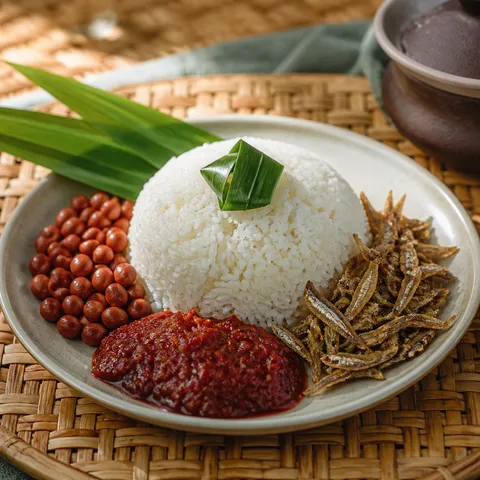
 Nasi Lemak
Malaysia's national comfort dish — fragrant coconut rice paired with sambal, crispy anchovies, roasted peanuts, and a soft-boiled egg.