 Food Lens Images are for illustrative purposes only, may be inaccurate, and do not guarantee the presence or absence of specific ingredients.
 Food Lens · Recipe ingredients
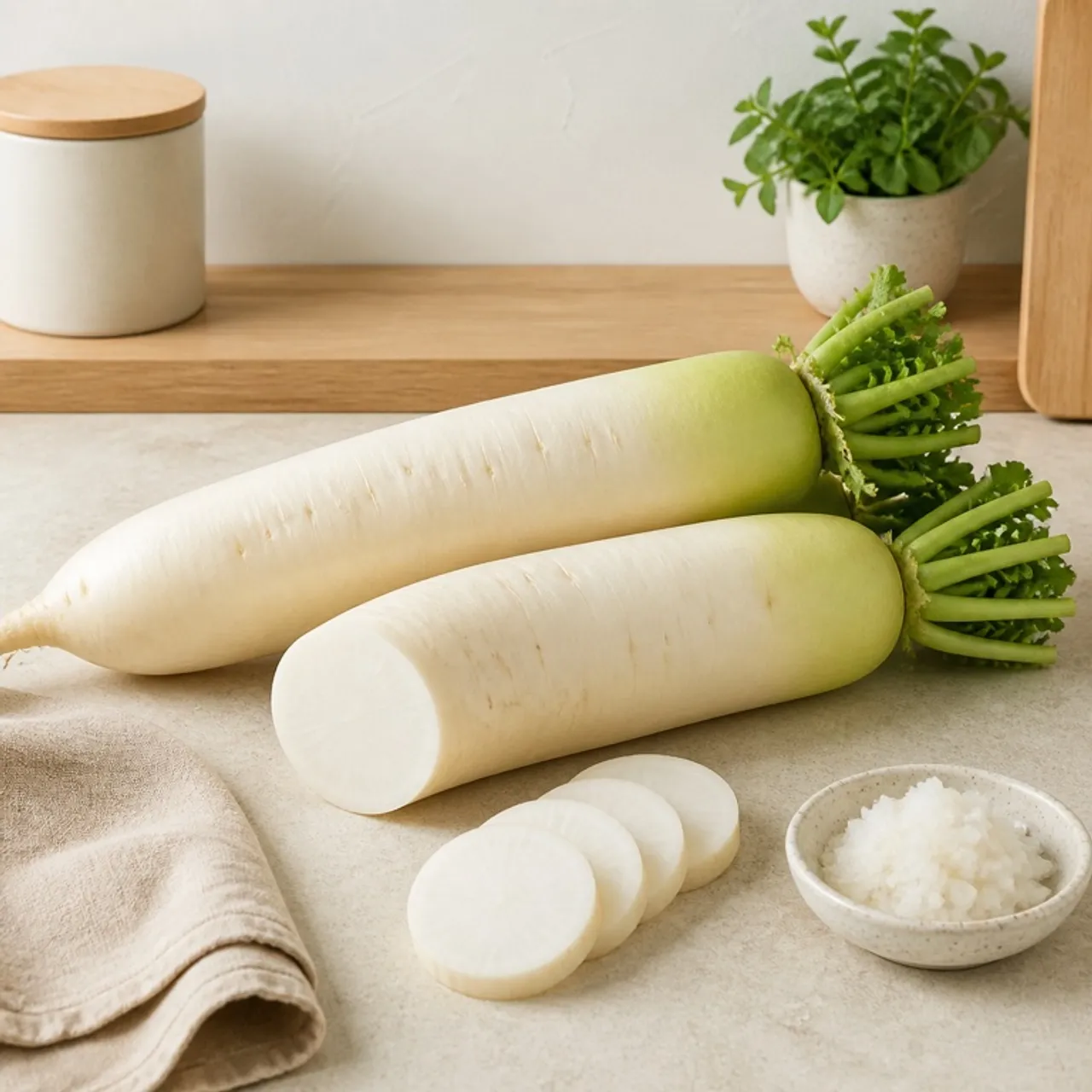
Daikon Radish
Mild and slightly peppery raw with a clean, watery crunch; far less sharp than red radishes. Cooking mellows it to a sweet, tender, almost turnip-like flavor.
Lens VerifiedDaikon radish is a large, mild white Asian radish used raw in salads, pickled as a condiment, grated as a garnish, or cooked in soups and braises across Japanese, Korean, Chinese, and Southeast Asian cuisines.
Where it comes from
Daikon radish has been cultivated in East Asia for thousands of years, with historical records in China and Japan dating back over two millennia. It became one of the most important winter vegetables in Korean, Japanese, and Chinese culinary traditions — versatile enough to be preserved through pickling for the cold months and prized fresh for its refreshing crunch. Daikon arrived in North America with waves of East and Southeast Asian immigration, and today it is widely available in Asian grocery stores and increasingly in mainstream supermarkets, especially on the West Coast.
Varieties — Japanese daikon is long, cylindrical, and very white — the most common type in North American Asian markets. Korean mu (mooli) is rounder and slightly spicier. Chinese luobo includes green-shouldered and red varieties. Watermelon radish has a stunning pink interior.
Grated daikon (daikon oroshi) is served with grilled fish in Japan to aid digestion; Korean radish kimchi (kkakdugi) is a staple banchan; Filipino atchara uses daikon-like radishes alongside green papaya; Vietnamese canh chua includes radish in the sour soup.
In a modern kitchen — Grated daikon is best used immediately as it becomes pungent over time. For quick-pickled daikon, slice thin, salt lightly, and let sit 15 minutes to draw out moisture before adding rice vinegar and sugar — it's ready to eat in 30 minutes and improves overnight.
Buying it
Choose firm, smooth, unblemished daikon with bright white skin. It should feel very heavy and dense — lightweight daikon is hollow and pithy inside. Avoid any with cracks, soft spots, or a wrinkled surface. The leaf attachment point at the top should look fresh if leaves are still attached.
Storing it
Store in a cool, dark, well-ventilated spot for short-term keeping, wrapped loosely to limit moisture loss. For longer freshness, it holds up better in the fridge, staying crisp rather than turning spongy.
Keeps about 14 days in the fridge.
Out of daikon radish? Good swaps
- Red radishes — More peppery and much smaller; use the same weight but expect a sharper bite — best raw only
- Turnip — Earthier and slightly bitter; use 1:1 in cooked preparations like soups and braises
- Jicama — Very mild and crunchy; great raw in salads and slaws — use 1:1, less peppery than daikon
General cooking guidance — always check the labels on the products you use. Listahan’s allergen checks run automatically when you plan a recipe in the app. Not medical advice.
Recipes that use daikon radish
Common questions about daikon radish
Is daikon radish vegan?
Daikon Radish is generally plant-based and suitable for a vegan diet, but brands differ — confirm on the label.
What can I use instead of daikon radish?
Good swaps include Red radishes, Turnip, Jicama. Each behaves a little differently — see the swaps above for notes, and always check labels for allergens.
How do I store daikon radish?
Store in a cool, dark, well-ventilated spot for short-term keeping, wrapped loosely to limit moisture loss. For longer freshness, it holds up better in the fridge, staying crisp rather than turning spongy. It keeps about 14 days in the fridge.
More recipe ingredients
See all


Make daikon radish about your kitchen — with Listahan Pro
Everything above is free, forever. Pro adds the Household Lens — the same food, seen for your family:
-
Checked for each member
Flags daikon radish per person against your household's allergies and school rules — not just a generic "contains" tag.
-
Pantry-aware
Knows whether you already have it, what is running low, and the best swap from what is in your kitchen tonight.
-
What it costs near you
A real price from the Presyo community index, so you can plan the budget — not guess.
-
Your household memory
Who likes it, plus your own private notes — brand, where you keep it, who skips it.
Allergen safety is always free — Pro adds the automation, never the safety.
Cook with daikon radish — safely
Plan a recipe in Listahan and the household allergen check runs automatically — every plan, every swap, every lunchbox. Safety is never paywalled.