 Indonesian & Malaysian Images are for illustrative purposes only, may be inaccurate, and do not guarantee the presence or absence of specific ingredients.
  Serving Images are for illustrative purposes only, may be inaccurate, and do not guarantee the presence or absence of specific ingredients.
 Nasi Padang
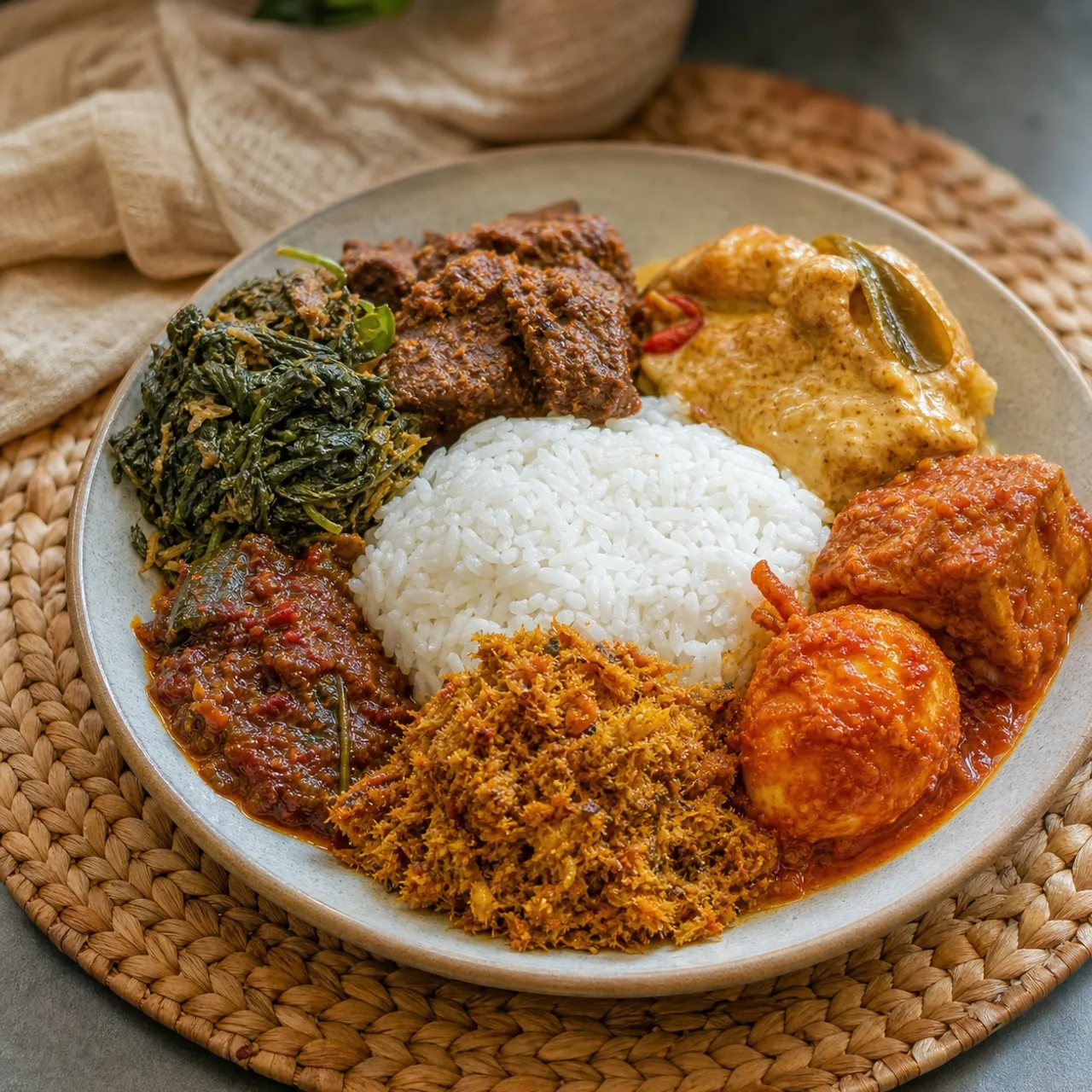
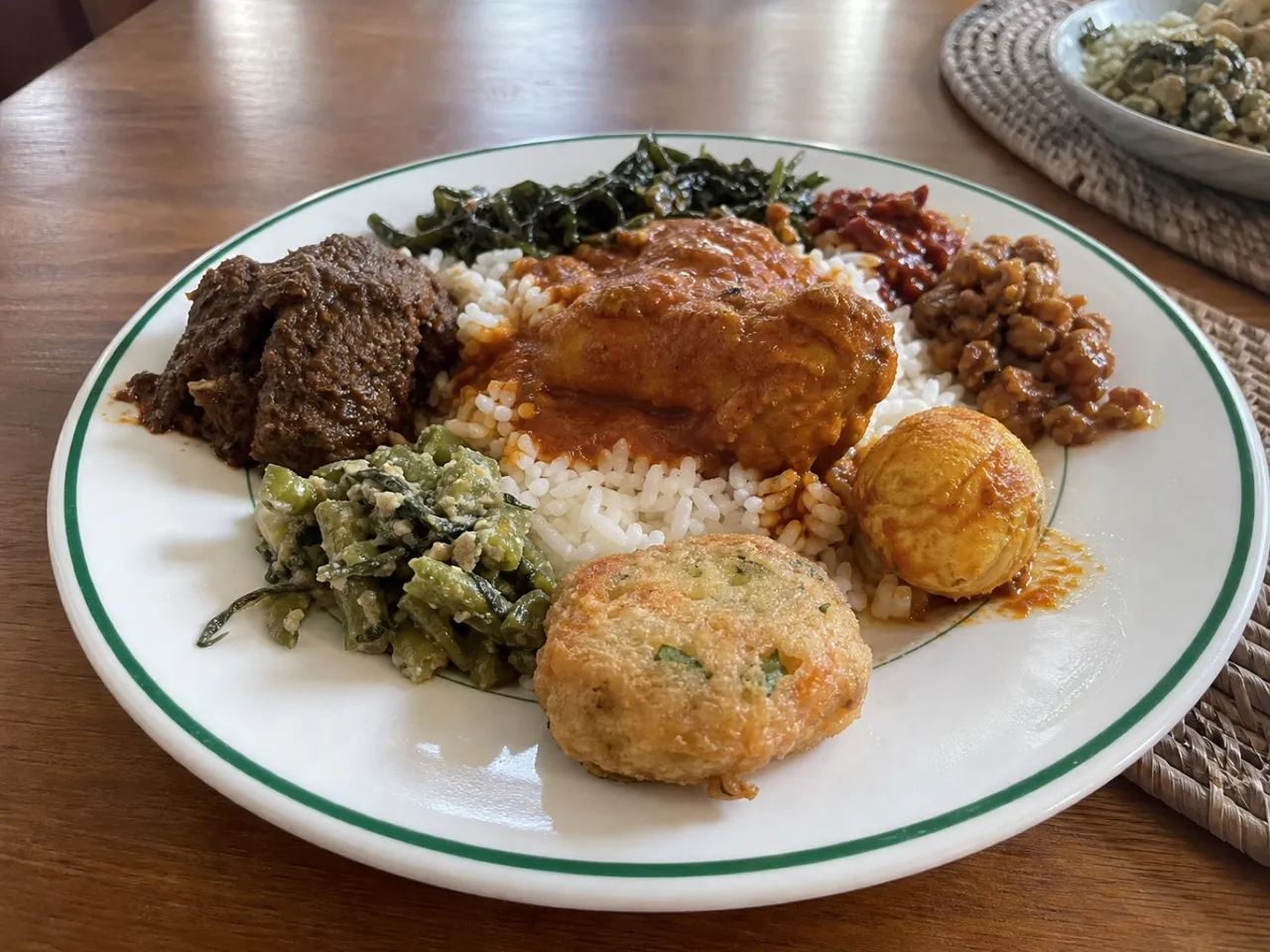
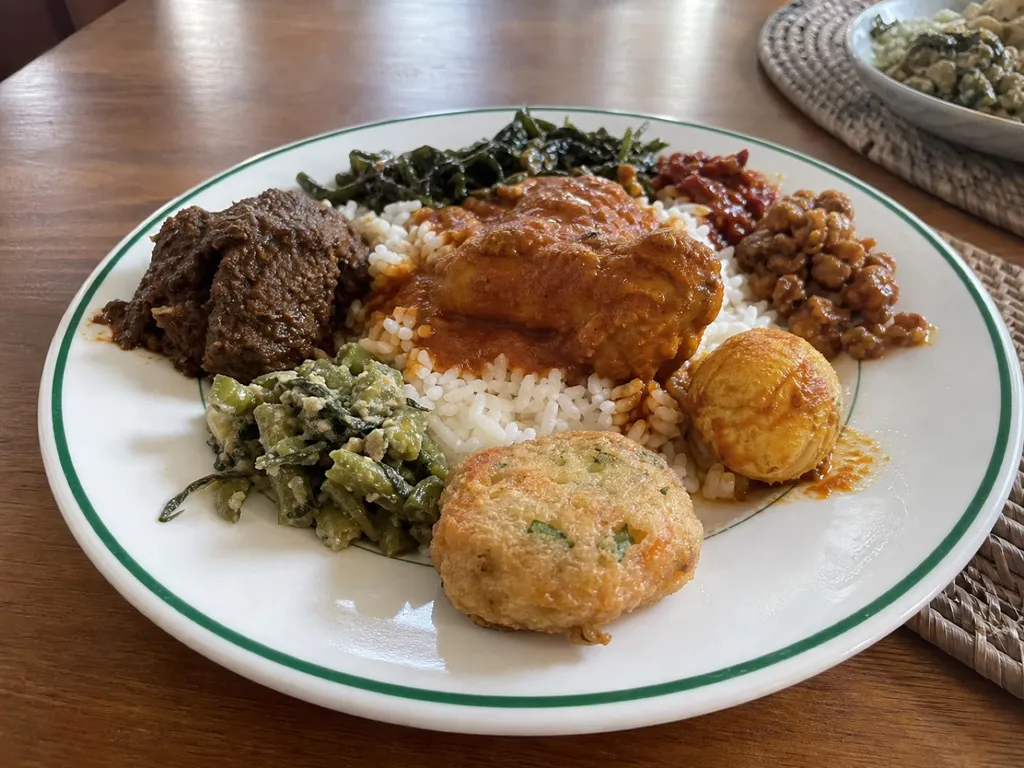
A lavish Sumatran spread — steamed rice surrounded by bold curries, rendang, sambal, and braised greens, letting you build every mouthful your way.
Contains common allergens
In the app, Listahan checks these against your household automatically.
Instructions
6 steps- 1
Cook the rice and keep it warm; this is the base every other component is served over.
- 2
Prepare or reheat the rendang, simmering gently if reheating so the sauce stays glossy rather than breaking.
- 3
Warm the vegetable side and fry the tempeh or tofu until golden and crisp.
- 4
Mound a generous scoop of rice on each plate.
- 5
Arrange small portions of the rendang, vegetable curry, and fried tempeh around the rice, keeping each component distinct rather than mixed together.
- 6
Finish with a spoonful of sambal on the side and serve immediately, Padang style, with extra rice available.
 Images are for illustrative purposes only, may be inaccurate, and do not guarantee the presence or absence of specific ingredients.
 Listahan Family Score™
66/100
Works for many families
Score reflects how well this recipe fits a typical busy household. In the app, your Family Score is personalized to your household's allergens, kids, and pantry.
Nutrition
per serving340
Calories
6 g
Protein
74 g
Carbs
1 g
Fat
Estimated per serving. Actual values depend on the brands and portions you use.
Listahan cooking guide
Chef notes & practical guide
Technique notes, ingredient swaps, serve-alongside ideas, storage guidance, and equipment for this recipe.
Cultural context
Nasi Padang originates from the Minangkabau people of West Sumatra, who developed one of the world's most complex spice-based cooking traditions over centuries of trade with India and the Middle East. The meal is defined not by a single dish but by the experience of eating: at a Padang restaurant, servers bring dozens of small plates to the table simultaneously, and diners pay only for what they eat. This communal abundance model traveled with Minangkabau migrants throughout Southeast Asia and became one of the most widely replicated restaurant formats in the region.
Listahan note
This version presents Nasi Padang as a manageable home format of steamed rice accompanied by three or four bold side dishes cooked simultaneously, so the table feels abundant without requiring a professional kitchen.
Technique cues
- Santan, or coconut milk, is the backbone of Padang curries and braises; use full-fat coconut milk and let it cook down until the oil separates and the solids begin to fry in their own fat, a technique called pecah santan, which concentrates flavor and eliminates raw coconut taste.
- Build each dish's spice paste, or bumbu, fresh by blending shallots, garlic, galangal, lemongrass, and chilies before frying; pre-made curry powders do not replicate the layered, fragrant result of a properly fried fresh bumbu.
- Stagger the cooking of your side dishes by total time required, starting with anything braised and finishing with quick-cooked vegetables, so everything arrives at the right texture at serving time.
Kitchen flow
- Parallel prep
- Batch-blend all the bumbu for every side dish at once in the food processor, portioning it into separate bowls, so you only clean the blender once and the prep is compressed into a single block.
- Make-ahead
- Most Padang side dishes taste better the next day after the flavors meld; braises and rendang-style dishes can be made up to 2 days ahead and reheated gently on the stovetop.
- Leftover move
- Leftover side dishes can be packed over fresh rice for weekday lunches; the sauces also double as a base for noodle soups by thinning them with chicken or vegetable broth.
- Cleanup rhythm
- Line up all side dishes to finish together before washing any pans; wipe the blender immediately after the bumbu step before the spice paste dries and stains.
Ingredient brief
Role, handling, and swap guidance for each key ingredient.
steamed white rice
neutral base
Purpose: Plain steamed jasmine rice is essential as the clean, starchy canvas that absorbs the intensely spiced sauces from the accompanying dishes without competing with them.
Handling: Rinse well and cook using the absorption method for slightly stickier grains that hold together when scooped onto a plate.
Adaptation: Long-grain rice or even lightly seasoned coconut rice works, though plain white rice is traditional and lets the side dishes be the star.
full-fat coconut milk
sauce base and emulsifier
Purpose: Full-fat coconut milk provides the creamy body that distinguishes Padang-style curries from drier preparations; its fat content carries fat-soluble spice compounds and gives dishes their characteristic richness.
Handling: Shake the can well before opening, or stir the separated cream back into the liquid for even distribution.
Adaptation: Light coconut milk can be used for a lower-calorie result but will produce a thinner sauce that does not cling as well to protein.
shallots
bumbu foundation
Purpose: Shallots form the sweet, pungent backbone of virtually every Padang spice paste; their lower water content compared to onions means they fry to a deeper, more rounded flavor more quickly.
Handling: Peel and roughly chop before blending, no need for precision as everything gets puréed into a smooth paste.
Adaptation: Red onion works as a substitute in equal weight, though the resulting bumbu will be slightly sharper and may need an extra minute of frying to mellow.
galangal
distinctive aromatic
Purpose: Galangal contributes a floral, peppery sharpness that is the clearest flavor marker separating Padang cooking from other Southeast Asian curries; ginger is not the same and cannot replicate this quality.
Handling: Peel and slice thinly before adding to the blender; the fibrous root blends more evenly when cut small.
Adaptation: If galangal is unavailable, combine ginger and a small piece of lemongrass for a partial approximation, understanding the flavor will differ noticeably.
lemongrass
citrus aroma
Purpose: Lemongrass adds a bright, almost citrusy fragrance that lifts the heavier coconut and spice notes in each dish, preventing the overall meal from tasting one-dimensionally rich.
Handling: Bruise the bottom third of each stalk by pressing with the flat of a knife before slicing into the bumbu, which releases the aromatic oils.
Adaptation: Lemongrass paste (found in the produce section of many grocery stores) can be used at about 1 teaspoon per stalk with acceptable results.
Technique notes
- Frying the bumbu in oil before adding any liquid is non-negotiable in Padang cooking: the paste needs to cook for at least 5 to 8 minutes until it is deeply fragrant and the oil visibly separates from the solids, which eliminates raw onion taste and develops complexity.
- Serve the dishes at room temperature rather than piping hot, as Padang restaurants traditionally do; the flavors are clearer and more balanced when the food has rested slightly from the stove.
- For the most authentic presentation, spoon each side dish into small plates and crowd them around the central rice mound so the table looks abundant; the visual abundance is itself part of the eating experience.
Ingredient swaps
- Gluten-free direction
- Most Padang dishes are naturally gluten-free; verify any store-bought sambal or soy-based condiments are made without wheat, and use tamari in place of regular soy sauce in any component that calls for it.
- Lower-heat direction
- Reduce the number of fresh chilies in the bumbu by half and remove seeds before blending; the dishes retain their full spice character from galangal and lemongrass even without the chili heat.
- Weeknight shortcut
- Focus on two side dishes rather than four, pairing a protein braise from the day before with a quick wilted leafy green cooked with garlic and coconut milk for a complete but achievable weeknight spread.
- Vegan direction
- Replace chicken or beef side dishes with jackfruit braised in the same spice paste and coconut milk, and use tempeh or tofu as a secondary protein; the bumbu and coconut base make plant proteins taste deeply seasoned.
Serve alongside
- Beef rendang
- Gulai sayur (coconut-braised vegetables)
- Perkedel jagung (corn fritters)
- Sambal lado mudo (green chili sambal)
- Es teh manis (sweet iced tea)
- Young coconut water
- Avocado juice blended with condensed milk
Serving suggestions only — check pairings for your household's allergens.
Storage & reheating
- Each side dish can be refrigerated separately in airtight containers for up to 3 days; dishes cooked with coconut milk may solidify slightly when cold due to the coconut fat.
- Reheat individual portions in a small saucepan over low heat with a tablespoon of water, stirring gently, until warmed through; avoid microwaving coconut-based dishes at high power as it can cause the sauce to break.
Equipment
- High-powered blender or food processor for making smooth, homogeneous bumbu spice paste
- Heavy-bottomed wok or Dutch oven for frying bumbu without scorching
- Rice cooker or tight-lidded saucepan for consistently cooked steamed rice
- Multiple small serving bowls for presenting side dishes in the Padang restaurant style
Make this household-aware
Listahan Pro checks this recipe against your household's allergens, finds pantry-aware swaps, builds the shopping list, and helps you plan the week around it.
Plan it in Listahan
Add Nasi Padang to your week, check it against your household's allergens, and build the shopping list automatically.
More Indonesian & Malaysian recipes
 Indonesian & Malaysian Lens Verified Images are for illustrative purposes only, may be inaccurate, and do not guarantee the presence or absence of specific ingredients.
 Soto Ayam
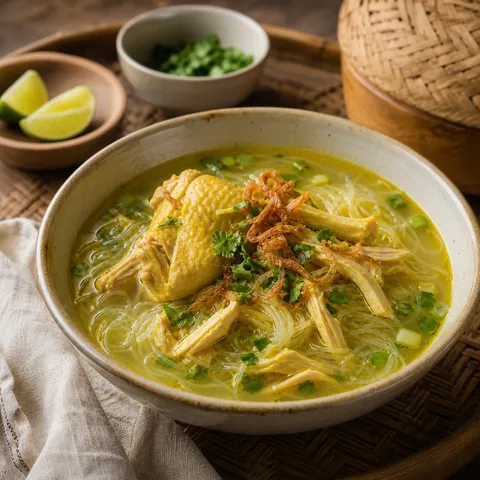
A golden, turmeric-spiced Indonesian chicken soup with glass noodles, crispy shallots, and lime — light, herbal, and deeply comforting.
 Indonesian & Malaysian Lens Verified Images are for illustrative purposes only, may be inaccurate, and do not guarantee the presence or absence of specific ingredients.
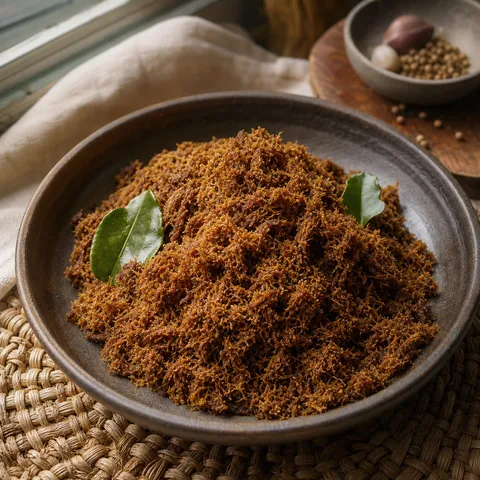
 Beef Serunding
Dry-fried spiced beef floss toasted with coconut and lemongrass until golden and fragrant — a rich, crumbly condiment that transforms plain rice.
 Indonesian & Malaysian Lens Verified Images are for illustrative purposes only, may be inaccurate, and do not guarantee the presence or absence of specific ingredients.
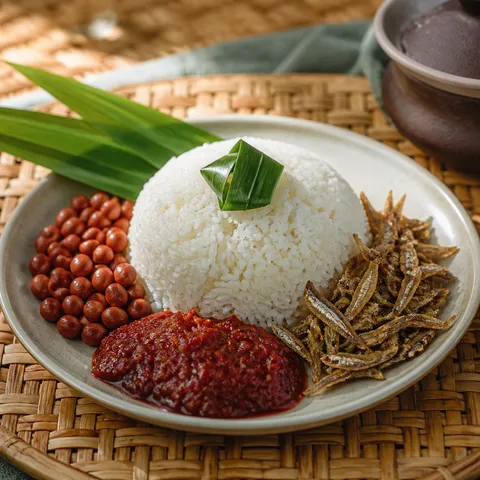
 Nasi Lemak
Malaysia's national comfort dish — fragrant coconut rice paired with sambal, crispy anchovies, roasted peanuts, and a soft-boiled egg.