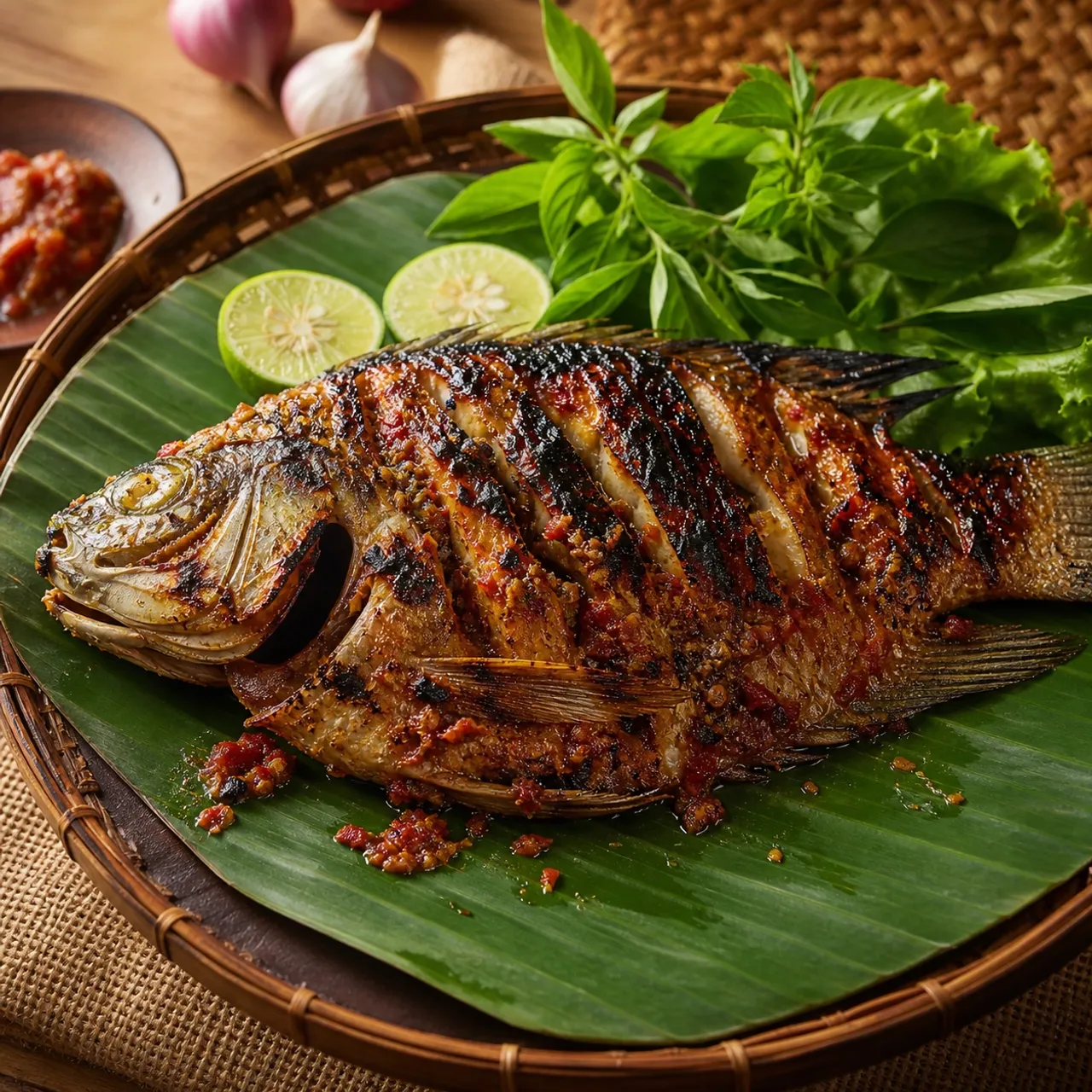
 Indonesian & Malaysian Images are for illustrative purposes only, may be inaccurate, and do not guarantee the presence or absence of specific ingredients.
 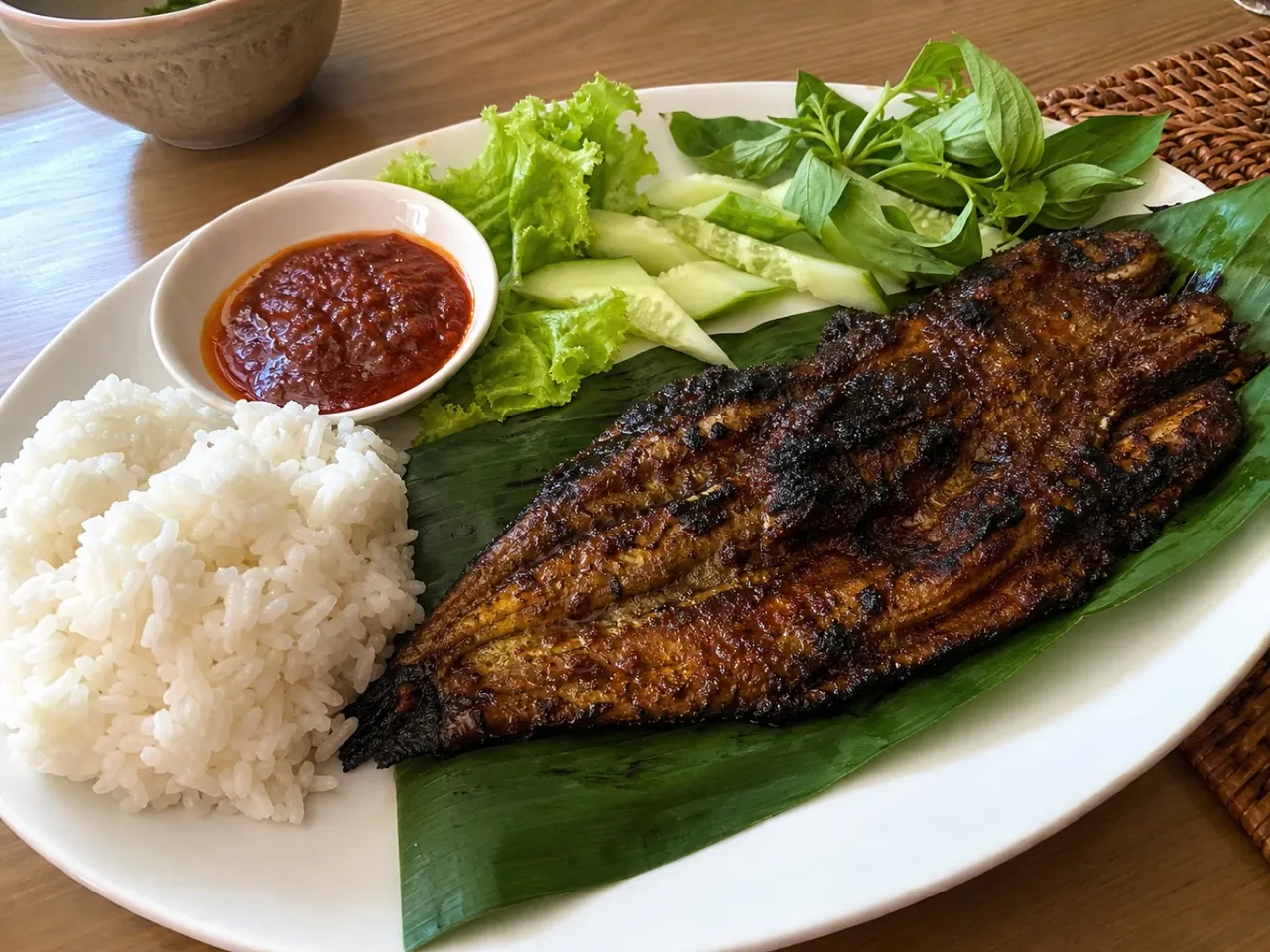 Serving Images are for illustrative purposes only, may be inaccurate, and do not guarantee the presence or absence of specific ingredients.
 Ikan Bakar
Whole fish marinated in turmeric and chili paste, then grilled over charcoal until smoky and charred — a coastal classic served with fragrant sambal.
Contains common allergens
In the app, Listahan checks these against your household automatically.
Good to know
- Ready in under 30 minutes
Matched from this dish's own ingredients and timing. Browse more: 30-minute meals
Instructions
6 steps- 1
Clean the whole fish and score the sides diagonally with a sharp knife.
- 2
Rub the fish thoroughly with lime juice and a pinch of salt, letting it sit for 10 minutes to remove any fishy odor.
- 3
Coat the fish generously inside and out with the sambal paste and sweet soy sauce.
- 4
Prepare a charcoal grill or heat a grill pan over medium heat.
- 5
Grill the fish for about 8-10 minutes per side, brushing with leftover marinade and oil to keep it moist.
- 6
Serve hot off the grill with extra sambal and steamed rice.
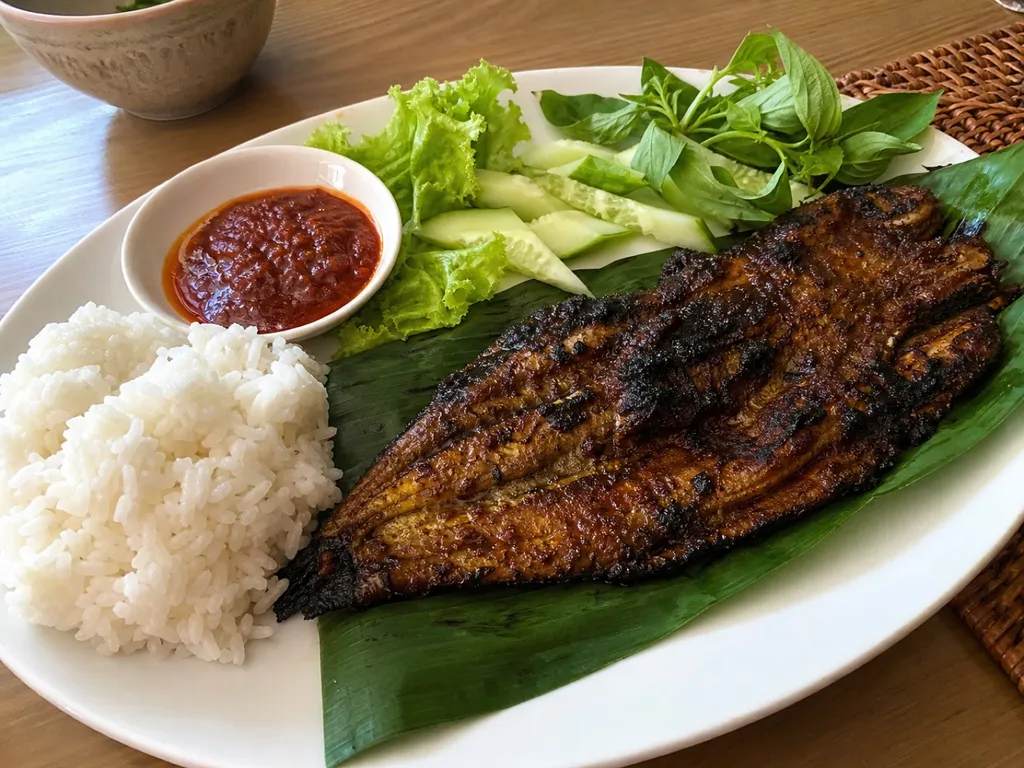 Images are for illustrative purposes only, may be inaccurate, and do not guarantee the presence or absence of specific ingredients.
 Listahan Family Score™
51/100
Works for many families
Score reflects how well this recipe fits a typical busy household. In the app, your Family Score is personalized to your household's allergens, kids, and pantry.
Nutrition
per serving5
Calories
1 g
Protein
1 g
Carbs
0 g
Fat
Estimated per serving. Actual values depend on the brands and portions you use.
Listahan cooking guide
Chef notes & practical guide
Technique notes, ingredient swaps, serve-alongside ideas, storage guidance, and equipment for this recipe.
Cultural context
Ikan bakar — literally 'burned fish' in Malay and Indonesian — is a grilled whole fish preparation found across the Indonesian archipelago and Malaysia, particularly associated with coastal communities where fresh fish is abundant. The technique of wrapping spice-marinated fish in banana leaves before grilling over charcoal was developed to keep the moisture in and allow the fish to steam gently while the outside chars. Night seafood markets from Jimbaran Beach in Bali to the Straits Quay in Penang have made ikan bakar a defining seaside dining experience.
Listahan note
This version focuses on the sambal marinade applied both under the banana leaf wrap and directly on the fish, creating a layered spice profile with a caramelized outer crust when grilled over high heat.
Technique cues
- Score the fish deeply to the bone on both sides before applying the marinade — without deep cuts the spice paste cannot penetrate the flesh and the fish will taste of plain grilled fish underneath a spiced surface.
- Wrap in banana leaf if available, but if not, use foil for the first portion of grilling and unwrap for the final 5 minutes to develop direct char — the two-stage approach mimics the steaming-then-charring that banana leaf provides.
- Baste the fish with the reserved marinade every 3 to 4 minutes during grilling — the basting builds a lacquered, caramelized layer that is the visual and flavor signature of properly made ikan bakar.
Kitchen flow
- Parallel prep
- Make the sambal marinade and score the fish simultaneously; the fish should marinate for at least 30 minutes while the grill or oven heats.
- Make-ahead
- The sambal marinade keeps refrigerated for up to 5 days; marinate the fish up to 4 hours ahead in the refrigerator.
- Leftover move
- Leftover ikan bakar flakes beautifully into a rice porridge (bubur ikan) the next morning — simmer leftover fish and sambal into a thin rice broth.
- Cleanup rhythm
- Use a fish spatula and oiled grill grates to minimize sticking; the banana leaf or foil wrap catches most of the marinade drips and simplifies cleanup.
Ingredient brief
Role, handling, and swap guidance for each key ingredient.
whole firm fish (snapper, pompano, or mackerel)
main protein
Purpose: A whole fish retains moisture better than fillets during the long direct-heat grilling and provides the visual drama central to the dish.
Handling: Have the fishmonger clean and scale the fish; score both sides 3 to 4 times to the bone.
Adaptation: Large skin-on salmon fillets can substitute and are more widely available, though the cooking time should be reduced.
shrimp paste (belacan)
fermented depth in marinade
Purpose: Toasted belacan adds the pungent fermented umami that gives the sambal marinade its savory backbone — untoasted shrimp paste tastes raw and sharp.
Handling: Wrap in foil and toast in a dry pan for 2 minutes per side until fragrant and slightly darkened before incorporating.
Adaptation: Miso paste can approximate the umami depth for those who find shrimp paste too pungent, though the flavor is distinctly different.
red chilies
heat and color in marinade
Purpose: Red chilies provide the characteristic orange-red color and fruity heat of the sambal marinade.
Handling: Blend with the other aromatics into a smooth paste; the smoother the paste, the more evenly it coats the fish.
Adaptation: Chili paste or sambal oelek can substitute for a quicker approach.
banana leaves
wrapping and subtle flavor
Purpose: Banana leaves impart a subtle herbal, slightly grassy aroma to the fish during grilling and prevent the delicate flesh from sticking to the grill.
Handling: Pass briefly over a gas flame or warm in the oven to soften and make flexible before wrapping.
Adaptation: Heavy-duty foil works as a practical substitute; the fish will lack the banana leaf aroma but cooks identically.
Technique notes
- Oil the fish, not the grates — rubbing oil on each scored surface prevents sticking more effectively than oiling the grate, which just burns off immediately.
- Turn the whole fish only once during grilling, halfway through the estimated cook time — multiple turns cause the flesh to break apart before it has formed a crust.
- The fish is done when the thickest part flakes easily with a fork and the flesh near the bone has turned from translucent to opaque — about 8 to 10 minutes per inch of thickness.
Ingredient swaps
- Gluten-free direction
- The dish is naturally gluten-free; verify only that any prepared sambal or soy sauce used is wheat-free.
- Indoor direction
- Roast the wrapped fish at 425F for 20 to 25 minutes, then open the foil and broil for 3 to 4 minutes to develop color — this closely approximates the charcoal-grilled result.
Serve alongside
- Steamed jasmine rice
- Acar kuning (pickled vegetable salad)
- Kangkung belacan (stir-fried water spinach)
- Fresh lime soda
- Cold Bintang or Tiger lager
Serving suggestions only — check pairings for your household's allergens.
Storage & reheating
- Grilled ikan bakar is best eaten immediately; leftovers keep refrigerated for up to 2 days.
- Reheat in a 350F oven wrapped loosely in foil for 10 minutes — microwaving ruins the texture of the fish.
Equipment
- Outdoor charcoal or gas grill, or oven with broiler
- Fish spatula for turning
- Pastry brush for basting
Make this household-aware
Listahan Pro checks this recipe against your household's allergens, finds pantry-aware swaps, builds the shopping list, and helps you plan the week around it.
Plan it in Listahan
Add Ikan Bakar to your week, check it against your household's allergens, and build the shopping list automatically.
More Indonesian & Malaysian recipes
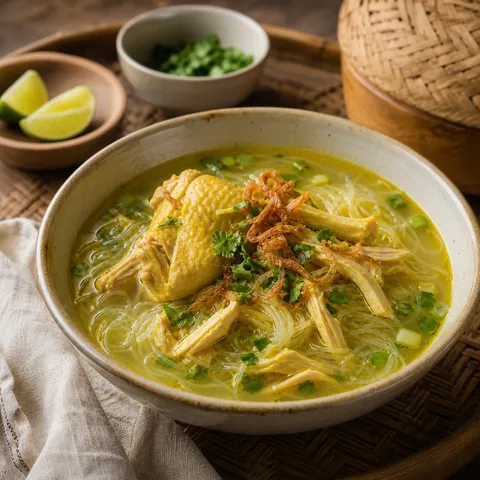 Indonesian & Malaysian Lens Verified Images are for illustrative purposes only, may be inaccurate, and do not guarantee the presence or absence of specific ingredients.
 Soto Ayam
A golden, turmeric-spiced Indonesian chicken soup with glass noodles, crispy shallots, and lime — light, herbal, and deeply comforting.
 Indonesian & Malaysian Lens Verified Images are for illustrative purposes only, may be inaccurate, and do not guarantee the presence or absence of specific ingredients.
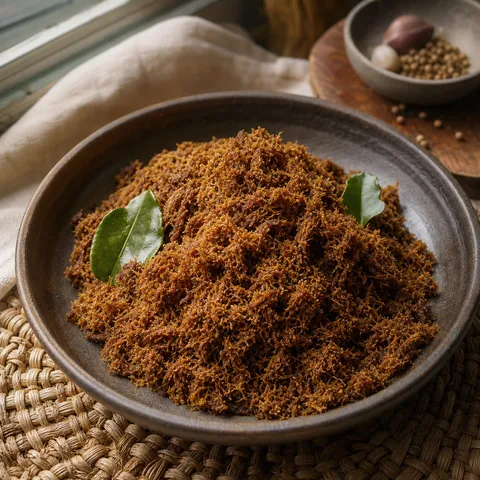
 Beef Serunding
Dry-fried spiced beef floss toasted with coconut and lemongrass until golden and fragrant — a rich, crumbly condiment that transforms plain rice.
 Indonesian & Malaysian Lens Verified Images are for illustrative purposes only, may be inaccurate, and do not guarantee the presence or absence of specific ingredients.
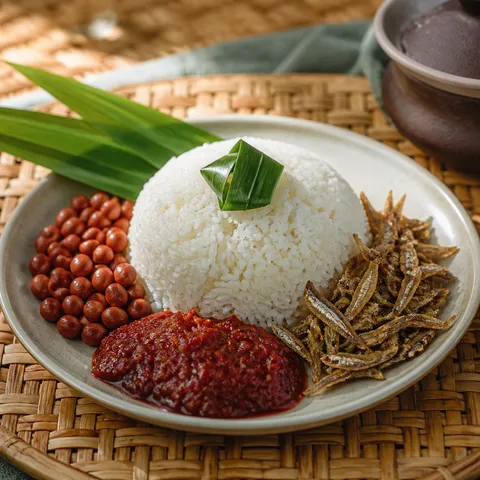
 Nasi Lemak
Malaysia's national comfort dish — fragrant coconut rice paired with sambal, crispy anchovies, roasted peanuts, and a soft-boiled egg.