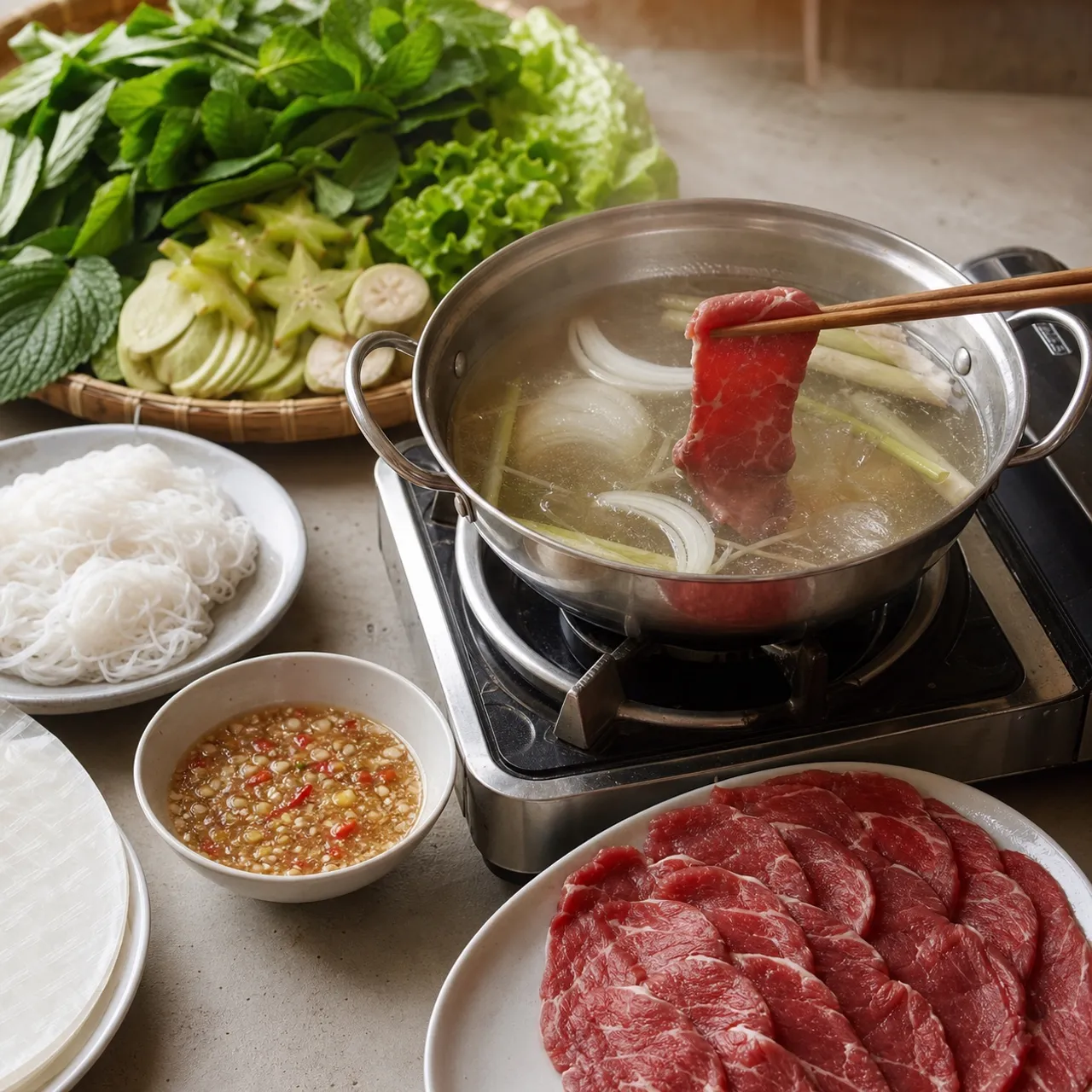
 Vietnamese Images are for illustrative purposes only, may be inaccurate, and do not guarantee the presence or absence of specific ingredients.
 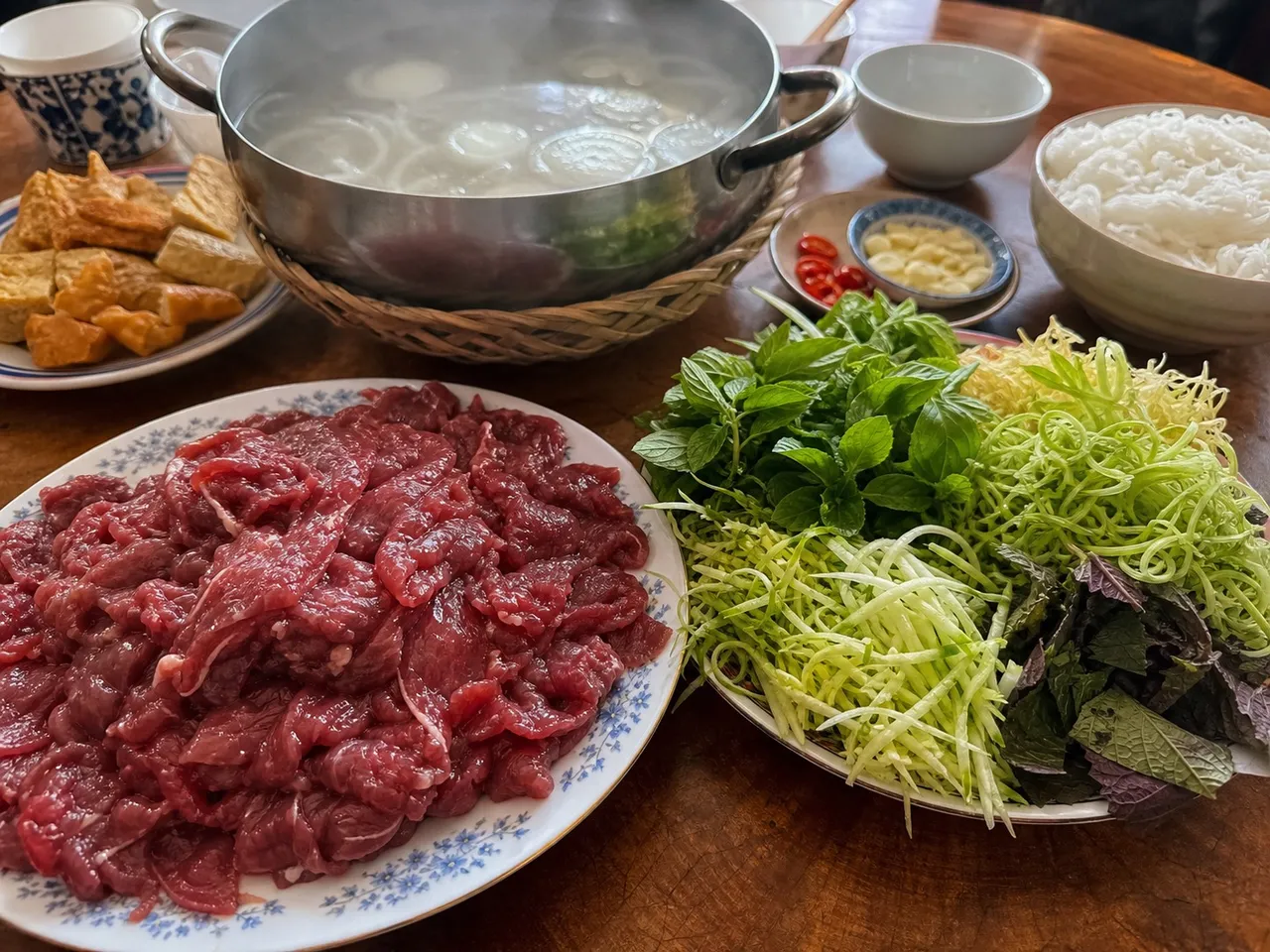 Serving Images are for illustrative purposes only, may be inaccurate, and do not guarantee the presence or absence of specific ingredients.
 Bò Nhúng Dấm (Beef Fondue)
Thinly sliced beef cooked at the table in a vinegar-lemongrass broth.
Contains common allergens
In the app, Listahan checks these against your household automatically.
Instructions
6 steps- 1
Prepare Broth: In a wide tabletop hot pot, combine the coconut water, vinegar, sugar, lemongrass, and sliced onion. Bring to a simmer. Adjust sugar and vinegar so it is pleasantly sweet and tart.
- 2
Prepare Platter: Arrange the paper-thin beef slices nicely on a large platter.
- 3
Set the Table: Set out bowls of warm water for the rice paper. Arrange platters of rice noodles, lettuce, and all the fresh herbs and sliced green banana/star fruit. Set out individual bowls of the pungent Mắm Nêm dipping sauce.
- 4
Cook (At the table): Diners use chopsticks to pick up a slice of beef and dip it into the boiling vinegar broth for 10-15 seconds until just cooked through.
- 5
Wrap: Dip a sheet of rice paper in warm water. Lay it flat, add lettuce, herbs, noodles, and the hot cooked beef.
- 6
Eat: Roll it up tightly like a spring roll, dip heavily into the Mắm Nêm sauce, and enjoy.
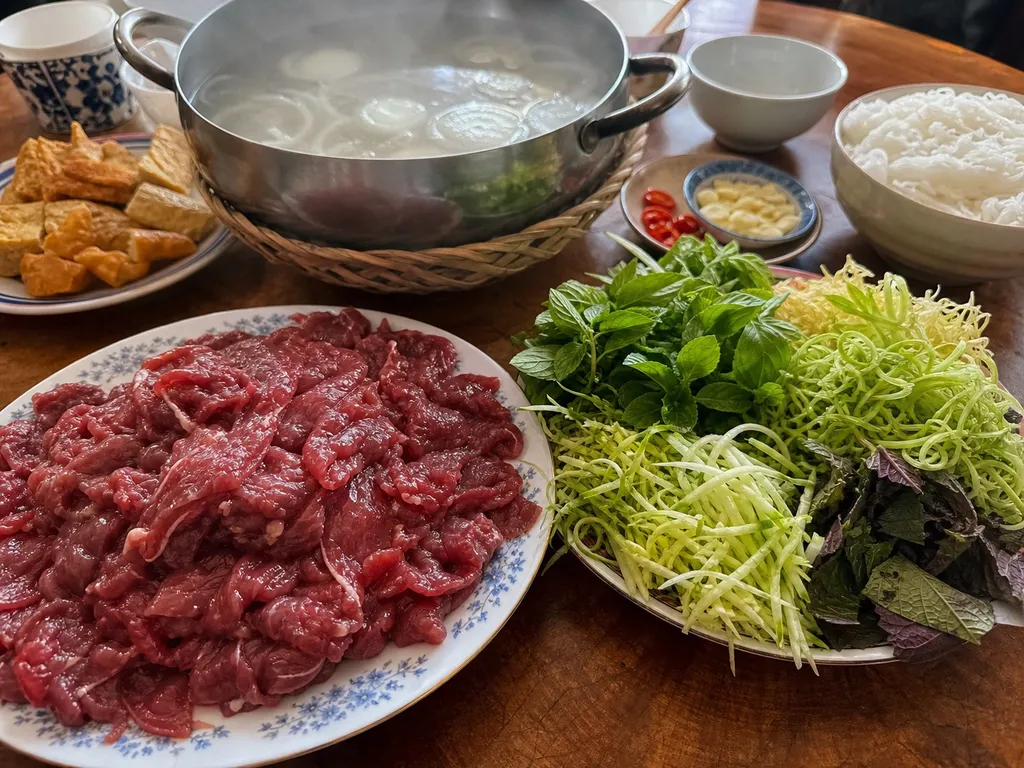 Images are for illustrative purposes only, may be inaccurate, and do not guarantee the presence or absence of specific ingredients.
 Listahan Family Score™
62/100
Works for many families
Score reflects how well this recipe fits a typical busy household. In the app, your Family Score is personalized to your household's allergens, kids, and pantry.
Nutrition
per serving425
Calories
44 g
Protein
0 g
Carbs
26 g
Fat
Estimated per serving. Actual values depend on the brands and portions you use.
Listahan cooking guide
Chef notes & practical guide
Technique notes, ingredient swaps, serve-alongside ideas, storage guidance, and equipment for this recipe.
Cultural context
Bo nhung dam is a centerpiece dish of southern Vietnamese celebratory meals, originating in the Mekong Delta region around the early 20th century when French culinary influence intersected with Vietnamese beef-eating culture. The name means 'beef dipped in vinegar,' and the fragrant coconut water-vinegar broth was likely developed as a way to cook thin-sliced beef at the table without deep frying. It belongs to the Vietnamese tradition of interactive 'do it yourself' meals, where wrapping, rolling, and customizing is the social act.
Listahan note
This version focuses on the proper broth ratio and the wrapping technique — the beef cooks in seconds and the roll is the delivery mechanism for balancing all the flavors at once, so the assembly mise en place matters as much as the cooking.
Technique cues
- Beef sliced paper-thin (ideally 1-2 mm, semi-frozen before slicing to make this achievable at home) cooks in 10-15 seconds when swished through simmering broth — it should be pale pink to just-white, not gray, or it will be tough in the roll.
- The vinegar-to-coconut-water ratio in the broth is critical: too much vinegar makes the broth harsh and aggressively sours the beef; the correct proportion should be detectable as a brightness, not a pucker.
- Softened rice paper should be left just slightly tacky and not fully soft when removed from the water — it continues to hydrate as you add filling, and a paper that was fully soft when dipped will tear when you try to roll it.
Kitchen flow
- Parallel prep
- Set the beef to semi-freeze while you arrange all the wrapping components on the table — greens, noodles, rice paper, herbs — so that when guests arrive everything is ready and only the broth needs heating.
- Make-ahead
- Slice the beef up to 4 hours ahead and keep refrigerated, covered tightly; prep the mam nem sauce up to 2 days ahead and refrigerate.
- Leftover move
- Any uncooked beef can be stir-fried with garlic and vegetables the next day; leftover fresh herbs and noodles can be tossed into a quick bun bo hue-style soup with store-bought broth.
- Cleanup rhythm
- The hot pot (electric or tabletop burner) keeps the broth simmering throughout the meal — turn it off at the end and let it cool before washing; the table components are mostly bowls and plates that rinse easily.
Ingredient brief
Role, handling, and swap guidance for each key ingredient.
1.5 lbs beef eye round or sirloin, sliced paper-thin
main protein
Purpose: Lean cuts like eye round work best because there is no fat to render in the quick-cook time; the thinness is more important than the cut.
Handling: Freeze the beef for 45-60 minutes until firm but not solid, then slice as thinly as possible against the grain with a sharp knife, or ask your butcher to slice it on a deli slicer.
Adaptation: Wagyu beef is a luxurious upgrade; well-marbled short rib sliced thin can also be used but needs an extra few seconds in the broth.
2 cups coconut water
broth sweetness and aroma
Purpose: Coconut water gives the broth its characteristic mild sweetness and a faint tropical note that distinguishes this dish from a plain vinegar broth.
Handling: Use plain unsweetened coconut water; sweetened varieties will make the broth cloying and upset the acid balance.
Adaptation: Pineapple juice diluted 1:1 with water can approximate the sweetness and fruity acid in a pinch.
1/2 cup white vinegar
acid and cooking agent
Purpose: The acid in the broth partially denatures the beef protein as it cooks, which is what keeps the quickly dipped meat tender rather than rubbery.
Handling: Add to the broth base and taste; the broth should taste bright but not sour enough to pucker.
Adaptation: Rice vinegar at the same volume gives a slightly gentler, less sharp acid that is also traditional.
Rice paper
wrapping vessel
Purpose: Rice paper is the neutral wrapper that holds all the components together and provides a slightly chewy, slightly sticky exterior to the finished roll.
Handling: Dip one sheet at a time in a wide bowl of room-temperature water for 8-10 seconds — do not soak; lay on a damp towel and fill immediately.
Adaptation: Butter lettuce leaves can substitute for a lighter wrap without any soaking required.
Mam Nem (fermented anchovy sauce) mixed with pineapple, sugar, and chili
dipping sauce
Purpose: Mam nem is the defining condiment for bo nhung dam — its intensely pungent, funky fermented flavor is the counterpoint to the clean vinegar-poached beef.
Handling: Blend or finely mash fresh pineapple with the mam nem, sugar, and chili to taste; it should be slightly chunky with a balance of sweet, sour, and savory.
Adaptation: Hoisin sauce thinned with lime juice and a pinch of chili is a milder, widely available substitute for those new to mam nem.
Technique notes
- Keep the broth at a consistent simmer throughout the meal by adjusting the tabletop burner — if it drops below simmering the beef takes too long to cook and becomes unevenly done; if it boils hard the broth evaporates and concentrates the vinegar.
- Arrange the fresh herbs, banana, and star fruit on a shared platter so guests can build their own rolls to taste — this is a dish that is supposed to be personal and improvised, and having everything visible encourages interaction.
- The roll is most successful when you use less filling than you think you need; overfilling causes the rice paper to tear and the roll falls apart before the first bite.
Ingredient swaps
- Gluten-free direction
- Rice paper and the dish as written are naturally gluten-free; confirm the hoisin sauce (if using as a sub for mam nem) is gluten-free, as many brands contain wheat.
- Mam Nem alternative
- For guests who find mam nem too pungent, serve hoisin mixed with peanut butter thinned with lime juice as a parallel dipping option — it is more approachable for Western palates.
- Vegetarian direction
- Thinly sliced king oyster mushroom stems or firm tofu can replace the beef; they need slightly longer in the broth (30-45 seconds) but absorb the vinegar-coconut fragrance beautifully.
Serve alongside
- steamed jasmine rice to fill out the meal after rolling
- simple pickled daikon and carrot (do chua) alongside the herb plate
- plain rice vermicelli bundles for the rolls
- mung bean sprouts added to the herb platter
- cold Vietnamese lager (333 or Saigon) — the most traditional pairing
- sparkling water with lime, which mirrors the vinegar brightness in the broth
- chrysanthemum tea (tra hoa cuc) served cool
Serving suggestions only — check pairings for your household's allergens.
Storage & reheating
- Raw sliced beef should be cooked the same day it is sliced; any unused beef should be cooked, not kept raw overnight.
- Cooked beef rolls do not store well; they are meant to be made and eaten at the table.
- Leftover mam nem sauce keeps refrigerated in an airtight jar for up to 1 week.
Equipment
- electric hot pot or portable tabletop gas burner with a shallow pot
- chopsticks or a small strainer basket for cooking beef in the broth
- wide shallow bowl of room-temperature water for dipping rice paper
- large platter for the herb and wrapping components
Make this household-aware
Listahan Pro checks this recipe against your household's allergens, finds pantry-aware swaps, builds the shopping list, and helps you plan the week around it.
Plan it in Listahan
Add Bò Nhúng Dấm (Beef Fondue) to your week, check it against your household's allergens, and build the shopping list automatically.
More Vietnamese recipes
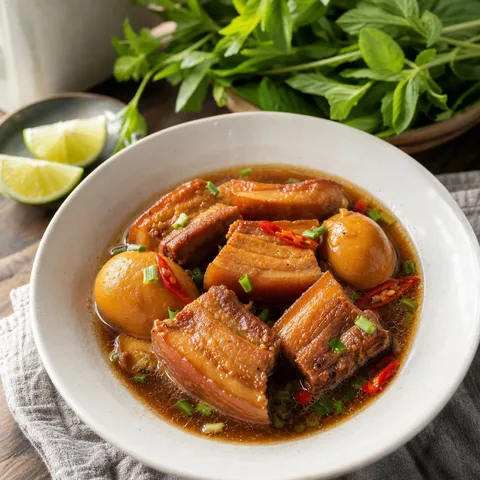 Vietnamese Lens Verified Images are for illustrative purposes only, may be inaccurate, and do not guarantee the presence or absence of specific ingredients.
 Thịt Kho Tàu (Caramelized Pork and Eggs)
Meltingly tender pork belly and hard-boiled eggs braised in a rich, sweet, and savory coconut juice caramel, perfect over steamed rice.
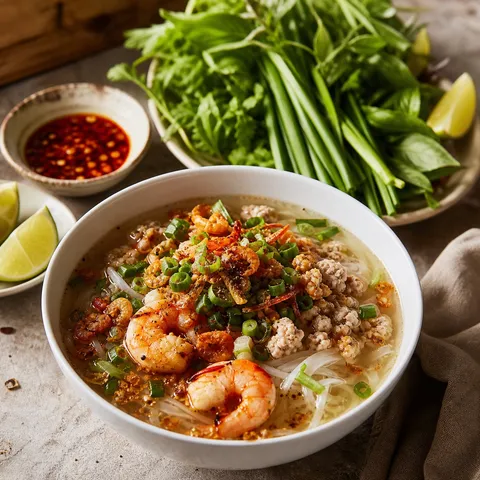 Vietnamese Lens Verified Images are for illustrative purposes only, may be inaccurate, and do not guarantee the presence or absence of specific ingredients.
 Hủ Tiếu (Pork and Seafood Noodle Soup)
A Vietnamese pork-bone broth noodle soup loaded with ground pork, shrimp, and dried shrimp over chewy tapioca noodles, finished with garlic chives and fried garlic.
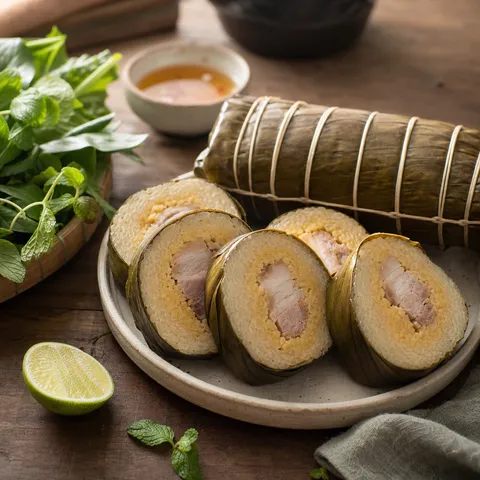 Vietnamese Lens Verified Images are for illustrative purposes only, may be inaccurate, and do not guarantee the presence or absence of specific ingredients.
 Bánh Tét (Cylindrical Sticky Rice Cake)
The Southern equivalent of Bánh Chưng, rolled into a cylinder.