 Food Lens Images are for illustrative purposes only, may be inaccurate, and do not guarantee the presence or absence of specific ingredients.
 Food Lens · Produce
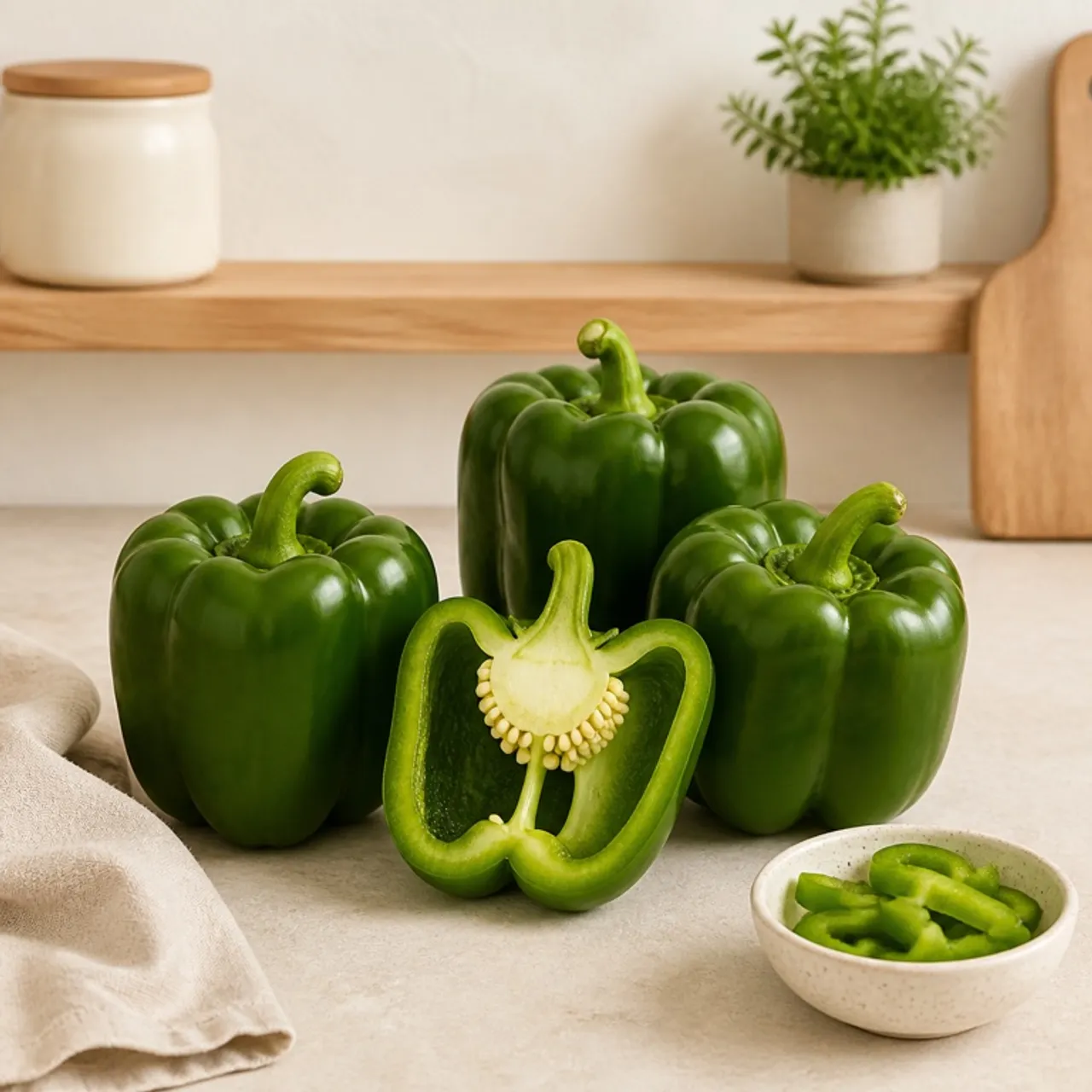
Bell pepper
Sweet and juicy with a fresh, vegetal aroma; red and yellow are noticeably sweeter than green, which carries a slight grassy bitterness.
Lens VerifiedBell pepper is a sweet, crisp capsicum used raw in salads, roasted for depth, or stir-fried as a colorful base in countless cuisines. Unlike its hot relatives, it has zero heat and a naturally juicy sweetness that builds with ripeness.
Where it comes from
Bell peppers trace back to wild capsicum plants in Mexico and Central America, where indigenous peoples cultivated them for millennia. Spanish colonizers carried seeds to Europe in the 1500s, and from there they spread across Asia and Africa, transforming cuisines far from their origin. They arrived in North American markets in earnest through the 20th century and are now one of the most widely consumed vegetables on the continent.
Varieties — Green peppers are unripe and slightly bitter; yellow and orange are mid-ripe and sweeter; red peppers are fully ripe with the most sugar and vitamins. Purple and chocolate varieties exist but are rarer in supermarkets.
Red and green bell peppers are foundational to the 'holy trinity plus' in Filipino ginisang gulay, and red bell pepper is essential to Italian peperonata and Turkish şakşuka.
In a modern kitchen — To peel a roasted pepper easily, place it in a covered bowl for 10 minutes after charring — the steam loosens the skin. Store cut peppers cut-side down on a paper towel in the fridge for up to 4 days.
Buying it
Choose peppers that feel heavy for their size with taut, glossy skin free of soft spots or wrinkles. Stems should be firm and green. Red, orange, and yellow peppers should show no green patches (unless intentional), as green areas indicate uneven ripening.
Storing it
Refrigerate in the crisper drawer, ideally in a bag with some airflow. Wrinkled skin or soft spots are signs it's past its best.
Keeps about 10 days in the fridge.
In season
Peak season is July–September, though it's available year-round.
Bell peppers peak locally in late summer; greenhouse and imported peppers keep supermarket supply steady year-round.
Out of bell pepper? Good swaps
- Poblano pepper — Mild heat; use 1:1 for a slightly smoky, earthier flavor — good for roasting
- Cubanelle pepper — Thinner walls, sweeter, less crisp; great raw or lightly sautéed as a 1:1 swap
- Pimiento — Sweeter and softer; swap 1:1 in cooked dishes but not raw salads
General cooking guidance — always check the labels on the products you use. Listahan’s allergen checks run automatically when you plan a recipe in the app. Not medical advice.
Recipes that use bell pepper
Common questions about bell pepper
Is bell pepper vegan?
Bell pepper is generally plant-based and suitable for a vegan diet, but brands differ — confirm on the label.
What can I use instead of bell pepper?
Good swaps include Poblano pepper, Cubanelle pepper, Pimiento. Each behaves a little differently — see the swaps above for notes, and always check labels for allergens.
How do I store bell pepper?
Refrigerate in the crisper drawer, ideally in a bag with some airflow. Wrinkled skin or soft spots are signs it's past its best. It keeps about 10 days in the fridge.
More produce
See all


Make bell pepper about your kitchen — with Listahan Pro
Everything above is free, forever. Pro adds the Household Lens — the same food, seen for your family:
-
Checked for each member
Flags bell pepper per person against your household's allergies and school rules — not just a generic "contains" tag.
-
Pantry-aware
Knows whether you already have it, what is running low, and the best swap from what is in your kitchen tonight.
-
What it costs near you
A real price from the Presyo community index, so you can plan the budget — not guess.
-
Your household memory
Who likes it, plus your own private notes — brand, where you keep it, who skips it.
Allergen safety is always free — Pro adds the automation, never the safety.
Cook with bell pepper — safely
Plan a recipe in Listahan and the household allergen check runs automatically — every plan, every swap, every lunchbox. Safety is never paywalled.