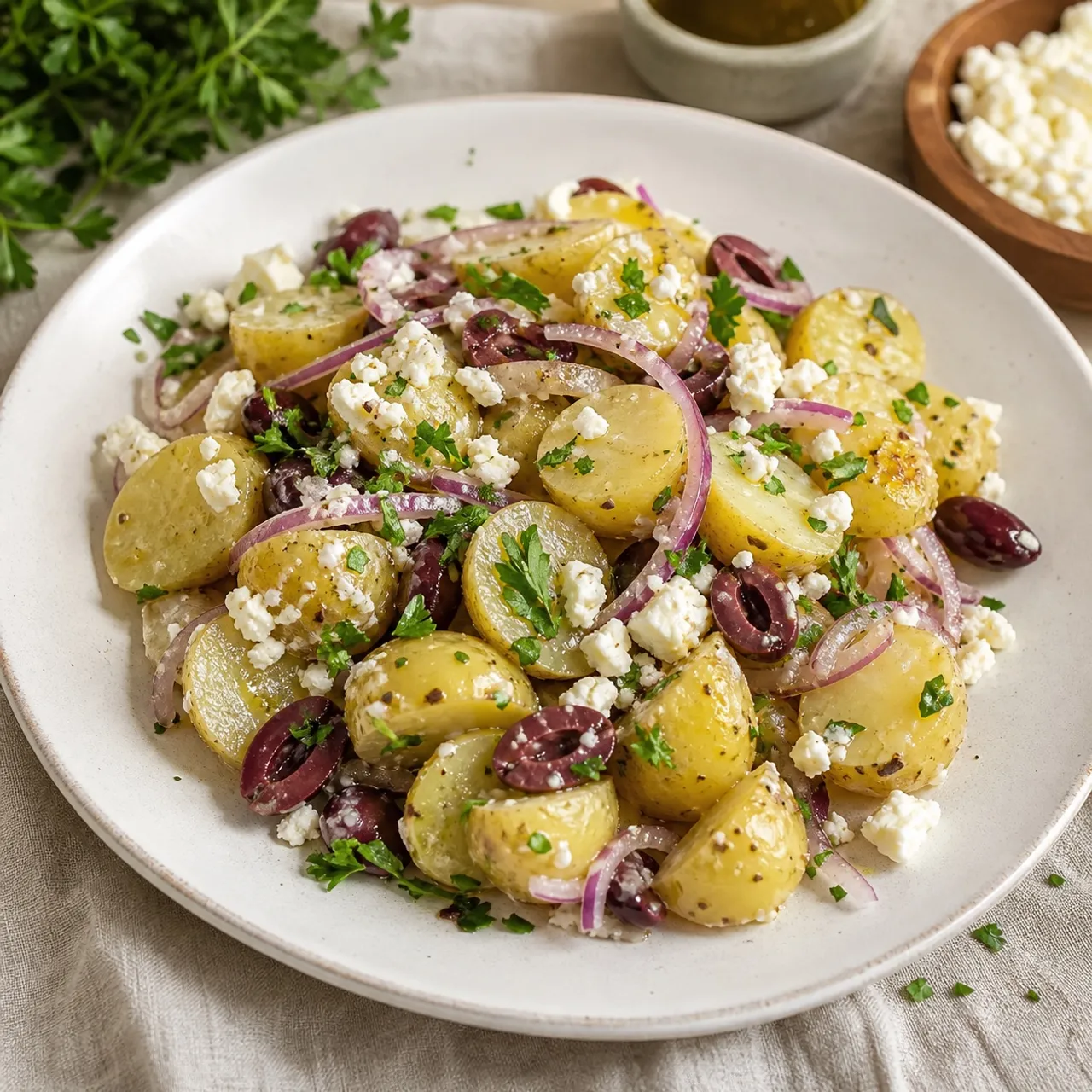
 Greek Images are for illustrative purposes only, may be inaccurate, and do not guarantee the presence or absence of specific ingredients.
 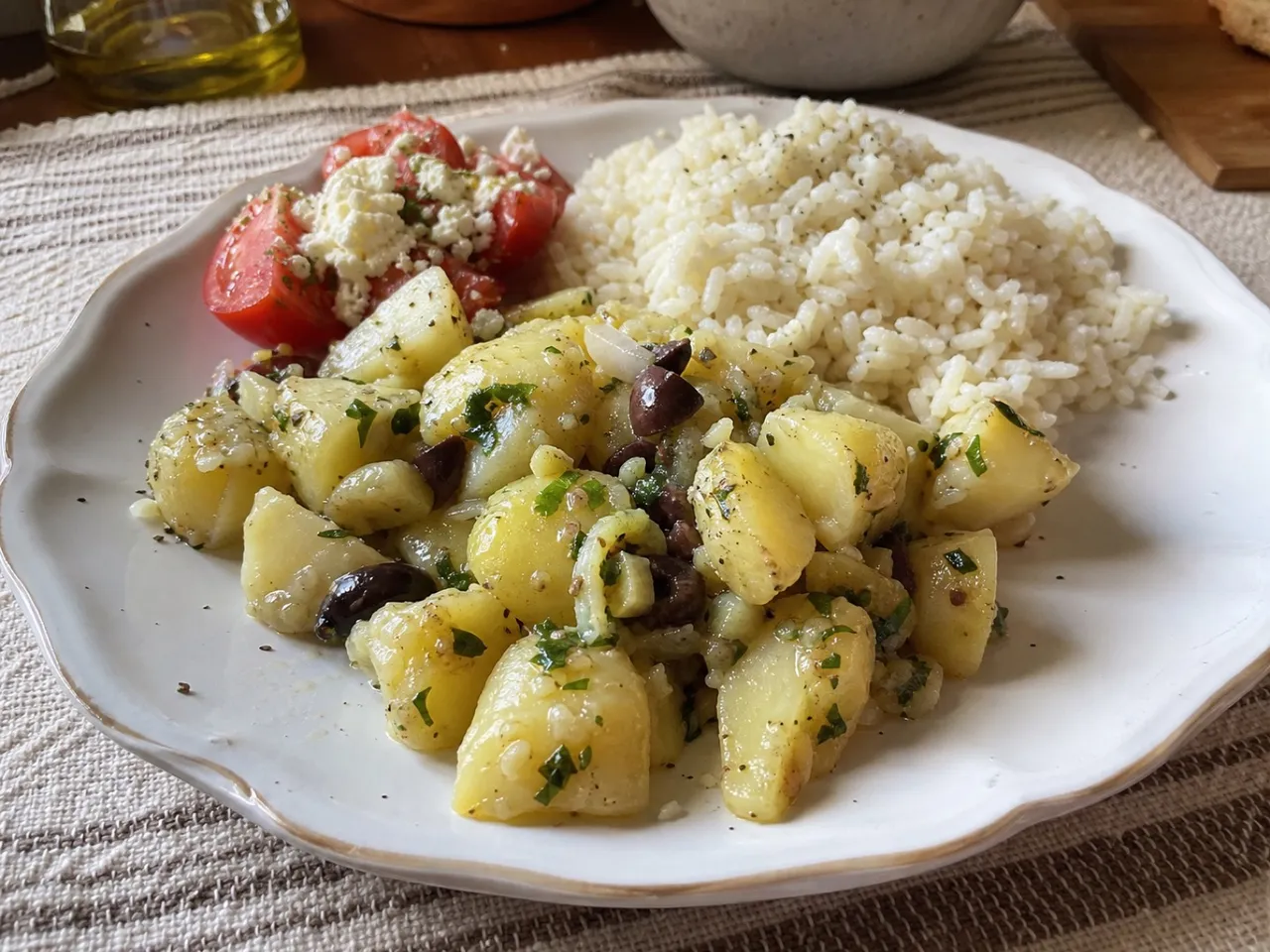 Serving Images are for illustrative purposes only, may be inaccurate, and do not guarantee the presence or absence of specific ingredients.
 Greek Lemon Potato Salad
A vibrant, no-mayo potato salad dressed in a bright lemon-olive oil vinaigrette and tossed with Kalamata olives, feta, and fresh herbs.
Contains common allergens
In the app, Listahan checks these against your household automatically.
Good to know
- Ready in under 30 minutes
Matched from this dish's own ingredients and timing. Browse more: 30-minute meals
Instructions
5 steps- 1
Boil Potatoes: Place the potatoes in a large pot of salted water. Bring to a boil and cook for 15-20 minutes until fork-tender. Drain and let cool slightly.
- 2
Make Dressing: In a small bowl, whisk together the olive oil, lemon juice, Dijon mustard, salt, and pepper until emulsified.
- 3
Toss: While the potatoes are still warm, toss them with the dressing so they absorb the flavors.
- 4
Assemble: Gently fold in the Kalamata olives, feta cheese, red onion, and parsley.
- 5
Serve: Serve at room temperature or chilled.
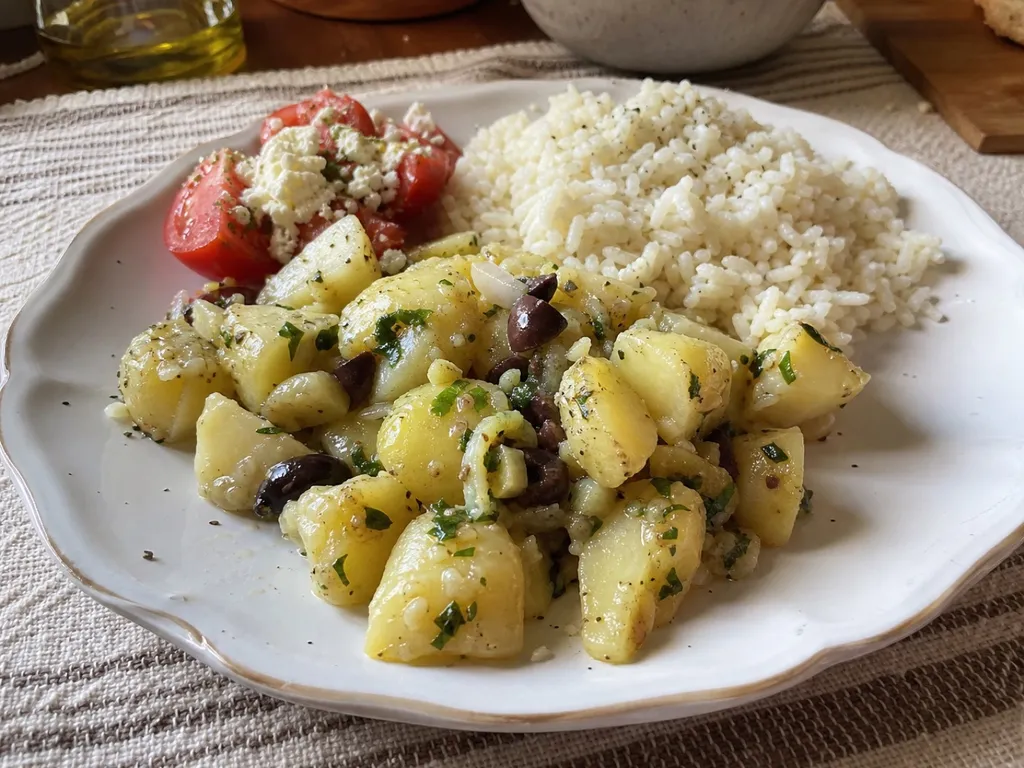 Images are for illustrative purposes only, may be inaccurate, and do not guarantee the presence or absence of specific ingredients.
 Listahan Family Score™
79/100
Good fit for most families
Score reflects how well this recipe fits a typical busy household. In the app, your Family Score is personalized to your household's allergens, kids, and pantry.
Nutrition
per serving210
Calories
4 g
Protein
21 g
Carbs
12 g
Fat
Estimated per serving. Actual values depend on the brands and portions you use.
Listahan cooking guide
Chef notes & practical guide
Technique notes, ingredient swaps, serve-alongside ideas, storage guidance, and equipment for this recipe.
Cultural context
Unlike the mayonnaise-heavy potato salads common in Northern Europe and North America, the Greek approach dresses potatoes while they are still warm with olive oil and lemon juice, a technique rooted in the Mediterranean tradition of using fat and acid rather than emulsified sauces. This style of potato salad appears across Greek home cooking as both a meze dish and a side at grilled meat tables, where it cuts through richness with bright acidity. The combination of capers, olives, and fresh herbs reflects the pantry of the Aegean islands, where preserved and brined ingredients have long been central to everyday cooking.
Listahan note
This version dresses the potatoes while hot so they absorb the lemon-olive oil mixture deeply, and relies on generous fresh herbs rather than any filler to keep the flavors vivid and distinct.
Technique cues
- Toss the potatoes with the olive oil and lemon dressing while they are still hot and just drained — warm potatoes are porous and absorb dressing all the way through, rather than just coating the outside once cooled.
- Cut potatoes into uniform chunks before boiling rather than after so each piece cooks at the same rate; uneven chunks lead to some pieces turning mushy before others are done.
- Taste and re-season after the salad has sat for 10 minutes at room temperature — the flavors mellow as it cools and almost always need another pinch of salt and a squeeze of lemon to restore brightness before serving.
Kitchen flow
- Parallel prep
- While the potatoes boil, whisk together the lemon-olive oil dressing, pit and halve the olives, and chop the herbs — everything is ready to go the moment the potatoes come out of the pot.
- Make-ahead
- The salad can be made up to 4 hours ahead and held at room temperature, which actually allows the flavors to deepen; hold the fresh herbs and add them just before serving to keep them bright.
- Leftover move
- Leftover salad keeps refrigerated for up to 2 days; bring back to room temperature and add a fresh squeeze of lemon and a drizzle of olive oil before serving since the potatoes absorb the dressing as they sit.
- Cleanup rhythm
- One pot for boiling, one bowl for dressing, one cutting board — this is a minimal-cleanup dish; rinse the pot immediately after draining to prevent starch from drying on.
Ingredient brief
Role, handling, and swap guidance for each key ingredient.
Yukon Gold potatoes
salad base
Purpose: Their waxy, buttery texture holds together well when tossed, unlike starchy russets that crumble and turn gluey when dressed.
Handling: Scrub well, cut into 1.5-inch chunks with skin on to hold shape during boiling, and start in cold salted water to cook evenly.
Adaptation: Red potatoes are an equally good waxy substitute and their skin adds a bit of color to the finished dish.
fresh lemon juice
primary dressing acid
Purpose: Lemon is the defining flavor of this salad, providing the brightness that distinguishes it from heavier dressed potato salads.
Handling: Juice right before dressing the potatoes so the volatile aroma is at its strongest when it hits the hot flesh.
Adaptation: White wine vinegar at half the quantity can substitute in a pinch, though it lacks the citrus perfume that makes this dish distinctly Greek.
extra-virgin olive oil
dressing fat and flavor carrier
Purpose: A good olive oil is not just a cooking fat here — its grassy, peppery character is a primary flavor component of the salad.
Handling: Use at room temperature so it emulsifies readily with the lemon juice when whisked; cold oil will not combine evenly.
Adaptation: Avocado oil works as a neutral alternative for those who find strong olive oil flavors overpowering, though it loses the characteristic Greek flavor.
Kalamata olives
briny, savory counterpoint
Purpose: Their deep, meaty brine cuts through the richness of the olive oil and adds salt and umami without any extra seasoning.
Handling: Buy pitted if possible; if whole, press each olive flat with the side of a knife to release the pit cleanly before halving.
Adaptation: Green Castelvetrano olives are milder and less bitter, a good option for olive skeptics while keeping the Mediterranean character.
fresh dill
herb accent and freshness
Purpose: Dill is among the most commonly used herbs in Greek cooking and its anise-light flavor pairs naturally with lemon and potato.
Handling: Chop just before adding to preserve its color and volatile oils; dried dill is a poor substitute in a dish where fresh herb flavor is structural.
Adaptation: Fresh flat-leaf parsley can replace dill for a more neutral herb note; fresh mint adds a cooling quality that works well in summer.
capers
salty, tangy accent
Purpose: Capers provide concentrated bursts of acidity and salt that echo the lemon dressing and contrast the starchy potato.
Handling: Rinse salt-packed capers well before using; brine-packed capers can go straight in but drain off excess liquid.
Adaptation: Finely chopped pickled green olives approximate the brininess of capers for those who find their flavor too assertive.
Technique notes
- Salt the boiling water generously — it should taste pleasantly salty, like a light brine — because potatoes absorb very little seasoning after cooking and this is your only chance to season the interior.
- Whisk the lemon juice and olive oil together vigorously just before dressing the potatoes so they form a loose emulsion that coats each piece evenly rather than pooling at the bottom of the bowl.
- This salad is safer and more stable than mayo-based potato salads at room temperature because the acid in the lemon dressing discourages bacterial growth — a reliable choice for picnics and buffets.
Ingredient swaps
- Gluten-free direction
- This recipe is naturally gluten-free as written — no substitutions needed; verify any store-bought capers are processed in a gluten-free facility if cross-contamination is a concern.
- Lower-sodium direction
- Reduce Kalamata olives by half and replace capers with a tablespoon of lemon zest for brininess without the sodium load; finish with a good drizzle of oil and extra herbs.
- Weeknight shortcut
- Microwave cubed potatoes in a covered dish with 2 tablespoons of water for 8 to 10 minutes until just tender, saving 15 minutes over stovetop boiling and producing a similar texture.
Serve alongside
- Grilled lamb chops with rosemary
- Chicken Souvlaki with Tzatziki
- Spanakopita (spinach and feta phyllo pie)
- Simple tomato and cucumber salad
- Chilled Moschofilero white wine
- Sparkling water with lemon and a sprig of fresh mint
Serving suggestions only — check pairings for your household's allergens.
Storage & reheating
- Store leftovers in a sealed container in the refrigerator for up to 2 days; the potatoes will absorb the dressing and the salad will taste less bright than fresh.
- Before serving from the fridge, let sit at room temperature for 20 minutes and refresh with a squeeze of fresh lemon juice and a small drizzle of olive oil to revive the flavors.
Equipment
- Large heavy pot for boiling potatoes evenly without crowding
- Colander for draining quickly so potatoes do not continue to steam and turn mushy
- Large mixing bowl with enough room to toss without spilling
- Microplane or citrus zester for adding lemon zest to amplify citrus fragrance
Make this household-aware
Listahan Pro checks this recipe against your household's allergens, finds pantry-aware swaps, builds the shopping list, and helps you plan the week around it.
Plan it in Listahan
Add Greek Lemon Potato Salad to your week, check it against your household's allergens, and build the shopping list automatically.
More Greek recipes
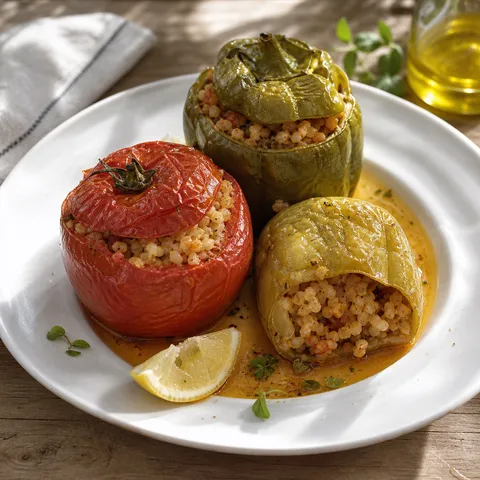 Greek Lens Verified Images are for illustrative purposes only, may be inaccurate, and do not guarantee the presence or absence of specific ingredients.
 Gemista (Stuffed Tomatoes and Peppers with Rice)
Ripe tomatoes and bell peppers hollowed out and stuffed with a savory herbed rice filling, then baked until tender and caramelized.
 Greek Lens Verified Images are for illustrative purposes only, may be inaccurate, and do not guarantee the presence or absence of specific ingredients.
 Kourabiedes (Greek Almond Butter Cookies)
Buttery, crumbly shortbread cookies studded with toasted almonds and generously dusted with powdered sugar.
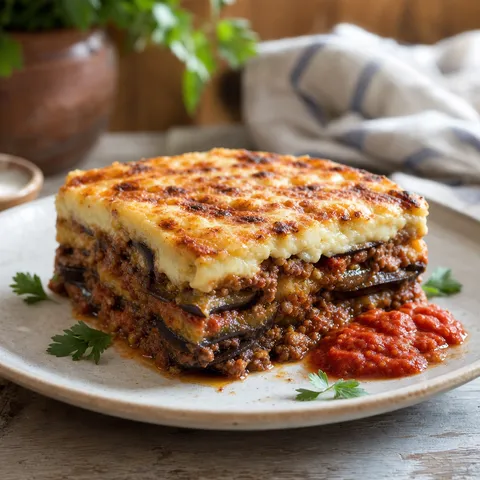 Greek Lens Verified Images are for illustrative purposes only, may be inaccurate, and do not guarantee the presence or absence of specific ingredients.
 Classic Moussaka
A rich, layered Greek casserole featuring roasted eggplant, a hearty spiced meat sauce, and a thick, creamy béchamel topping.