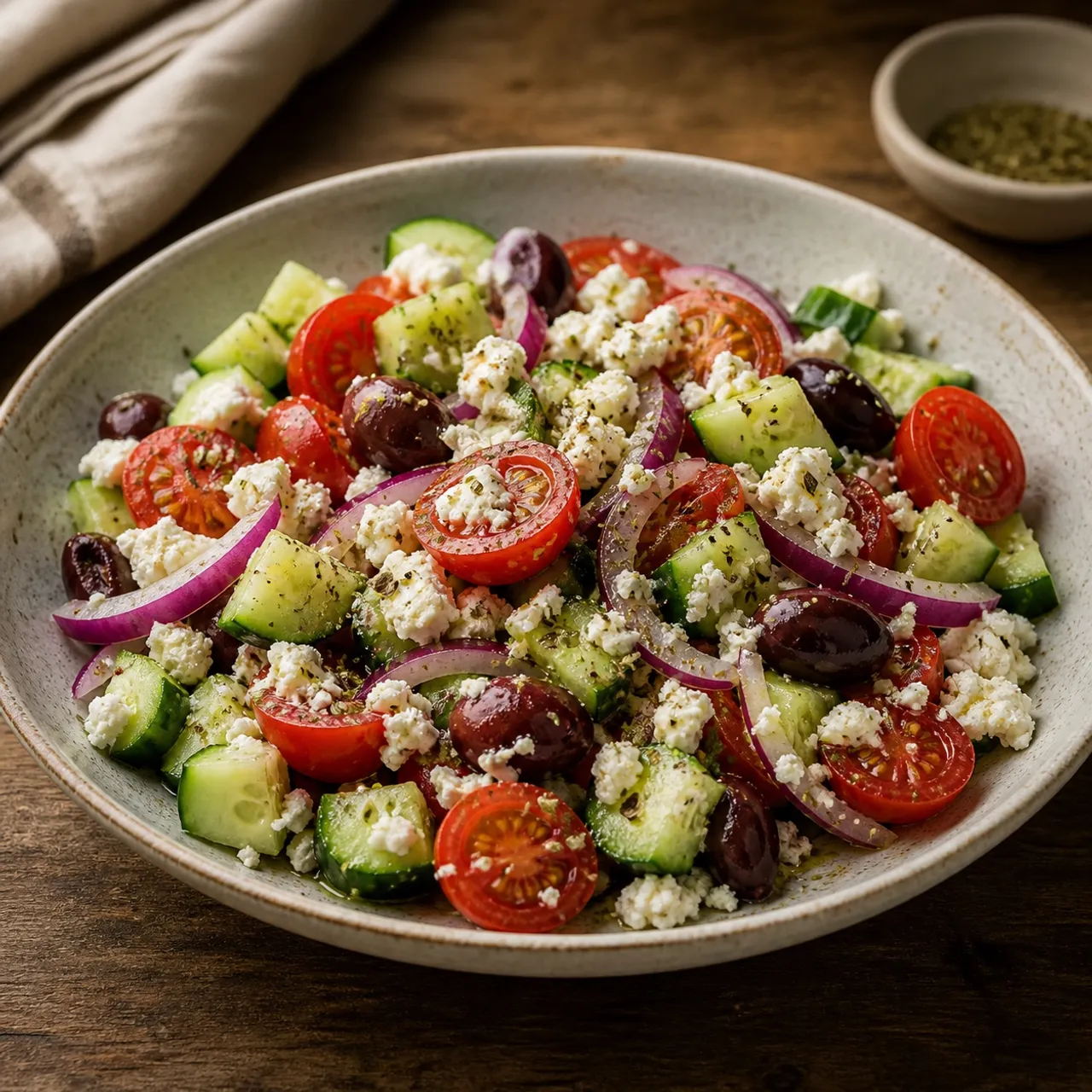
 Keto Images are for illustrative purposes only, may be inaccurate, and do not guarantee the presence or absence of specific ingredients.
 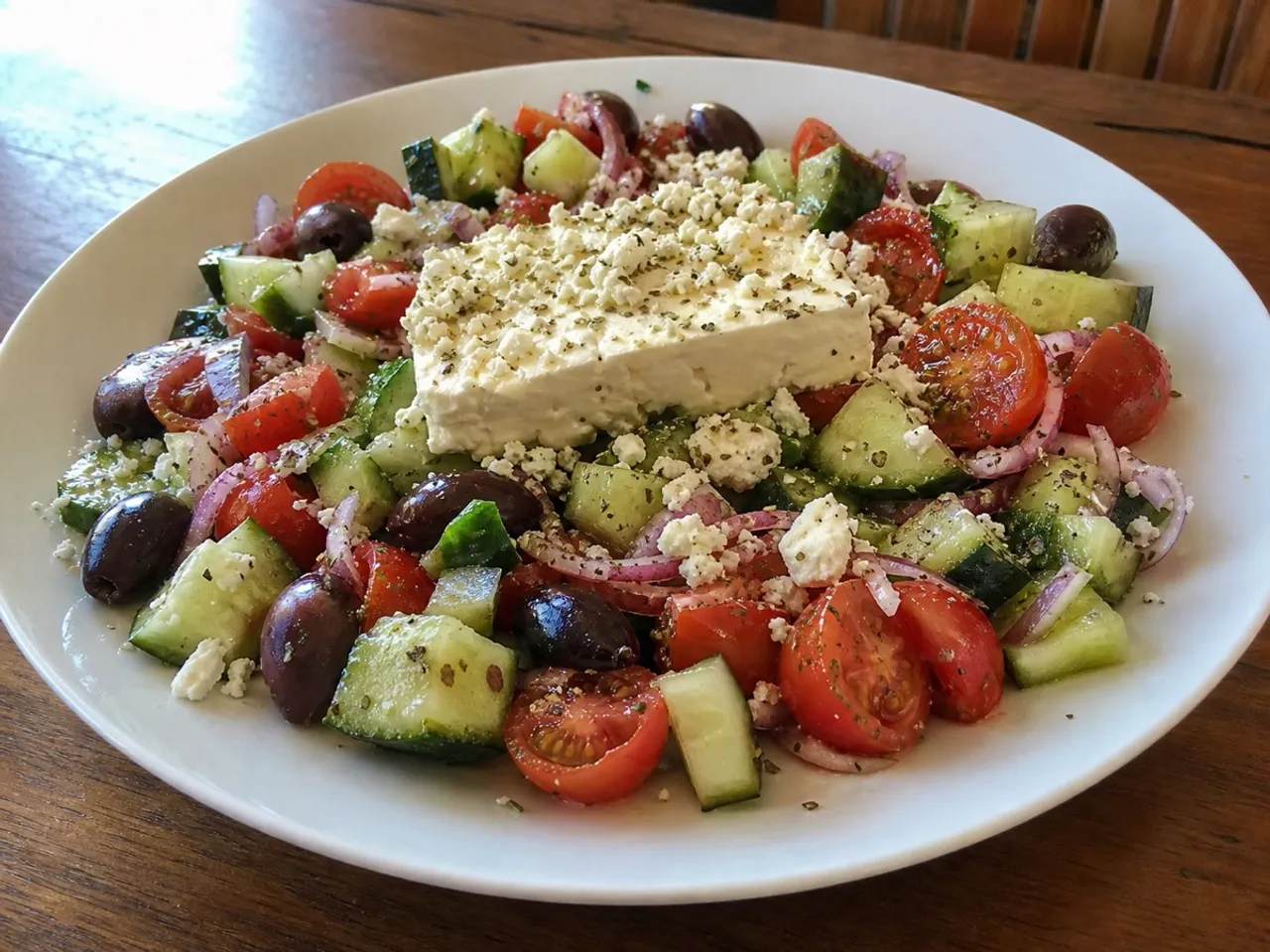 Serving Images are for illustrative purposes only, may be inaccurate, and do not guarantee the presence or absence of specific ingredients.
 Greek Salad
A classic keto Greek salad with crisp cucumber, Kalamata olives, tomatoes, red onion, and feta in a lemon-oregano dressing.
Contains common allergens
In the app, Listahan checks these against your household automatically.
Good to know
- Ready in under 30 minutes
Matched from this dish's own ingredients and timing. Browse more: 30-minute meals
Instructions
5 steps- 1
Combine the tomatoes, cucumber, red onion, and olives in a large bowl.
- 2
Whisk together the olive oil, red wine vinegar, oregano, salt, and pepper in a small bowl.
- 3
Pour the dressing over the vegetables and toss gently to coat.
- 4
Top with the feta cheese, either left in a block on top Greek-taverna style or crumbled over the salad.
- 5
Let sit for 5 minutes so the flavors meld, then serve.
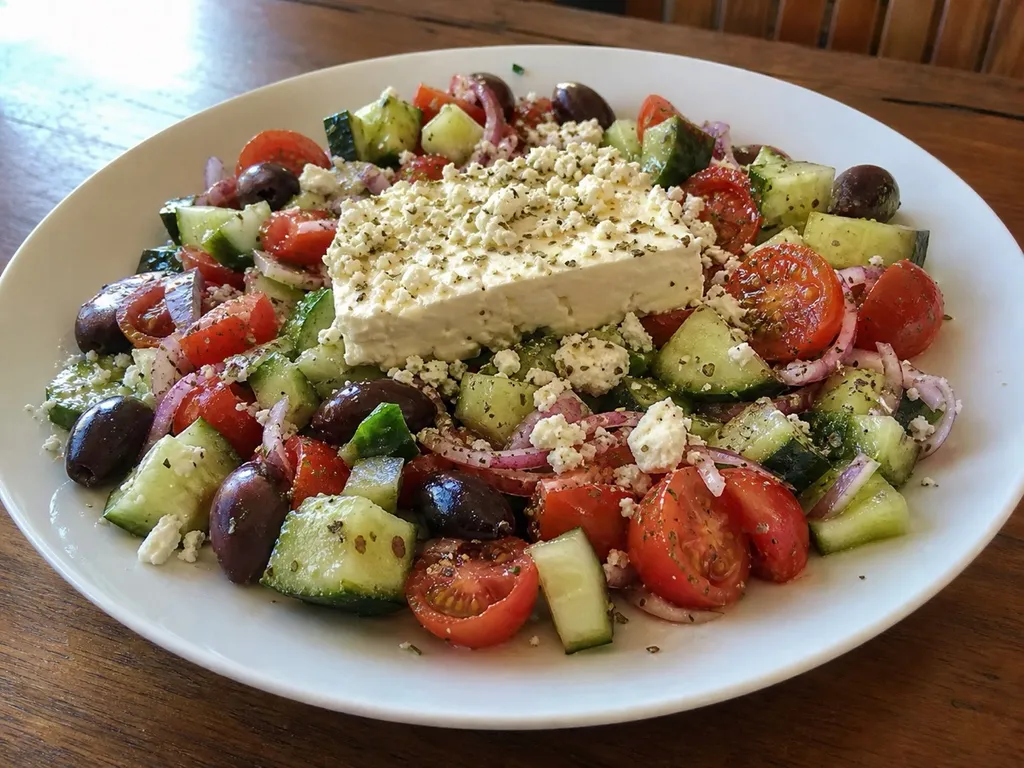 Images are for illustrative purposes only, may be inaccurate, and do not guarantee the presence or absence of specific ingredients.
 Listahan Family Score™
80/100
Good fit for most families
Score reflects how well this recipe fits a typical busy household. In the app, your Family Score is personalized to your household's allergens, kids, and pantry.
Nutrition
per serving110
Calories
6 g
Protein
4 g
Carbs
8 g
Fat
Estimated per serving. Actual values depend on the brands and portions you use.
Listahan cooking guide
Chef notes & practical guide
Technique notes, ingredient swaps, serve-alongside ideas, storage guidance, and equipment for this recipe.
Cultural context
The Greek salad, known in Greece as horiatiki (village salad), is not a green salad with dressing — it is a combination of chunked vegetables, whole olives, and a large slab of feta cheese dressed simply with olive oil and dried oregano. It became popular in North America in the 1970s and 1980s, often Americanized with shredded iceberg lettuce and bottled Greek dressing. The authentic version is already naturally keto, gluten-free, and vegetarian, and requires nothing beyond good-quality ingredients and a respectful approach to the original.
Listahan note
This version stays close to the traditional horiatiki — no lettuce, tomatoes and cucumbers in large chunks, a full block of feta rather than crumbles, and a simple olive oil and oregano dressing that lets the quality of each ingredient speak.
Technique cues
- Cut all the vegetables into large, rustic chunks rather than thin slices — horiatiki is meant to be eaten with a fork, not a spoon, and large pieces have better texture and more presence than a finely diced salad.
- Use the best-quality feta you can find, ideally Greek feta made from sheep's milk or a blend with goat's milk; supermarket crumbles are processed and saltier with less of the tangy, creamy flavor that defines the dish.
- Dress the salad with olive oil first, then the oregano, then a small pinch of salt — the oil coats the vegetables before the salt draws out their moisture, which means the dressing stays as a coating rather than pooling at the bottom of the bowl.
Kitchen flow
- Parallel prep
- Cut all vegetables and prepare the dressing simultaneously since no cooking is required; the whole salad assembles in under 10 minutes.
- Make-ahead
- Cut and refrigerate the vegetables up to one day ahead; add the feta, olives, and dressing only at serving time.
- Leftover move
- Chop leftover salad finely and serve as a topping for grilled chicken or lamb for a quick Mediterranean-style dinner.
- Cleanup rhythm
- One cutting board, one bowl, no cooking; the only thing to clean is the knife and the serving bowl.
Ingredient brief
Role, handling, and swap guidance for each key ingredient.
cucumber
cool crunch
Purpose: Cucumber provides freshness, water content, and a cool counterpoint to the briny feta and olives.
Handling: Cut into thick half-moons or large chunks; no need to peel if using English cucumber.
Adaptation: Persian cucumbers are thin-skinned and have fewer seeds, making them the best option when available.
tomatoes
sweetness and acidity
Purpose: Ripe tomatoes add juiciness, natural sweetness, and the acidity that balances the salt of the feta and olives.
Handling: Core and cut into large wedges rather than slicing; let any cut tomatoes rest cut-side up to reduce weeping.
Adaptation: Cherry tomatoes halved are acceptable and sweeter; heirloom varieties add color variety.
green bell pepper
vegetal crunch
Purpose: Strips of green bell pepper add a slightly bitter, fresh vegetal flavor that is part of the horiatiki identity.
Handling: Cut into thin rings or strips and scatter over the top rather than mixing in, for visual appeal.
Adaptation: Banana peppers add a mild tang; red bell pepper adds sweetness if green is too assertive.
Kalamata olives
briny depth
Purpose: Kalamata olives are the canonical choice for Greek salad — meaty, briny, and rich with a purple-red color that adds visual contrast.
Handling: Use whole or pitted olives and scatter on top; crushing lightly with the side of a knife releases more flavor.
Adaptation: Castelvetrano olives provide a milder, buttery flavor if Kalamata is too intense for some palates.
feta cheese
protein, fat, and salt
Purpose: Feta is not a garnish in this salad — it is a primary ingredient that provides salt, creaminess, and the characteristic tangy bite.
Handling: Place a whole thick slice or large block on top of the salad rather than crumbling it; crumbling is an American adaptation.
Adaptation: Sheep's milk feta is traditionally correct; a good Bulgarian feta is an acceptable alternative.
Technique notes
- A very small amount of dried oregano rubbed between your palms before scattering over the salad releases more of its aromatic oils, making the herb fragrance more immediate and vivid.
- A drizzle of red wine vinegar in addition to or instead of lemon juice adds the slightly sharp acidity that is characteristic of taverna Greek salads.
- Let the assembled salad rest for 5 minutes before serving — the salt draws a small amount of liquid from the vegetables that mingles with the olive oil into a naturally emulsified, incredibly flavorful dressing at the bottom of the bowl.
Ingredient swaps
- Lower-sodium direction
- Rinse the feta under cold water briefly to remove surface salt, and choose a milder, less-salty feta variety; Kalamata olives can be rinsed as well.
- Vegan direction
- Replace feta with cubed firm tofu marinated in lemon juice, nutritional yeast, and salt for a tangy, creamy substitute with a similar visual effect.
- Protein boost
- Add a can of drained tuna or sliced grilled chicken on top to transform the side salad into a complete main course.
Serve alongside
- Grilled lamb chops with lemon and herbs
- Tzatziki with cucumber dippers
- Stuffed grape leaves (dolmades)
- Crisp Greek white wine such as Assyrtiko (for adults)
- Sparkling water with lemon
Serving suggestions only — check pairings for your household's allergens.
Storage & reheating
- Store undressed salad components in separate airtight containers in the refrigerator for up to 2 days.
- Once dressed, the salad should be eaten within an hour as the vegetables begin to release liquid and the feta softens.
Equipment
- Sharp chef's knife and large cutting board
- Wide, shallow bowl for attractive presentation of chunked vegetables
- Small bowl and whisk for the olive oil dressing
Make this household-aware
Listahan Pro checks this recipe against your household's allergens, finds pantry-aware swaps, builds the shopping list, and helps you plan the week around it.
Plan it in Listahan
Add Greek Salad to your week, check it against your household's allergens, and build the shopping list automatically.
More Keto recipes
 Keto Lens Verified Images are for illustrative purposes only, may be inaccurate, and do not guarantee the presence or absence of specific ingredients.
 Keto Chicken Enchiladas
Savory chicken and cheese rolled in low-carb tortillas, smothered in a rich, mild red enchilada sauce.
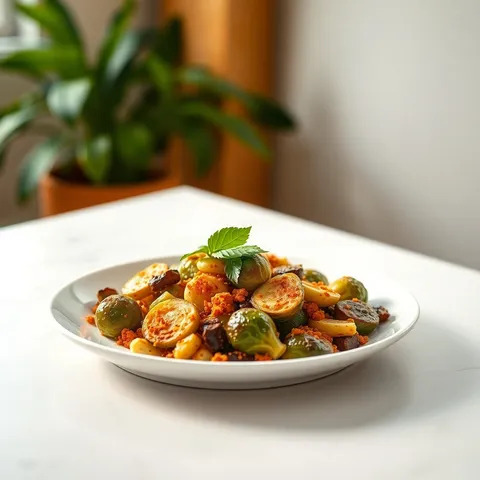 Keto Lens Verified Images are for illustrative purposes only, may be inaccurate, and do not guarantee the presence or absence of specific ingredients.
 Brussels Sprouts
Crispy oven-roasted keto Brussels sprouts with garlic and Parmesan — caramelized and golden.
 Keto Lens Verified Images are for illustrative purposes only, may be inaccurate, and do not guarantee the presence or absence of specific ingredients.
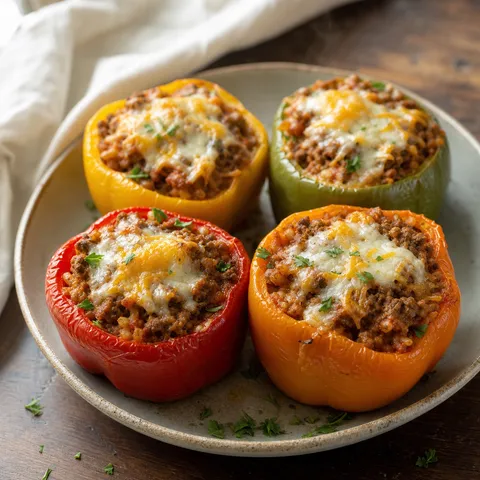
 Low-Carb Stuffed Bell Peppers
Vibrant bell peppers generously stuffed with a savory mixture of ground beef, cauliflower rice, and melted cheese.