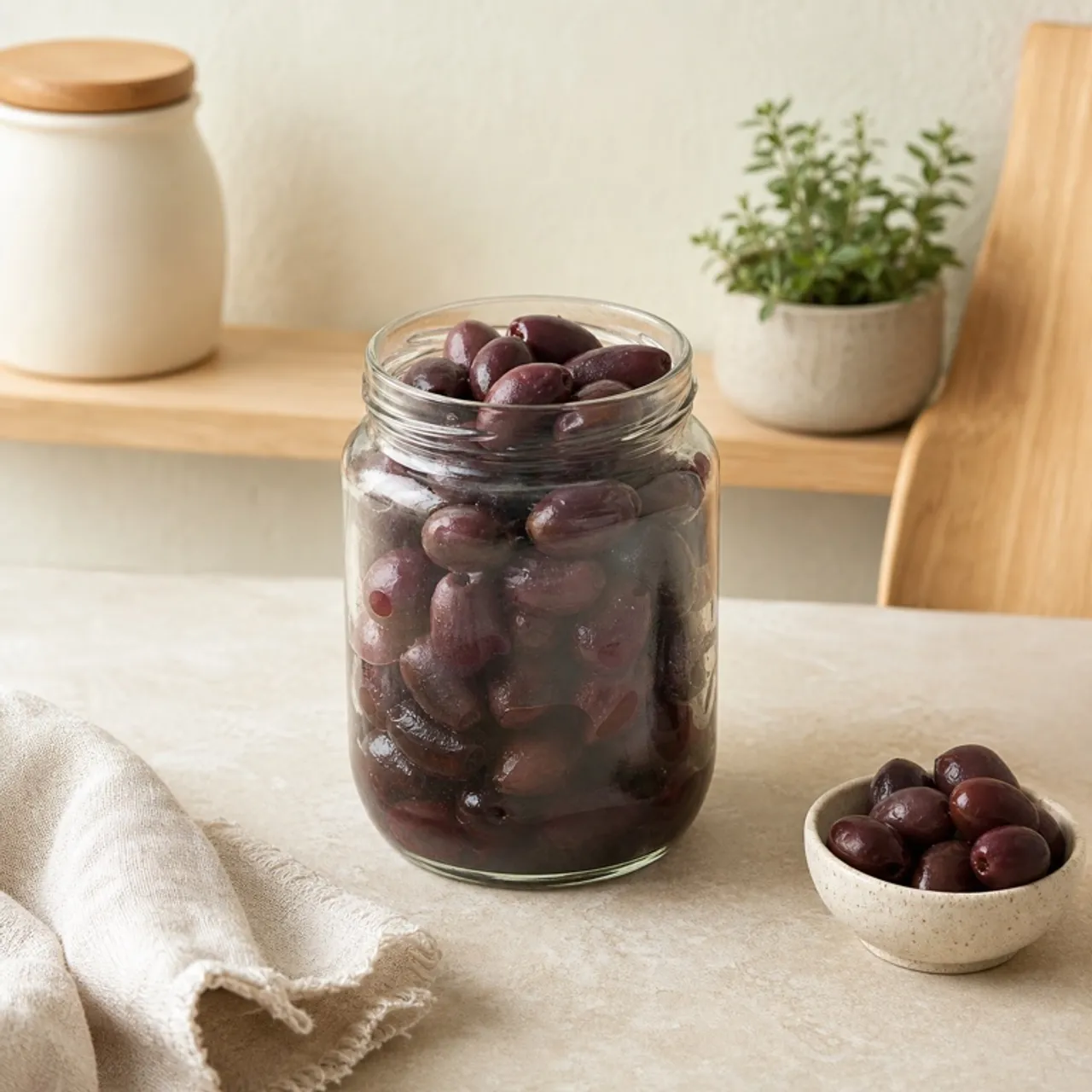
 Food Lens Images are for illustrative purposes only, may be inaccurate, and do not guarantee the presence or absence of specific ingredients.
 Food Lens · Recipe ingredients
Black Olives
Rich, meaty, and savory with a briny saltiness and varying degrees of bitterness depending on the variety and curing method. Kalamatas are fruity and wine-like; Moroccan oil-cured olives are intensely savory and slightly bitter; Gaeta olives are mild and earthy. All share an underlying umami depth from the curing process.
Lens VerifiedBlack olives are fully ripened olives — or in the case of California-style canned olives, artificially darkened green olives — with a richer, milder, and less bitter flavor than their green counterparts. Olives are one of the oldest cultivated fruits in the world, inseparable from Mediterranean civilization, and black varieties from Kalamata to Gaeta to Moroccan oil-cured olives represent centuries of regional curing and preserving tradition. Their savory, briny, and meaty quality makes them one of the most flavor-dense ingredients in the pantry.
Where it comes from
Olives have been cultivated in the eastern Mediterranean for at least 6,000 years, with black olives representing the fully ripened fruit of one of the most historically significant crops in human civilization.
Varieties — Kalamata (Greece): almond-shaped, purple-black, rich and fruity; Gaeta (Italy): small, wrinkled, oil-cured, earthy; Niçoise (France): tiny, nutty, with a pit; Moroccan oil-cured: shriveled, intensely savory; California canned black olives: artificially oxidized green olives, mild and rubbery — a distinctly different product from tree-ripened varieties.
Olives and olive oil are not merely food but a cultural and economic foundation across the Mediterranean. In Greece, the olive tree is a sacred symbol linked to Athena; in Morocco, oil-cured black olives preserved in herbs are a centuries-old domestic art. The spread of Roman civilization helped establish olive cultivation across the entire Mediterranean basin.
In a modern kitchen — The quality difference between brined whole olives from a deli counter or specialty store and canned California-style black olives is dramatic. For cooking and charcuterie applications, seek out traditionally cured whole olives with pits — they have far greater complexity and depth of flavor.
Buying it
For culinary use, seek olives cured in brine or oil rather than lye-processed canned versions. Look for whole olives with pits at a deli counter — they hold their flavor better than pre-pitted. Good black olives should smell briny, fruity, and slightly rich, not vinegary or flat. Check for plump, firm flesh without mushiness.
Storing it
Keep unopened jarred or canned black olives in the pantry. Once opened, refrigerate them submerged in their brine or a little oil, and use within a couple of weeks — cloudy brine or an off smell means they've turned.
Keeps about 1 year in the pantry.
Out of black olives? Good swaps
General cooking guidance — always check the labels on the products you use. Listahan’s allergen checks run automatically when you plan a recipe in the app. Not medical advice.
Recipes that use black olives
- Fricasse
- Empanadas de Pino
- Escabeche de Pescado (Peruvian Pickled Fish)
- Pastel de Choclo
- Papa Rellena (Stuffed Potato Fritters)
- Seven-Layer Dip
- Classic Pasta Salad
- Ocopa Arequipeña (Potatoes in Spicy Huacatay Sauce)
- Greek Lentil & Olive Salad
- Causa Limeña (Layered Potato Terrine with Chicken)
- Aji de Gallina (Creamy Chicken Stew)
- Papa a la Huancaina
Common questions about black olives
Is black olives vegan?
Black Olives is generally plant-based and suitable for a vegan diet, but brands differ — confirm on the label.
What can I use instead of black olives?
Good swaps include , , . Each behaves a little differently — see the swaps above for notes, and always check labels for allergens.
How do I store black olives?
Keep unopened jarred or canned black olives in the pantry. Once opened, refrigerate them submerged in their brine or a little oil, and use within a couple of weeks — cloudy brine or an off smell means they've turned. It keeps about 1 year in the pantry.
More recipe ingredients
See all


Make black olives about your kitchen — with Listahan Pro
Everything above is free, forever. Pro adds the Household Lens — the same food, seen for your family:
-
Checked for each member
Flags black olives per person against your household's allergies and school rules — not just a generic "contains" tag.
-
Pantry-aware
Knows whether you already have it, what is running low, and the best swap from what is in your kitchen tonight.
-
What it costs near you
A real price from the Presyo community index, so you can plan the budget — not guess.
-
Your household memory
Who likes it, plus your own private notes — brand, where you keep it, who skips it.
Allergen safety is always free — Pro adds the automation, never the safety.
Cook with black olives — safely
Plan a recipe in Listahan and the household allergen check runs automatically — every plan, every swap, every lunchbox. Safety is never paywalled.