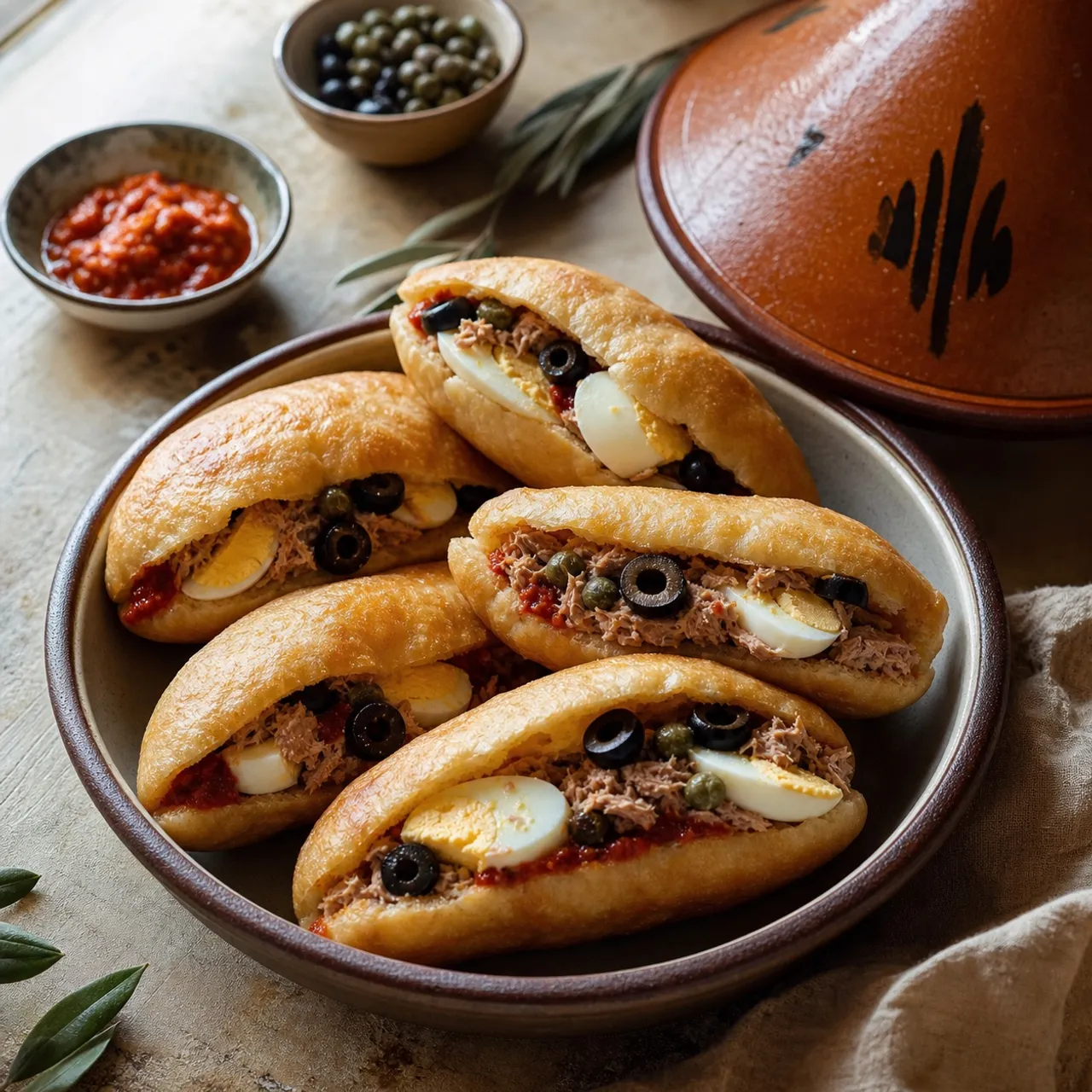
 North African Images are for illustrative purposes only, may be inaccurate, and do not guarantee the presence or absence of specific ingredients.
 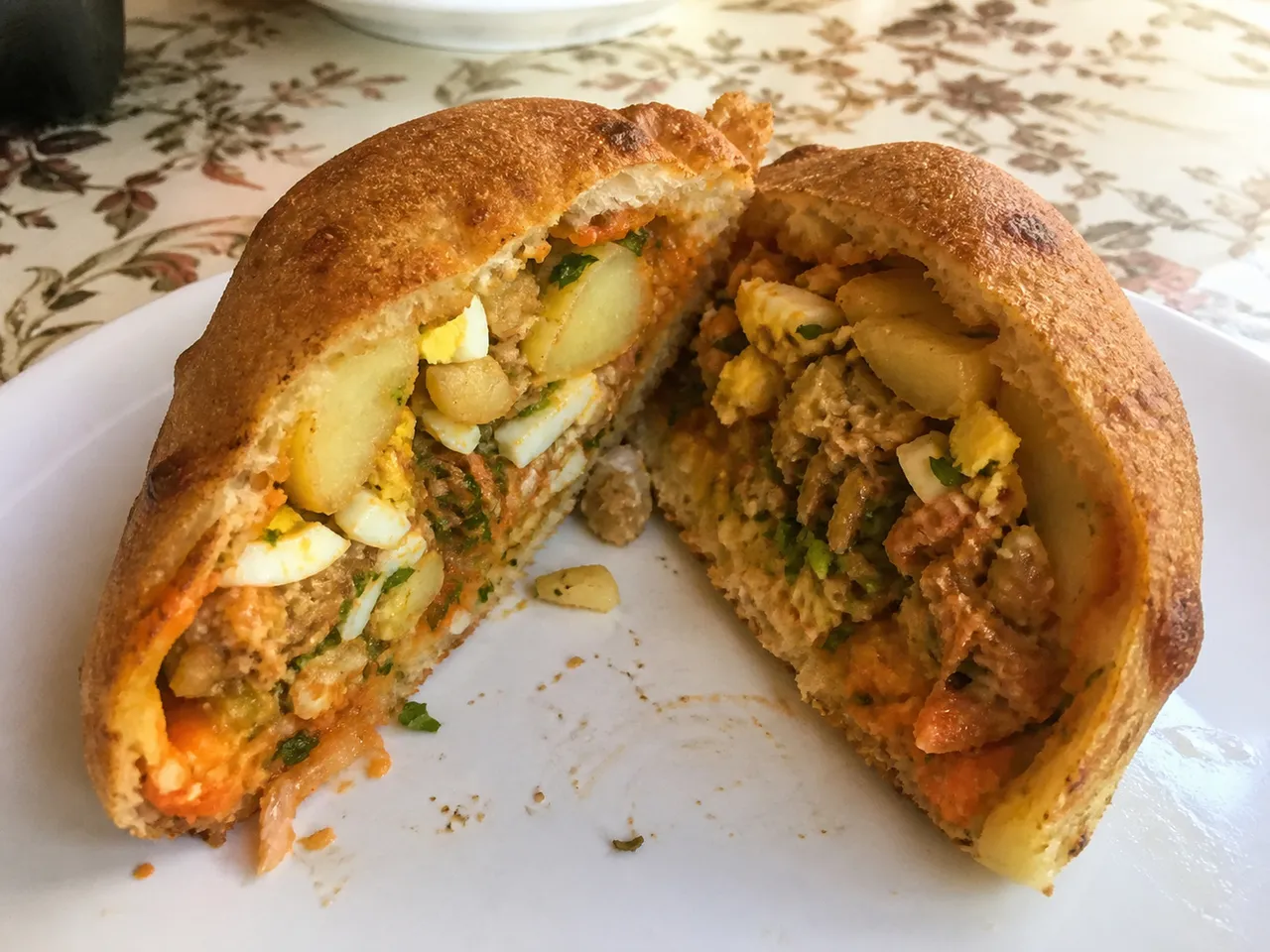 Serving Images are for illustrative purposes only, may be inaccurate, and do not guarantee the presence or absence of specific ingredients.
 Fricasse
Tunisia's puffy fried bun stuffed with tuna, olives, harissa, and hard-boiled egg — a messy, glorious street sandwich that is completely addictive.
Contains common allergens
In the app, Listahan checks these against your household automatically.
Instructions
8 steps- 1
Dissolve the yeast and sugar in warm water and let stand until foamy, about 10 minutes.
- 2
Mix the flour and salt in a large bowl, pour in the yeast mixture, and knead into a soft, slightly sticky dough.
- 3
Cover and let rise in a warm place until doubled, about 45 minutes.
- 4
Punch down the dough and divide into six pieces, shaping each into a flattened oval bun.
- 5
Heat about 2 inches of oil in a deep pot to 350F and fry the buns a couple at a time, turning once, until deeply golden and puffed, about 3 minutes per side.
- 6
Drain the fried buns on paper towels and let cool slightly, then slice each open like a pocket.
- 7
Spread harissa inside each bun and fill with tuna, olives, egg slices, and shredded lettuce.
- 8
Press gently closed and serve immediately while the bread is still warm.
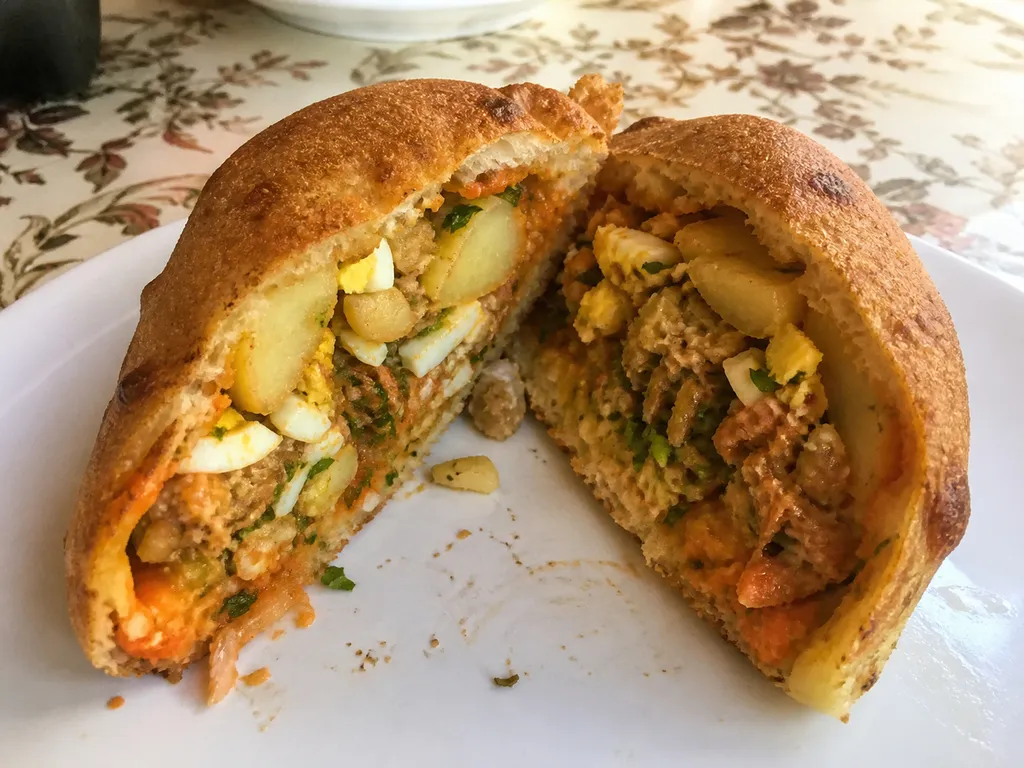 Images are for illustrative purposes only, may be inaccurate, and do not guarantee the presence or absence of specific ingredients.
 Listahan Family Score™
55/100
Works for many families
Score reflects how well this recipe fits a typical busy household. In the app, your Family Score is personalized to your household's allergens, kids, and pantry.
Nutrition
per serving460
Calories
19 g
Protein
85 g
Carbs
4 g
Fat
Estimated per serving. Actual values depend on the brands and portions you use.
Listahan cooking guide
Chef notes & practical guide
Technique notes, ingredient swaps, serve-alongside ideas, storage guidance, and equipment for this recipe.
Cultural context
The Tunisian fricasse is entirely unrelated to the French fricassee stew; it is a small, deep-fried sandwich roll that has been a fixture of Tunisian street food since at least the early 20th century, sold from carts and tiny storefronts in the medinas of Tunis and Sfax. The dough is enriched with a small amount of yeast and fried in shallow oil until puffed and golden, then split and stuffed with tuna, egg, olives, and harissa in varying combinations depending on the vendor. It occupies the same cultural space in Tunisia that the hot dog does in North America: cheap, fast, portable, and deeply tied to memory.
Listahan note
This version makes the dough soft and slightly enriched so it puffs reliably during frying, and layers the fillings in a specific order (harissa first, then tuna, then egg and olive) so every bite hits each element.
Technique cues
- The dough should be soft but not sticky and must proof until doubled before shaping; under-proofed dough will not puff during frying and results in a dense, bread-like roll rather than a light, slightly crispy one.
- Fry at 350 degrees Fahrenheit (175 Celsius) in enough oil to come halfway up the sides of the rolls and flip once when the bottom is deep golden; too-hot oil darkens the outside before the interior cooks through, while too-cool oil means greasy, pale rolls.
- Harissa should be spread inside the split roll while the bread is still warm from the fry so it absorbs slightly and flavors the bread itself rather than sitting as a separate condiment layer.
Kitchen flow
- Parallel prep
- While the dough proofs (60 to 90 minutes), hard-boil and peel the eggs, drain the tuna, and slice the olives so all fillings are ready when the rolls come out of the oil.
- Make-ahead
- The dough can be made and refrigerated overnight after the first proof; bring it to room temperature for 30 minutes before shaping and frying.
- Leftover move
- Leftover fried rolls reheat well in a 350-degree oven for 8 minutes; re-fill fresh since assembled fricasse with egg and tuna do not store well once split.
- Cleanup rhythm
- Set up a drying rack over a sheet pan before frying so drained rolls stay warm and crispy; strain and store the frying oil in a jar for reuse and the cleanup reduces to one pot.
Ingredient brief
Role, handling, and swap guidance for each key ingredient.
3 cups all-purpose flour
dough structure
Purpose: All-purpose flour gives the roll enough gluten to hold its shape when fried but enough tenderness to split easily for filling.
Handling: Measure by spooning into the cup and leveling; too much flour from packing produces a tough roll.
Adaptation: Bread flour yields a chewier roll with a slightly crispier exterior; the swap is 1:1.
1 can (5 oz) tuna in oil (drained)
main protein filling
Purpose: Oil-packed tuna is richer and more flavorful than water-packed and stays moist even after the roll is assembled and eaten quickly.
Handling: Drain well but leave a little oil on the tuna so it does not crumble into dry flakes when filling the rolls.
Adaptation: Sardines packed in olive oil are the traditional alternative for a more assertive, briny filling.
2 tbsp harissa
heat and aromatic paste
Purpose: Harissa is the non-negotiable flavor anchor of the fricasse; without it the sandwich tastes mild and undefined.
Handling: Spread directly onto the inside of the warm, split roll before adding any other filling.
Adaptation: Mix 1 tablespoon sriracha with 1/2 teaspoon caraway and a pinch of cumin for a rough approximation if harissa is unavailable.
3 hard-boiled eggs (sliced)
creamy protein layer
Purpose: Sliced egg softens the heat of the harissa and adds a mild richness that balances the salty tuna and olives.
Handling: Bring eggs to a boil from cold water, cook 10 minutes, and transfer to ice water; peel and slice into rounds.
Adaptation: Soft-boiled eggs (7-minute cook) work for a more luxurious, slightly runny yolk effect.
2 tbsp capers
brine and acid contrast
Purpose: Capers add a sharp, pickled pop that cuts through the richness of the fried bread and oily tuna.
Handling: Rinse salt-packed capers; brine-packed capers can go in straight without rinsing for a saltier result.
Adaptation: Finely chopped cornichons deliver a similar tangy crunch.
Technique notes
- Shape the rolls by pressing the dough into a flat oval (not a ball) about 1/2 inch thick; a ball will take too long to cook through and the exterior will over-brown before the center cooks.
- Fry in batches of two or three rolls at most so the oil temperature does not drop; a crowded pan steams the dough instead of frying it and prevents the characteristic puffed exterior.
- Let the fried rolls rest on the rack for at least 2 minutes before slicing; cutting too soon causes them to deflate and become dense.
Ingredient swaps
- Vegan direction
- Fill with a mixture of roasted vegetables, harissa, sliced olives, and capers; omit egg and tuna entirely for a fully plant-based version.
- Gluten-free direction
- A reliable gluten-free fried bread is difficult to replicate here; use store-bought gluten-free slider buns toasted in a pan with a little oil as a practical substitute for the fried roll.
- Baked option
- Brush shaped rolls with olive oil and bake at 400 degrees Fahrenheit for 18 to 20 minutes until golden; not traditional but reduces oil significantly.
Serve alongside
- simple tomato and cucumber salad with olive oil
- Slata Mechouia as a condiment or side
- pickled turnips and olives
- strong hot Tunisian tea with pine nuts
- cold lemonade with orange blossom water
- sparkling water
Serving suggestions only — check pairings for your household's allergens.
Storage & reheating
- Unfilled fried rolls can be stored in an open paper bag at room temperature for up to 6 hours; store in a sealed bag and they become soft and lose crispness.
- Fillings should be stored separately in the refrigerator for up to 2 days and assembled to order.
- Do not freeze assembled fricasse; freeze unfilled fried rolls for up to 1 month and re-crisp in a 375-degree oven for 10 minutes.
Equipment
- large heavy skillet or Dutch oven for frying
- instant-read or candy thermometer
- wire cooling rack set over a sheet pan
- pastry brush for oil (if baking)
Make this household-aware
Listahan Pro checks this recipe against your household's allergens, finds pantry-aware swaps, builds the shopping list, and helps you plan the week around it.
Plan it in Listahan
Add Fricasse to your week, check it against your household's allergens, and build the shopping list automatically.
More North African recipes
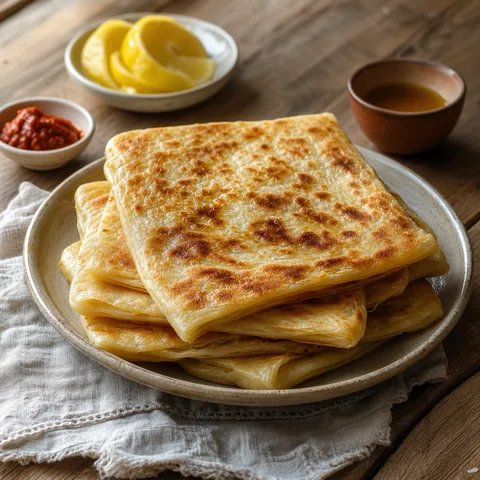 North African Lens Verified Images are for illustrative purposes only, may be inaccurate, and do not guarantee the presence or absence of specific ingredients.
 Msemmen
Layered and folded semolina flatbread cooked on a griddle until the outside crisps and the inside stays wonderfully chewy — perfect with honey or harissa.
 North African Lens Verified Images are for illustrative purposes only, may be inaccurate, and do not guarantee the presence or absence of specific ingredients.
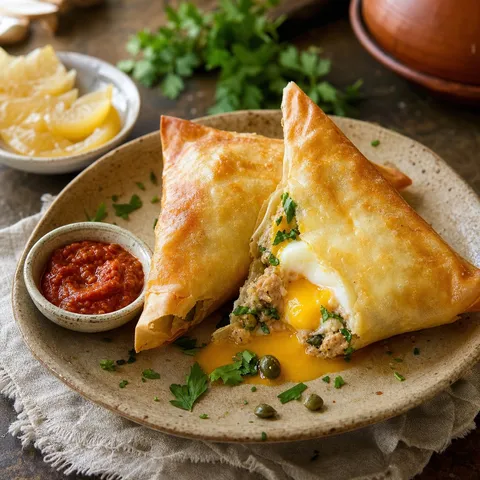
 Brik
Crispy paper-thin pastry folded around a whole egg, tuna, and parsley then flash-fried until golden — Tunisia's beloved street snack, eaten fast before the yolk escapes.
 North African Lens Verified Images are for illustrative purposes only, may be inaccurate, and do not guarantee the presence or absence of specific ingredients.
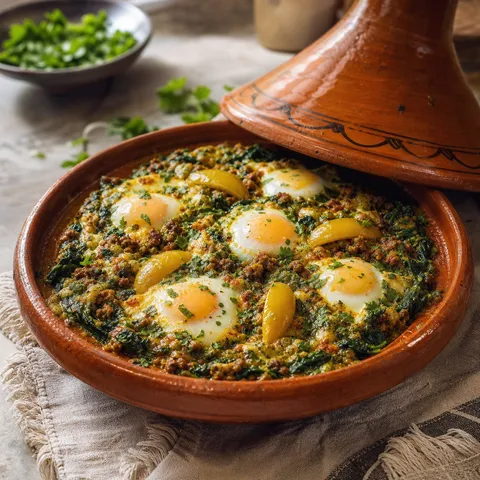
 Tajine El Bey
Tunisia's grand layered bake of spiced lamb, eggs, and cheese baked in a deep crust — a celebration dish with silky, complex layers in every slice.