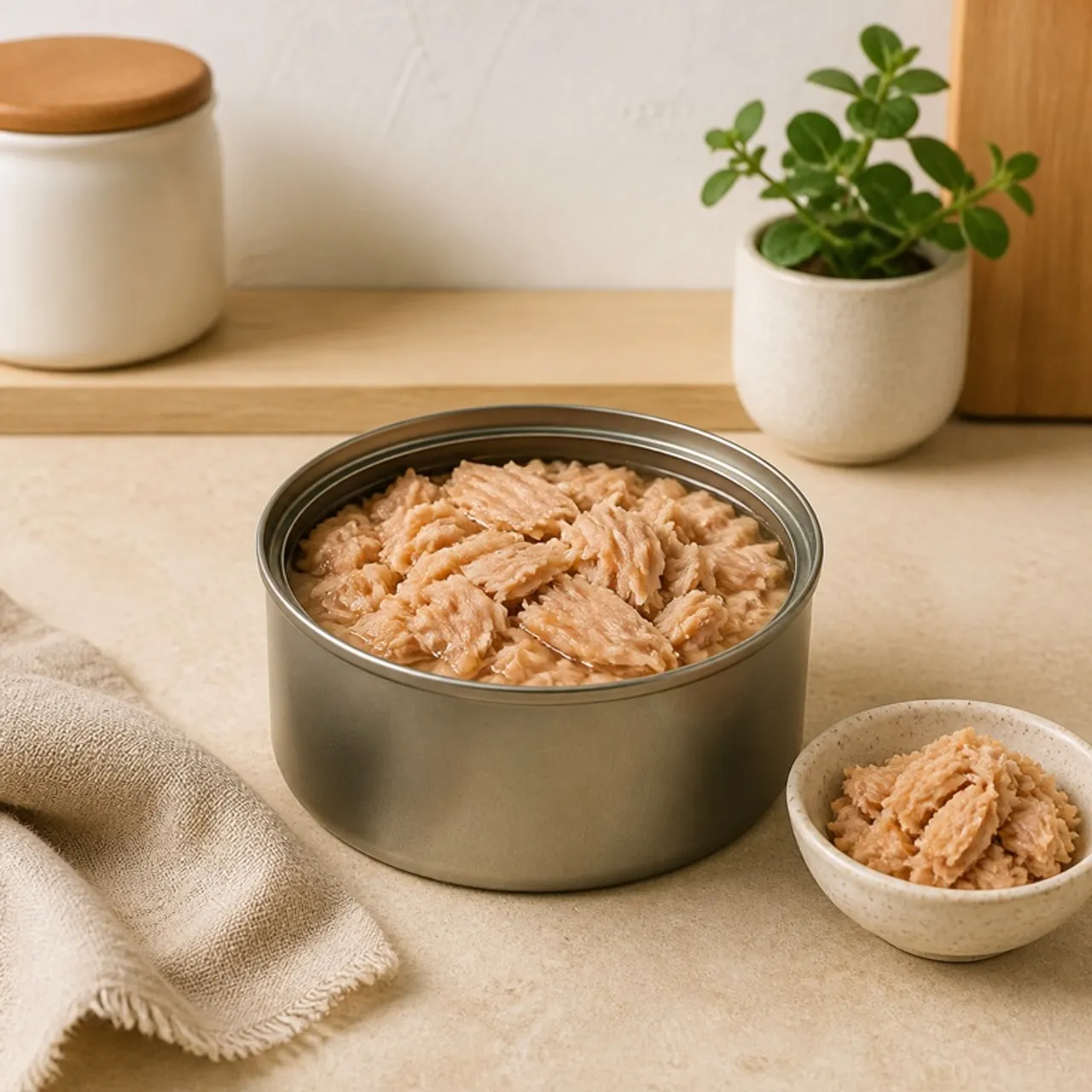
 Food Lens Images are for illustrative purposes only, may be inaccurate, and do not guarantee the presence or absence of specific ingredients.
 Food Lens · Recipe ingredients
Tuna
Canned light tuna is mild and savory; albacore is firmer with a clean, slightly stronger taste; fresh ahi is meaty, clean, and oceanic with a buttery mouthfeel when seared rare.
Lens VerifiedTuna is a large, fast-swimming ocean fish sold canned in water or oil, or as fresh steaks. It spans a wide flavor spectrum from mild canned skipjack to meaty, sashimi-grade bluefin, making it one of the most versatile proteins in the global kitchen.
Where it comes from
Tuna has sustained coastal civilizations since antiquity, with Mediterranean bluefin drives well documented in ancient texts. The California tuna cannery industry boomed from 1903 onward, making canned tuna one of the most affordable protein sources in the American pantry by the 1950s. Today, tuna is one of the most consumed seafoods worldwide, bridging the gap between humble pantry staple and premium sushi counter luxury.
Varieties — Canned light tuna (skipjack — mildest, most affordable, darker flesh); canned albacore / 'white' tuna (firmer, paler, more expensive, stronger flavor); yellowfin/ahi (fresh steaks — sashimi quality when center-rare); bluefin (premium sashimi and sushi); bigeye (prized for fatty belly cuts).
In Japan, bluefin tuna (maguro and toro) is the centerpiece of sushi culture — the fatty belly (otoro) commands some of the highest prices of any food in the world. Hawaiian poke, a dish of cubed raw ahi dressed with soy sauce and sesame, has become a global food trend.
In a modern kitchen — Fresh tuna steak is best served medium-rare — sear 60–90 seconds per side over very high heat to develop a crust while leaving the center pink and cool. Cooking through yields a dry, flaky result that loses the silky texture that makes fresh tuna exceptional.
Buying it
For canned: look for 'packed in water' or 'packed in olive oil' (avoid generic 'vegetable oil' for better flavor). Albacore is firmer and better for salads where appearance matters. For fresh: sashimi-grade ahi should be deep ruby-red, firm, and odor-free. Avoid any with a brown or gray tinge.
Storing it
Unopened canned tuna keeps well in a cool, dry pantry. Once opened, transfer to a sealed container in the fridge and use within a couple of days. Fresh tuna steaks belong in the fridge and cook best within a day or two.
Keeps about 2 days in the fridge.
Out of tuna? Good swaps
- Canned salmon — Richer and slightly more assertive; works 1:1 in tuna salad and casseroles
- Swordfish steak — Meaty and firm; can handle higher heat; substitute 1:1 by weight for fresh tuna steaks
- Mahi-mahi — Leaner, flakier; good swap in seared preparations; cook through rather than rare
General cooking guidance — always check the labels on the products you use. Listahan’s allergen checks run automatically when you plan a recipe in the app. Not medical advice.
Recipes that use tuna
Common questions about tuna
What can I use instead of tuna?
Good swaps include Canned salmon, Swordfish steak, Mahi-mahi. Each behaves a little differently — see the swaps above for notes, and always check labels for allergens.
How do I store tuna?
Unopened canned tuna keeps well in a cool, dry pantry. Once opened, transfer to a sealed container in the fridge and use within a couple of days. Fresh tuna steaks belong in the fridge and cook best within a day or two. It keeps about 2 days in the fridge.
More recipe ingredients
See all


Make tuna about your kitchen — with Listahan Pro
Everything above is free, forever. Pro adds the Household Lens — the same food, seen for your family:
-
Checked for each member
Flags tuna per person against your household's allergies and school rules — not just a generic "contains" tag.
-
Pantry-aware
Knows whether you already have it, what is running low, and the best swap from what is in your kitchen tonight.
-
What it costs near you
A real price from the Presyo community index, so you can plan the budget — not guess.
-
Your household memory
Who likes it, plus your own private notes — brand, where you keep it, who skips it.
Allergen safety is always free — Pro adds the automation, never the safety.
Cook with tuna — safely
Plan a recipe in Listahan and the household allergen check runs automatically — every plan, every swap, every lunchbox. Safety is never paywalled.