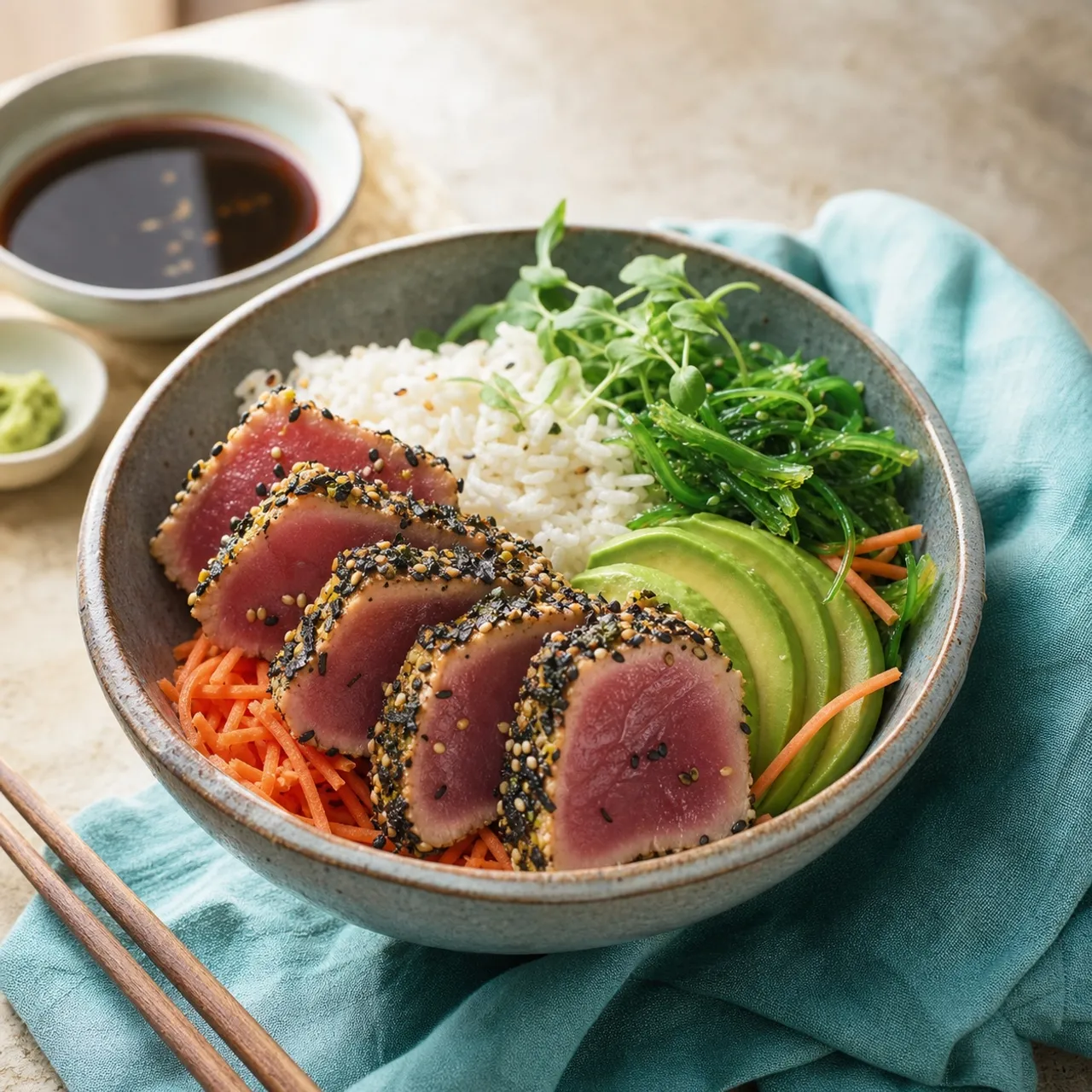
 Hawaiian Images are for illustrative purposes only, may be inaccurate, and do not guarantee the presence or absence of specific ingredients.
 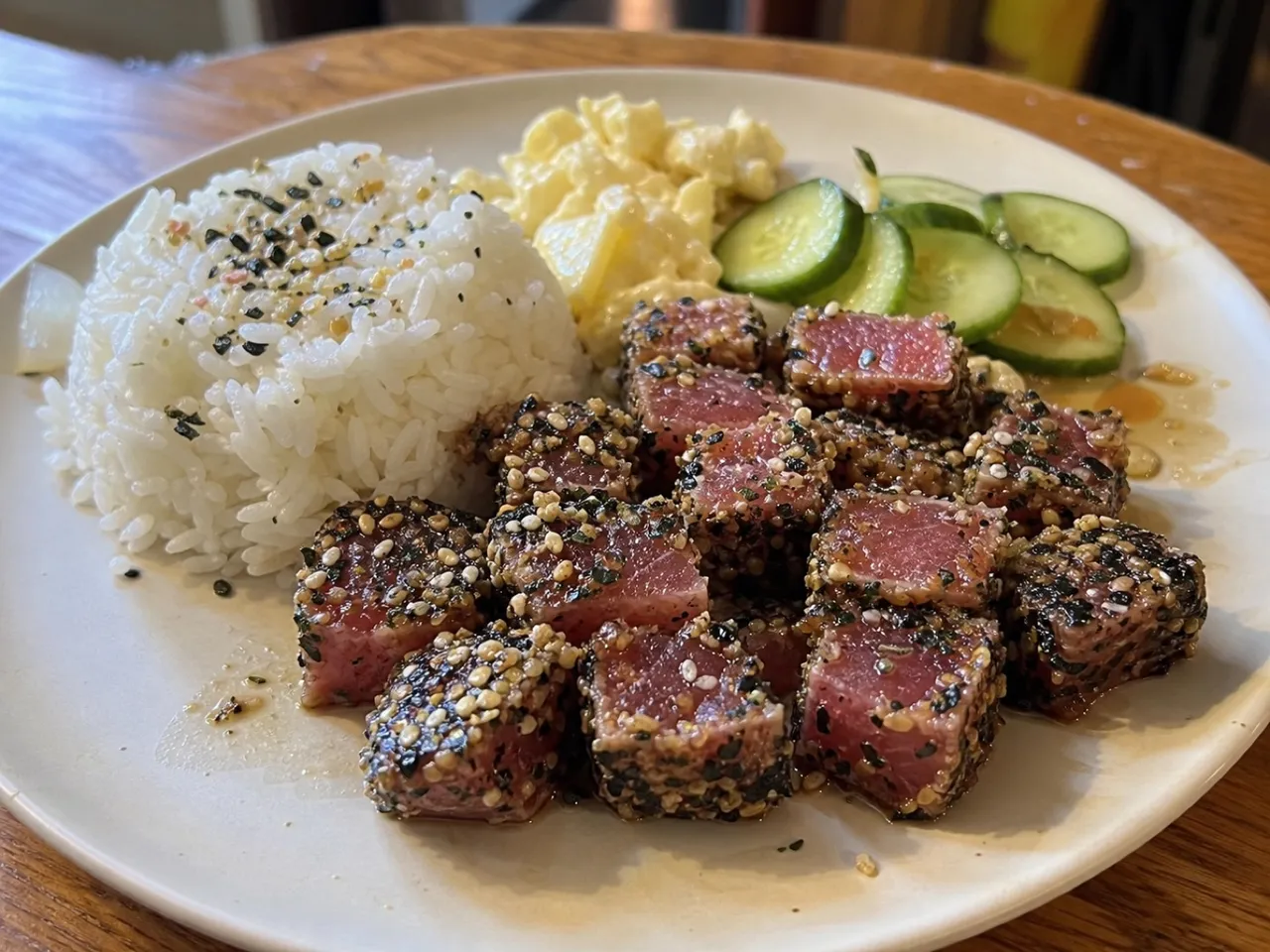 Serving Images are for illustrative purposes only, may be inaccurate, and do not guarantee the presence or absence of specific ingredients.
 Furikake Ahi
Sashimi-grade tuna rolled in savory furikake and seared to a golden crust, while staying rare inside — a beautiful blend of Japanese technique and Hawaiian fish.
Contains common allergens
In the app, Listahan checks these against your household automatically.
Good to know
- Ready in under 30 minutes
Matched from this dish's own ingredients and timing. Browse more: 30-minute meals
Instructions
7 steps- 1
Pat the ahi block completely dry with paper towels so the furikake adheres and the sear does not steam.
- 2
Brush the mayonnaise thinly over all sides of the tuna to act as glue for the coating.
- 3
Press the ahi firmly into the furikake on a plate, rolling to coat every side in an even, generous crust.
- 4
Heat the vegetable oil in a heavy skillet over high heat until just smoking.
- 5
Sear the ahi for 30 to 45 seconds per side, just enough to toast the furikake golden and warm the outer edge while leaving the center raw and cool.
- 6
Remove immediately to a cutting board and let rest 1 to 2 minutes before slicing thinly against the grain with a sharp knife.
- 7
Whisk the soy sauce, wasabi, and sesame oil together and drizzle over the sliced ahi or serve alongside as a dipping sauce.
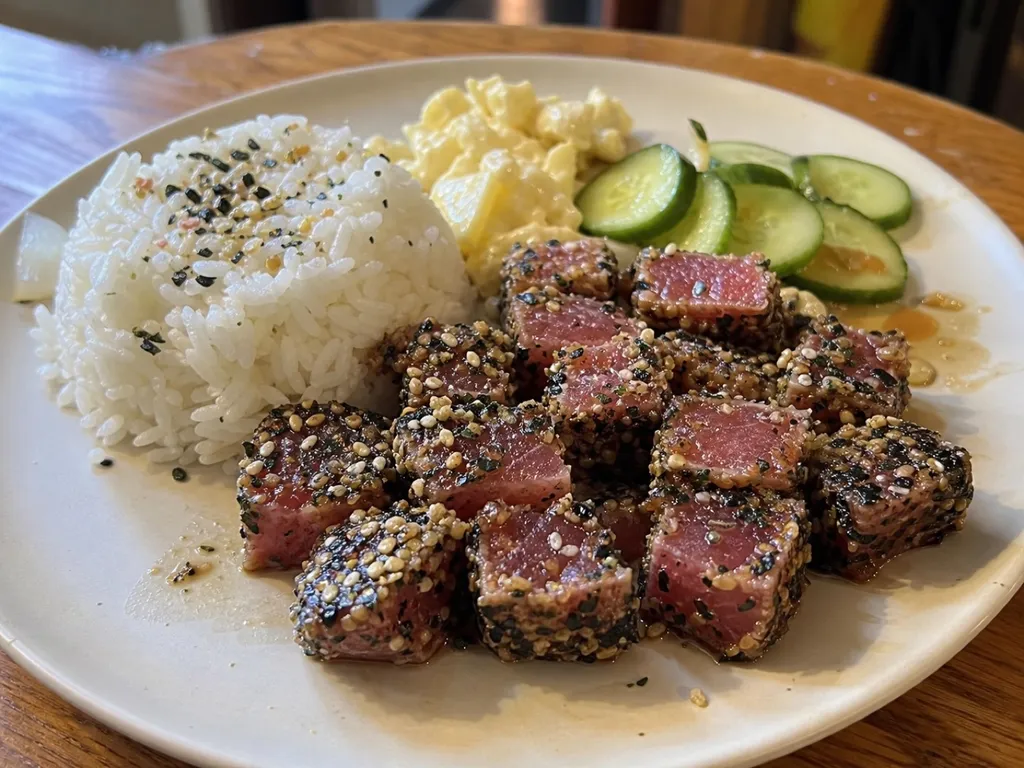 Images are for illustrative purposes only, may be inaccurate, and do not guarantee the presence or absence of specific ingredients.
 Listahan Family Score™
56/100
Works for many families
Score reflects how well this recipe fits a typical busy household. In the app, your Family Score is personalized to your household's allergens, kids, and pantry.
Nutrition
per serving5
Calories
1 g
Protein
0 g
Carbs
0 g
Fat
Estimated per serving. Actual values depend on the brands and portions you use.
Listahan cooking guide
Chef notes & practical guide
Technique notes, ingredient swaps, serve-alongside ideas, storage guidance, and equipment for this recipe.
Cultural context
Furikake Ahi is a product of Hawaii's multicultural kitchen, where Japanese pantry staples became firmly embedded in local cooking through generations of Japanese immigrant communities on the islands. Furikake — a Japanese seasoning blend of dried seaweed, sesame seeds, and sometimes dried fish — found a natural home coating fresh ahi (yellowfin tuna), a fish central to Hawaiian food culture. The dish became a fixture on local restaurant menus in the 1990s and remains a beloved example of Hawaii Regional Cuisine.
Listahan note
This version sears the furikake crust quickly over high heat to keep the ahi rare inside, which is where the best texture and flavor live.
Technique cues
- Pat the ahi completely dry before pressing on the furikake — any surface moisture will steam the crust instead of crisping it during the sear.
- Use a screaming-hot pan and sear no more than 60-90 seconds per side; the goal is a golden crust outside and cool, deep-red interior throughout.
- Let the seared ahi rest for 2 minutes before slicing so the juices redistribute — cutting immediately causes the center to look uneven even when perfectly cooked.
Kitchen flow
- Parallel prep
- Mix the dipping sauce and prepare the greens or rice while the ahi comes to room temperature — the active cook time is under 5 minutes.
- Make-ahead
- Furikake Ahi does not keep well once seared; coat the tuna up to 2 hours ahead and refrigerate, then sear just before serving.
- Leftover move
- Slice leftover seared ahi thin and use in a salad with mixed greens, avocado, and sesame dressing for a next-day plate.
- Cleanup rhythm
- A cast-iron or stainless pan will need a quick deglazing with water right after cooking; furikake crumbs burn onto non-stick surfaces if left.
Ingredient brief
Role, handling, and swap guidance for each key ingredient.
ahi tuna steaks
star protein
Purpose: Sushi-grade yellowfin tuna has the lean, meaty texture that holds up to a high-heat sear while remaining silky when served rare.
Handling: Bring to near room temperature for 10 minutes and pat bone-dry with paper towels before coating.
Adaptation: Salmon steaks can substitute for a fattier, more forgiving result; sear time remains similar.
furikake
flavor crust
Purpose: The blend of seaweed, sesame, and salt creates a crunchy, savory coating with deep umami that complements the clean flavor of fresh tuna.
Handling: Press firmly onto all sides of the dried tuna so the seasoning adheres before it hits the hot pan.
Adaptation: A mix of toasted sesame seeds, crumbled nori, and a pinch of salt creates a reasonable DIY substitute.
sesame oil
searing fat
Purpose: Sesame oil adds a nutty aroma that reinforces the Japanese flavor profile of the furikake crust.
Handling: Use a neutral oil for the base of the pan and add just a drop of sesame oil to season it without burning.
Adaptation: Avocado oil with a drizzle of toasted sesame oil after cooking works well.
soy sauce
dipping sauce base
Purpose: A soy-based dipping sauce at the table echoes the umami in the furikake without making the fish taste over-salted during cooking.
Handling: Mix soy sauce with a little wasabi and a squeeze of lime for the simplest effective accompaniment.
Adaptation: Tamari works for a gluten-free version of the dipping sauce.
Technique notes
- The pan must be preheated for at least 2 minutes before the fish goes in — a properly hot pan gives you a crust in seconds without overcooking the center.
- Slice against the grain on a slight bias after resting; this maximizes the visual impact of the rare center against the dark crust.
- Ponzu makes a brighter, more citrus-forward dipping sauce than straight soy if you want to keep the plate feeling light.
Ingredient swaps
- Gluten-free direction
- Choose a gluten-free furikake (check the label — some contain soy sauce) and serve with tamari-based dipping sauce.
- Lower-sodium direction
- Use reduced-sodium soy sauce in the dipping sauce and choose a furikake without added salt to control sodium throughout.
- Weeknight shortcut
- Pre-portion and coat the tuna at the fish counter or at home during morning prep; it takes just 3 minutes to sear when you get home.
Serve alongside
- steamed white rice
- seaweed salad
- cucumber sunomono
- edamame
- cold Sapporo beer
- sparkling water with yuzu
- green tea
Serving suggestions only — check pairings for your household's allergens.
Storage & reheating
- Best eaten immediately; the crust softens within an hour of cooking. Leftover seared ahi can be refrigerated for up to 1 day and is best served cold, thinly sliced, rather than reheated. Do not freeze.
Equipment
- cast-iron skillet or heavy stainless steel pan
- fish spatula
- sharp slicing knife
- paper towels for drying fish
Make this household-aware
Listahan Pro checks this recipe against your household's allergens, finds pantry-aware swaps, builds the shopping list, and helps you plan the week around it.
Plan it in Listahan
Add Furikake Ahi to your week, check it against your household's allergens, and build the shopping list automatically.
More Hawaiian recipes
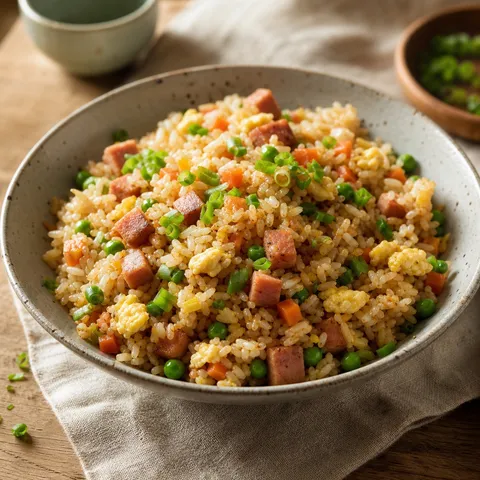 Hawaiian Lens Verified Images are for illustrative purposes only, may be inaccurate, and do not guarantee the presence or absence of specific ingredients.
 Spam Fried Rice
Day-old rice stir-fried with caramelized Spam, egg, soy sauce, and green onion — a quick, satisfying island classic that turns pantry staples into something craveable.
 Hawaiian Lens Verified Images are for illustrative purposes only, may be inaccurate, and do not guarantee the presence or absence of specific ingredients.
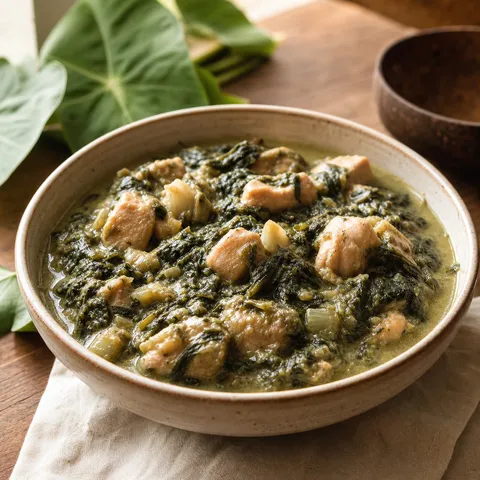
 Chicken Luau
Tender chicken simmered with young taro leaves in coconut milk until velvety and earthy — a quietly comforting Hawaiian stew full of old-fashioned luau warmth.
 Hawaiian Lens Verified Images are for illustrative purposes only, may be inaccurate, and do not guarantee the presence or absence of specific ingredients.
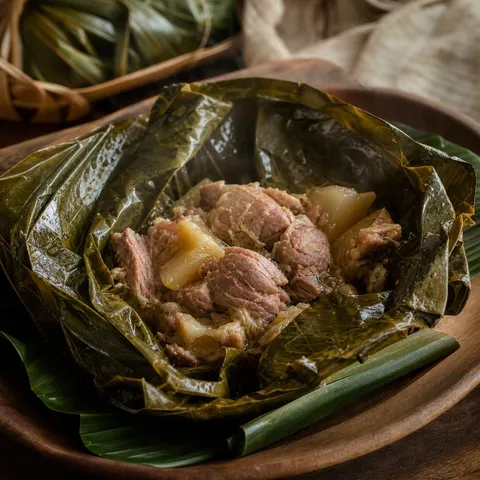
 Lau Lau
Pork shoulder and butterfish bundled in layers of taro leaf and steamed until meltingly tender — earthy, rich, and deeply rooted in Native Hawaiian tradition.