 Spanish Images are for illustrative purposes only, may be inaccurate, and do not guarantee the presence or absence of specific ingredients.
  Serving Images are for illustrative purposes only, may be inaccurate, and do not guarantee the presence or absence of specific ingredients.
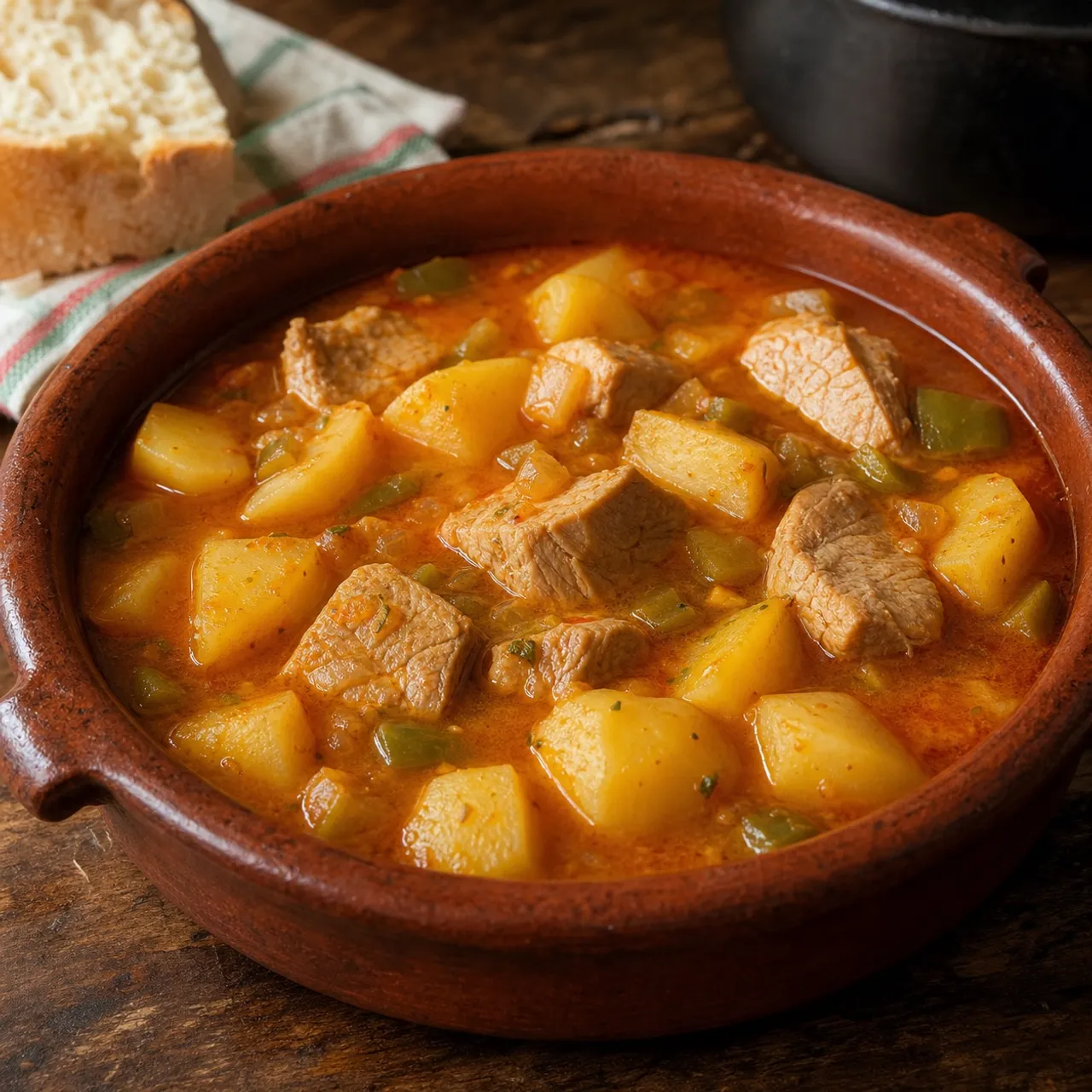
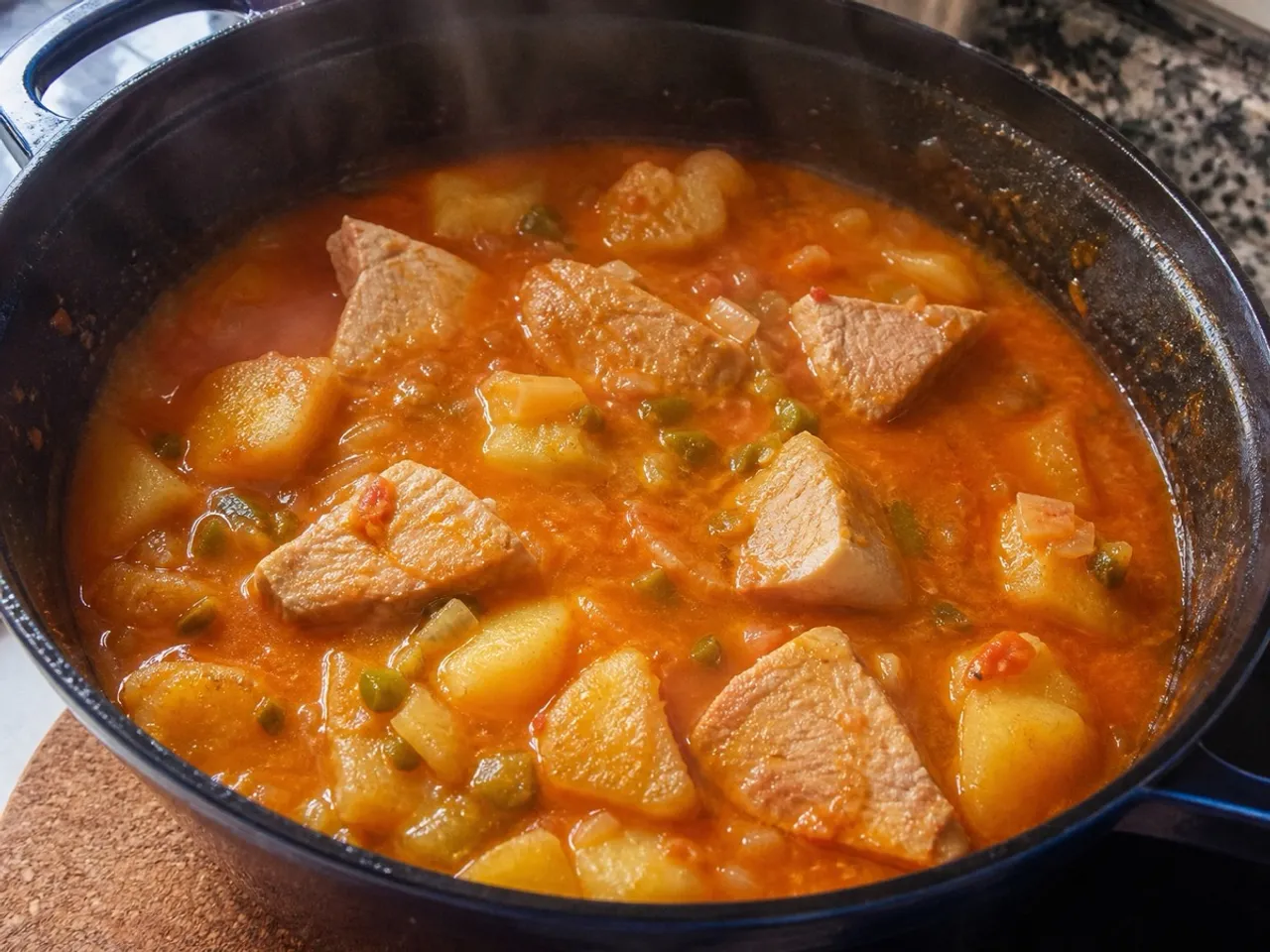
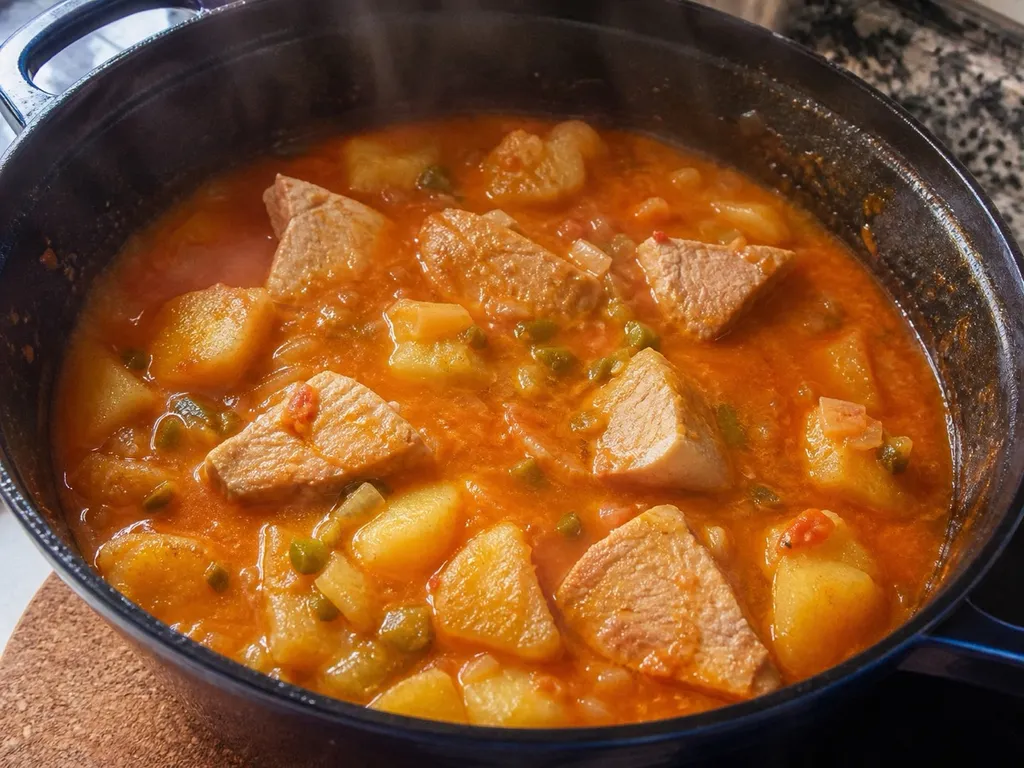
 Marmitako
Basque fisherman's stew of chunky tuna and potato simmered with peppers and paprika — hearty, rustic, and deeply satisfying after a long day.
Contains common allergens
In the app, Listahan checks these against your household automatically.
Good to know
- One-pot
Matched from this dish's own ingredients and timing. Browse more: one-pot dinners
Instructions
7 steps- 1
Heat olive oil in a large pot and sweat the onion, green peppers, and red pepper together over medium heat until softened, about 10 minutes.
- 2
Add the garlic and cook 1 minute, then stir in the grated tomato, pimentón, and the flesh scraped from the soaked choricero pepper, cooking until the sofrito thickens, about 8 minutes.
- 3
Add the potatoes and bay leaf, then pour in the stock to just cover.
- 4
Bring to a boil, reduce the heat, and simmer gently for 20-25 minutes, occasionally shaking the pot rather than stirring with a spoon so the potato starch thickens the broth.
- 5
When the potatoes are tender, season the tuna chunks with salt and gently fold them into the pot.
- 6
Remove from the heat and let the residual heat finish cooking the tuna, about 3-4 minutes, so it stays tender and does not overcook.
- 7
Let the stew rest 5 minutes off the heat before serving, as marmitako always tastes better a few minutes after cooking.
 Images are for illustrative purposes only, may be inaccurate, and do not guarantee the presence or absence of specific ingredients.
 Listahan Family Score™
59/100
Works for many families
Score reflects how well this recipe fits a typical busy household. In the app, your Family Score is personalized to your household's allergens, kids, and pantry.
Nutrition
per serving305
Calories
32 g
Protein
28 g
Carbs
6 g
Fat
Estimated per serving. Actual values depend on the brands and portions you use.
Listahan cooking guide
Chef notes & practical guide
Technique notes, ingredient swaps, serve-alongside ideas, storage guidance, and equipment for this recipe.
Cultural context
Marmitako is a Basque fisherman's stew of tuna or bonito, potatoes, and peppers, named for the marmita, the pot it was cooked in aboard fishing boats. It was practical sailor's food made from the catch and whatever vegetables kept well at sea, and it remains tied to the summer bonito season along the Bay of Biscay. The defining technique is breaking the potatoes rather than slicing them so they release starch and thicken the broth.
Listahan note
This version builds a paprika-rich pepper and potato base, then adds the tuna at the very end so it stays moist and just-cooked. It is built as a hearty one-pot stew that honors the fishermen's break-the-potatoes trick for a naturally thick broth.
Technique cues
- Break the potatoes by snapping them off your knife rather than slicing clean through; the ragged edges release starch and thicken the broth.
- Add the tuna only in the last few minutes off direct boiling heat, since overcooked tuna turns dry and chalky.
- Build a proper sofrito and bloom the paprika first so the broth has depth before the potatoes even go in.
Kitchen flow
- Parallel prep
- Build the sofrito and snap the potatoes while the fish stock heats, so the stew layers come together without waiting.
- Make-ahead
- Make the potato and pepper base a day ahead and refrigerate, then reheat and add fresh tuna at the last minute so it stays tender.
- Leftover move
- Mash leftover potato base and use it as a thick soup, adding any leftover tuna flaked through at the end.
- Cleanup rhythm
- Soak the pot right after serving so the starchy, paprika-stained broth releases easily from the bottom.
Ingredient brief
Role, handling, and swap guidance for each key ingredient.
Fresh tuna or bonito
The protein
Purpose: Meaty tuna or bonito is the heart of the stew and what marks it as a Basque coastal dish.
Handling: Cut into chunks and add at the very end so it stays just cooked and moist.
Adaptation: Swordfish or a firm white fish like cod work if tuna is unavailable.
Potatoes
Body and thickener
Purpose: Broken rather than sliced, they release starch that thickens the broth naturally.
Handling: Snap into rough chunks by levering them off the knife to expose ragged edges.
Adaptation: Any waxy-to-medium potato works; very floury potatoes may break down too much.
Green and red peppers
Sweet aromatic base
Purpose: Peppers give the stew its sweetness and color and are part of the sofrito foundation.
Handling: Dice and cook slowly with the onion until soft before the potatoes go in.
Adaptation: Italian frying peppers or piquillo peppers add an even more Spanish character.
Choricero or sweet pepper paste
Deep flavor base
Purpose: Dried pepper pulp gives marmitako its traditional earthy, slightly sweet depth.
Handling: Soak dried peppers and scrape the pulp, or use a quality pepper paste.
Adaptation: Smoked paprika plus a little tomato paste approximates the flavor.
Fish stock
The broth
Purpose: A good fish stock deepens the seafood character of the whole pot.
Handling: Heat and add enough to just cover the potatoes, then simmer until they are tender.
Adaptation: Light vegetable stock or water with a splash of clam juice in a pinch.
Technique notes
- Let the potato base rest off the heat for ten minutes before adding the tuna, which lets the broth thicken and the flavors marry.
- Add the tuna and then cover and let the residual heat finish cooking it gently rather than boiling it.
- A splash of dry white wine in the sofrito adds brightness that balances the rich pepper base.
Ingredient swaps
- Pantry direction
- Use good canned tuna stirred in at the very end when fresh tuna is unavailable, keeping it off the boil.
- Different fish direction
- Swap in swordfish or firm cod chunks, added late, for a milder stew.
- Lower-sodium direction
- Use low-sodium fish stock and build flavor with the pepper paste, paprika, and sofrito instead of salt.
Serve alongside
- Crusty Basque bread
- A simple green salad
- Pickled guindilla peppers
- Steamed greens
- A chilled Txakoli white
- A light Rioja
- Sparkling water with lemon
Serving suggestions only — check pairings for your household's allergens.
Storage & reheating
- Store the cooled stew in an airtight container in the fridge for up to two days; the potato base keeps better than the tuna. Reheat gently on the stovetop without boiling so the tuna stays tender. It is best not frozen, since the potatoes turn grainy and the tuna dries out on thawing.
Equipment
- A heavy pot or marmita
- A sharp knife for snapping the potatoes
- A wooden spoon
- A ladle for serving
Make this household-aware
Listahan Pro checks this recipe against your household's allergens, finds pantry-aware swaps, builds the shopping list, and helps you plan the week around it.
Plan it in Listahan
Add Marmitako to your week, check it against your household's allergens, and build the shopping list automatically.
More Spanish recipes
 Spanish Lens Verified Images are for illustrative purposes only, may be inaccurate, and do not guarantee the presence or absence of specific ingredients.
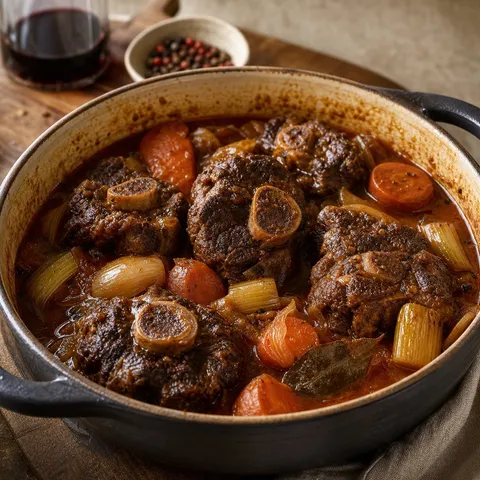
 Rabo de Toro
Oxtail slow-braised for hours with red wine, vegetables, and cloves until the meat falls from the bone in a deeply savoury, velvety Andalusian stew.
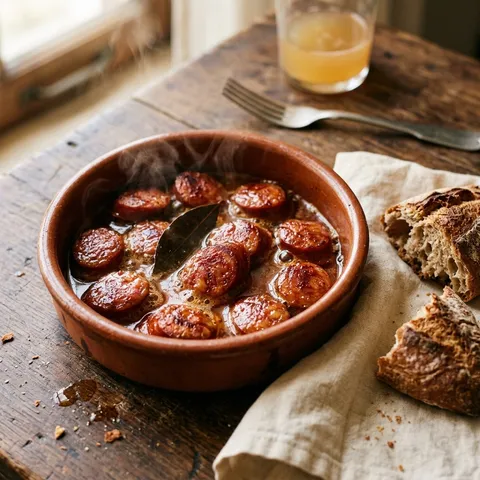 Spanish Lens Verified Images are for illustrative purposes only, may be inaccurate, and do not guarantee the presence or absence of specific ingredients.
 Chorizo a la Sidra
Sliced Spanish chorizo simmered in dry Asturian cider until the sauce is tangy, smoky, and gloriously red — a quick tapas that pairs beautifully with beer.
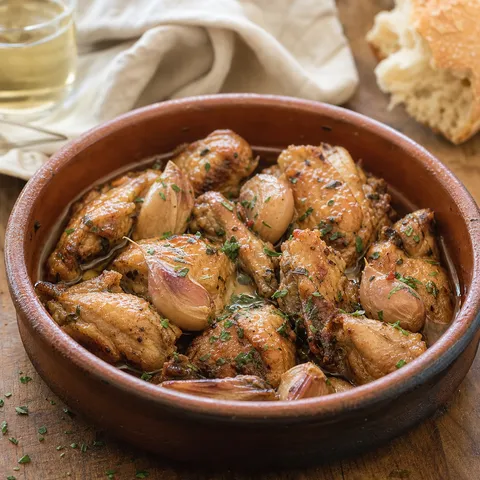 Spanish Lens Verified Images are for illustrative purposes only, may be inaccurate, and do not guarantee the presence or absence of specific ingredients.
 Pollo al Ajillo
Chicken pieces braised in white wine and a generous amount of garlic until the sauce is sticky, fragrant, and impossible to resist mopping up.