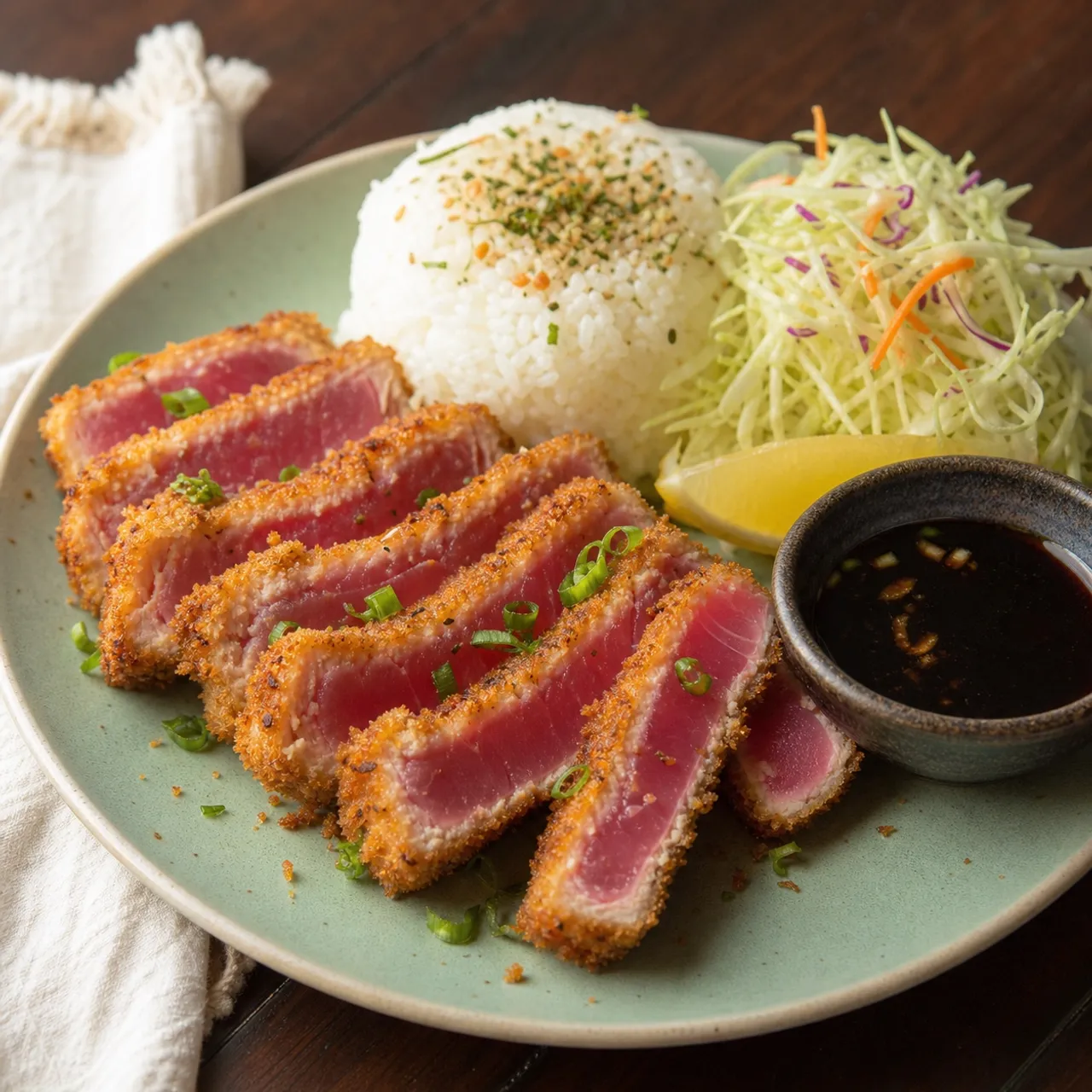
 Hawaiian Images are for illustrative purposes only, may be inaccurate, and do not guarantee the presence or absence of specific ingredients.
 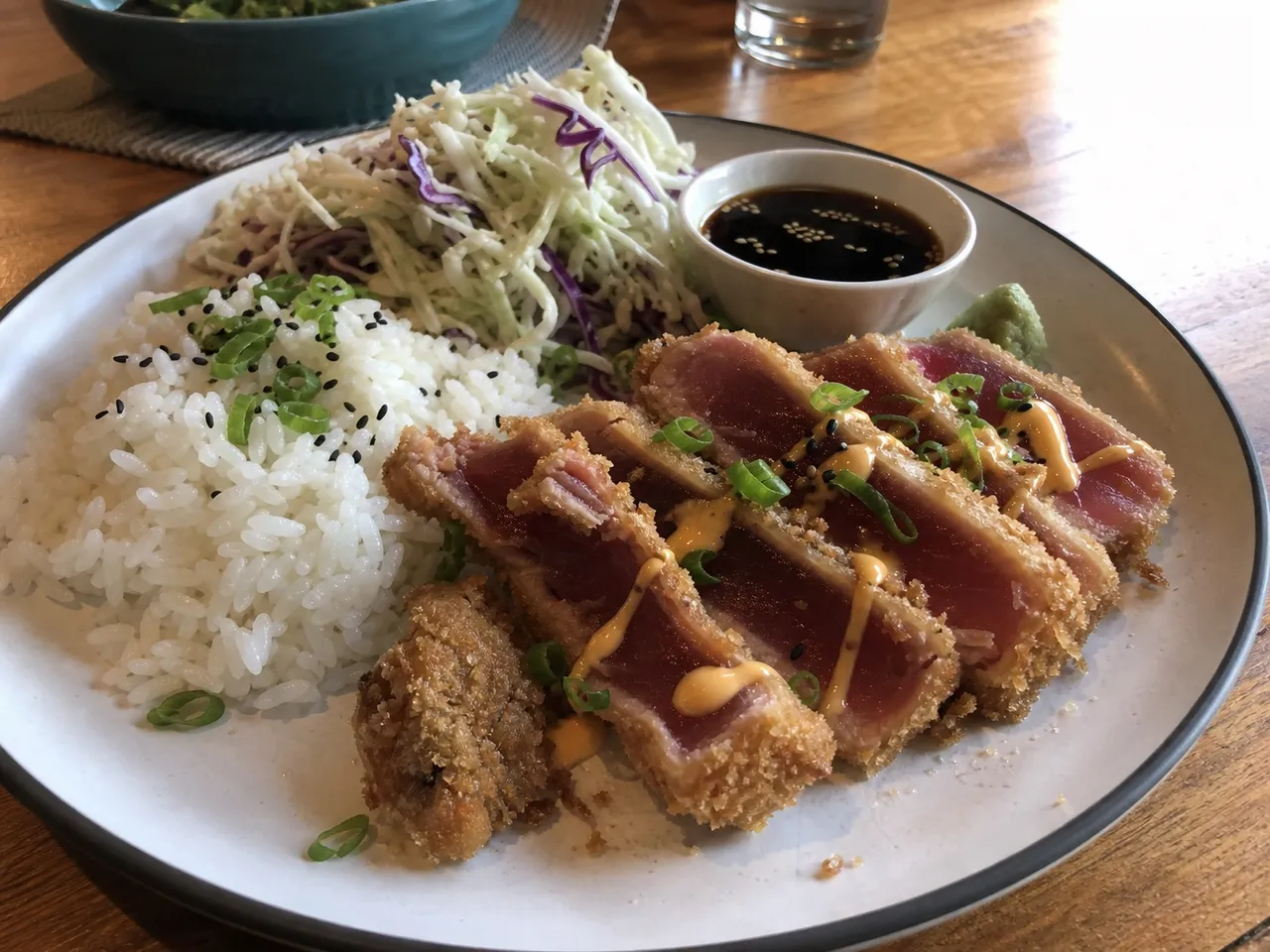 Serving Images are for illustrative purposes only, may be inaccurate, and do not guarantee the presence or absence of specific ingredients.
 Ahi Katsu
Fresh ahi tuna breaded in crisp panko and fried golden, served with a soy-ginger dipping sauce — a beautiful meeting of Japanese technique and island seafood.
Contains common allergens
In the app, Listahan checks these against your household automatically.
Good to know
- Crispy
- Ready in under 30 minutes
Matched from this dish's own ingredients and timing. Browse more: crispy recipes30-minute meals
Instructions
7 steps- 1
Pat the ahi strips dry and season lightly with salt and pepper.
- 2
Set up a breading station with flour in one dish, beaten eggs in a second, and panko in a third.
- 3
Dredge each ahi strip in flour, shaking off the excess, dip in egg, then press firmly into the panko so the crumbs adhere in an even crust.
- 4
Heat about 1/2 inch of vegetable oil in a heavy skillet to 350 degrees.
- 5
Fry the ahi strips for 45 to 60 seconds per side only, just enough to crisp and brown the panko while keeping the center rare to medium-rare.
- 6
Drain briefly on a wire rack or paper towels, then slice each strip crosswise to show the seared crust against the raw red center.
- 7
Whisk together the soy sauce, rice vinegar, ginger, and sesame oil for the dipping sauce and serve alongside the sliced ahi katsu.
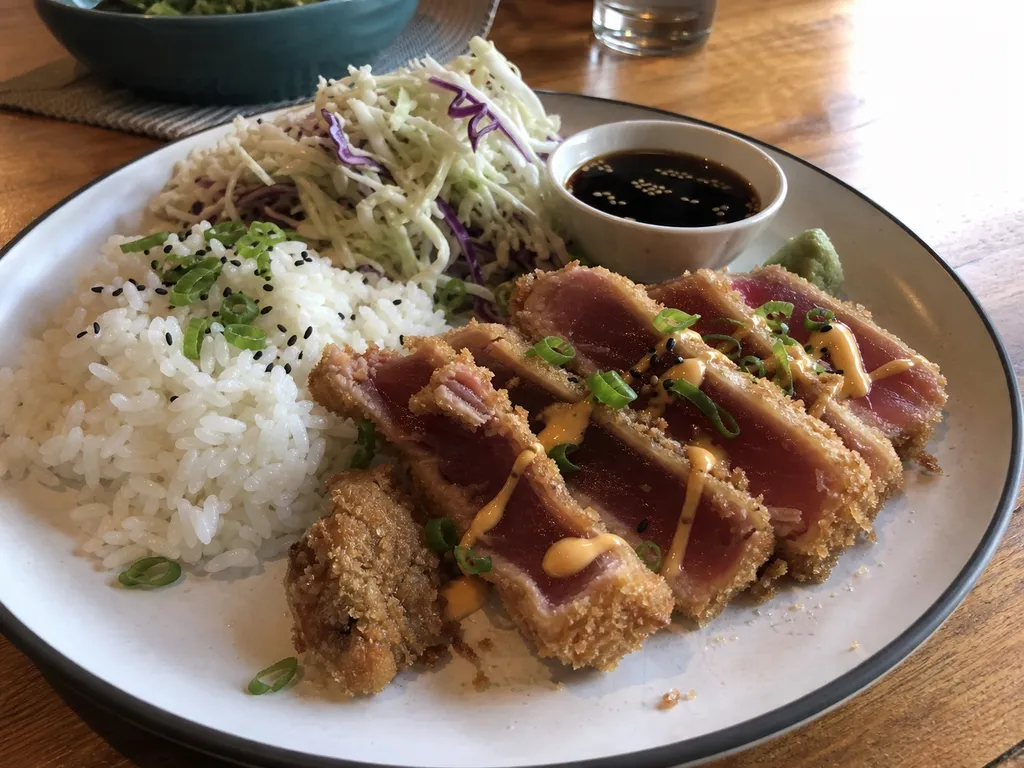 Images are for illustrative purposes only, may be inaccurate, and do not guarantee the presence or absence of specific ingredients.
 Listahan Family Score™
60/100
Works for many families
Score reflects how well this recipe fits a typical busy household. In the app, your Family Score is personalized to your household's allergens, kids, and pantry.
Nutrition
per serving345
Calories
45 g
Protein
13 g
Carbs
11 g
Fat
Estimated per serving. Actual values depend on the brands and portions you use.
Listahan cooking guide
Chef notes & practical guide
Technique notes, ingredient swaps, serve-alongside ideas, storage guidance, and equipment for this recipe.
Cultural context
Ahi katsu is a distinctly Hawaii-born dish that fuses Japanese katsu technique with the island's prized yellowfin tuna. Japanese immigrants who arrived in Hawaii as plantation workers in the late 19th and early 20th centuries brought the panko-breaded cutlet tradition, which locals quickly applied to fresh ahi rather than pork. The result is a dish found everywhere from plate lunch counters to upscale hotel restaurants, celebrating Hawaii's Japanese cultural heritage and its unmatched access to Pacific tuna.
Listahan note
This version keeps the center of the tuna rare and cool, treating the panko crust as a textural shell rather than a full cook-through — the contrast is the whole point.
Technique cues
- Press the panko firmly onto the tuna before frying so the coating bonds fully; a loose crust will slide off the moment the fish hits the hot oil.
- Use a high smoke-point oil at 375 degrees F and fry only 60 to 90 seconds per side — the goal is a deep golden crust while the interior stays sashimi-rare.
- Slice with a sharp knife in one clean pull rather than a sawing motion to avoid crushing the crust and to show clean rare-pink cross sections.
Kitchen flow
- Parallel prep
- Set up the three-station breading line (flour, egg, panko) while the oil preheats, so you can bread and fry in one continuous motion without the tuna sitting and releasing moisture.
- Make-ahead
- Bread the tuna steaks up to 2 hours ahead and refrigerate uncovered on a wire rack; the cold air dries the coating and helps it adhere better during frying.
- Leftover move
- Slice cold leftover ahi katsu thin and lay over a bowl of warm rice with a drizzle of ponzu and sliced scallions for a quick next-day rice bowl.
- Cleanup rhythm
- Line the breading station with parchment paper for easy disposal; keep a dedicated spider or tongs for the fryer so the breading station utensils stay dry.
Ingredient brief
Role, handling, and swap guidance for each key ingredient.
ahi tuna steaks
main protein
Purpose: Sushi-grade ahi provides the clean, mild flavor and silky texture that makes a rare center desirable rather than alarming.
Handling: Pat completely dry before dredging; any surface moisture turns the panko gummy during frying.
Adaptation: Substitute mahi mahi or swordfish if you prefer the center fully cooked, adjusting fry time to 3 minutes per side.
panko breadcrumbs
crisp shell
Purpose: Panko's coarser, flakier structure creates a lighter, crunchier crust than standard breadcrumbs without absorbing excess oil.
Handling: Toast panko lightly in a dry pan before breading for extra crunch and a nuttier flavor.
Adaptation: Gluten-free panko works well and produces a nearly identical texture.
soy sauce
dipping sauce base
Purpose: Soy sauce provides the salty, savory contrast that cuts through the richness of the fried crust.
Handling: Combine with wasabi, ginger, or ponzu at the table so each person can adjust heat and acidity.
Adaptation: Tamari makes this dish gluten-free without changing the flavor profile noticeably.
eggs
breading binder
Purpose: A beaten egg wash creates the adhesive layer that anchors panko to the surface of the fish.
Handling: Beat with a splash of water to thin slightly, which helps the egg coat evenly without clumping.
Adaptation: Aquafaba (drained chickpea liquid) works as a vegan binder and provides similar adhesion.
flour
initial dredge
Purpose: A light flour coating gives the egg wash something to grip, creating the foundation of a crust that stays intact during frying.
Handling: Season the flour with salt and pepper before dredging so the seasoning reaches the fish itself.
Adaptation: Rice flour produces a slightly thinner but equally effective base coat.
Technique notes
- Bring the tuna to room temperature for 15 minutes before breading — cold fish from the refrigerator drops the oil temperature sharply, leading to a greasy rather than crisp crust.
- A wire rack over a sheet pan is essential after frying; placing fried katsu directly on paper towels traps steam underneath and softens the bottom crust within minutes.
- The ponzu-wasabi dipping sauce should be made first and chilled so the flavors meld — a sauce mixed right before serving tastes sharp and one-dimensional.
Ingredient swaps
- Gluten-free direction
- Use rice flour for the dredge, a gluten-free egg wash, and gluten-free panko; serve with tamari in place of soy sauce for a fully gluten-free plate.
- Lower-sodium direction
- Use reduced-sodium soy sauce in the dipping sauce and skip any salt in the flour dredge, relying on the soy alone for seasoning.
- Weeknight shortcut
- Air-fry breaded ahi at 400 degrees F for 4 minutes flipping once — the crust is slightly less shatteringly crisp but the rare center is easier to control.
Serve alongside
- Hawaiian macaroni salad
- Steamed white rice with furikake
- Pickled cucumber and daikon salad
- Iced green tea
- Cold Kirin lager
- Lilikoi (passionfruit) lemonade
Serving suggestions only — check pairings for your household's allergens.
Storage & reheating
- Store leftover ahi katsu refrigerated for up to 1 day; the crust will soften significantly. Reheat in a 400-degree F oven or air fryer for 4 minutes to partially restore crispness. Do not freeze — the texture of sushi-grade tuna degrades badly after freezing and thawing.
Equipment
- Heavy-bottomed skillet or cast-iron pan for stable frying temperature
- Instant-read thermometer to confirm oil is at 375 degrees F before adding fish
- Wire rack set over a sheet pan for draining without steam-softening the crust
- Sharp boning or slicing knife for clean cuts through the finished katsu
Make this household-aware
Listahan Pro checks this recipe against your household's allergens, finds pantry-aware swaps, builds the shopping list, and helps you plan the week around it.
Plan it in Listahan
Add Ahi Katsu to your week, check it against your household's allergens, and build the shopping list automatically.
More Hawaiian recipes
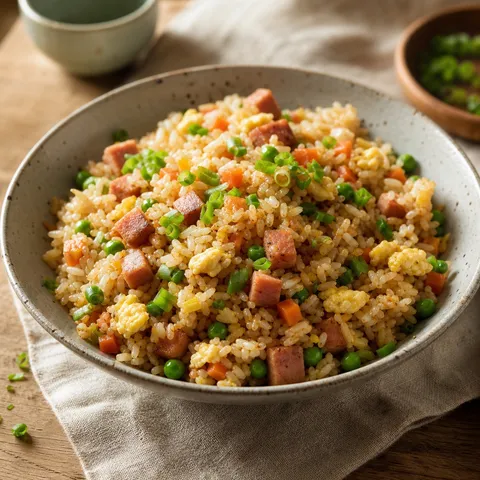 Hawaiian Lens Verified Images are for illustrative purposes only, may be inaccurate, and do not guarantee the presence or absence of specific ingredients.
 Spam Fried Rice
Day-old rice stir-fried with caramelized Spam, egg, soy sauce, and green onion — a quick, satisfying island classic that turns pantry staples into something craveable.
 Hawaiian Lens Verified Images are for illustrative purposes only, may be inaccurate, and do not guarantee the presence or absence of specific ingredients.
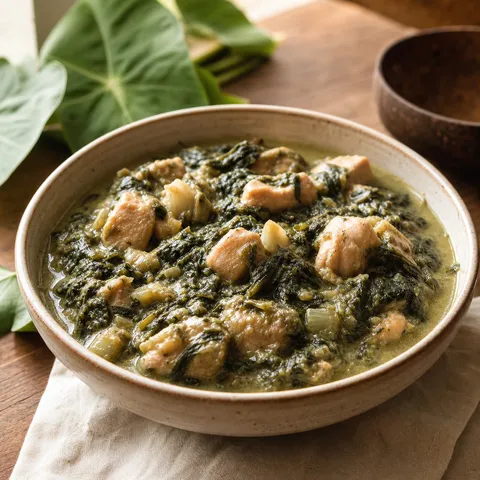
 Chicken Luau
Tender chicken simmered with young taro leaves in coconut milk until velvety and earthy — a quietly comforting Hawaiian stew full of old-fashioned luau warmth.
 Hawaiian Lens Verified Images are for illustrative purposes only, may be inaccurate, and do not guarantee the presence or absence of specific ingredients.
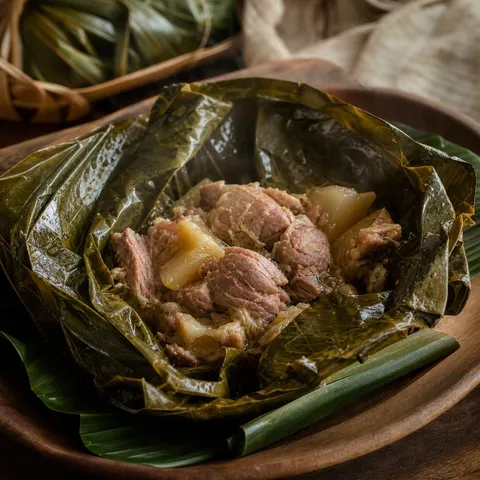
 Lau Lau
Pork shoulder and butterfish bundled in layers of taro leaf and steamed until meltingly tender — earthy, rich, and deeply rooted in Native Hawaiian tradition.