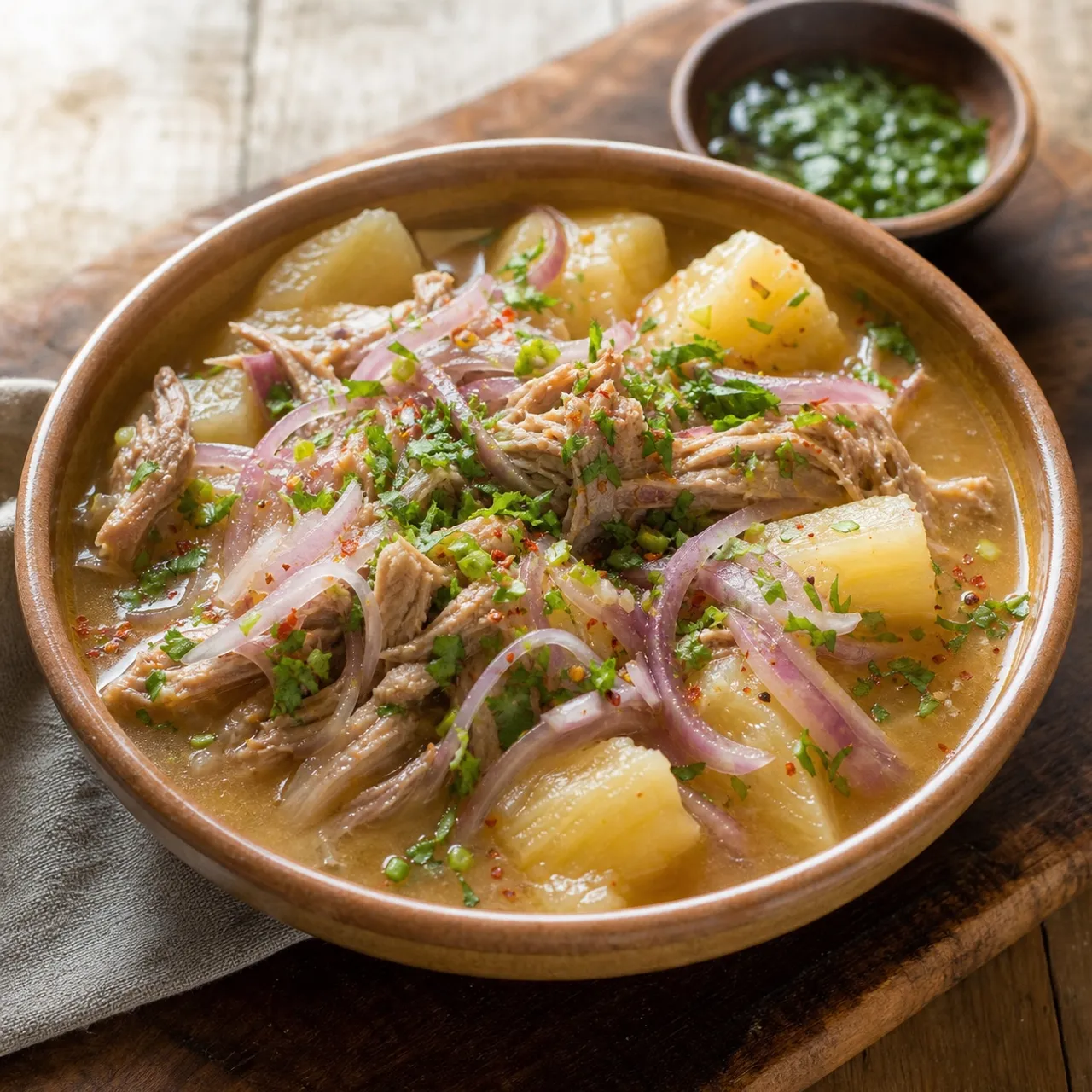
 South American Images are for illustrative purposes only, may be inaccurate, and do not guarantee the presence or absence of specific ingredients.
 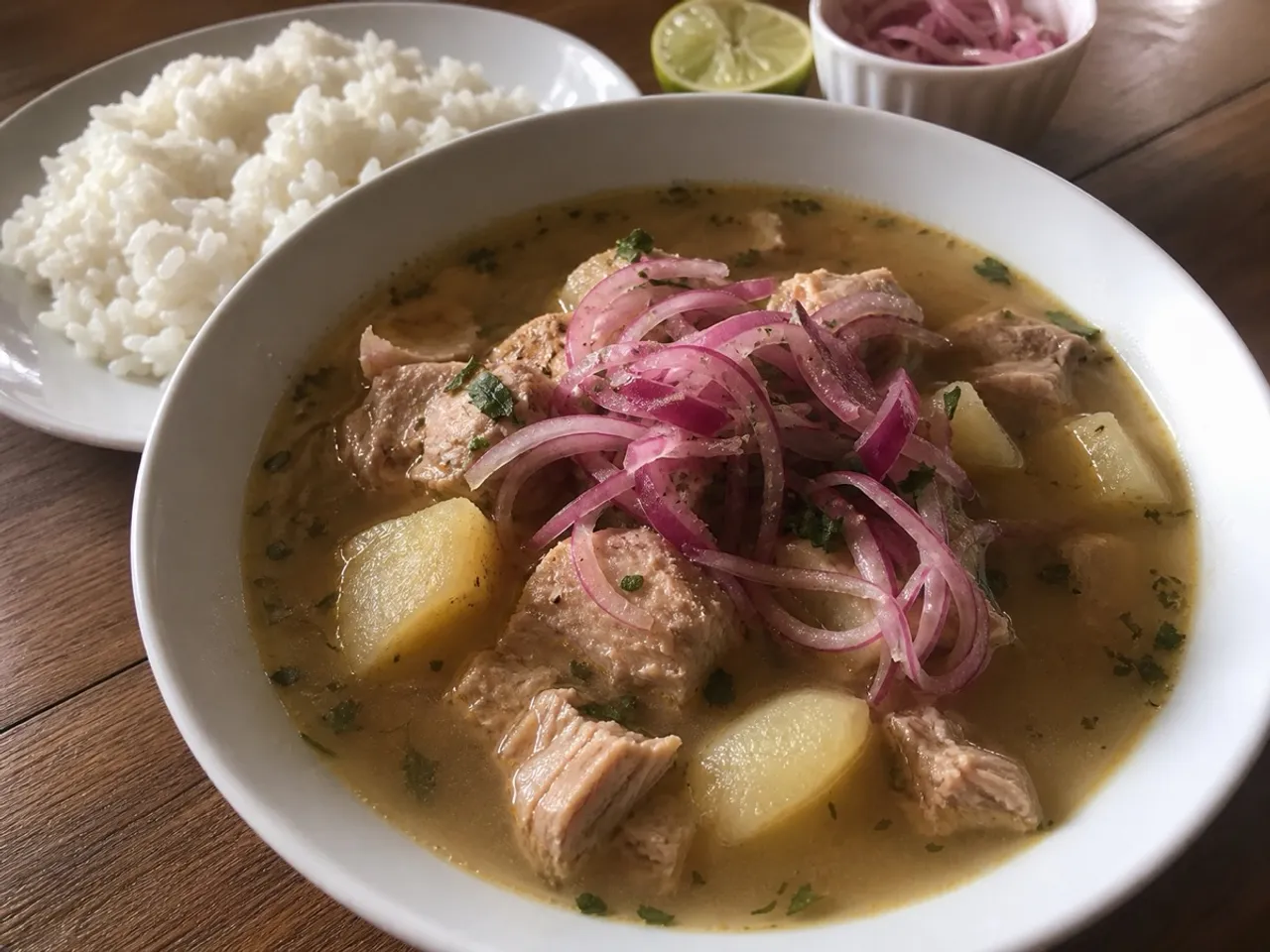 Serving Images are for illustrative purposes only, may be inaccurate, and do not guarantee the presence or absence of specific ingredients.
 Encebollado
Ecuador's restorative albacore tuna soup — slow-simmered with yuca and smothered in a tangy pickled red onion curtido, beloved as an energizing breakfast.
Contains common allergens
In the app, Listahan checks these against your household automatically.
Instructions
8 steps- 1
Combine the sliced red onion with the vinegar and a pinch of salt in a bowl and let it pickle at room temperature for at least 30 minutes, until softened and bright pink; this is the curtido.
- 2
Simmer the yuca in salted water until fork-tender but not falling apart, about 20 minutes, then drain and set aside.
- 3
In a pot, heat the achiote oil and saute garlic and tomato until softened, about 3 minutes.
- 4
Add the stock and cumin, bring to a boil, then add the tuna steak and poach gently for 8 to 10 minutes, until just cooked through.
- 5
Remove the tuna, flake it into large chunks with a fork, and return it to the pot along with the cooked yuca.
- 6
Season the broth with salt and pepper and simmer for 5 more minutes to let the flavors meld.
- 7
Ladle into bowls and top generously with the pickled onion curtido and chopped cilantro.
- 8
Serve hot with avocado slices and toasted cancha on the side.
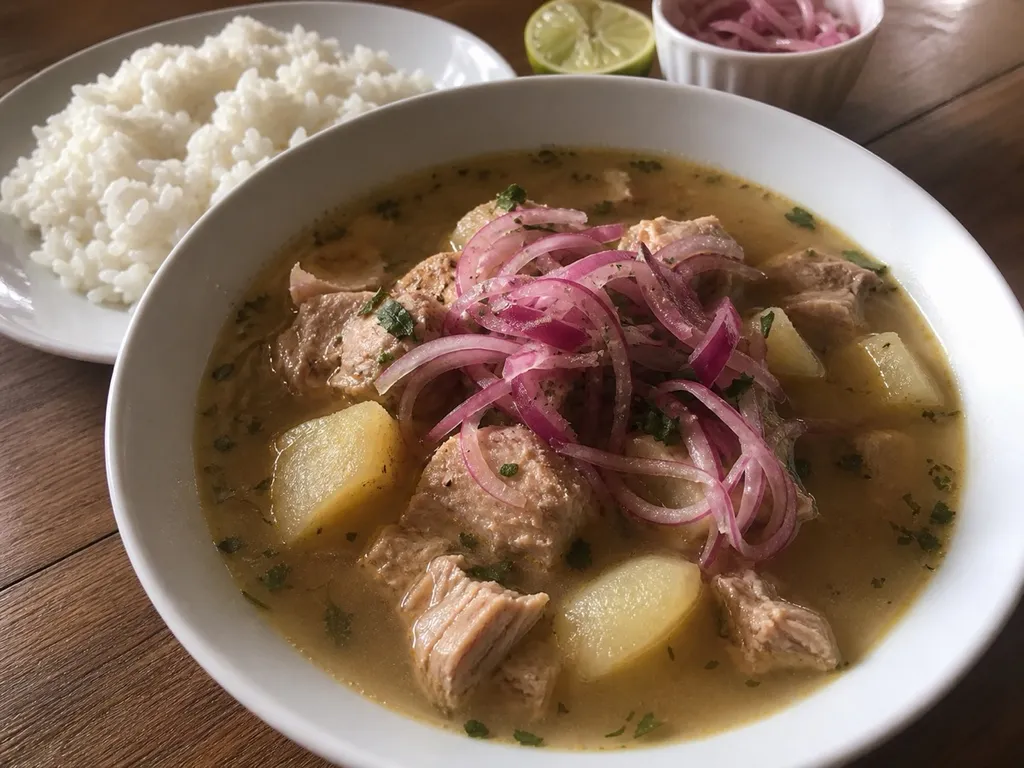 Images are for illustrative purposes only, may be inaccurate, and do not guarantee the presence or absence of specific ingredients.
 Listahan Family Score™
59/100
Works for many families
Score reflects how well this recipe fits a typical busy household. In the app, your Family Score is personalized to your household's allergens, kids, and pantry.
Nutrition
per serving165
Calories
24 g
Protein
5 g
Carbs
5 g
Fat
Estimated per serving. Actual values depend on the brands and portions you use.
Listahan cooking guide
Chef notes & practical guide
Technique notes, ingredient swaps, serve-alongside ideas, storage guidance, and equipment for this recipe.
Cultural context
Encebollado is an Ecuadorian fish soup built around tuna or albacore simmered in a tomato-based broth with yuca and pickled red onion, most closely tied to the coastal city of Guayaquil. It has a reputation as an early-morning or hangover-relief dish, often eaten at street stalls before the rest of the day gets going.
Listahan note
This version cooks the yuca separately until just tender before adding it to the broth, since yuca can turn either chalky or mushy if it's simmered too long in liquid alongside the fish, and getting its texture right matters as much as the broth itself.
Technique cues
- Simmer the fish gently in a well-seasoned tomato broth rather than boiling it hard, since tuna and albacore turn dry and start to fall apart into small shreds if the broth boils too vigorously.
- Cook the yuca in a separate pot of water until just fork-tender, then add it to the broth near the end, so it holds its shape as distinct pieces rather than dissolving into the soup.
- Pickle the sliced red onion in lime juice and salt while the soup cooks, letting it soften and turn slightly pink, since raw onion straight from the knife is far too sharp for the finished bowl.
- Season the tomato broth assertively with cumin and enough acid from lime or vinegar, since the fish's flavor is mild on its own and the broth needs to carry most of the seasoning.
Kitchen flow
- Parallel prep
- While Encebollado simmers, chop any garnish or side bread — the pot doesn't need active attention during the long simmer. This one leans on the tuna steaks. Everything else is quick — the cook is the one step that takes real time.
- Make-ahead
- Encebollado is a genuine make-ahead dish — it actually tastes better the next day once tuna steaks have had time to meld; make it a day early and reheat gently. Plan around the cook; that's the slow part.
- Leftover move
- Leftover Encebollado is often better the next day — refrigerate and reheat gently on the stove, thinning with a splash of water or broth if it's thickened. This one leans on the tuna steaks. The cook step is what sets the pace here.
- Cleanup rhythm
- Let the pot for Encebollado soak while you eat — a long simmer tends to leave a stuck layer on the bottom that's easier to lift once soaked. This one leans on the tuna steaks. Plan around the cook; that's the slow part.
Ingredient brief
Role, handling, and swap guidance for each key ingredient.
Tuna
Main protein or body
Purpose: Tuna gives Encebollado its main substance and carries the seasoning.
Handling: Pat dry, cut evenly, and season before cooking so browning or sauce coverage is consistent.
Adaptation: Use a non-seafood protein only with adjusted seasoning and cooking time.
Yuca
Flavor support
Purpose: Yuca supports the balance of Encebollado and should taste integrated.
Handling: Prep before heat is high so the cooking step can move without rushing.
Adaptation: Use the closest fresh equivalent and expect a modest shift in flavor or texture.
Onion
Aromatic base
Purpose: Onion creates the savory foundation before stronger ingredients are added.
Handling: Wash, trim, and cut evenly so the pieces cook at the same pace.
Adaptation: Use the closest fresh equivalent and expect a modest shift in flavor or texture.
Technique notes
- Serve encebollado with the pickled onion piled on top rather than stirred in, along with a side of fried plantain chips for scooping or as a textural contrast to the soup.
- A squeeze of fresh lime and a dash of hot sauce at the table lets each person adjust the brightness and heat to their own taste.
- It's traditionally eaten as a morning dish rather than an evening one, though there's no real reason it can't be served any time a light, brothy fish soup fits the meal.
Ingredient swaps
- Seafood-aware direction
- Replace the fish stock with a vegetarian fish-sauce alternative or extra soy sauce and a pinch of dried seaweed for umami to keep the savory depth without any fish or shellfish. This one leans on the red onions.
- Lower-sodium direction
- Use a low-sodium or no-salt-added version of the fish stock, then season to taste with fresh herbs, citrus, or vinegar at the end instead of more salt. This one leans on the red onions.
- Weeknight shortcut
- For a faster version, prep the longest-cooking component a day ahead so the night-of cook is mostly assembly and finishing. This one leans on the red onions.
Serve alongside
- Steamed rice
- Cucumber salad
- Roasted vegetables
- Pickled vegetables
- Iced tea
- Sparkling water with citrus
Serving suggestions only — check pairings for your household's allergens.
Storage & reheating
- Refrigerate in a sealed container for up to 4 days.
- Reheat gently with a splash of water, broth, milk, or sauce as appropriate.
- Freeze up to 2 months when the texture is braised, baked, or stew-like.
Equipment
- Dutch oven or soup pot
- Wooden spoon
- Ladle
Make this household-aware
Listahan Pro checks this recipe against your household's allergens, finds pantry-aware swaps, builds the shopping list, and helps you plan the week around it.
Plan it in Listahan
Add Encebollado to your week, check it against your household's allergens, and build the shopping list automatically.
More South American recipes
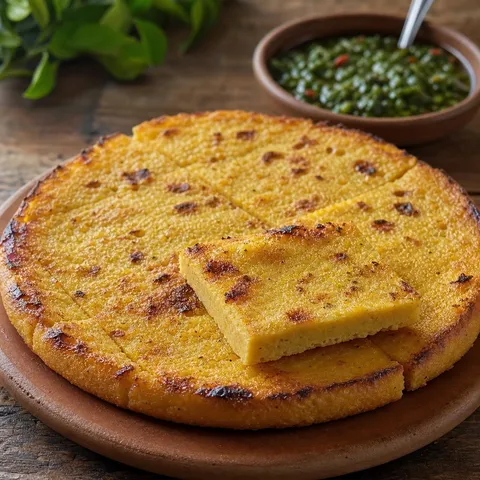 South American Lens Verified Images are for illustrative purposes only, may be inaccurate, and do not guarantee the presence or absence of specific ingredients.
 Fainá
Buenos Aires's thin chickpea flatbread, baked until golden and fragrant — simple, crispy-edged, and traditionally eaten layered right on top of a pizza slice.
 South American Lens Verified Images are for illustrative purposes only, may be inaccurate, and do not guarantee the presence or absence of specific ingredients.
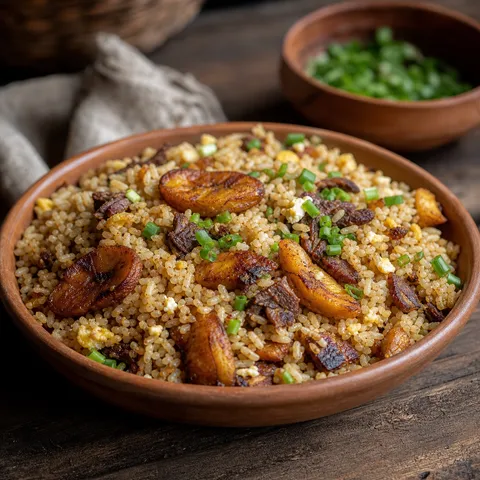
 Majadito
Bolivia's rustic one-pot comfort — dried charque beef simmered down with rice, tomato, and spices into a savory, fragrant dish topped with a fried egg.
 South American Lens Verified Images are for illustrative purposes only, may be inaccurate, and do not guarantee the presence or absence of specific ingredients.
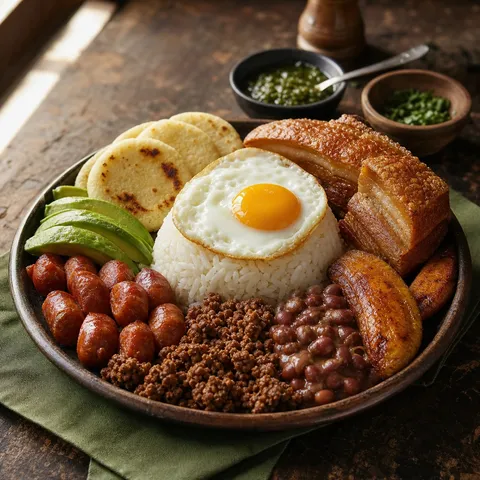
 Bandeja Paisa
Colombia's legendary tray of abundance — red beans, white rice, chicharrón, chorizo, fried egg, plantains, and avocado all piled high for a satisfying feast.