 North African Images are for illustrative purposes only, may be inaccurate, and do not guarantee the presence or absence of specific ingredients.
  Serving Images are for illustrative purposes only, may be inaccurate, and do not guarantee the presence or absence of specific ingredients.
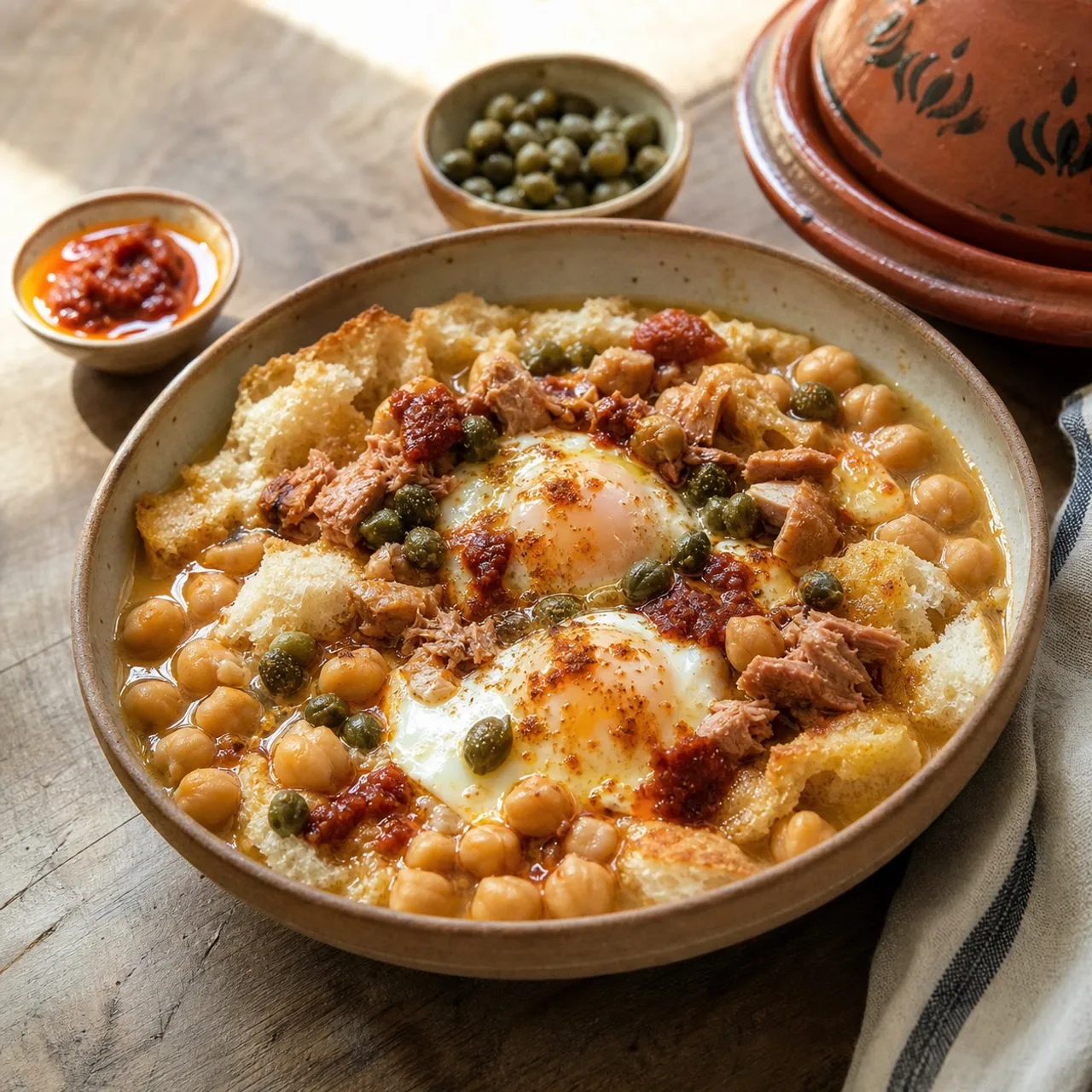
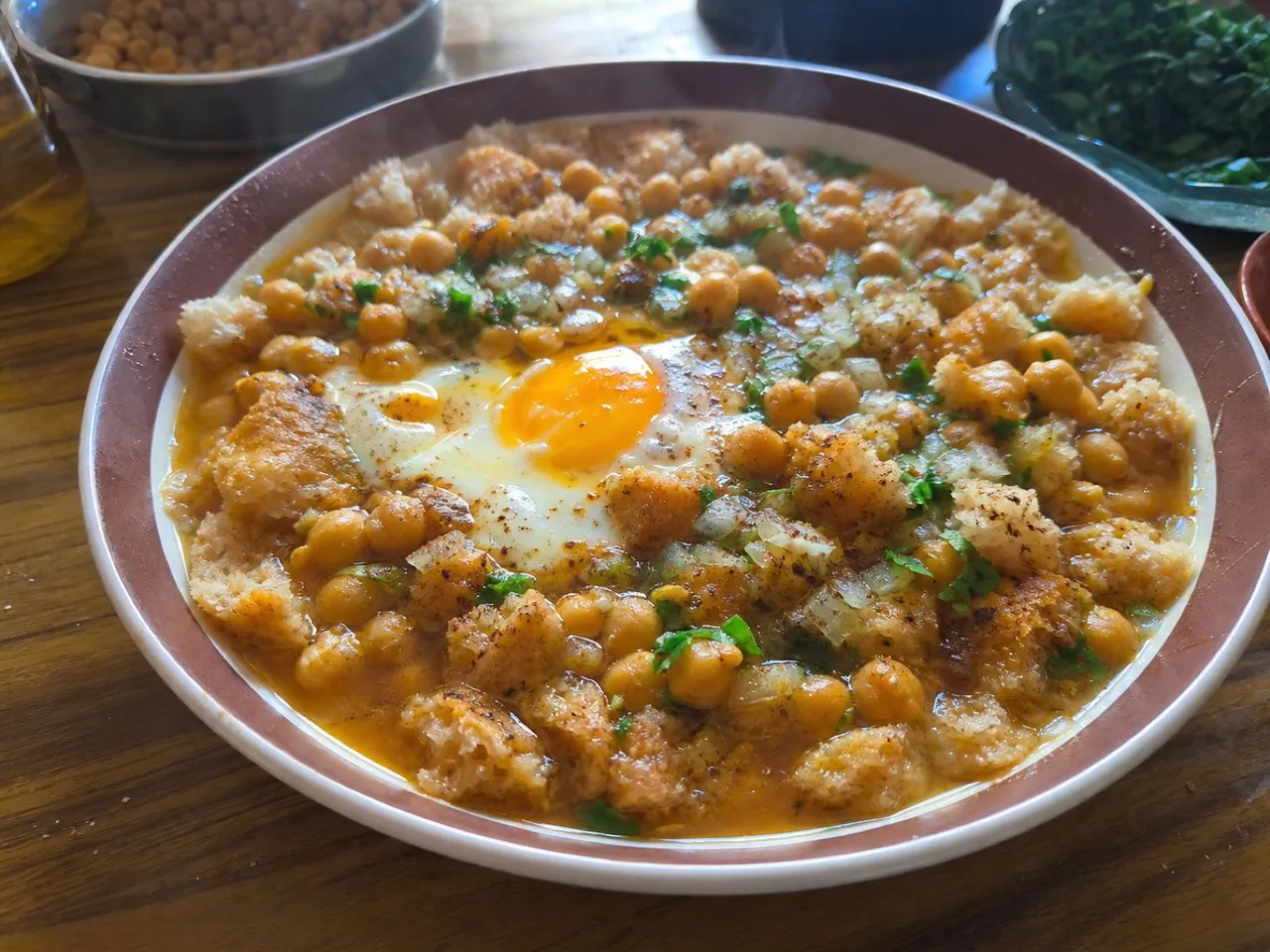
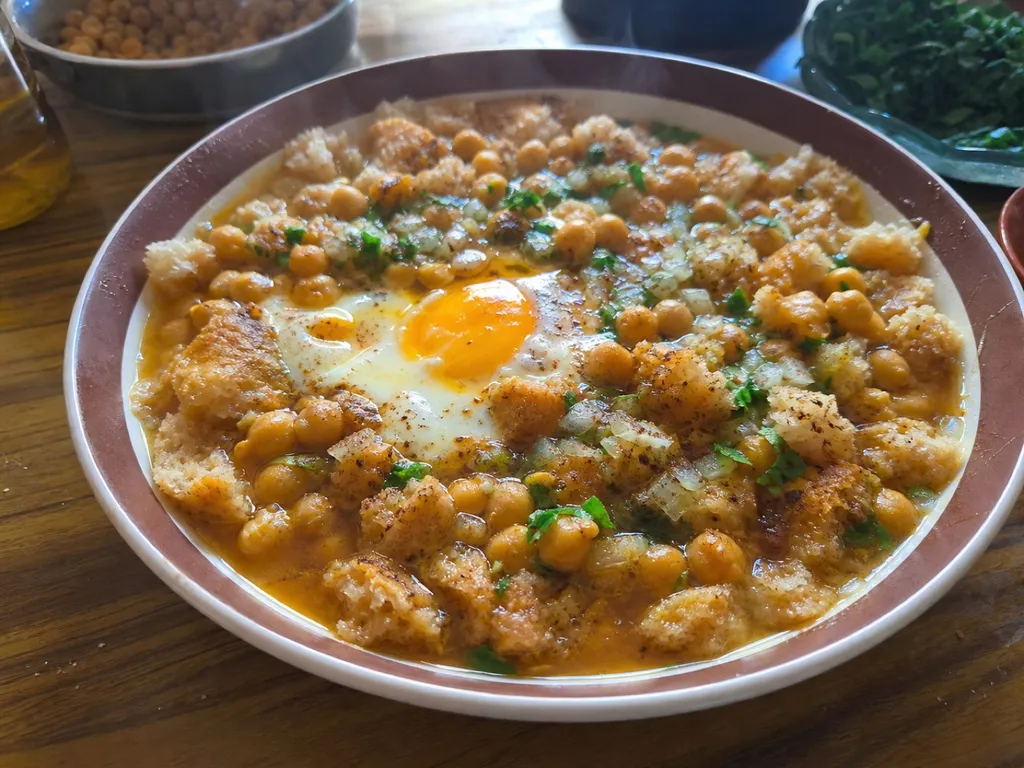
 Lablabi
Tunisia's beloved street-food bowl — soft chickpeas ladled over stale bread with a fiery broth of harissa, garlic, cumin, and a swirl of olive oil.
Contains common allergens
In the app, Listahan checks these against your household automatically.
Instructions
5 steps- 1
Cook Chickpeas: Drain the soaked chickpeas. Place in a large pot, cover with plenty of fresh water, and boil for 1.5 to 2 hours until very tender.
- 2
Make the Broth: Add the crushed garlic, cumin, salt, and 1 tbsp olive oil to the chickpea broth. Simmer for another 15 minutes.
- 3
Prepare the Base: Tear the stale crusty bread into small pieces and place them in the bottom of deep serving bowls.
- 4
Assemble the Soup: Ladle the hot chickpeas and their broth generously over the bread until it is thoroughly soaked.
- 5
Garnish: Top each bowl with a spoonful of harissa, a drizzle of olive oil, capers, a chunk of tuna, and a soft-boiled egg. Stir everything together before eating.
 Images are for illustrative purposes only, may be inaccurate, and do not guarantee the presence or absence of specific ingredients.
 Listahan Family Score™
56/100
Works for many families
Score reflects how well this recipe fits a typical busy household. In the app, your Family Score is personalized to your household's allergens, kids, and pantry.
Nutrition
per serving275
Calories
14 g
Protein
24 g
Carbs
14 g
Fat
Estimated per serving. Actual values depend on the brands and portions you use.
Listahan cooking guide
Chef notes & practical guide
Technique notes, ingredient swaps, serve-alongside ideas, storage guidance, and equipment for this recipe.
Cultural context
Lablabi is Tunisia's beloved street-food-style chickpea soup, most famously eaten as a hangover cure or early breakfast from sidewalk stalls in Tunis and Sfax. The dish is built in the bowl rather than the pot: stale bread goes in first, then the hot harissa-spiked chickpea broth is poured over, followed by a raw or soft-boiled egg that poaches gently in the heat. Toppings like tuna, capers, and a drizzle of olive oil are added at the table, making every bowl personal.
Listahan note
This version uses stale crusty bread as the textural base that absorbs the broth, and stirs in harissa at the bowl level rather than cooking it into the pot, so each diner can control their heat.
Technique cues
- Cooking dried chickpeas from scratch rather than using canned is what gives Lablabi its signature silky, starchy broth; canned chickpeas produce a thinner, blander liquid that cannot soak the bread with the same body.
- Harissa stirred directly into the hot broth at the table blooms briefly from the residual heat, releasing its dried-pepper fragrance without the extended cooking that dulls fresh-ground chili pastes.
- The raw egg dropped into the bowl cooks to a soft-set in the steaming broth if you let the dish rest 2 minutes before eating; a pre-cooked soft-boiled egg is safer for children and those avoiding raw egg.
Kitchen flow
- Parallel prep
- While the chickpeas simmer, soft-boil the eggs and set up the toppings (tuna, capers, olive oil) in small bowls so assembly at the table is instant.
- Make-ahead
- Cook the chickpea broth up to 3 days ahead; reheat to a full simmer before serving and build each bowl fresh at mealtime.
- Leftover move
- Refrigerate leftover chickpeas and broth together for up to 3 days; the bread will have softened overnight, so add a fresh torn piece to the bottom of the bowl when reheating.
- Cleanup rhythm
- One pot handles everything; the toppings are served in their own small vessels, so cleanup is limited to the pot, ladle, and individual bowls.
Ingredient brief
Role, handling, and swap guidance for each key ingredient.
2 cups dried chickpeas (soaked overnight)
protein base and broth builder
Purpose: Chickpeas cooked from dry release starch into the cooking water, creating a thick, cloudy broth that is the backbone of the dish and soaks into the bread.
Handling: Soak overnight in cold water, drain, cover with fresh water by 3 inches, and simmer 1 to 1.5 hours until completely tender; reserve all cooking liquid.
Adaptation: Two 15-oz cans of chickpeas can work in a time crunch; supplement the liquid with good chicken or vegetable stock to replace the lost starch broth.
1 tbsp harissa
heat and smoky depth
Purpose: Harissa provides the essential Tunisian character of the dish; without it, the broth is mild chickpea soup rather than Lablabi.
Handling: Stir a small amount into the hot broth in the cooking pot for baseline heat, and put extra harissa on the table for individual bowls.
Adaptation: Berbere paste adds heat with a different spice profile; a combination of cayenne, smoked paprika, and a pinch of caraway approximates store-bought harissa.
stale crusty bread
textural base
Purpose: Stale bread torn into the bowl absorbs the hot broth and becomes tender but not disintegrated, giving the soup a panade-like body.
Handling: Tear into large, rough pieces roughly an inch across and place in the bowl first, so the broth soaks in evenly from beneath.
Adaptation: Day-old baguette, ciabatta, or any dense-crumbed rustic loaf works; avoid soft sandwich bread, which collapses into paste immediately.
4 soft-boiled eggs
richness and protein
Purpose: The runny yolk breaks into the harissa broth and adds a creamy, fatty richness that rounds the spice.
Handling: Cook 6 minutes in boiling water, transfer to an ice bath for 2 minutes, then peel; they will hold their shape while staying jammy in the center.
Adaptation: Hard-boiled eggs work for food-safety reasons; for a vegan bowl, skip the egg entirely and drizzle extra olive oil.
4 cloves garlic (crushed)
aromatic foundation
Purpose: Garlic cooked briefly with cumin at the start of the broth adds a pungent depth that is fundamental to Tunisian chickpea cooking.
Handling: Crush rather than mince; larger pieces hold together during the long simmer and can be removed or eaten as soft, mild nuggets.
Adaptation: Roasted garlic (a half-head roasted in foil) can substitute for a sweeter, less sharp base.
Technique notes
- Season the chickpea cooking liquid generously with salt only after the chickpeas are fully tender; salting too early slows the cooking and can toughen the skins.
- Cumin is nearly as important as harissa in this dish; bloom a full teaspoon in a little olive oil before adding the garlic and broth to deepen the earthy note that runs through every bite.
- Assemble each bowl to order rather than all at once; the bread at the bottom softens quickly and becomes unpleasant if it sits in broth more than 10 minutes.
Ingredient swaps
- Gluten-free direction
- Substitute cooked short-grain rice or certified GF corn bread for the stale bread in the bowl base.
- Vegan direction
- Skip the egg and tuna; add a drizzle of good olive oil, extra capers, and a spoonful of preserved lemon pulp to compensate for the missing richness.
- Lower-heat option
- Use a mild tomato paste instead of harissa for the base, and offer harissa separately so children and heat-sensitive diners can eat the same bowl.
Serve alongside
- Tunisian slata mechouia (roasted pepper and tomato salad)
- extra crusty bread on the side for mopping
- simple shredded cabbage dressed with lemon juice
- strong black tea with sugar
- sparkling water with a wedge of lemon
Serving suggestions only — check pairings for your household's allergens.
Storage & reheating
- Refrigerate chickpeas and broth for up to 4 days in a sealed container; the flavor improves overnight.
- Reheat the broth to a full boil before assembling bowls; build each bowl fresh with new bread.
- Freeze the plain chickpea broth (no bread, egg, or toppings) for up to 2 months; thaw overnight and reheat.
Equipment
- large heavy pot for cooking chickpeas
- small saucepan for soft-boiling eggs
- ladle for serving
- deep wide bowls for assembly
Make this household-aware
Listahan Pro checks this recipe against your household's allergens, finds pantry-aware swaps, builds the shopping list, and helps you plan the week around it.
Plan it in Listahan
Add Lablabi to your week, check it against your household's allergens, and build the shopping list automatically.
More North African recipes
 North African Lens Verified Images are for illustrative purposes only, may be inaccurate, and do not guarantee the presence or absence of specific ingredients.
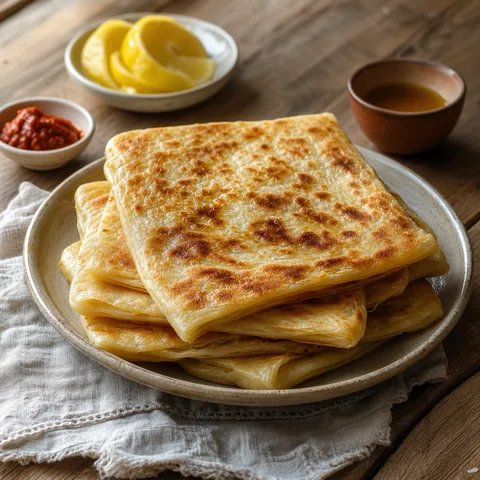
 Msemmen
Layered and folded semolina flatbread cooked on a griddle until the outside crisps and the inside stays wonderfully chewy — perfect with honey or harissa.
 North African Lens Verified Images are for illustrative purposes only, may be inaccurate, and do not guarantee the presence or absence of specific ingredients.
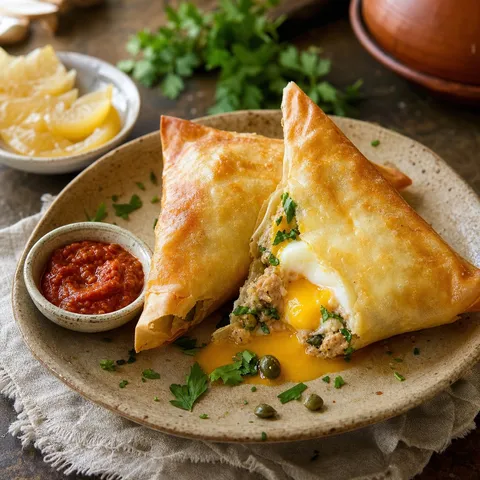
 Brik
Crispy paper-thin pastry folded around a whole egg, tuna, and parsley then flash-fried until golden — Tunisia's beloved street snack, eaten fast before the yolk escapes.
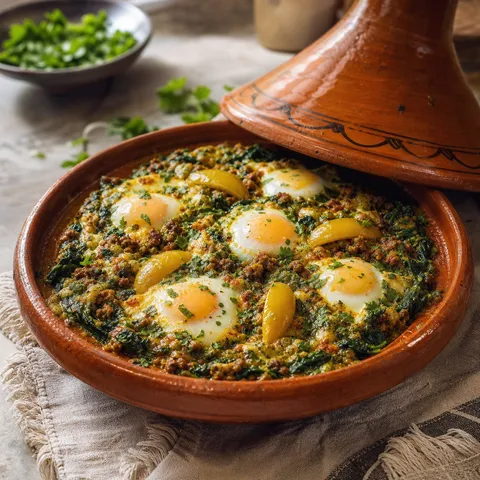 North African Lens Verified Images are for illustrative purposes only, may be inaccurate, and do not guarantee the presence or absence of specific ingredients.
 Tajine El Bey
Tunisia's grand layered bake of spiced lamb, eggs, and cheese baked in a deep crust — a celebration dish with silky, complex layers in every slice.