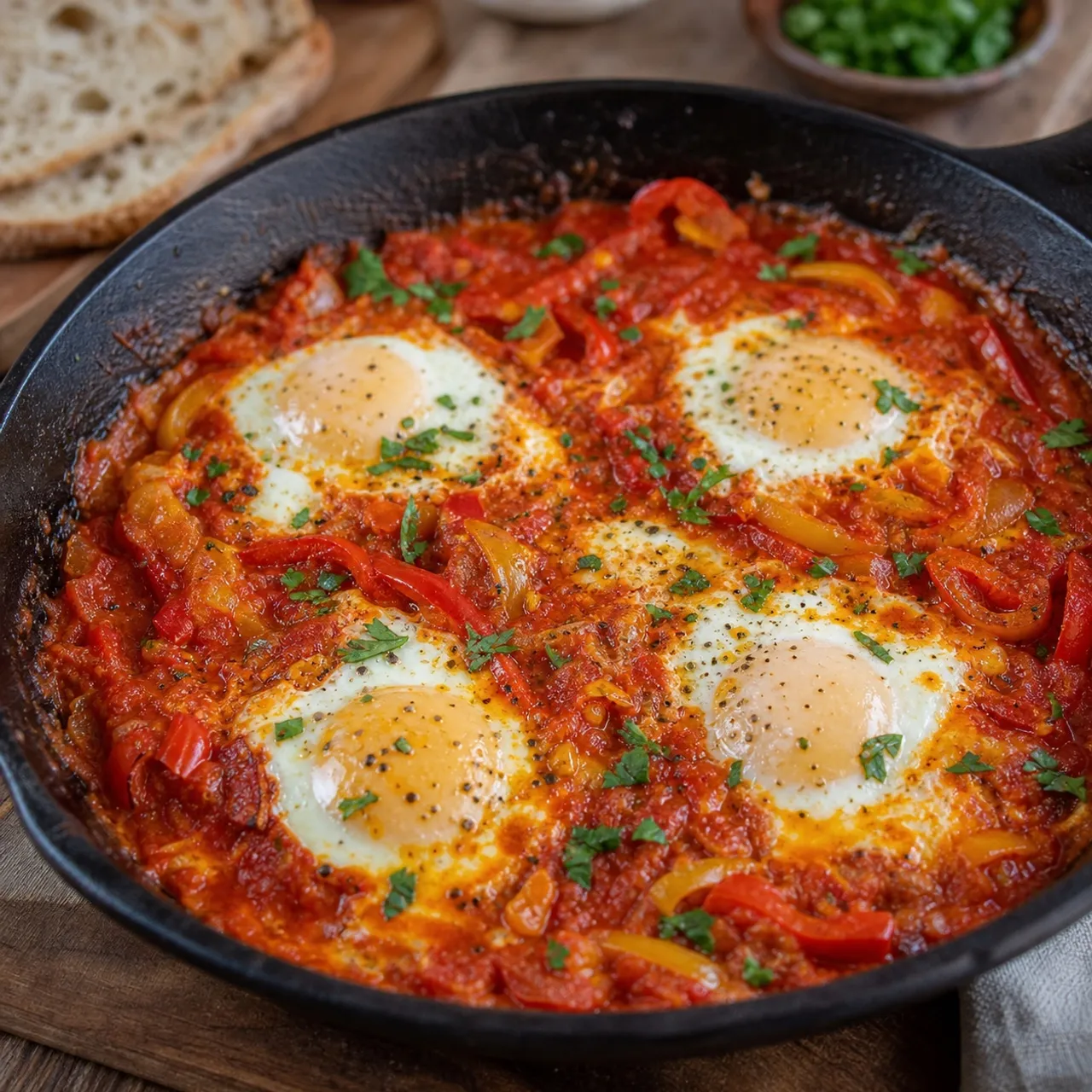
 North African Images are for illustrative purposes only, may be inaccurate, and do not guarantee the presence or absence of specific ingredients.
 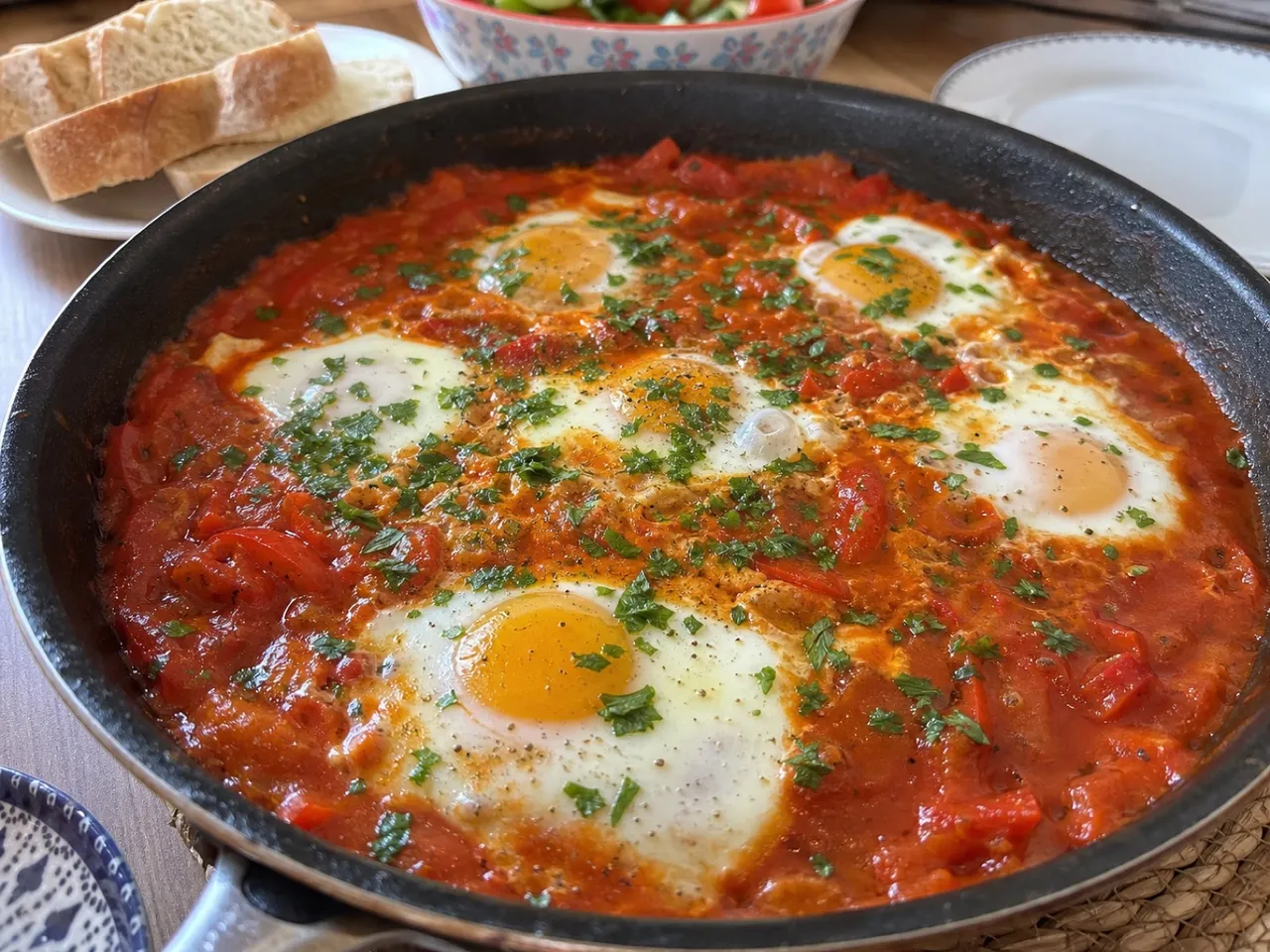 Serving Images are for illustrative purposes only, may be inaccurate, and do not guarantee the presence or absence of specific ingredients.
 Shakshouka
Eggs poached in a spiced tomato and pepper sauce, this bold North African one-pan breakfast is hearty, warming, and endlessly satisfying.
Contains common allergens
In the app, Listahan checks these against your household automatically.
Good to know
- Ready in under 30 minutes
Matched from this dish's own ingredients and timing. Browse more: 30-minute meals
Instructions
5 steps- 1
Sauté Aromatics: Heat 2 tbsp olive oil in a wide skillet over medium heat. Add onions and peppers, sautéing for 5-7 minutes until softened.
- 2
Add Spices: Stir in garlic, cumin, paprika, and chili flakes. Cook for 1 minute until highly fragrant.
- 3
Simmer Sauce: Pour in the diced tomatoes. Bring to a gentle simmer and cook for 10-15 minutes until the sauce thickens and the tomatoes break down.
- 4
Poach Eggs: Create small wells in the sauce using a spoon. Carefully crack one egg into each well.
- 5
Cover and Cook: Cover the skillet and let simmer on low heat for 5-8 minutes until the egg whites are fully set but yolks remain slightly runny.
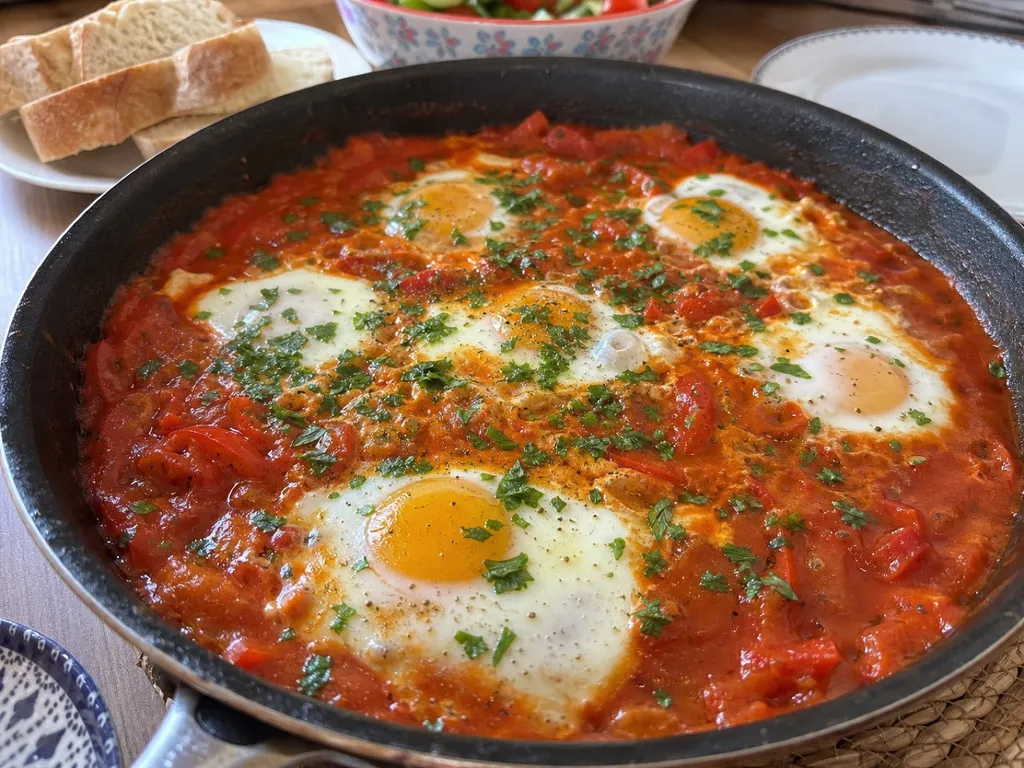 Images are for illustrative purposes only, may be inaccurate, and do not guarantee the presence or absence of specific ingredients.
 Listahan Family Score™
68/100
Works for many families
Score reflects how well this recipe fits a typical busy household. In the app, your Family Score is personalized to your household's allergens, kids, and pantry.
Nutrition
per serving115
Calories
8 g
Protein
9 g
Carbs
5 g
Fat
Estimated per serving. Actual values depend on the brands and portions you use.
Listahan cooking guide
Chef notes & practical guide
Technique notes, ingredient swaps, serve-alongside ideas, storage guidance, and equipment for this recipe.
Cultural context
Shakshouka traces its roots to Ottoman-era North Africa, most closely associated with Tunisia before spreading east through Libya and Egypt and eventually becoming a beloved Israeli breakfast staple. The name derives from an Arabic word meaning 'mixture' or 'shakiness,' reflecting the technique of nestling eggs into a spiced tomato-pepper sauce and letting them set in the pan. It traveled with Jewish communities across the Mediterranean and today appears across Middle Eastern and North African households as a humble, inexpensive meal eaten from the pan at any hour.
Listahan note
This version keeps the spice restrained enough for a weeknight family dinner while relying on the tomato-pepper base to develop real depth before the eggs go in. The goal is set whites with runny yolks, which requires watching the pan closely in the final minutes.
Technique cues
- Cook the onion and pepper low and slow until fully soft and slightly jammy before adding tomatoes; this base sweetness balances the acidity of the tomatoes and prevents the sauce from tasting raw.
- Add the eggs to gentle depressions pressed into the sauce, then cover the pan with a lid to trap steam and cook the whites from above without direct contact with heat that would toughen the yolks.
- Chili flakes bloom in the hot oil with the cumin and paprika at the start; this 30-second step releases fat-soluble aroma compounds that stay locked in the sauce far longer than if spices are added later.
Kitchen flow
- Parallel prep
- Dice the onion and slice the pepper while the oil heats; the spices and garlic take only moments so have them measured before the onion goes in.
- Make-ahead
- The tomato-pepper sauce base keeps refrigerated for up to 3 days; reheat it in the skillet and add the eggs fresh to order.
- Leftover move
- Leftover sauce (without eggs) makes an excellent pasta sauce or base for a quick bean stew the next day.
- Cleanup rhythm
- This is a single-skillet meal; wipe the pan after serving and soak briefly in warm water to loosen any egg residue.
Ingredient brief
Role, handling, and swap guidance for each key ingredient.
4 large eggs
protein centerpiece
Purpose: The eggs are the dish; their degree of doneness defines whether the meal feels luxurious or overcooked.
Handling: Crack each egg into a small bowl first so you can lower it gently into the sauce without breaking the yolk.
Adaptation: For a vegan direction, press firm tofu slabs into the sauce and simmer until heated through, or add a drained can of white beans for protein.
2 cups diced tomatoes
sauce body
Purpose: The tomatoes provide the acidic, sweet-savory liquid that the eggs poach in; quality here matters more than any other ingredient.
Handling: Canned crushed or diced tomatoes work as well as fresh and cook down more consistently; if using fresh, seed them first to avoid a watery sauce.
Adaptation: Fire-roasted canned tomatoes add a smoky backbone that complements the cumin without extra effort.
1 large bell pepper (sliced)
sweetness and texture
Purpose: Bell pepper softens into the sauce and provides a natural sweetness that offsets the acid of the tomatoes.
Handling: Slice into thin strips rather than large chunks so the pepper breaks down and integrates into the sauce instead of remaining as distinct pieces.
Adaptation: Roasted red peppers from a jar save time and add extra caramelized sweetness with no additional cooking.
1 tsp cumin
earthy base spice
Purpose: Cumin provides the warm, smoky undertone that makes shakshouka taste distinctly North African rather than Italian.
Handling: Add to the hot oil along with paprika and chili flakes before the vegetables go in so the spices toast briefly.
Adaptation: A pinch of caraway can substitute for part of the cumin for a more specifically Tunisian character.
1 tsp paprika
color and mild heat
Purpose: Paprika deepens the red color of the sauce and adds a mild, sweet pepper flavor that layers with the fresh bell pepper.
Handling: Use sweet paprika as the base; add smoked paprika as a partial swap if you want a deeper, campfire-adjacent flavor.
Adaptation: Smoked paprika replaces half or all of the sweet paprika for a more complex sauce that pairs especially well with crusty bread.
Technique notes
- Use a wide, heavy skillet with a lid rather than a saucepan; more surface area means more eggs fit and the sauce reduces faster to the right consistency.
- The eggs continue cooking from residual heat after the pan leaves the stove, so pull them when the whites look just barely set at the edges near the yolk.
- A small spoonful of harissa stirred into the sauce just before the eggs go in takes this from simple to restaurant-quality with almost no additional effort.
Ingredient swaps
- Gluten-free direction
- Serve with gluten-free bread or over cooked polenta instead of pita. The dish itself is eggs, tomato, pepper, onion and spices.
- Lower heat
- Reduce or omit the chili flakes entirely and use a mild paprika; the dish is still flavorful and family-friendly for younger children.
- Boost protein
- Stir a drained can of chickpeas into the sauce before adding the eggs for a heartier, more filling meal.
Serve alongside
- warm pita or crusty sourdough for scooping
- simple cucumber and tomato salad with lemon and olive oil
- creamy labneh or plain Greek yogurt on the side
- strong mint tea
- fresh orange juice
- black coffee
Serving suggestions only — check pairings for your household's allergens.
Storage & reheating
- The tomato sauce base keeps in the fridge for up to 3 days in a sealed container.
- Cooked eggs in sauce do not store well; reheat the sauce and poach fresh eggs each time.
- The sauce base can be frozen for up to 2 months; thaw overnight in the fridge before reheating.
Equipment
- 12-inch heavy skillet (cast iron or stainless) with a lid
- wooden spoon or silicone spatula
- small bowls for cracking eggs individually
Make this household-aware
Listahan Pro checks this recipe against your household's allergens, finds pantry-aware swaps, builds the shopping list, and helps you plan the week around it.
Plan it in Listahan
Add Shakshouka to your week, check it against your household's allergens, and build the shopping list automatically.
More North African recipes
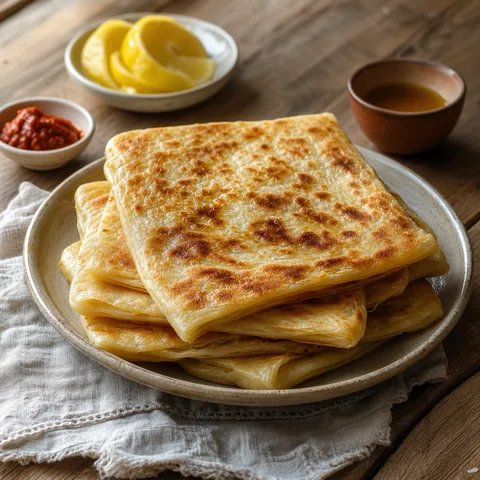 North African Lens Verified Images are for illustrative purposes only, may be inaccurate, and do not guarantee the presence or absence of specific ingredients.
 Msemmen
Layered and folded semolina flatbread cooked on a griddle until the outside crisps and the inside stays wonderfully chewy — perfect with honey or harissa.
 North African Lens Verified Images are for illustrative purposes only, may be inaccurate, and do not guarantee the presence or absence of specific ingredients.
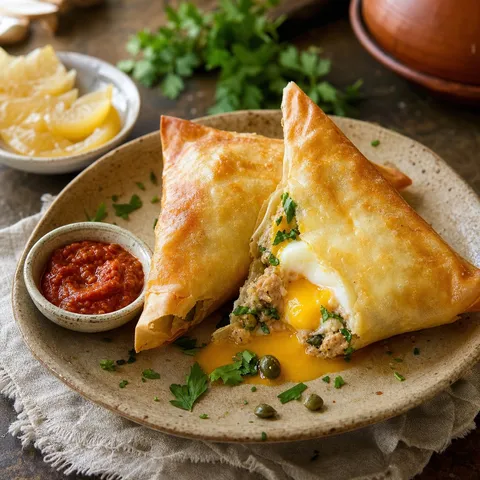
 Brik
Crispy paper-thin pastry folded around a whole egg, tuna, and parsley then flash-fried until golden — Tunisia's beloved street snack, eaten fast before the yolk escapes.
 North African Lens Verified Images are for illustrative purposes only, may be inaccurate, and do not guarantee the presence or absence of specific ingredients.
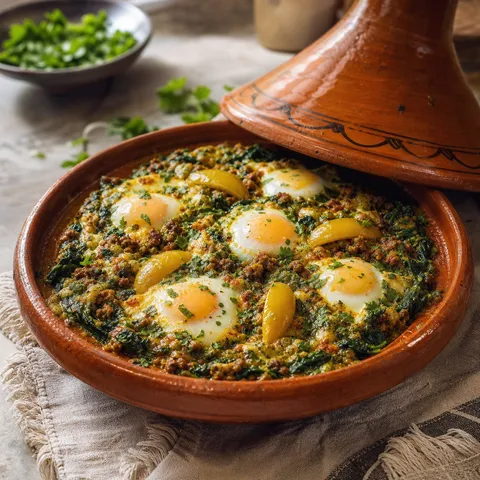
 Tajine El Bey
Tunisia's grand layered bake of spiced lamb, eggs, and cheese baked in a deep crust — a celebration dish with silky, complex layers in every slice.