 Food Lens Images are for illustrative purposes only, may be inaccurate, and do not guarantee the presence or absence of specific ingredients.
 Food Lens · Pantry
Chili flakes
Sharp, fiery, fruity, and dryly spicy with a lingering burn.
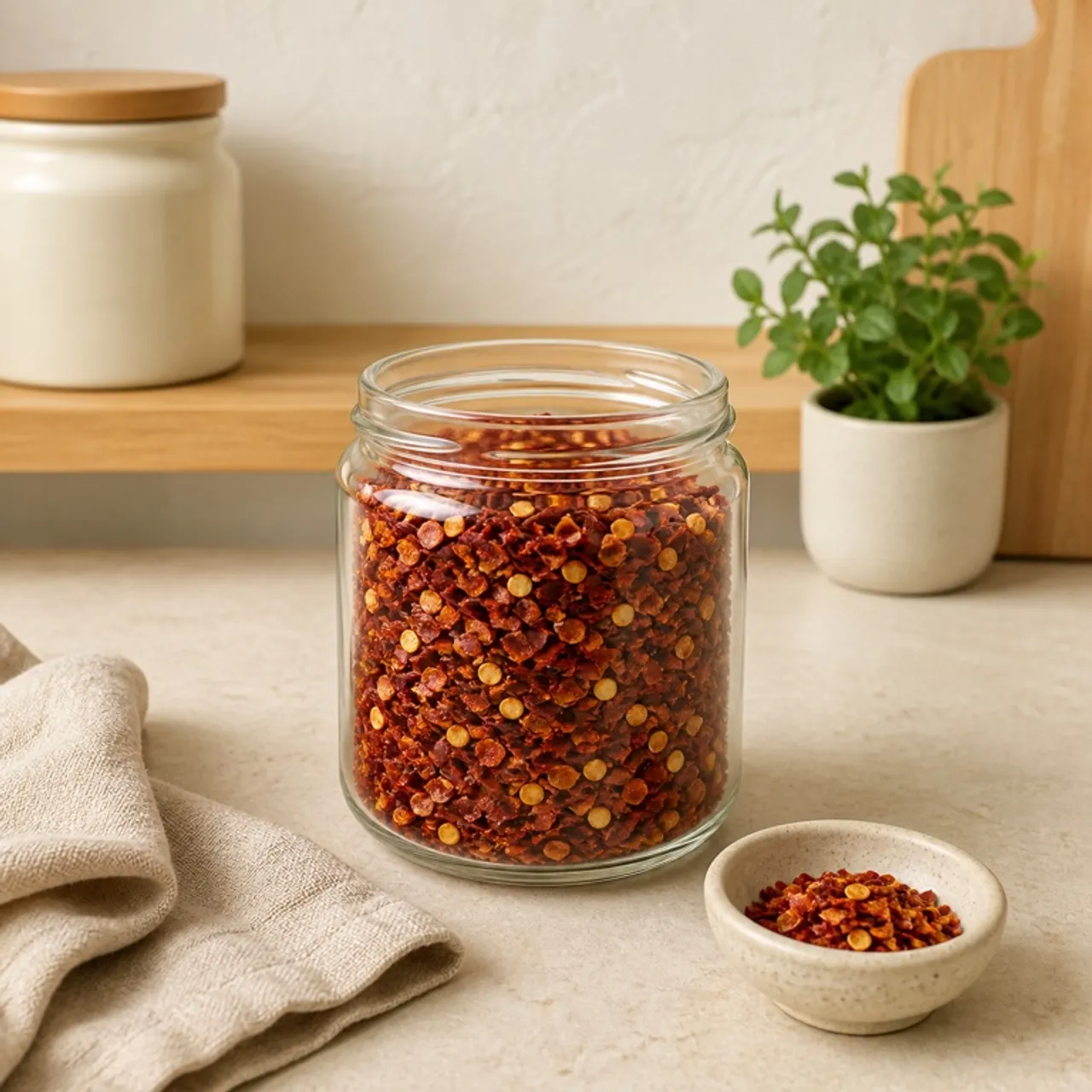
Lens VerifiedChili flakes (also called red pepper flakes) are coarsely crushed dried red chili peppers, seeds included, that add heat and a light fruity pepper note. A pinch wakes up a sauce, pizza, or stir-fry.
Where it comes from
Red pepper flakes are dried chili peppers — typically cayenne-type — crushed coarsely so the seeds remain, which carry much of the heat. They became a pantry standard in Italian-American cooking and are used across many regional cuisines that depend on dried chili heat.
Varieties — Most supermarket red pepper flakes use a blend of cayenne-type peppers; Korean gochugaru is a specific style — coarser, milder, and fruitier than generic chili flakes.
A tableside staple in Italian-American pizza restaurants and an essential heat source in Korean kimchi, Chinese mapo tofu, and Mediterranean cooking.
In a modern kitchen — Blooming chili flakes briefly in warm oil before adding other ingredients unlocks more flavor than adding them raw.
Buying it
Look for bright red flakes with visible seeds and a pleasant chili aroma. Flakes that have gone dull and lost their scent are past their best. Buy in small amounts unless you use them frequently.
Storing it
Store in an airtight jar out of direct light and heat so the color and heat don't fade. A washed-out color or musty smell means it's stale rather than spoiled.
Keeps about 2 years in the pantry.
Out of chili flakes? Good swaps
- Cayenne pepper — Finely ground and hotter by volume; use about half as much.
- Fresh chili, minced — Juicy and bright; add at the same stage of cooking.
- Gochugaru — Korean chili flakes — fruitier and milder, great for Korean-style dishes.
General cooking guidance — always check the labels on the products you use. Listahan’s allergen checks run automatically when you plan a recipe in the app. Not medical advice.
Recipes that use chili flakes
Common questions about chili flakes
Is chili flakes vegan?
Chili flakes is generally plant-based and suitable for a vegan diet, but brands differ — confirm on the label.
What can I use instead of chili flakes?
Good swaps include Cayenne pepper, Fresh chili, minced, Gochugaru. Each behaves a little differently — see the swaps above for notes, and always check labels for allergens.
How do I store chili flakes?
Store in an airtight jar out of direct light and heat so the color and heat don't fade. A washed-out color or musty smell means it's stale rather than spoiled. It keeps about 2 years in the pantry.
More pantry
See all


Make chili flakes about your kitchen — with Listahan Pro
Everything above is free, forever. Pro adds the Household Lens — the same food, seen for your family:
-
Checked for each member
Flags chili flakes per person against your household's allergies and school rules — not just a generic "contains" tag.
-
Pantry-aware
Knows whether you already have it, what is running low, and the best swap from what is in your kitchen tonight.
-
What it costs near you
A real price from the Presyo community index, so you can plan the budget — not guess.
-
Your household memory
Who likes it, plus your own private notes — brand, where you keep it, who skips it.
Allergen safety is always free — Pro adds the automation, never the safety.
Cook with chili flakes — safely
Plan a recipe in Listahan and the household allergen check runs automatically — every plan, every swap, every lunchbox. Safety is never paywalled.