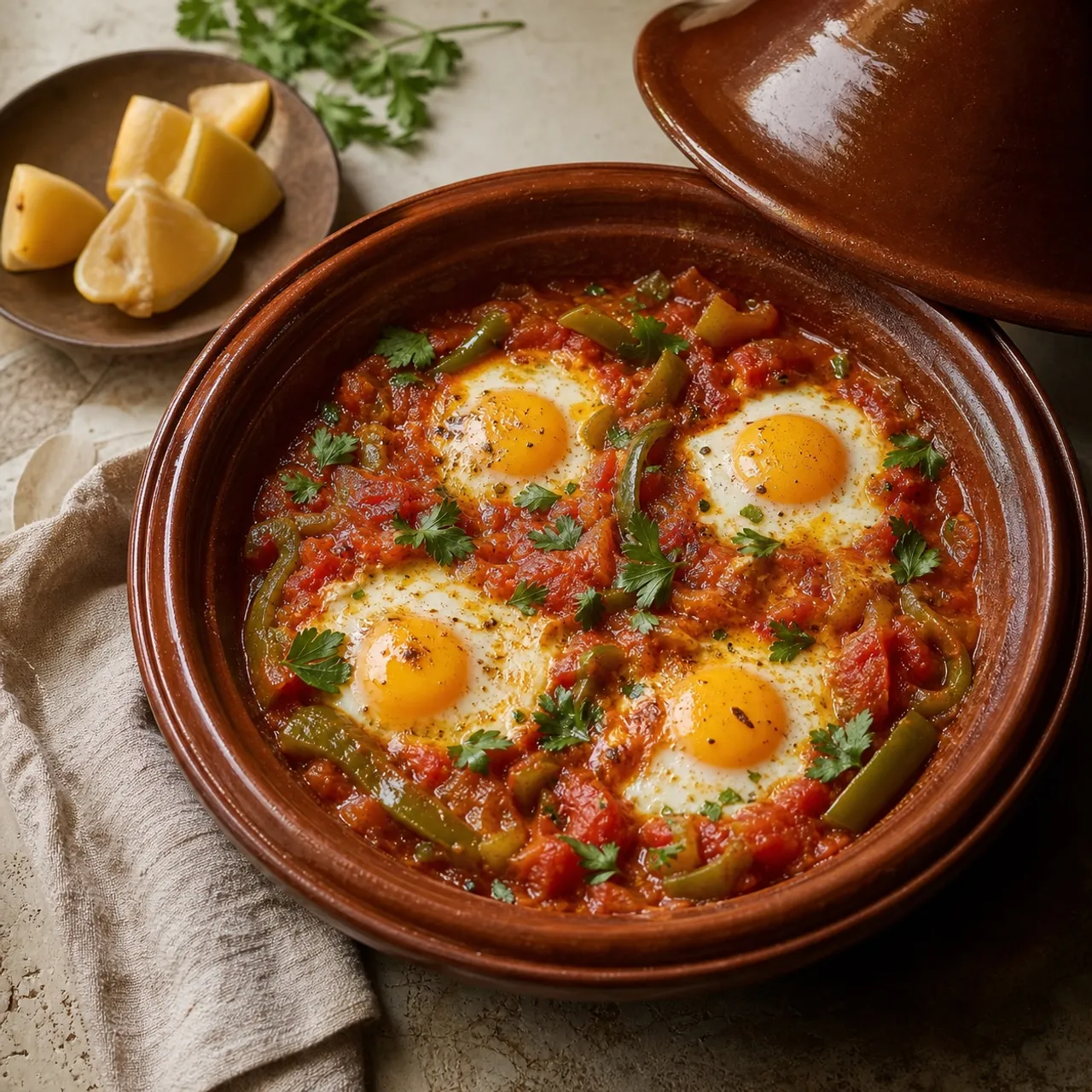
 North African Images are for illustrative purposes only, may be inaccurate, and do not guarantee the presence or absence of specific ingredients.
 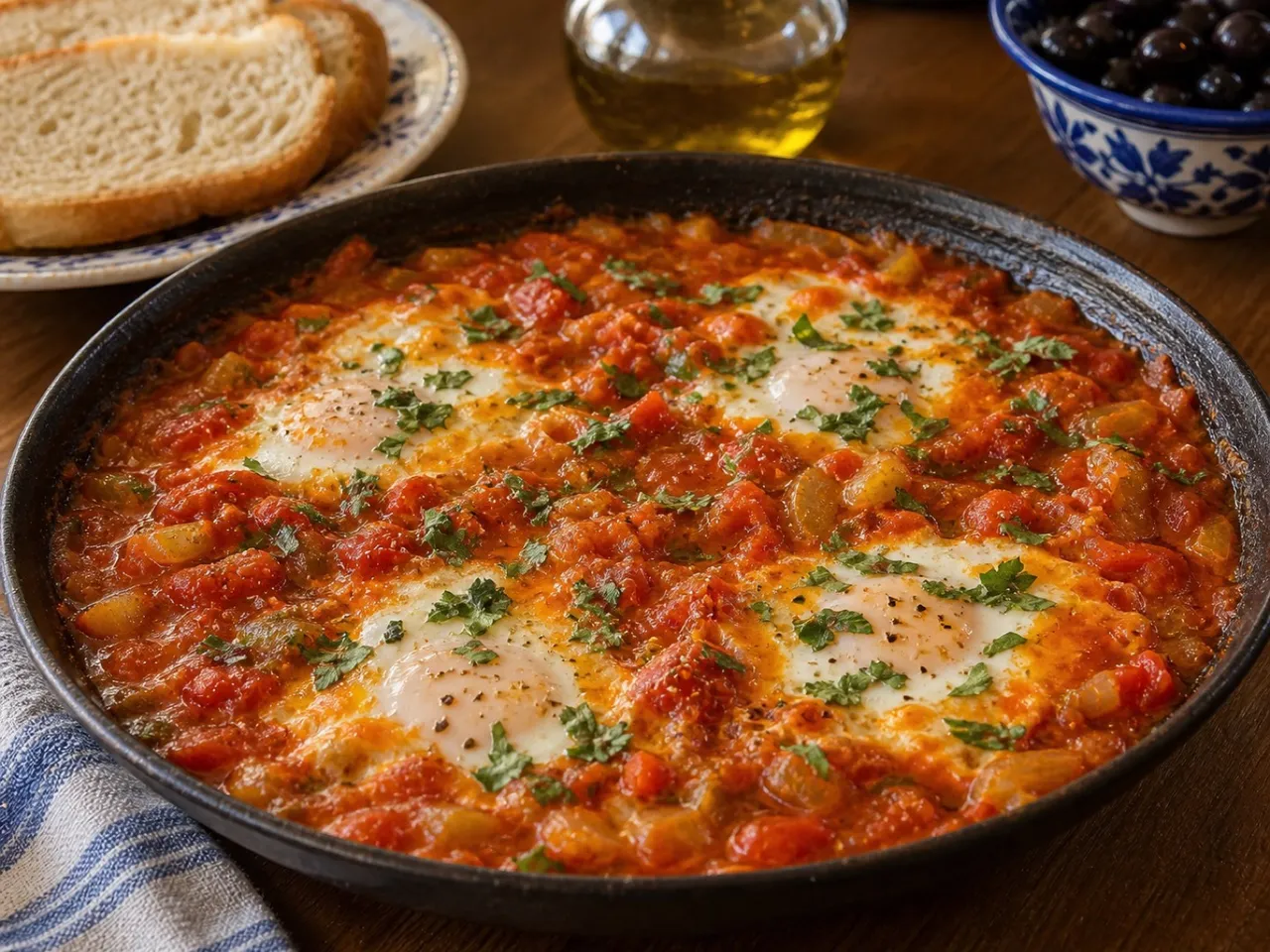 Serving Images are for illustrative purposes only, may be inaccurate, and do not guarantee the presence or absence of specific ingredients.
 Chakchouka
Ripe tomatoes, charred peppers, and aromatic spices cooked down into a thick, fragrant sauce with eggs nested inside — a versatile North African staple for any meal.
Contains common allergens
In the app, Listahan checks these against your household automatically.
Good to know
- Ready in under 30 minutes
Matched from this dish's own ingredients and timing. Browse more: 30-minute meals
Instructions
7 steps- 1
Heat the olive oil in a wide skillet and cook the onion and peppers over medium heat until softened and lightly charred at the edges, about 10 minutes.
- 2
Add the garlic and chili and cook until fragrant, about one minute.
- 3
Stir in the tomatoes, caraway, paprika, harissa, and salt, and simmer uncovered until the mixture thickens into a jammy sauce, about 12 to 15 minutes.
- 4
Taste and adjust seasoning, the sauce should be thick enough to hold a spoon upright.
- 5
Use the back of a spoon to make shallow wells in the sauce and crack an egg into each one.
- 6
Cover the skillet and cook over low heat until the egg whites are set but the yolks remain soft, about 5 to 7 minutes.
- 7
Serve straight from the skillet with crusty bread for mopping up the sauce.
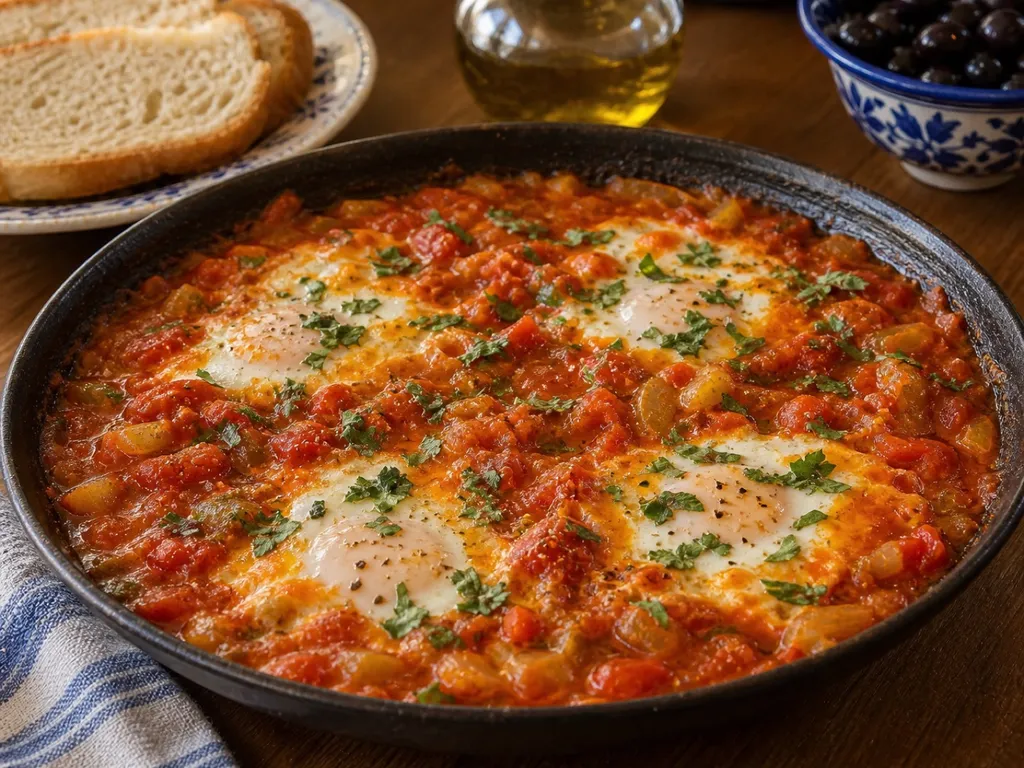 Images are for illustrative purposes only, may be inaccurate, and do not guarantee the presence or absence of specific ingredients.
 Listahan Family Score™
68/100
Works for many families
Score reflects how well this recipe fits a typical busy household. In the app, your Family Score is personalized to your household's allergens, kids, and pantry.
Nutrition
per serving70
Calories
7 g
Protein
0 g
Carbs
5 g
Fat
Estimated per serving. Actual values depend on the brands and portions you use.
Listahan cooking guide
Chef notes & practical guide
Technique notes, ingredient swaps, serve-alongside ideas, storage guidance, and equipment for this recipe.
Cultural context
Chakchouka (also transliterated as shakshouka) is a spiced tomato and pepper stew with eggs poached directly in the sauce, a dish that originated in the Ottoman Empire's North African provinces and remains a daily staple across Tunisia, Libya, Algeria, and Morocco. Tunisia claims it most fiercely as a national dish, and the Tunisian version typically includes caraway and is spicier than the Israeli-popularized version that North American cooks know best. The dish name likely derives from a Berber word meaning 'mixture,' which perfectly describes its simple, everything-in-one-pan logic.
Listahan note
This version builds the sauce slowly over medium-low heat until the peppers are completely soft and the tomatoes have reduced to a thick, almost jam-like base before the eggs are added, which ensures the eggs cook in a stable environment rather than watery sauce.
Technique cues
- The sauce must reduce until it is thick enough to hold a channel when a spoon is dragged through it before eggs are added; eggs dropped into thin, watery sauce will spread and overcook on the edges before the whites near the yolk set, producing a rubbery rather than silky result.
- Caraway is the Tunisian spice fingerprint of chakchouka and should be added with the paprika at the beginning of cooking so it blooms in the oil; adding it near the end produces a harsh, raw-spice aftertaste.
- Cover the pan with a lid after adding the eggs and cook on the lowest possible heat; the steam from the sauce gently sets the egg whites from above while the heat below keeps the yolks runny — lifting the lid every 30 seconds to check allows you to pull the pan at exactly the right moment.
Kitchen flow
- Parallel prep
- Chop all vegetables before turning on the heat; the sauce cooks in a single pan with no multitasking required once it starts.
- Make-ahead
- The tomato-pepper sauce base can be made up to 3 days ahead and refrigerated; reheat until simmering, then add the eggs fresh to order.
- Leftover move
- The sauce without eggs keeps beautifully and can be used as a pasta sauce, a base for braised lamb meatballs, or a dipping sauce for flatbread.
- Cleanup rhythm
- The dish cooks and serves in one pan; soak the pan immediately after eating since the tomato sauce sets quickly on the surface.
Ingredient brief
Role, handling, and swap guidance for each key ingredient.
4 large eggs
protein and centerpiece
Purpose: The eggs poached in the sauce are the defining element of the dish; their yolk richness enriches the sauce when broken at the table.
Handling: Crack each egg into a small cup before adding to the sauce so you can guide them in gently without breaking the yolk and can discard any with broken yolks before they hit the pan.
Adaptation: No substitution replicates the egg; for a vegan direction, substitute drained canned chickpeas pressed into the sauce wells and warmed through.
2 green bell peppers (sliced)
sweet vegetable body
Purpose: Bell peppers provide the bulk and sweetness that balances the acidity of the tomatoes and the heat of the chili flakes.
Handling: Slice into thin strips so they soften completely in the sauce time rather than remaining half-crunchy.
Adaptation: Red bell peppers create a sweeter, more visually striking sauce; a mix of colors is appealing.
4 ripe tomatoes (chopped)
sauce base
Purpose: Fresh ripe tomatoes provide the acid, liquid, and bright flavor that form the sauce; they must reduce significantly to create the thick base that holds the eggs.
Handling: Chop roughly including the seeds and juice; all of this liquid will reduce during cooking into the concentrated sauce.
Adaptation: One 28-oz can of whole peeled tomatoes (crushed by hand) is a reliable year-round substitute that often produces a more consistent sauce than out-of-season fresh tomatoes.
1 tsp paprika
depth and color
Purpose: Paprika deepens the red color of the sauce and adds a mild sweetness that rounds the acidity of the tomatoes.
Handling: Add to the oil with the garlic and onion so it blooms; bloomed paprika is noticeably richer in flavor and color than paprika added to liquid.
Adaptation: Smoked paprika adds a gentle campfire note that works particularly well if the tomatoes are canned rather than fresh.
1/2 tsp ground caraway
Tunisian spice signature
Purpose: Caraway is what makes this chakchouka distinctly Tunisian; it adds a warm, anise-adjacent note that cuts through the sweetness of the peppers.
Handling: Add with the paprika to the oil so it blooms; use freshly ground whole seeds if possible for a brighter flavor.
Adaptation: Ground cumin is a milder, earthier substitute that shifts the flavor profile toward the Middle Eastern versions of the dish.
Technique notes
- Use a wide, shallow pan (a 12-inch skillet is ideal) rather than a deep pot so there is maximum surface area for the sauce to reduce and for the eggs to fit without crowding each other.
- Space the egg wells at least 2 inches apart in the sauce so each egg has room to set without the whites running together; pressing a spoon into the sauce makes a more defined well than just cracking the egg in.
- Serve directly from the pan with crusty bread; this is not a dish that transfers well to a serving bowl without the eggs continuing to cook from the residual heat, so get it to the table fast.
Ingredient swaps
- Vegan direction
- Omit eggs and add a drained can of chickpeas heated through in the sauce; finish with a drizzle of tahini stirred in just before serving for richness.
- Protein addition
- Add sliced merguez sausage browned first in the pan before the vegetables for a heartier version that is traditional in the Maghreb for large family breakfasts.
- Heat level control
- Omit chili flakes for a mild, kid-friendly version and serve harissa on the side for adults who want the heat.
Serve alongside
- warm crusty baguette or pita for scooping
- crumbled feta cheese scattered on top at the table
- simple arugula salad with lemon
- yogurt with cucumber and mint alongside
- hot mint tea
- freshly squeezed orange juice
- strong coffee with cardamom
Serving suggestions only — check pairings for your household's allergens.
Storage & reheating
- The sauce base without eggs keeps in the refrigerator for up to 4 days; store the sauce and eggs separately.
- Reheat the sauce over medium heat until simmering before cracking in fresh eggs; do not reheat cooked eggs in the sauce as they will overcook and turn rubbery.
- The sauce freezes well for up to 2 months; thaw overnight in the refrigerator and bring to a simmer before adding eggs.
Equipment
- wide 12-inch skillet or saute pan with a fitted lid
- small cups or ramekins for cracking eggs before adding to the pan
- wooden spoon or silicone spatula
- ladle for serving
Make this household-aware
Listahan Pro checks this recipe against your household's allergens, finds pantry-aware swaps, builds the shopping list, and helps you plan the week around it.
Plan it in Listahan
Add Chakchouka to your week, check it against your household's allergens, and build the shopping list automatically.
More North African recipes
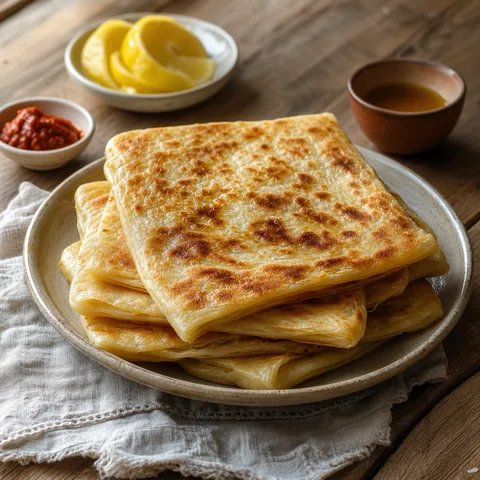 North African Lens Verified Images are for illustrative purposes only, may be inaccurate, and do not guarantee the presence or absence of specific ingredients.
 Msemmen
Layered and folded semolina flatbread cooked on a griddle until the outside crisps and the inside stays wonderfully chewy — perfect with honey or harissa.
 North African Lens Verified Images are for illustrative purposes only, may be inaccurate, and do not guarantee the presence or absence of specific ingredients.
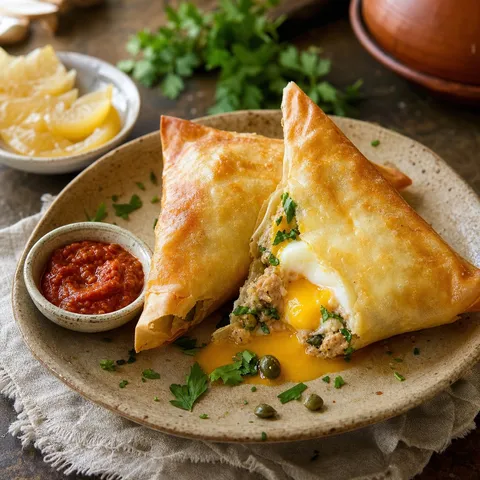
 Brik
Crispy paper-thin pastry folded around a whole egg, tuna, and parsley then flash-fried until golden — Tunisia's beloved street snack, eaten fast before the yolk escapes.
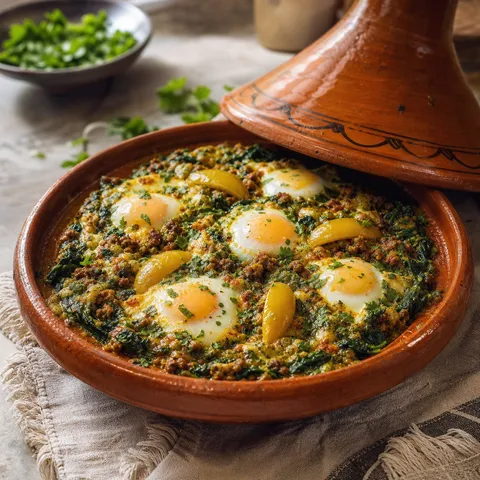 North African Lens Verified Images are for illustrative purposes only, may be inaccurate, and do not guarantee the presence or absence of specific ingredients.
 Tajine El Bey
Tunisia's grand layered bake of spiced lamb, eggs, and cheese baked in a deep crust — a celebration dish with silky, complex layers in every slice.