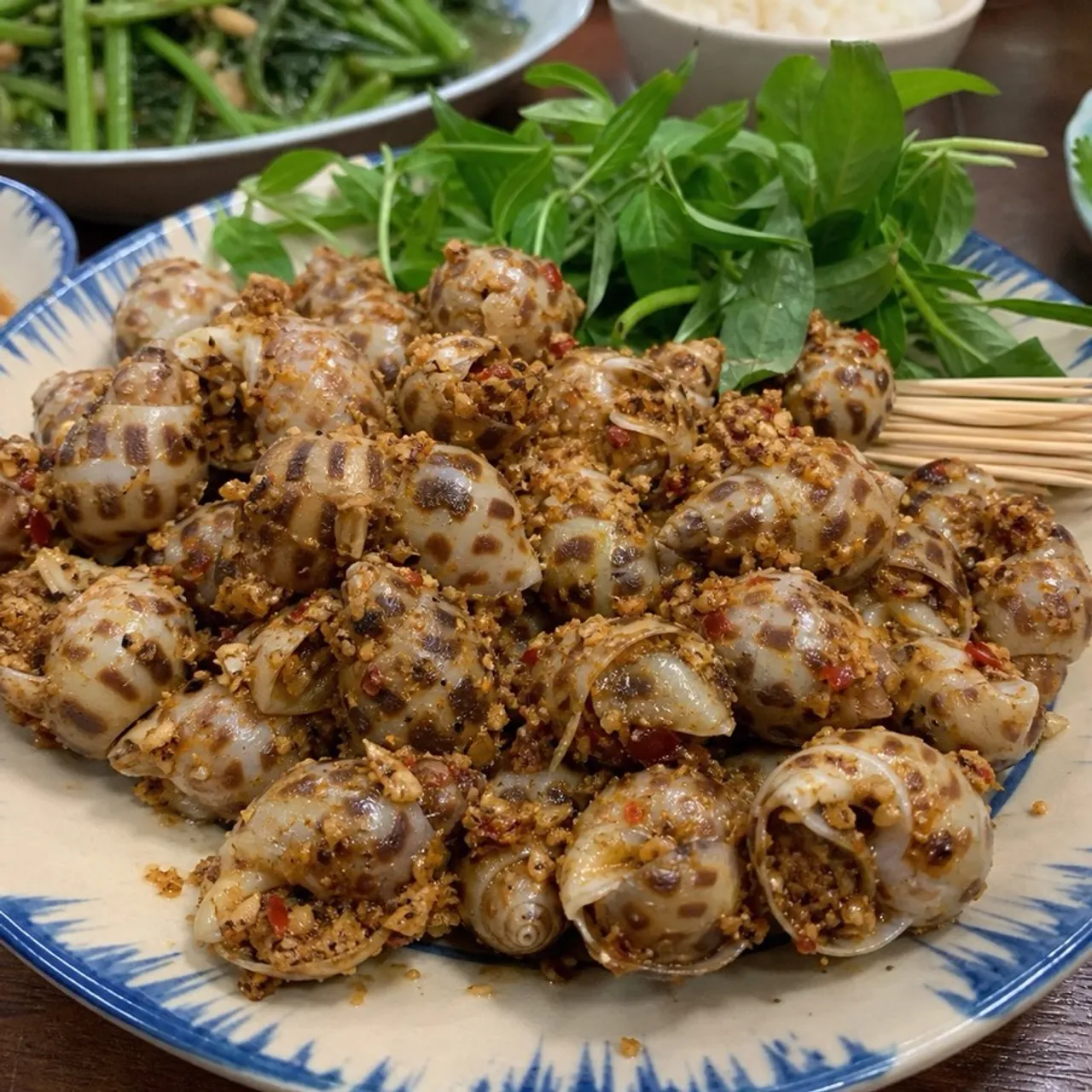
 Vietnamese Images are for illustrative purposes only, may be inaccurate, and do not guarantee the presence or absence of specific ingredients.
 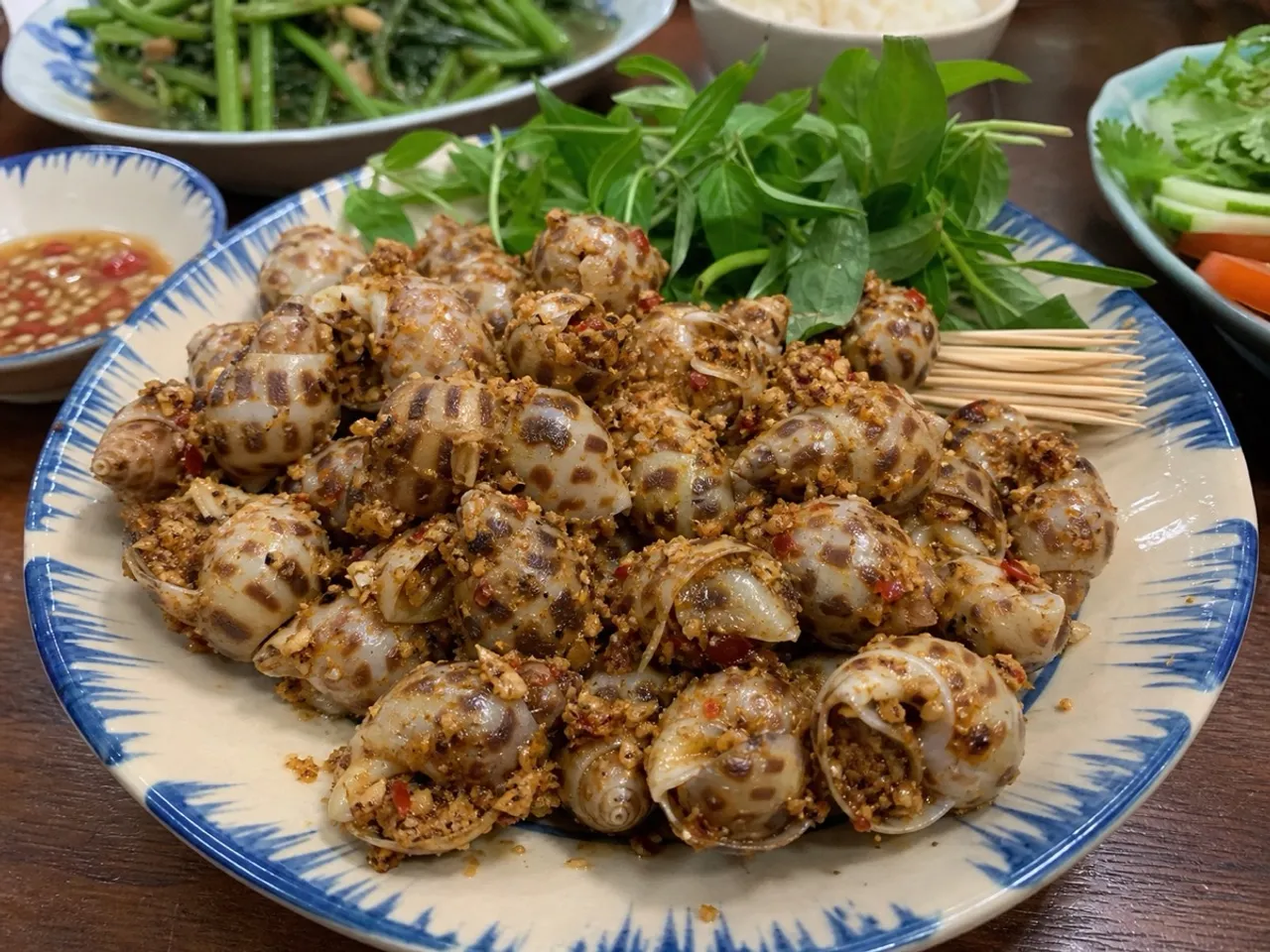 Serving Images are for illustrative purposes only, may be inaccurate, and do not guarantee the presence or absence of specific ingredients.
 Ốc Hương Rang Muối (Salt-toasted Sea Snails)
Vietnamese sea snails tossed and toasted with coarse salt, chili, and garlic, served with fragrant Vietnamese coriander.
No common allergens detected
Based on this recipe's ingredient list. Always verify with your own brands and labels.
Instructions
6 steps- 1
Purge Snails: Soak the snails in water with a few sliced fresh chilies or a metal spoon for 30 minutes to make them spit out sand. Scrub the shells vigorously and rinse multiple times until the water runs clear.
- 2
Parboil: Briefly boil the snails for 2-3 minutes, then drain. This ensures they are cooked and makes the meat easier to extract later.
- 3
Prepare Salt Mixture: In a small mortar, pound together the coarse salt, sugar, chili flakes, and MSG until roughly combined.
- 4
Toast Salt: Heat a dry wok over medium heat. Toast the salt mixture for a minute until fragrant and slightly dried out. Remove from the wok.
- 5
Stir-fry: Add oil to the wok and fry the minced garlic until golden. Add the snails and toss well.
- 6
Coat and Serve: Sprinkle the toasted chili-salt mixture over the snails. Toss continuously over medium heat for 3-5 minutes until the salt sticks completely to the shells and becomes dry. Serve hot with toothpicks to extract the meat, and fresh Vietnamese coriander on the side.
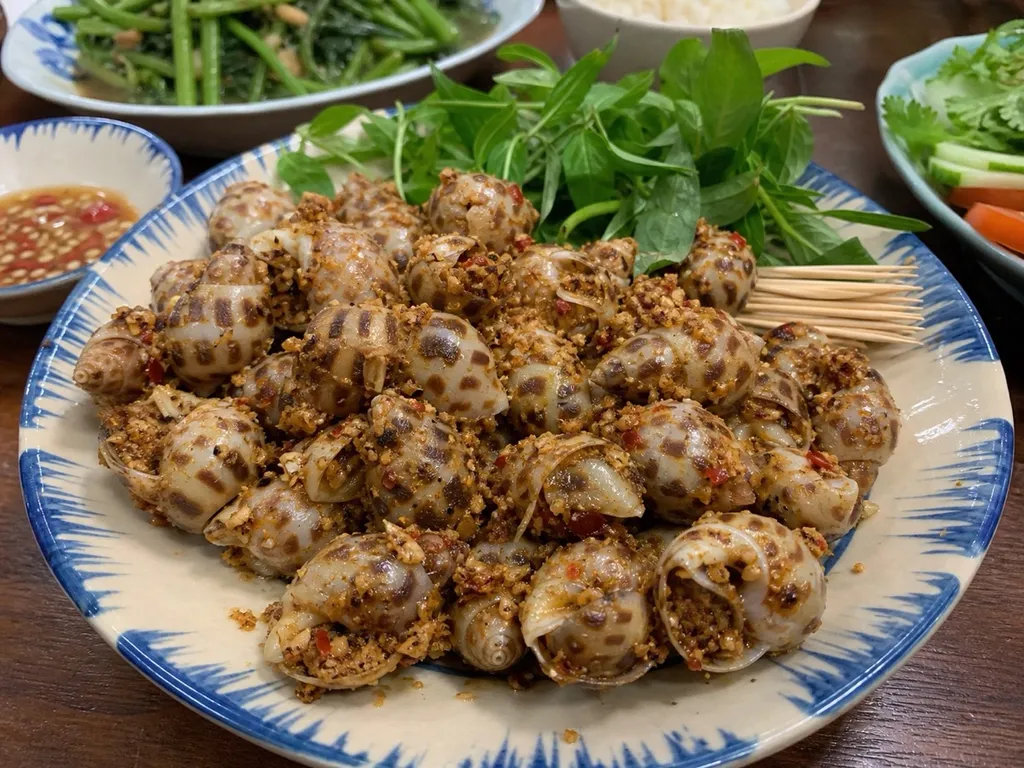 Images are for illustrative purposes only, may be inaccurate, and do not guarantee the presence or absence of specific ingredients.
 Listahan Family Score™
67/100
Works for many families
Score reflects how well this recipe fits a typical busy household. In the app, your Family Score is personalized to your household's allergens, kids, and pantry.
Nutrition
per serving50
Calories
0 g
Protein
5 g
Carbs
4 g
Fat
Estimated per serving. Actual values depend on the brands and portions you use.
Listahan cooking guide
Chef notes & practical guide
Technique notes, ingredient swaps, serve-alongside ideas, storage guidance, and equipment for this recipe.
Cultural context
Oc rang muoi belongs to Vietnam's vibrant street-food culture of oc (snails and shellfish), which thrives along the coastline and in the city alleyways of Ho Chi Minh City. Vendors set up small charcoal braziers on sidewalks from dusk onward, serving snails cooked to order with a bottle of beer and a pile of fresh herbs. The technique of dry-toasting in salt and sugar creates a crunchy, caramelized shell coating that is eaten alongside the meat rather than discarded.
Listahan note
This version uses the dry salt-toast method over high heat to concentrate flavor directly on the shells before adding garlic and chili, giving each snail an aromatic, slightly crispy exterior that you get at the street stalls.
Technique cues
- The wok or skillet must be fully preheated and nearly smoking before the snails go in — the initial high heat sears moisture off the shells and starts the caramelization that defines the dish.
- Toss constantly for the first two minutes to expose every surface to the hot salt; once the shells dry and begin to color, the garlic and chili go in for the final 60 seconds so they toast without burning.
- Vietnamese coriander (rau ram) is added only at the table, not during cooking — its peppery, lemony fragrance is volatile and disappears under heat, so serving it fresh is what distinguishes this dish from a plain stir-fry.
Kitchen flow
- Parallel prep
- Start purging the snails in salted water first, then mince the garlic and chilies and measure the salt and sugar while the snails soak, so everything is ready to go the moment the snails are drained.
- Make-ahead
- Snails can be purged and scrubbed up to 4 hours ahead and kept refrigerated in a dry bowl; do not pre-cook them as they tighten and toughen when reheated.
- Leftover move
- Pick any remaining meat from the shells, toss with rice vermicelli, a squeeze of lime, more rau ram, and a drizzle of fish sauce for a quick noodle bowl the next day.
- Cleanup rhythm
- Deglaze the hot wok with a splash of water immediately after plating — the salt-sugar coating that sticks to the wok dissolves quickly while the pan is still hot, making cleanup straightforward.
Ingredient brief
Role, handling, and swap guidance for each key ingredient.
1 lb sweet snails (Oc Huong), or substitute with whelks/periwinkles
main protein
Purpose: Oc Huong have a naturally sweet, clean flavor that holds up to the bold salt-sugar coating without needing much additional seasoning.
Handling: Purge in salted water with a splash of vinegar for 30 minutes, scrub shells under running water, then drain thoroughly and pat as dry as possible before cooking.
Adaptation: Littleneck clams or small whelks work well; increase cook time by one minute since they are denser.
2 tbsp coarse sea salt
seasoning and abrasive coating
Purpose: Coarse salt acts as both the primary seasoning and a physical medium that conducts dry heat evenly across every shell.
Handling: No prep; add directly to the dry wok with the sugar before the snails go in.
Adaptation: Kosher salt can replace sea salt at the same volume; fine table salt will over-season and should be reduced by half.
1 tbsp sugar
caramelization and balance
Purpose: Sugar caramelizes on the shells in the dry heat, adding a faint sweetness that rounds out the salt and carries flavor into the crevices of the shell.
Handling: Mix with the salt before adding to the pan so they distribute together.
Adaptation: Palm sugar adds a slightly deeper, less sharp sweetness if available.
1 tbsp minced garlic
aromatic top note
Purpose: Garlic added at the end of cooking toasts quickly in the residual oil and adheres to the shells, providing a sharp aromatic that contrasts the salt-sweet coating.
Handling: Mince finely so it cooks through in the 60 seconds it has in the pan; large pieces will be raw or burn unevenly.
Adaptation: Garlic powder used at the salt-stage gives a subtler background note if you want to avoid the finishing-garlic char risk.
2 tsp chili flakes or minced fresh Thai chilies
heat and color
Purpose: Chili adds the essential kick that makes this a street-food dish; it also stains the shells slightly red, which signals the flavor level visually.
Handling: If using fresh Thai chilies, mince finely and add at the same time as the garlic so both finish together.
Adaptation: Gochugaru (Korean chili flakes) works and adds a mild fruitiness; Calabrian chili flakes are also suitable.
Vietnamese coriander (rau ram) for serving
fresh aromatic garnish
Purpose: Rau ram is the defining herb for this dish in Vietnam — its citrusy, peppery bite is the flavor cue that makes oc rang muoi taste authentic rather than generic.
Handling: Tear leaves from the stems and pile loosely on the serving plate; guests wrap or dip the snail meat in them.
Adaptation: A mix of fresh mint and Thai basil approximates the flavor if rau ram is unavailable at Asian grocery stores.
Technique notes
- Dry the snails as thoroughly as possible before they hit the pan — any residual water creates steam that prevents the shells from toasting and the salt-sugar from caramelizing.
- Use a wok lid or splatter screen for the first 90 seconds; the shells pop audibly as moisture escapes and can eject small fragments.
- Serve within five minutes of cooking — the salt coating absorbs moisture from the air and the shells lose their crunch quickly; this is a dish that waits for no one.
Ingredient swaps
- MSG-free option
- Simply omit the MSG or mushroom seasoning; the salt-sugar caramel and garlic provide enough flavor without it.
- Mild heat direction
- Replace Thai chilies with a single mild red Fresno chili, minced, for color and fragrance without significant heat — useful for family gatherings with kids at the table.
- Vegan direction
- King oyster mushrooms cut into thick discs can mimic the chewy texture of snail meat in the salt-toast technique, though they cook faster and need only 3-4 minutes total.
Serve alongside
- cold rice vermicelli noodles with lime wedges for rolling
- fresh rau ram, mint, and perilla on a shared herb plate
- pickled daikon and carrot (do chua) for acidity between bites
- crusty Vietnamese banh mi rolls for scooping
- cold Vietnamese lager (333, Saigon, or Tiger) — the classic pairing for street oc
- sparkling water with lime for a non-alcoholic option that cuts through the salt
- light jasmine green tea served at room temperature
Serving suggestions only — check pairings for your household's allergens.
Storage & reheating
- Snails are best eaten immediately; the salt coating turns sticky within an hour at room temperature.
- If storing, refrigerate shelled meat only in an airtight container for up to 1 day and reheat briefly in a dry skillet.
- Whole cooked snails in shells do not freeze well; the meat becomes rubbery after thawing.
Equipment
- large carbon-steel wok or heavy cast-iron skillet
- wok spatula or long tongs
- splatter screen or wok lid
- small bowl and toothpicks or snail picks for eating
Make this household-aware
Listahan Pro checks this recipe against your household's allergens, finds pantry-aware swaps, builds the shopping list, and helps you plan the week around it.
Plan it in Listahan
Add Ốc Hương Rang Muối (Salt-toasted Sea Snails) to your week, check it against your household's allergens, and build the shopping list automatically.
More Vietnamese recipes
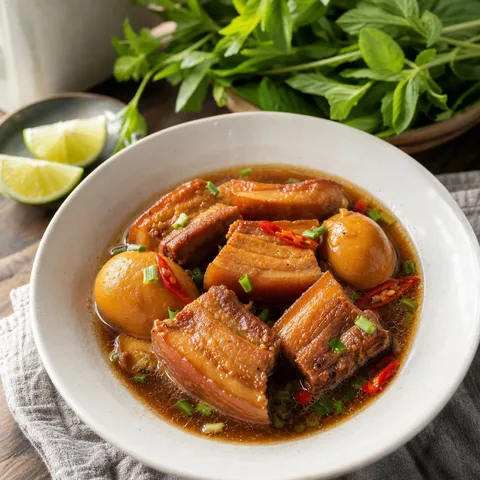 Vietnamese Lens Verified Images are for illustrative purposes only, may be inaccurate, and do not guarantee the presence or absence of specific ingredients.
 Thịt Kho Tàu (Caramelized Pork and Eggs)
Meltingly tender pork belly and hard-boiled eggs braised in a rich, sweet, and savory coconut juice caramel, perfect over steamed rice.
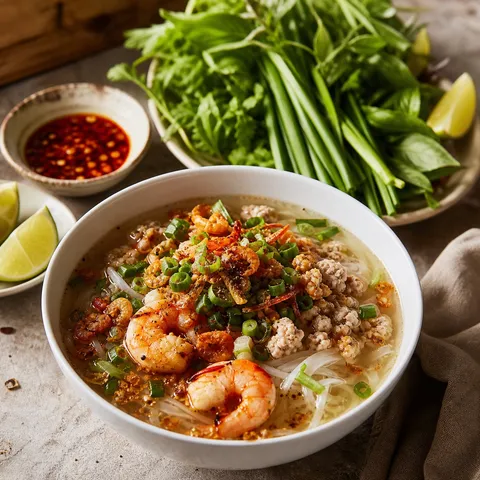 Vietnamese Lens Verified Images are for illustrative purposes only, may be inaccurate, and do not guarantee the presence or absence of specific ingredients.
 Hủ Tiếu (Pork and Seafood Noodle Soup)
A Vietnamese pork-bone broth noodle soup loaded with ground pork, shrimp, and dried shrimp over chewy tapioca noodles, finished with garlic chives and fried garlic.
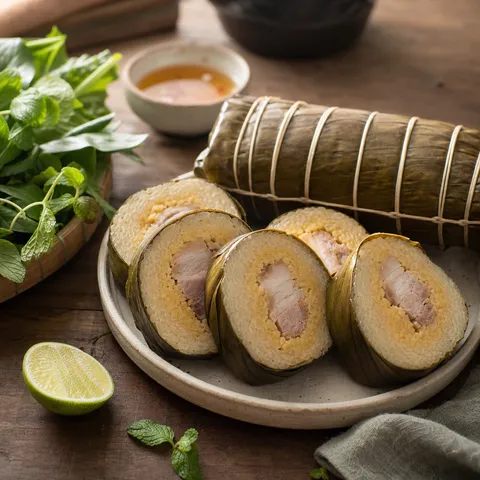 Vietnamese Lens Verified Images are for illustrative purposes only, may be inaccurate, and do not guarantee the presence or absence of specific ingredients.
 Bánh Tét (Cylindrical Sticky Rice Cake)
The Southern equivalent of Bánh Chưng, rolled into a cylinder.