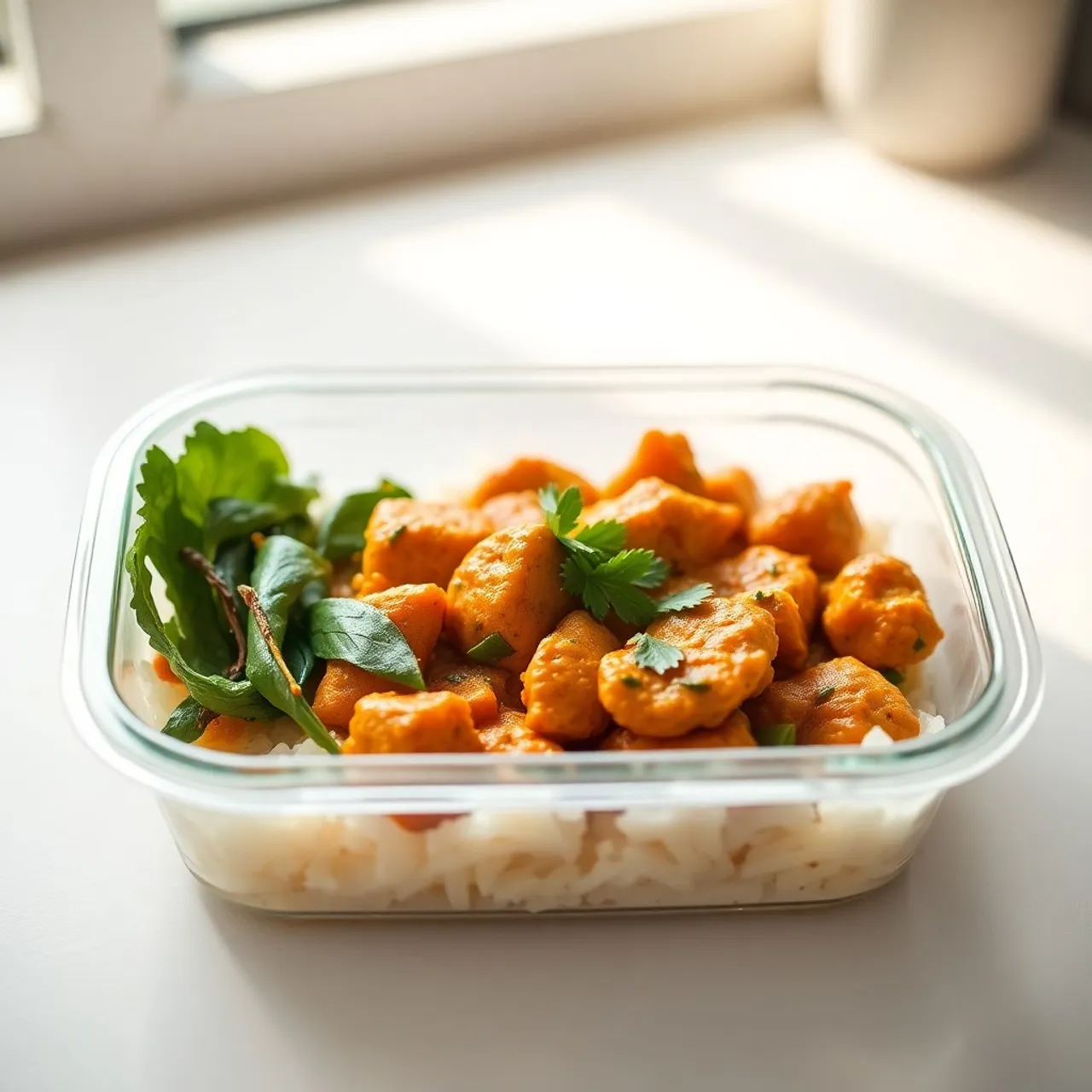
 Meal Prep Images are for illustrative purposes only, may be inaccurate, and do not guarantee the presence or absence of specific ingredients.
 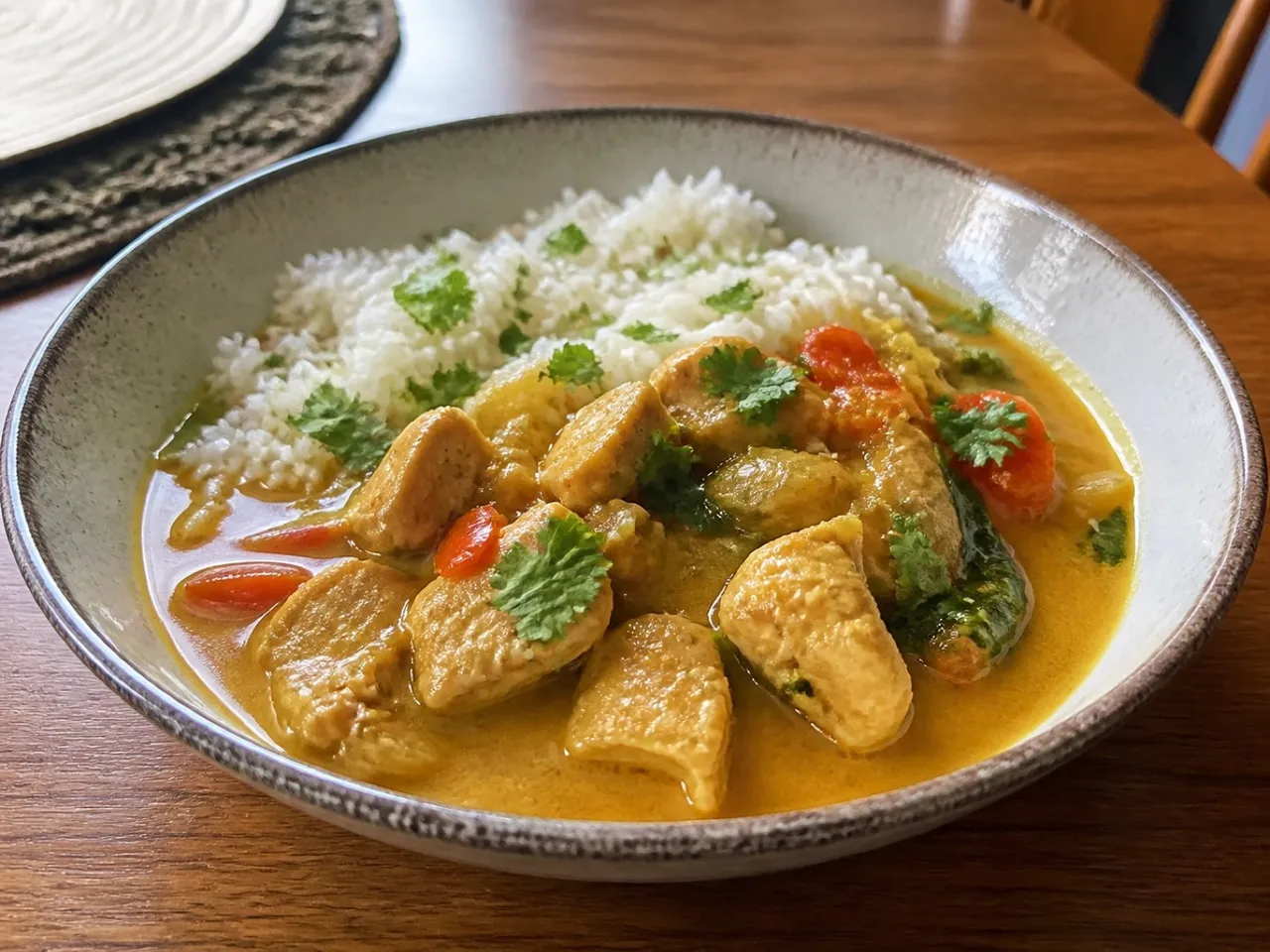 Serving Images are for illustrative purposes only, may be inaccurate, and do not guarantee the presence or absence of specific ingredients.
 Coconut Curry Chicken
Succulent chicken bathed in a fragrant coconut milk curry with lemongrass, ginger, and a gentle chili warmth — aromatic, creamy, and wonderful over jasmine rice.
Contains common allergens
In the app, Listahan checks these against your household automatically.
Good to know
- One-pot
Matched from this dish's own ingredients and timing. Browse more: one-pot dinners
Instructions
6 steps- 1
Heat the oil in a large skillet or pot over medium-high heat. Season the chicken with salt and pepper and sear 4-5 minutes per side until browned (it will finish cooking in the sauce); transfer to a plate.
- 2
Add the onion to the same pot and cook 3-4 minutes until softened, then stir in the garlic, ginger, and curry paste and cook 1 minute until fragrant.
- 3
Pour in the coconut milk, scraping up any browned bits, and add the lemongrass, carrots, fish sauce, and brown sugar.
- 4
Return the chicken to the pot, bring to a gentle simmer, and cook uncovered 12-15 minutes until the chicken reaches 165°F and the carrots are tender.
- 5
Remove the lemongrass stalk, stir in the lime juice, and adjust salt to taste.
- 6
Divide into 4 containers, top with cilantro, and refrigerate up to 4 days; reheat gently so the sauce doesn't break.
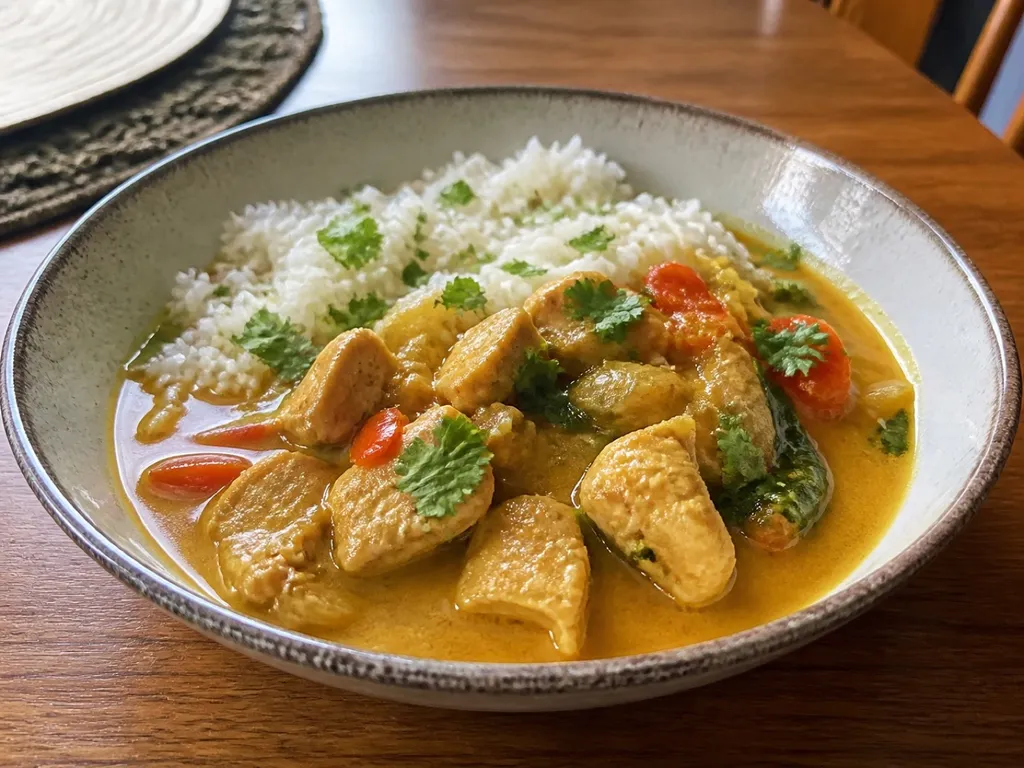 Images are for illustrative purposes only, may be inaccurate, and do not guarantee the presence or absence of specific ingredients.
 Listahan Family Score™
59/100
Works for many families
Score reflects how well this recipe fits a typical busy household. In the app, your Family Score is personalized to your household's allergens, kids, and pantry.
Nutrition
per serving630
Calories
46 g
Protein
14 g
Carbs
46 g
Fat
Estimated per serving. Actual values depend on the brands and portions you use.
Listahan cooking guide
Chef notes & practical guide
Technique notes, ingredient swaps, serve-alongside ideas, storage guidance, and equipment for this recipe.
Cultural context
Coconut curry chicken draws on the broader Southeast Asian tradition of building a curry from a paste fried in coconut cream before the rest of the liquid goes in — a technique common across Thai, Malaysian, and Indonesian kitchens. This home version uses a jarred red curry paste rather than building one from scratch, which trades some depth for a dish that comes together in well under an hour.
Listahan note
Searing the chicken before it goes into the sauce, rather than poaching it directly in the coconut milk, gives this version real browned flavor that a straight simmer wouldn't develop.
Technique cues
- Fry the curry paste in a spoonful of the thick coconut cream that separates at the top of the can before adding the rest of the liquid — this blooms the paste's oils the same way toasting spices does in other cuisines.
- Sear the chicken first rather than simmering it raw in the sauce; the browned bits left in the pan after searing dissolve into the curry and add real depth.
- Remove the lemongrass stalk before serving — it's there to infuse flavor, not to be eaten, and stays fibrous even after a long simmer.
Kitchen flow
- Parallel prep
- Slice the onion, garlic, and carrots while the chicken sears so the next steps move without a pause.
- Make-ahead
- The curry tastes even better the next day once the lemongrass and curry paste have had more time to infuse the sauce.
- Leftover move
- Spoon leftovers over rice noodles instead of rice for a quick change of texture.
- Cleanup rhythm
- Deglaze the pan with the coconut milk right after searing the chicken so the browned bits don't dry onto the pot.
Ingredient brief
Role, handling, and swap guidance for each key ingredient.
Boneless skinless chicken thighs
main protein
Purpose: Thighs stay tender and juicy through the simmer in a way that lean breast meat doesn't, and their fat enriches the sauce slightly.
Handling: Cut into bite-size pieces and sear before adding to the sauce for browned flavor.
Adaptation: Bone-in thighs add more flavor to the sauce if simmered longer and shredded before serving.
Coconut milk
sauce base
Purpose: Coconut milk gives the curry its signature richness and balances the heat from the curry paste and chili flakes.
Handling: Don't shake the can before opening — scoop the thick cream off the top first to fry the paste in, then add the rest.
Adaptation: A lower-fat coconut milk works but yields a noticeably thinner sauce.
Red curry paste
flavor base
Purpose: Curry paste is the primary source of heat, aromatics, and color in the dish, built from chilies, lemongrass, and galangal.
Handling: Fry in fat before adding liquid to release its full aroma rather than letting it simmer raw in the sauce.
Adaptation: Green curry paste swaps in for a brighter, herbier flavor with similar heat.
Lemongrass
aromatic
Purpose: Fresh lemongrass adds a citrusy, floral note that dried or powdered substitutes can't fully replicate.
Handling: Bruise the stalk with the back of a knife before adding so it releases more of its oils into the broth.
Adaptation: A strip of lime zest is the closest substitute if fresh lemongrass isn't available.
Fish sauce
umami seasoning
Purpose: Fish sauce adds a deep savory backbone that salt alone can't provide and is foundational to the dish's flavor.
Handling: Add to taste — brands vary significantly in saltiness and intensity.
Adaptation: Soy sauce is a reasonable substitute for those avoiding fish, though the flavor shifts noticeably.
Carrots
vegetable component
Purpose: Carrots add sweetness and color, and hold their shape through the simmer better than softer vegetables would.
Handling: Slice into thin rounds so they cook through in the same time as the chicken.
Adaptation: Bell pepper or snap peas can stand in or be added alongside for more vegetable variety.
Technique notes
- Don't rush the sear on the chicken — those browned bits left in the pan are most of the dish's depth, and skipping this step makes the curry taste flatter.
- Taste before adding the full tablespoon of fish sauce; brands vary enough in saltiness that it's easy to oversalt if you add it all at once.
- Reheat gently over low heat rather than a hard boil — coconut milk sauces can break (separate) if reheated too aggressively.
Ingredient swaps
- Milder direction
- Cut the red pepper flakes and use a mild curry paste for a version that’s kid-friendly without losing the coconut-curry flavor.
- Vegetable-forward direction
- Add a handful of snap peas or bell pepper strips in the last 5 minutes for more color and crunch.
- Lower-fat direction
- Use light coconut milk and add a spoonful of natural peanut butter for body without the full fat content.
Serve alongside
- Steamed jasmine rice
- Cucumber salad
- Roti or naan
- Thai iced tea
- Sparkling water with lime
Serving suggestions only — check pairings for your household's allergens.
Storage & reheating
- Refrigerate up to 4 days; the flavor deepens as the curry paste and lemongrass continue to infuse the sauce.
- Freezes acceptably up to 2 months, though coconut milk sauces can separate slightly on thawing — stir well when reheating.
- Reheat gently over low heat rather than a hard boil to keep the sauce from breaking.
Equipment
- Large skillet or pot
- Tongs for searing
- Cutting board
- Wooden spoon
Make this household-aware
Listahan Pro checks this recipe against your household's allergens, finds pantry-aware swaps, builds the shopping list, and helps you plan the week around it.
Plan it in Listahan
Add Coconut Curry Chicken to your week, check it against your household's allergens, and build the shopping list automatically.
More Meal Prep recipes
 Meal Prep Lens Verified Images are for illustrative purposes only, may be inaccurate, and do not guarantee the presence or absence of specific ingredients.
 BBQ Pulled Pork Stuffed Sweet Potatoes
A hearty, smoky, and sweet combination that balances protein and complex carbohydrates perfectly.
 Meal Prep Lens Verified Images are for illustrative purposes only, may be inaccurate, and do not guarantee the presence or absence of specific ingredients.
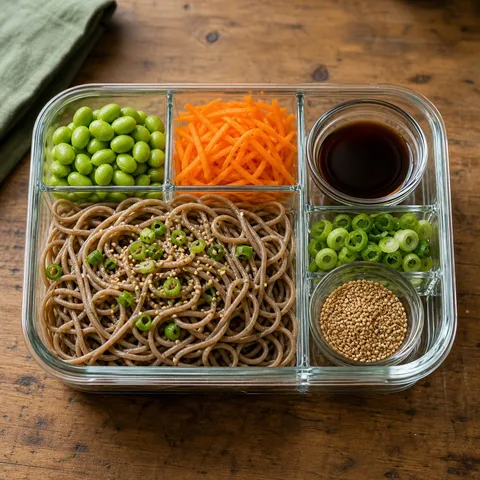
 Soba Noodle Salad
Buckwheat soba noodles tossed in a sesame-ginger dressing with edamame, shredded carrots, and scallions — nutty, refreshing, and endlessly satisfying served cold.
 Meal Prep Lens Verified Images are for illustrative purposes only, may be inaccurate, and do not guarantee the presence or absence of specific ingredients.
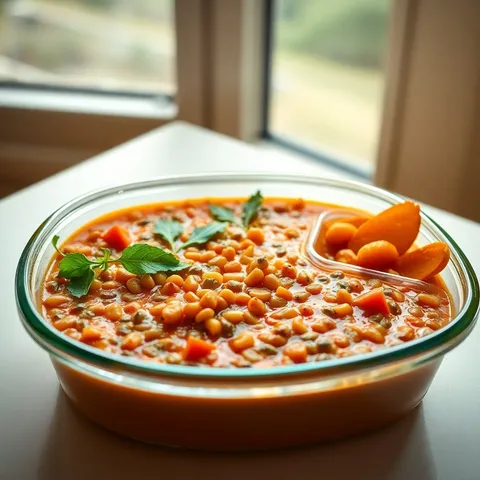
 Rustic French Lentil Soup
A deeply nourishing and earthy soup that is rich in plant-based protein and freezes exceptionally well.