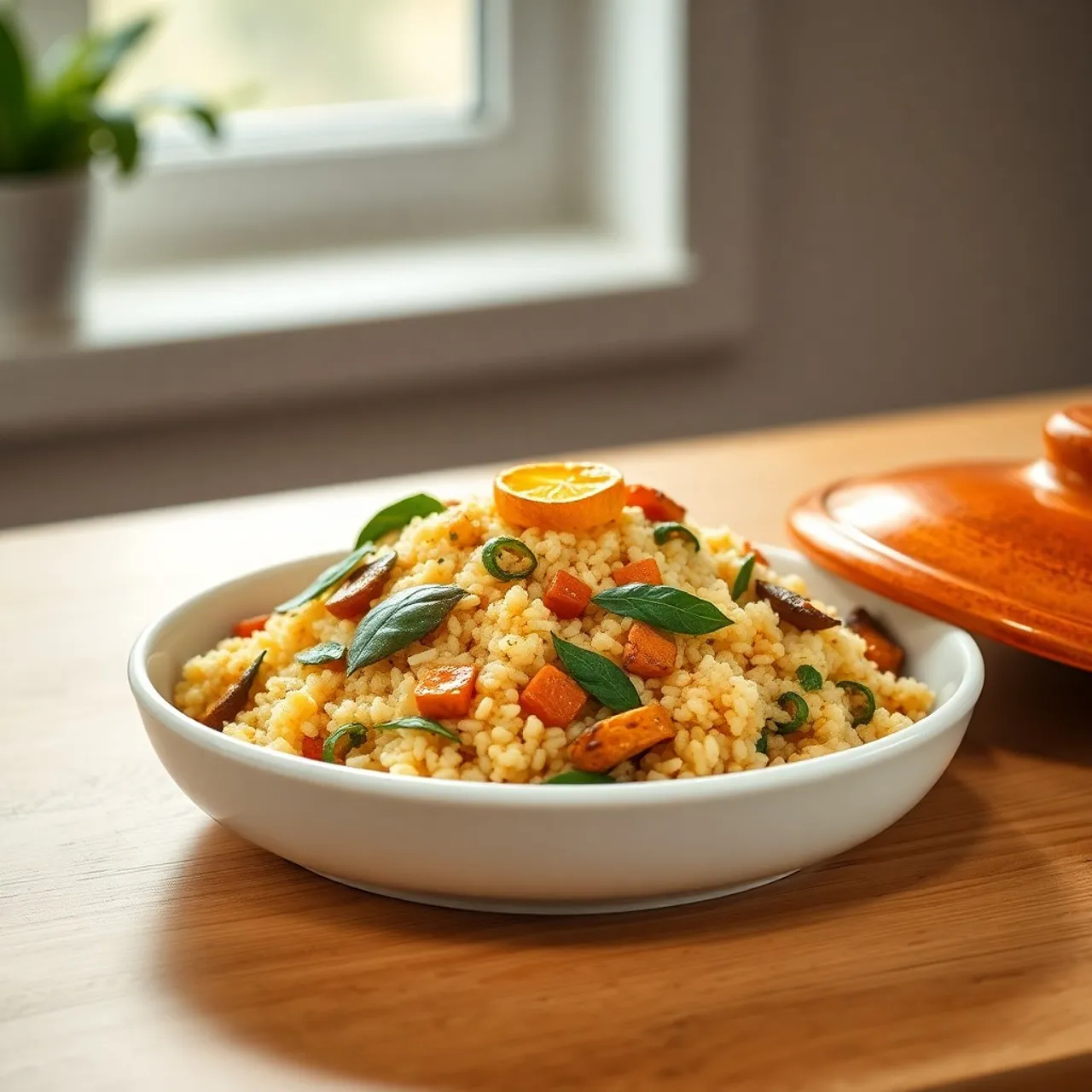
 North African Images are for illustrative purposes only, may be inaccurate, and do not guarantee the presence or absence of specific ingredients.
 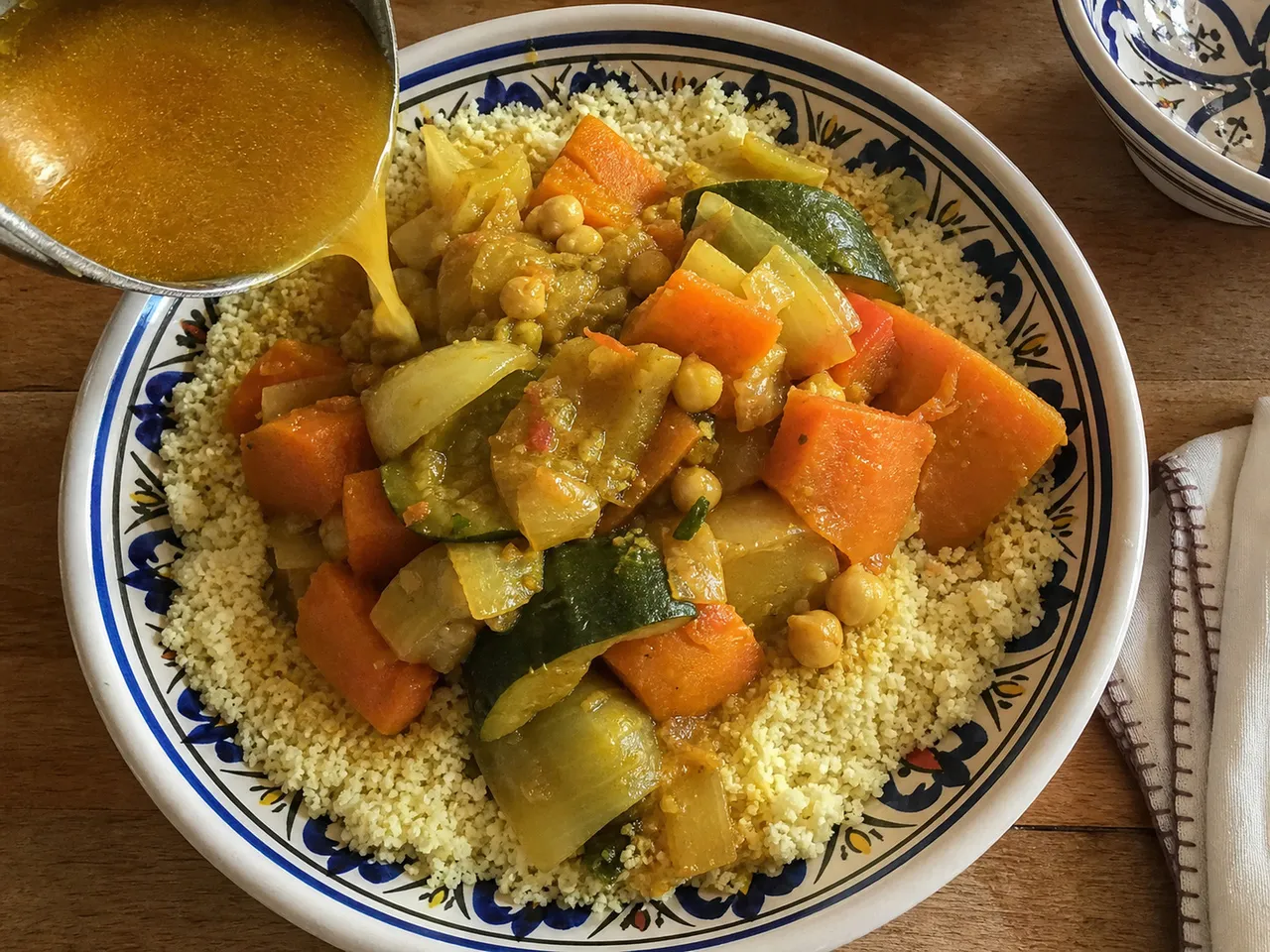 Serving Images are for illustrative purposes only, may be inaccurate, and do not guarantee the presence or absence of specific ingredients.
 Couscous with Vegetables
Fluffy steamed semolina crowned with tender root vegetables and a fragrant broth of cumin, saffron, and cinnamon — North Africa's ultimate comfort grain.
Contains common allergens
In the app, Listahan checks these against your household automatically.
Good to know
- One-pot
Matched from this dish's own ingredients and timing. Browse more: one-pot dinners
Instructions
5 steps- 1
Prepare Broth: In a large pot or couscoussiere, bring the broth to a boil. Add turmeric, ginger, salt, and pepper.
- 2
Cook Root Vegetables: Add carrots and turnips to the boiling broth. Lower heat and simmer for 20 minutes until they start to soften.
- 3
First Steam: Place couscous in the steamer basket over the simmering broth. Steam uncovered for 15 minutes.
- 4
Add Soft Vegetables: Add the zucchini, pumpkin, and chickpeas to the broth. Fluff the couscous with a fork and a little water or oil, then return to steam.
- 5
Final Steam & Serve: Steam for another 15-20 minutes until all vegetables are tender and couscous is fluffy. Serve couscous topped with the vegetables and ladled with broth.
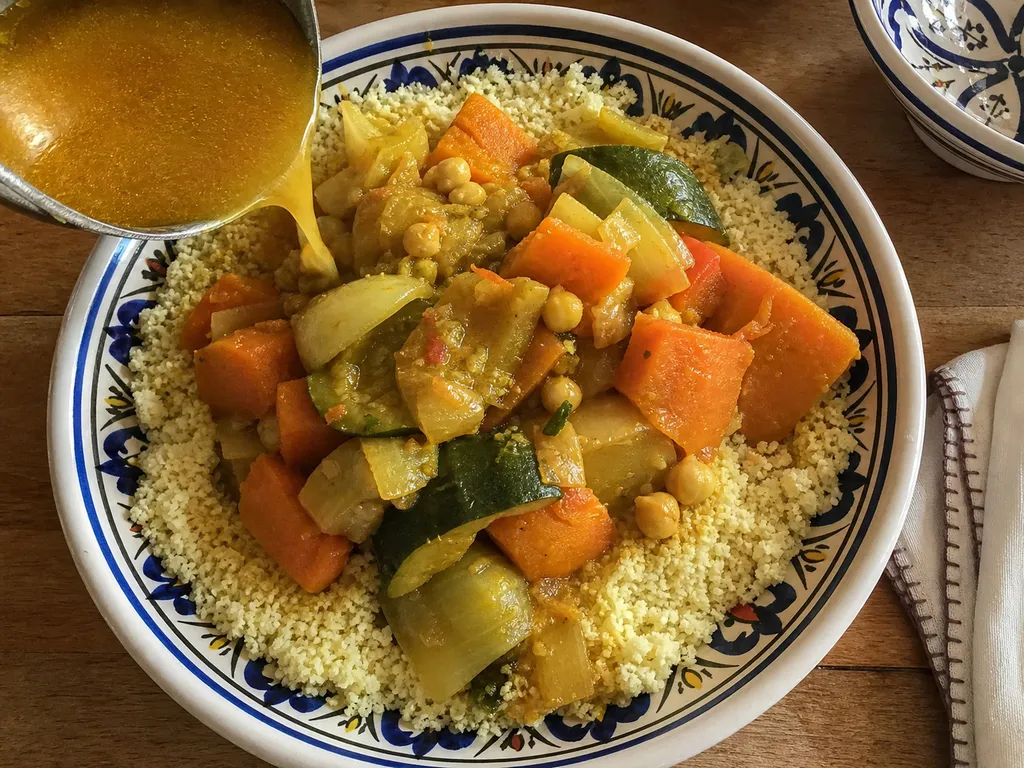 Images are for illustrative purposes only, may be inaccurate, and do not guarantee the presence or absence of specific ingredients.
 Listahan Family Score™
67/100
Works for many families
Score reflects how well this recipe fits a typical busy household. In the app, your Family Score is personalized to your household's allergens, kids, and pantry.
Nutrition
per serving405
Calories
17 g
Protein
81 g
Carbs
2 g
Fat
Estimated per serving. Actual values depend on the brands and portions you use.
Listahan cooking guide
Chef notes & practical guide
Technique notes, ingredient swaps, serve-alongside ideas, storage guidance, and equipment for this recipe.
Cultural context
Couscous is the staple grain of the Maghreb, a region spanning Morocco, Algeria, Tunisia, and Libya, where the dish has been prepared for at least a thousand years. Traditionally steamed over a simmering pot of broth and vegetables in a two-tiered vessel called a couscoussier, the grain absorbs the rising steam and flavored vapor rather than direct liquid, giving it a light, separate texture that instant couscous cannot fully replicate. The United Nations Educational, Scientific and Cultural Organization recognized couscous as Intangible Cultural Heritage in 2020 in a joint nomination from Algeria, Mauritania, Morocco, and Tunisia.
Listahan note
This version uses instant couscous and a straightforward broth-based approach suited to weeknight cooking while still layering the broth with turmeric and ginger for authentic warmth. The vegetables are simmered long enough to yield a light, savory broth that doubles as a sauce.
Technique cues
- Pour the hot broth over the dry instant couscous, cover tightly, and let it absorb off heat for exactly 5 minutes; lifting the lid too early or too late results in either a steaming-hot raw texture or a gluey clump.
- Fluff the couscous with a fork rather than a spoon, working from the edges inward in light lifting strokes to separate the grains and incorporate a tablespoon of olive oil or butter without crushing the texture.
- Root vegetables like carrots and turnips need 20-25 minutes in the simmering broth to soften fully; add the zucchini and pumpkin in the last 10 minutes so they cook through without turning mushy and collapsing.
Kitchen flow
- Parallel prep
- Peel and cut all vegetables before starting the broth; once the pot is on, the only task is timing when each vegetable goes in.
- Make-ahead
- The vegetable broth and cooked vegetables can be made up to 2 days ahead and refrigerated; reheat and pour over freshly made couscous.
- Leftover move
- Leftover couscous and vegetables can be formed into patties and pan-fried for a crispy fritter, or tossed cold as a grain salad with lemon and herbs.
- Cleanup rhythm
- One pot for the broth and a heat-safe bowl for the couscous; rinse the bowl immediately after serving while the couscous is still loose.
Ingredient brief
Role, handling, and swap guidance for each key ingredient.
2 cups dry couscous
starchy base
Purpose: Couscous absorbs the broth and carries the flavor of everything simmered above it; grain quality affects how well it separates.
Handling: Measure into a heat-safe bowl with a tight lid or plate to cover; have it ready before the broth finishes.
Adaptation: For a gluten-free direction, use millet or cauliflower rice prepared separately and served underneath the vegetables and broth.
3 carrots (peeled and halved)
sweetness and body
Purpose: Carrots cook long enough to release natural sugars into the broth, contributing a gentle sweetness that rounds the savory spices.
Handling: Halve lengthwise for faster cooking and a more attractive presentation; keep pieces large so they hold their shape.
Adaptation: Parsnips bring a more complex, peppery sweetness and work equally well in the same quantities.
1 can chickpeas (drained)
protein and texture
Purpose: Chickpeas add a nutty, filling element that makes this a complete vegetarian meal without adding cooking time.
Handling: Drain and rinse before adding to the pot in the last 15 minutes of cooking so they heat through without becoming mushy.
Adaptation: Dried chickpeas soaked overnight and pre-cooked give a more toothsome result for those who find canned too soft.
1 tsp turmeric
color and warmth
Purpose: Turmeric gives the broth its golden color and adds a mild, earthy warmth distinct from the heat of chili or the sweetness of paprika.
Handling: Stir into the broth at the start of cooking so it fully blooms and distributes throughout the liquid.
Adaptation: Saffron steeped in a tablespoon of warm water adds a more aromatic, floral quality in place of turmeric for a festive version.
1 tsp ginger
bright warmth
Purpose: Ground ginger lifts the flavor of the vegetable broth and pairs naturally with turmeric in North African couscous preparations.
Handling: Use ground ginger for even distribution; fresh grated ginger can replace it at double the quantity for a sharper effect.
Adaptation: Ras el hanout at 1 teaspoon replaces both the ginger and turmeric for a more complex, traditional spice profile.
Technique notes
- Toast the dry couscous in a dry pan for 2 minutes before adding the hot broth; the light toasting adds a nutty flavor that distinguishes homemade couscous from cafeteria-style.
- Season the broth aggressively because the couscous absorbs it and dilutes salt considerably; taste the broth and correct seasoning before pouring.
- Serve the broth in a small pitcher alongside the plated couscous and vegetables so everyone can add as much or as little liquid as they prefer.
Ingredient swaps
- Gluten-free direction
- Replace the couscous with millet, quinoa, or rice cooked separately; the vegetable stew and broth work over any grain.
- Protein boost
- Add cubed lamb shoulder or chicken thighs to the broth at the start and simmer until tender for a meat version that uses the same vegetables.
- Vegan direction
- Use vegetable broth and omit any butter for the couscous; the dish is already vegan in this form.
Serve alongside
- harissa paste on the side for heat
- simple carrot and raisin salad with cumin vinaigrette
- flatbread for scooping broth
- mint tea
- sparkling water with lemon
- light, dry white wine such as a Moroccan Guerrouane
Serving suggestions only — check pairings for your household's allergens.
Storage & reheating
- Store couscous and vegetables separately in the fridge for up to 3 days; the couscous will harden slightly when cold.
- Reheat the vegetables and broth on the stovetop over medium heat and pour over freshly made couscous, or microwave the couscous with a splash of water to loosen.
- Cooked vegetables freeze well for up to 2 months; the couscous does not freeze well and should be made fresh.
Equipment
- large heavy-bottomed pot with a lid
- heat-safe bowl with a tight-fitting plate or lid
- fork for fluffing
Make this household-aware
Listahan Pro checks this recipe against your household's allergens, finds pantry-aware swaps, builds the shopping list, and helps you plan the week around it.
Plan it in Listahan
Add Couscous with Vegetables to your week, check it against your household's allergens, and build the shopping list automatically.
More North African recipes
 North African Lens Verified Images are for illustrative purposes only, may be inaccurate, and do not guarantee the presence or absence of specific ingredients.
 Msemmen
Layered and folded semolina flatbread cooked on a griddle until the outside crisps and the inside stays wonderfully chewy — perfect with honey or harissa.
 North African Lens Verified Images are for illustrative purposes only, may be inaccurate, and do not guarantee the presence or absence of specific ingredients.
 Brik
Crispy paper-thin pastry folded around a whole egg, tuna, and parsley then flash-fried until golden — Tunisia's beloved street snack, eaten fast before the yolk escapes.
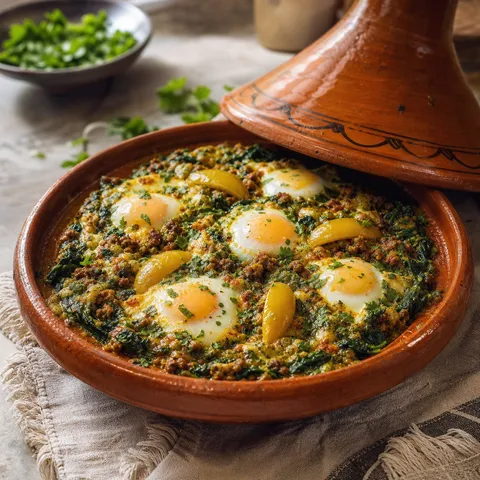 North African Lens Verified Images are for illustrative purposes only, may be inaccurate, and do not guarantee the presence or absence of specific ingredients.
 Tajine El Bey
Tunisia's grand layered bake of spiced lamb, eggs, and cheese baked in a deep crust — a celebration dish with silky, complex layers in every slice.