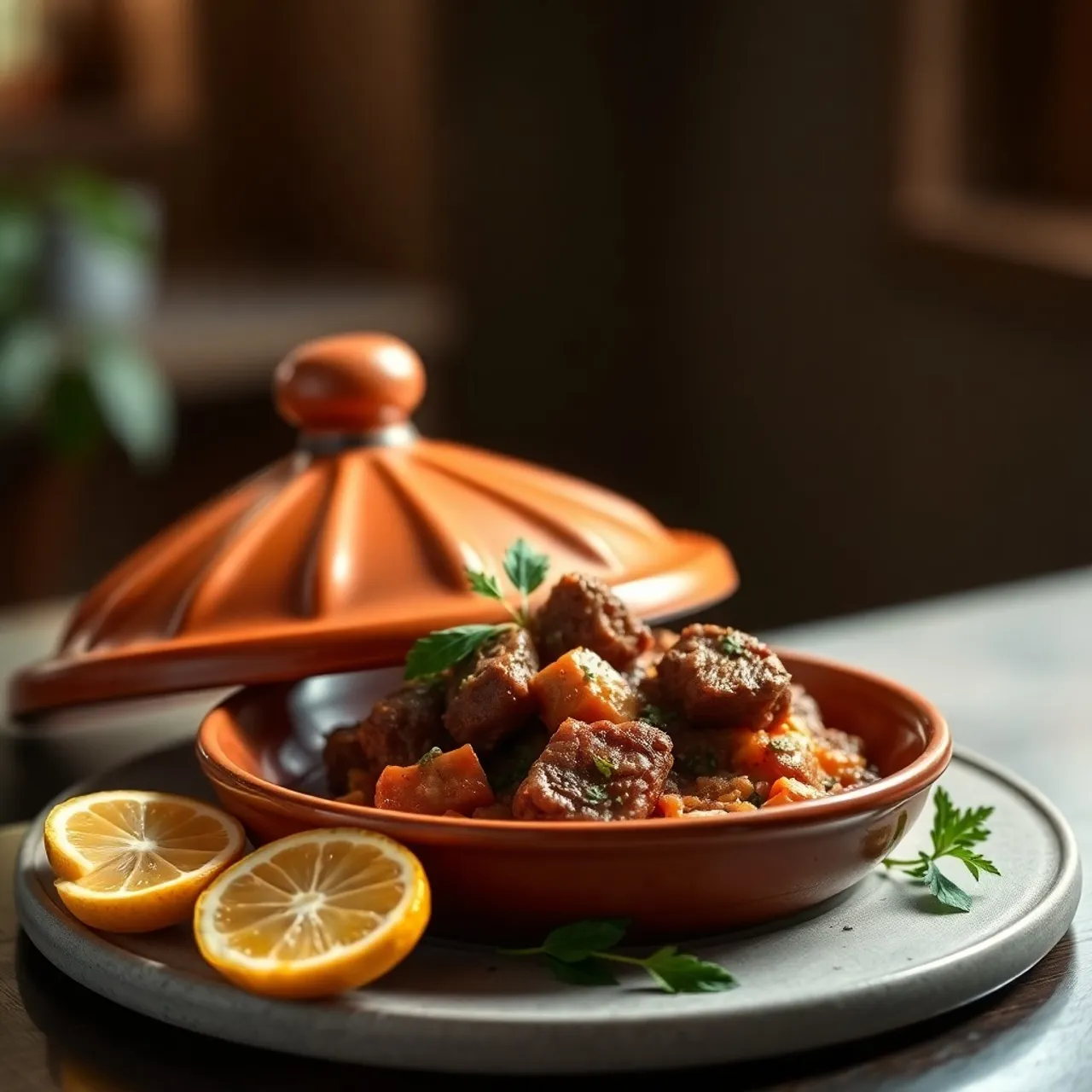
 North African Images are for illustrative purposes only, may be inaccurate, and do not guarantee the presence or absence of specific ingredients.
 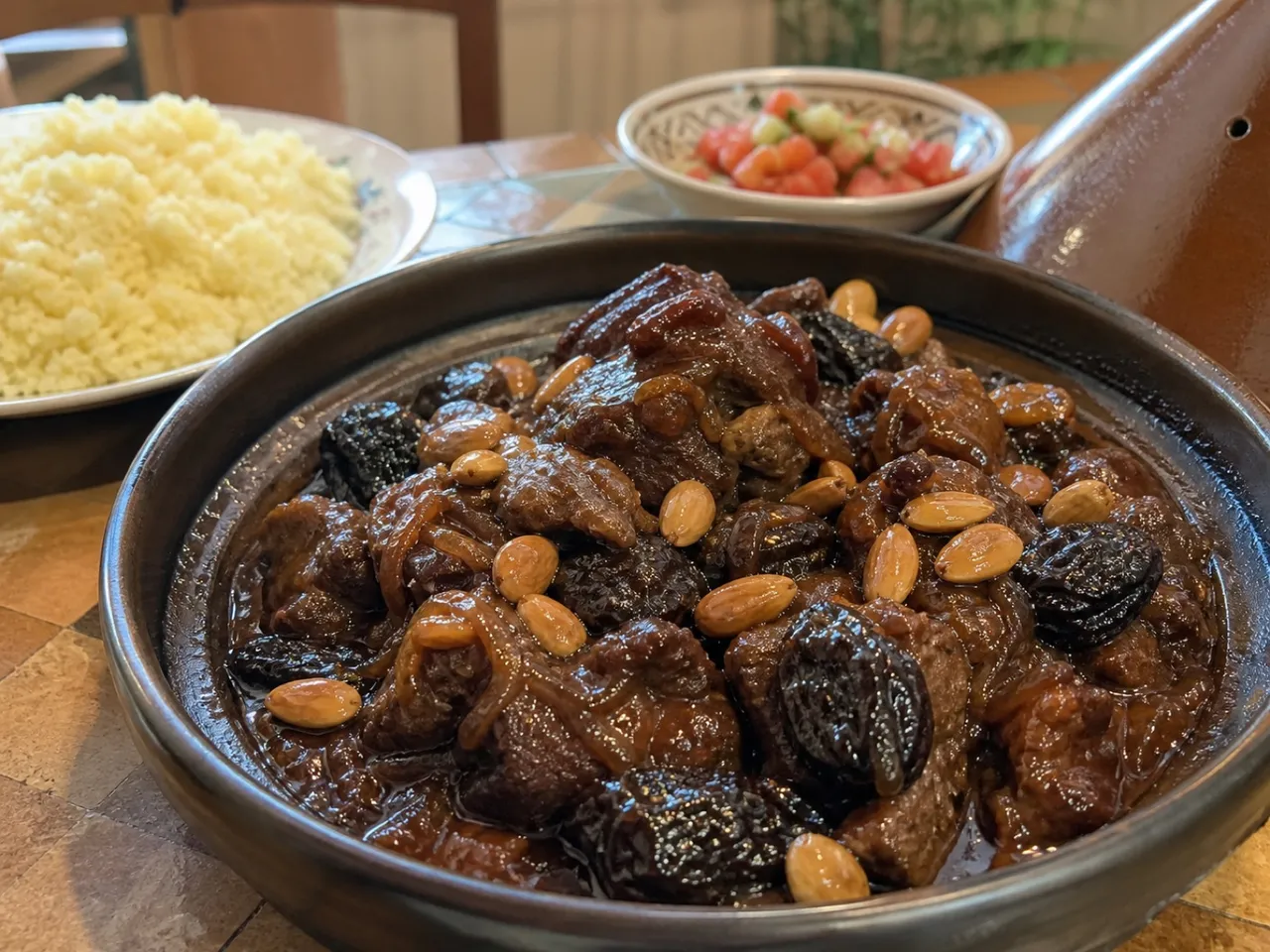 Serving Images are for illustrative purposes only, may be inaccurate, and do not guarantee the presence or absence of specific ingredients.
 Lamb Tagine
Meltingly tender lamb slow-cooked with preserved lemon, olives, and warming spices in a clay pot until the sauce turns silky and deeply aromatic.
Contains common allergens
In the app, Listahan checks these against your household automatically.
Instructions
5 steps- 1
Sear the Meat: Heat 2 tbsp oil in a heavy-bottomed pot or tagine. Brown the lamb cubes on all sides over medium-high heat.
- 2
Add Aromatics & Spices: Stir in grated onion, garlic, ginger, cinnamon, and turmeric. Sauté for 3 minutes until fragrant.
- 3
Slow Cook: Add enough water to barely cover the meat. Bring to a boil, then reduce to a low simmer, cover, and cook for 1.5 hours until the lamb is fork-tender.
- 4
Prepare Prunes: In a separate small saucepan, simmer the prunes in a little water with honey and a pinch of cinnamon for 10 minutes until plump and syrupy.
- 5
Combine & Garnish: Add the prune mixture to the lamb. Simmer together for 5-10 minutes. Garnish with toasted almonds before serving.
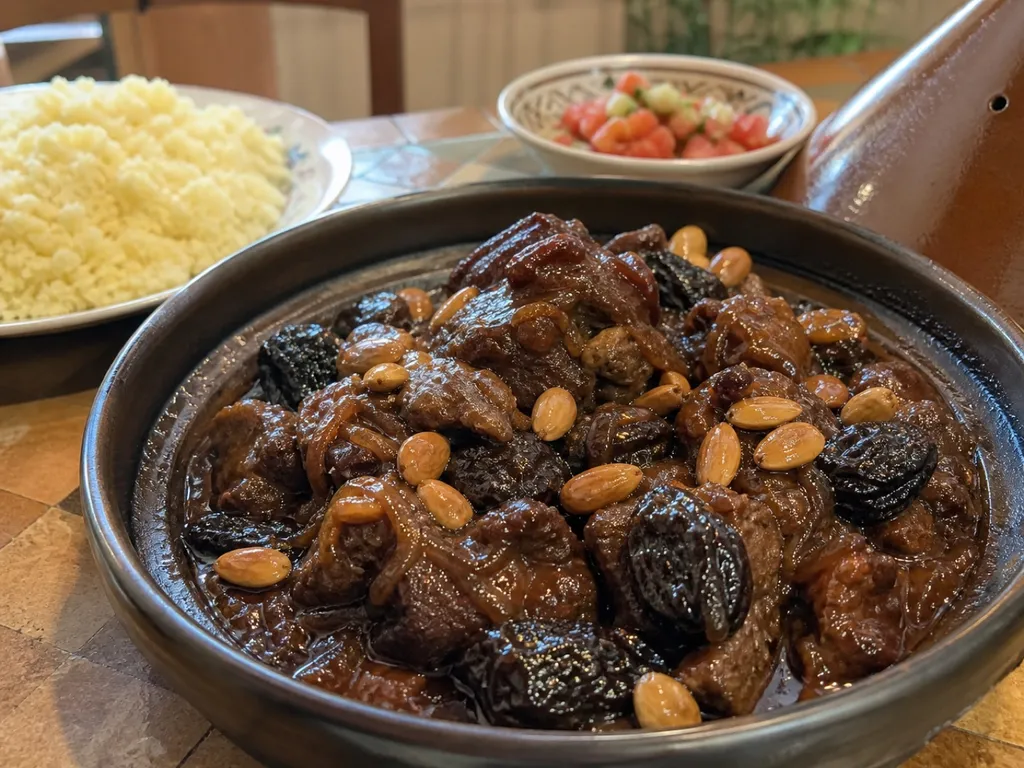 Images are for illustrative purposes only, may be inaccurate, and do not guarantee the presence or absence of specific ingredients.
 Listahan Family Score™
72/100
Good fit for most families
Score reflects how well this recipe fits a typical busy household. In the app, your Family Score is personalized to your household's allergens, kids, and pantry.
Nutrition
per serving615
Calories
47 g
Protein
11 g
Carbs
42 g
Fat
Estimated per serving. Actual values depend on the brands and portions you use.
Listahan cooking guide
Chef notes & practical guide
Technique notes, ingredient swaps, serve-alongside ideas, storage guidance, and equipment for this recipe.
Cultural context
The tagine is both the name of a North African dish and the conical earthenware vessel it is traditionally cooked in, named for the Berber word for the pot itself. The cone-shaped lid creates a continuous cycle of condensation, returning the steam to the base and allowing meat and aromatics to braise slowly with very little added liquid. Moroccan cuisine most famously uses the tagine format to combine savory meat with sweet elements like dried fruit, honey, and cinnamon, a tradition rooted in medieval Arabic cuisine that made its way to the Maghreb through the trade routes of Al-Andalus.
Listahan note
This version layers prunes, honey, and cinnamon against the richness of lamb shoulder, building the characteristic Moroccan sweet-savory profile in a heavy Dutch oven for those without a traditional tagine. The low, slow cook is not optional; it is what transforms tough shoulder meat into something silky.
Technique cues
- Brown the lamb cubes in batches without crowding the pot; crowding causes the meat to steam rather than sear, preventing the Maillard crust that provides the foundational savory depth the sweet ingredients need as a counterpoint.
- Grated onion rather than diced onion melts entirely into the braising liquid over the long cook, acting as a thickener and providing sweetness without any visible onion texture in the final dish.
- Add the prunes in the final 20-30 minutes of cooking; earlier and they dissolve into the sauce, which is useful for thickness but removes the appealing contrast of intact, plump fruit alongside tender lamb.
Kitchen flow
- Parallel prep
- Grate the onion and measure the spices while the lamb browns in batches; the prunes need no prep beyond measuring.
- Make-ahead
- Lamb tagine tastes better the next day as the flavors continue to develop; make up to 2 days ahead and reheat gently on the stovetop with a splash of water.
- Leftover move
- Leftover tagine shredded off the bone makes an outstanding filling for flatbread wraps with yogurt and fresh cilantro.
- Cleanup rhythm
- Brown the lamb in the same Dutch oven used for braising; deglaze with a splash of water to lift the fond rather than scrubbing, which captures all the flavor.
Ingredient brief
Role, handling, and swap guidance for each key ingredient.
2 lbs lamb shoulder (cubed)
primary protein
Purpose: Shoulder is the correct cut for braising because its collagen converts to gelatin over long cooking, giving the sauce a rich, almost glossy body.
Handling: Cut into roughly 2-inch cubes and pat dry before browning; moisture on the surface prevents proper searing.
Adaptation: Bone-in lamb neck pieces or short ribs work with the same method and provide even more body from the bones.
1 cup dried prunes
sweet counterpoint
Purpose: Prunes provide the defining sweet-savory tension of this Moroccan preparation and soften into the sauce, releasing natural sugars that balance the lamb's richness.
Handling: Leave whole and add in the final 20-30 minutes of cooking so they plump but hold their shape.
Adaptation: Dried apricots, medjool dates, or raisins each bring a slightly different sweetness level; apricots add a tartness that works particularly well.
1/2 tsp cinnamon
warm spice bridge
Purpose: Cinnamon is the key spice that links the savory lamb with the sweet fruit, a pairing rooted in medieval Moroccan flavor philosophy.
Handling: Add at the start of braising so it fully disperses throughout the sauce rather than tasting raw or sharp.
Adaptation: A combination of cinnamon and a pinch of allspice brings more complexity to the spice profile.
2 tbsp honey
sauce glaze
Purpose: Honey added near the end thickens the sauce slightly and deepens the glaze on the prunes and lamb, adding a floral sweetness distinct from the dried fruit.
Handling: Stir in during the last 10 minutes of cooking; adding too early causes it to caramelize and potentially scorch.
Adaptation: Pomegranate molasses replaces honey for a tart, complex alternative that is less sweet but more nuanced.
1/4 cup toasted almonds
textural finish
Purpose: Toasted almonds are scattered over the finished dish at the table, providing crunch and a nutty richness that cuts through the richness of the braised lamb.
Handling: Toast in a dry pan over medium heat for 3-4 minutes until fragrant and golden; watch carefully as they burn quickly.
Adaptation: Toasted pine nuts or sesame seeds provide a similar textural element for those with tree nut allergies, though the flavor differs.
Technique notes
- Season the lamb generously and let it sit at room temperature for 30 minutes before browning; cold meat drops the pan temperature sharply and makes even searing difficult.
- Keep the heat very low once the braising liquid is in the pot; the sauce should barely shiver rather than boil, which would tighten the lamb fibers instead of relaxing them.
- Finish the plated dish with a generous handful of chopped fresh cilantro alongside the almonds; the fresh herb is not optional and provides a brightness that makes the rich sauce feel lighter.
Ingredient swaps
- Alternative protein
- Chicken thighs on the bone work with the same technique at a shorter braise time of about 45 minutes; use bone-in pieces for the best texture.
- Dairy-free option
- No milk, butter or cream is called for; serve a non-dairy yogurt alternative on the side if you want one. Note this recipe does use toasted almonds.
- Lower sugar
- Reduce the prunes to 1/2 cup and omit the honey for a less sweet, more savory preparation that still has the characteristic Moroccan spice profile.
Serve alongside
- steamed couscous to absorb the sauce
- Moroccan carrot salad with harissa and cumin
- flatbread for scooping
- simple green salad with orange segments and olives
- mint tea
- a medium-bodied red wine such as a Moroccan Syrah or a Grenache
Serving suggestions only — check pairings for your household's allergens.
Storage & reheating
- Refrigerate leftovers in a sealed container for up to 3 days; the flavor improves overnight.
- Reheat gently on the stovetop over low heat with a splash of water to loosen the sauce, or covered in a 300F oven for 20 minutes.
- Freeze the braised lamb in its sauce for up to 3 months; thaw overnight in the fridge and reheat gently, adding toasted almonds fresh.
Equipment
- large Dutch oven or heavy braising pot with a lid
- box grater for the onion
- small dry skillet for toasting almonds
Make this household-aware
Listahan Pro checks this recipe against your household's allergens, finds pantry-aware swaps, builds the shopping list, and helps you plan the week around it.
Plan it in Listahan
Add Lamb Tagine to your week, check it against your household's allergens, and build the shopping list automatically.
More North African recipes
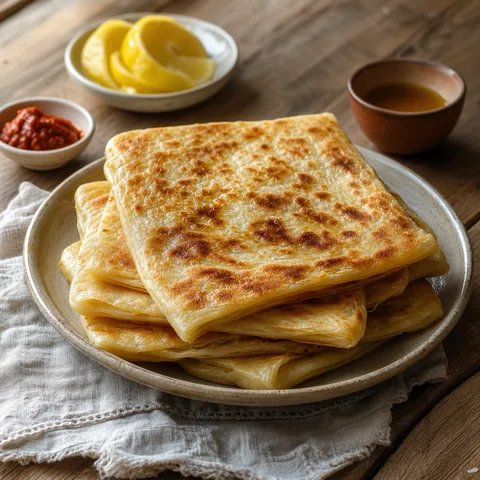 North African Lens Verified Images are for illustrative purposes only, may be inaccurate, and do not guarantee the presence or absence of specific ingredients.
 Msemmen
Layered and folded semolina flatbread cooked on a griddle until the outside crisps and the inside stays wonderfully chewy — perfect with honey or harissa.
 North African Lens Verified Images are for illustrative purposes only, may be inaccurate, and do not guarantee the presence or absence of specific ingredients.
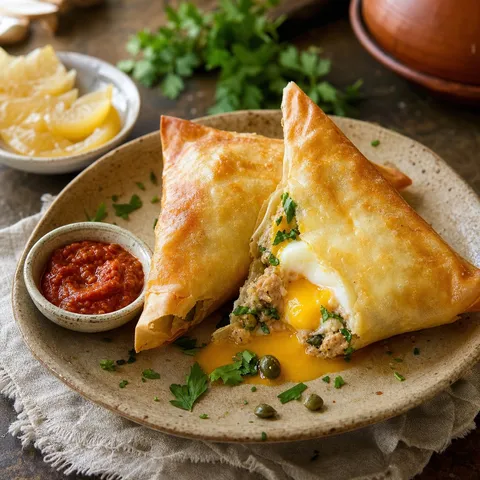
 Brik
Crispy paper-thin pastry folded around a whole egg, tuna, and parsley then flash-fried until golden — Tunisia's beloved street snack, eaten fast before the yolk escapes.
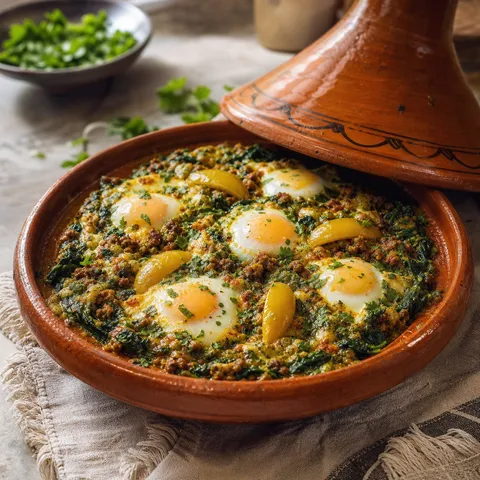 North African Lens Verified Images are for illustrative purposes only, may be inaccurate, and do not guarantee the presence or absence of specific ingredients.
 Tajine El Bey
Tunisia's grand layered bake of spiced lamb, eggs, and cheese baked in a deep crust — a celebration dish with silky, complex layers in every slice.