 Food Lens Images are for illustrative purposes only, may be inaccurate, and do not guarantee the presence or absence of specific ingredients.
 Food Lens · Recipe ingredients
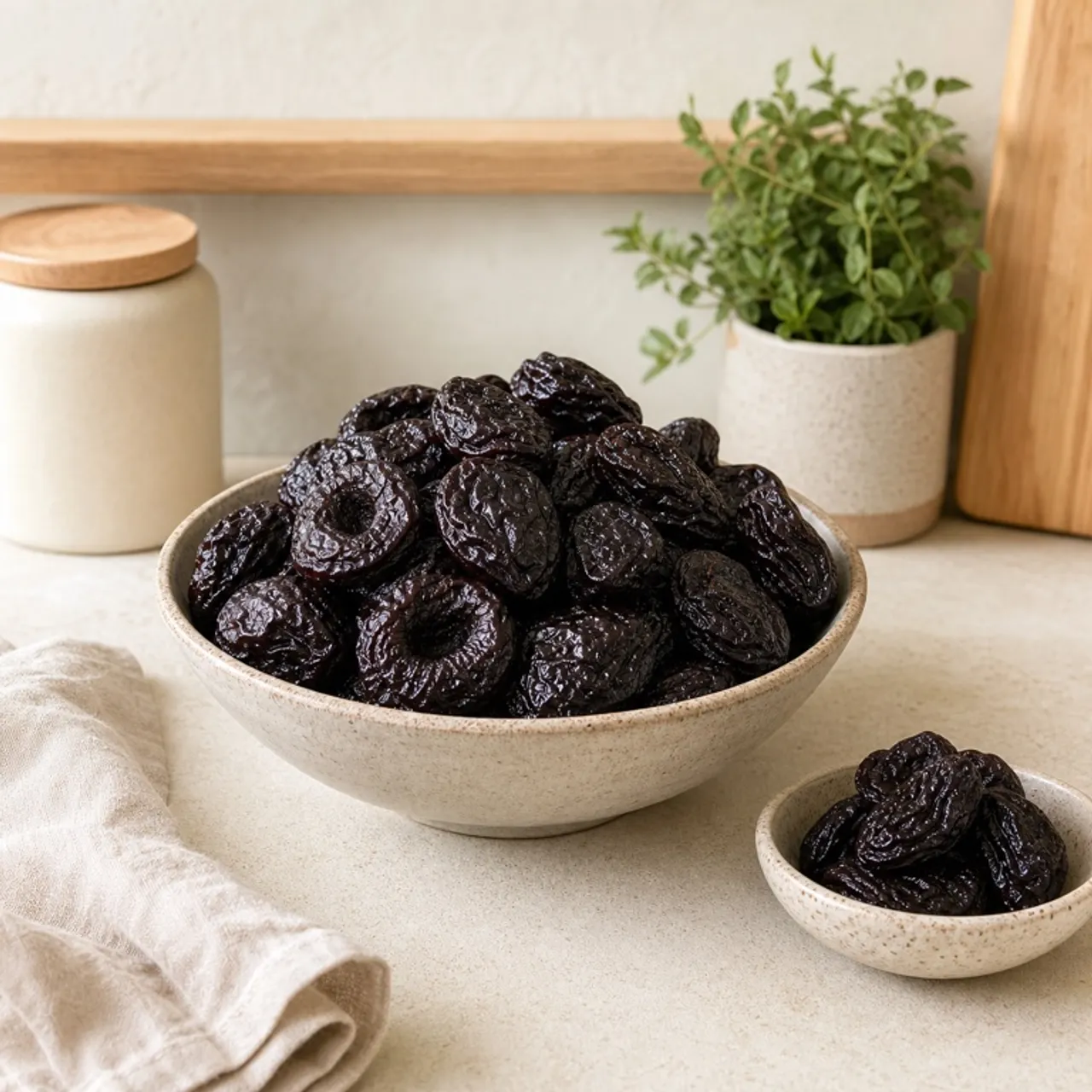
Prunes
Rich, deep, and intensely sweet with notes of dried fruit, dark honey, and subtle tannic complexity. Their flavor has a wine-like depth — jammy and concentrated, with a slight tartness underlying the sweetness. The texture is dense, chewy, and pleasantly sticky when eaten fresh from the bag.
Lens VerifiedPrunes are dried plums — specifically varieties bred for high sugar content that allows them to be dried without fermenting. Sweet, chewy, and deeply flavored, they are one of the most versatile dried fruits in the kitchen. Their concentrated sweetness, natural pectin content, and ability to add moisture and complexity make them valuable in both sweet and savory cooking, from stews and tagines to cakes and energy bars.
Where it comes from
Prunes have been dried and traded across Europe and the Middle East for centuries, with the Agen region of France becoming the most celebrated center of prune production from the medieval period onward.
Varieties — The most prized variety is the French Pruneaux d'Agen (a PDO-protected product). California prunes are the most widely available in North American markets and come in pitted and unpitted forms. Some markets also carry small, intensely flavored Italian prugne secche.
In French cuisine, poulet aux pruneaux (chicken with prunes) and the legendary Pruneaux à l'Armagnac are classic preparations. Moroccan and Algerian cooking uses prunes in slow-cooked lamb and chicken tagines alongside almonds and ras el hanout. Eastern European baking traditions, particularly Czech and Slovak, feature prune-filled pastries (kolache, buchty).
In a modern kitchen — Prunes have undergone a culinary rebranding — repackaged as 'dried plums' in North America and repositioned as a sophisticated pantry ingredient. They appear in charcuterie boards, dark chocolate confections, and restaurant-quality braises, shedding their old-fashioned health-food image.
Buying it
Choose prunes that are plump, moist, and soft to the touch — avoid dry, shriveled, or hardened prunes, which indicate age. Pitted prunes are more convenient for most cooking uses; unpitted retain moisture slightly better for long braises. Look for prunes with no added sugar or oil, as quality prunes are naturally sweet enough.
Storing it
Store prunes in a sealed container or bag in a cool, dry pantry. If they harden or dry out further, they're still usable — just simmer briefly in water to soften; discard any that develop mold.
Keeps about 1 year in the pantry.
Out of prunes? Good swaps
General cooking guidance — always check the labels on the products you use. Listahan’s allergen checks run automatically when you plan a recipe in the app. Not medical advice.
Recipes that use prunes
Common questions about prunes
Is prunes vegan?
Prunes is generally plant-based and suitable for a vegan diet, but brands differ — confirm on the label.
What can I use instead of prunes?
Good swaps include , . Each behaves a little differently — see the swaps above for notes, and always check labels for allergens.
How do I store prunes?
Store prunes in a sealed container or bag in a cool, dry pantry. If they harden or dry out further, they're still usable — just simmer briefly in water to soften; discard any that develop mold. It keeps about 1 year in the pantry.
More recipe ingredients
See all


Make prunes about your kitchen — with Listahan Pro
Everything above is free, forever. Pro adds the Household Lens — the same food, seen for your family:
-
Checked for each member
Flags prunes per person against your household's allergies and school rules — not just a generic "contains" tag.
-
Pantry-aware
Knows whether you already have it, what is running low, and the best swap from what is in your kitchen tonight.
-
What it costs near you
A real price from the Presyo community index, so you can plan the budget — not guess.
-
Your household memory
Who likes it, plus your own private notes — brand, where you keep it, who skips it.
Allergen safety is always free — Pro adds the automation, never the safety.
Cook with prunes — safely
Plan a recipe in Listahan and the household allergen check runs automatically — every plan, every swap, every lunchbox. Safety is never paywalled.