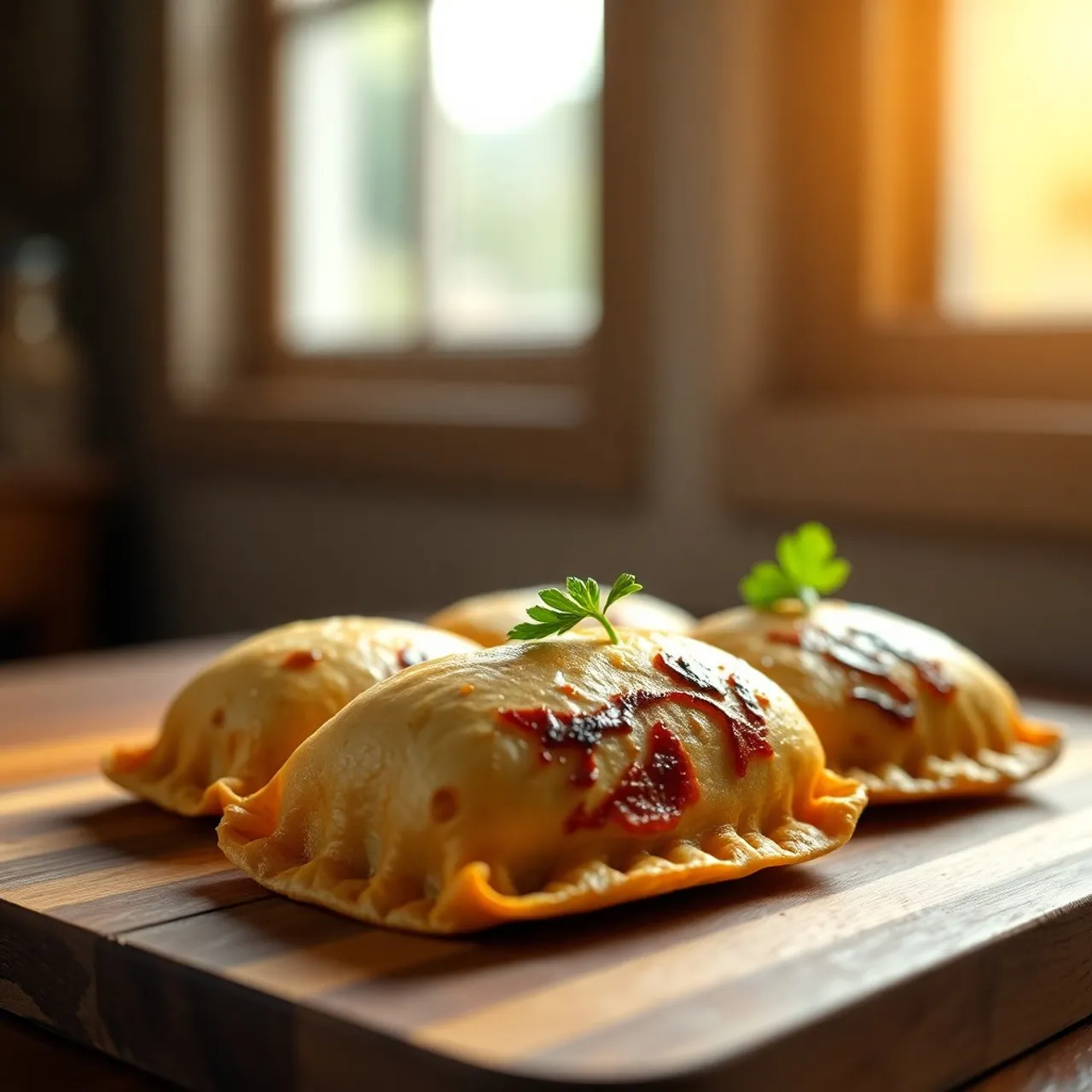
 South American Images are for illustrative purposes only, may be inaccurate, and do not guarantee the presence or absence of specific ingredients.
 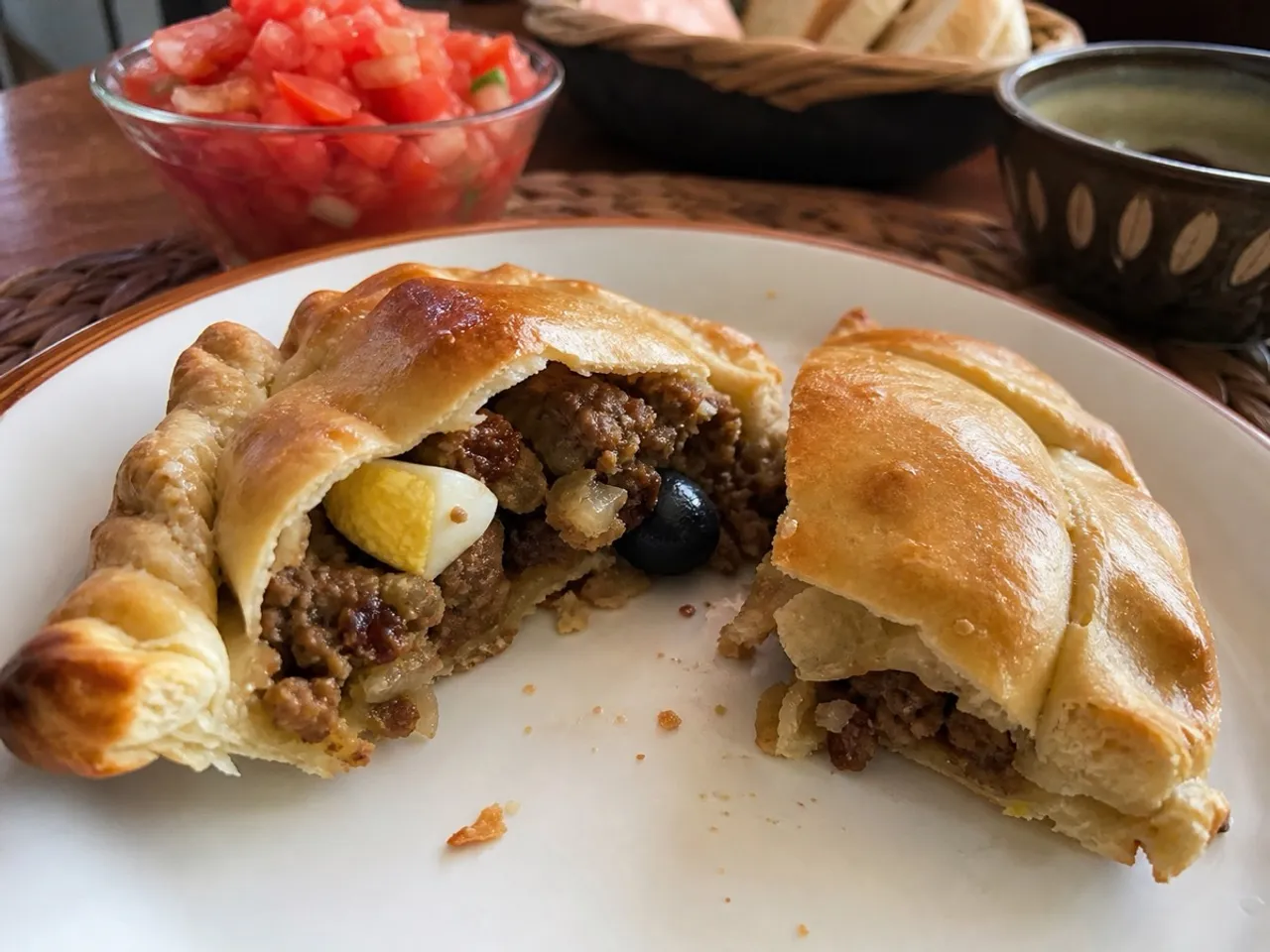 Serving Images are for illustrative purposes only, may be inaccurate, and do not guarantee the presence or absence of specific ingredients.
 Empanadas de Pino
Chile's classic baked empanadas — golden pastry filled with juicy beef braised with onion, cumin, olives, raisins, and hard-boiled egg in every bite.
Contains common allergens
In the app, Listahan checks these against your household automatically.
Instructions
7 steps- 1
Heat oil in a large pot over medium heat and cook the onions slowly, stirring often, until very soft and translucent but not browned, about 20 minutes.
- 2
Add the chopped beef, cumin, paprika, and oregano, and cook, breaking up the meat, until it just loses its raw color, about 8 minutes.
- 3
Pour in the broth, reduce heat to low, and simmer uncovered until the liquid is mostly absorbed and the mixture is moist but not soupy, about 15 minutes; season with salt and pepper.
- 4
Spread the pino filling on a tray and refrigerate for at least 1 hour, until fully cooled and firm.
- 5
Preheat oven to 400F. Place a generous spoonful of cold filling on each dough disc, along with a few raisins, an olive, and a piece of hard-boiled egg.
- 6
Fold the dough over the filling and crimp the edges firmly into a braided seal to prevent leaking.
- 7
Brush each empanada with beaten egg and bake for 25 to 30 minutes, until deep golden brown.
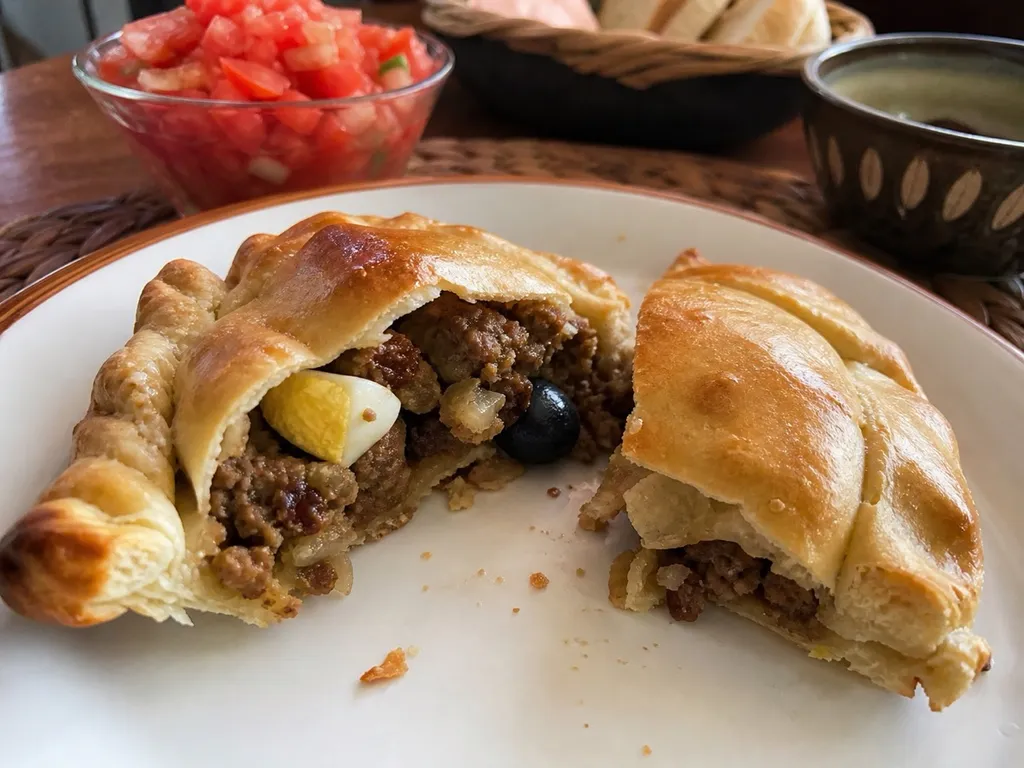 Images are for illustrative purposes only, may be inaccurate, and do not guarantee the presence or absence of specific ingredients.
 Listahan Family Score™
63/100
Works for many families
Score reflects how well this recipe fits a typical busy household. In the app, your Family Score is personalized to your household's allergens, kids, and pantry.
Nutrition
per serving295
Calories
30 g
Protein
2 g
Carbs
17 g
Fat
Estimated per serving. Actual values depend on the brands and portions you use.
Listahan cooking guide
Chef notes & practical guide
Technique notes, ingredient swaps, serve-alongside ideas, storage guidance, and equipment for this recipe.
Cultural context
Empanadas de pino are Chile's national empanada, a baked turnover whose name comes from pino, the Mapuche-derived word for the filling of minced beef, onion, raisins, black olives, and hard-boiled egg. They are an icon of Fiestas Patrias in September, when families bake them by the dozen, and the contrast of savory beef against sweet raisins is what sets the Chilean version apart from its Argentine and Colombian cousins. A proper one is large, folded into a neat rectangle, and brushed to a deep golden shine.
Listahan note
This version cooks the pino a day ahead so it chills firm and easy to wrap, and keeps the classic egg, olive, and raisin trio inside a sturdy baked dough.
Technique cues
- Cook the pino filling the day before and chill it cold, because a firm, set filling is far easier to wrap and keeps the juices from blowing out the dough.
- Season the beef and onion heavily with cumin and aji color, since the filling must carry the whole empanada through baking.
- Seal the edges with a little water and a firm crimp, and poke or leave a tiny vent so steam escapes without bursting a seam.
Kitchen flow
- Parallel prep
- Make the pino and boil the eggs while the dough rests, so both filling and garnish are cold and ready to assemble.
- Make-ahead
- The pino is actually better made a day ahead, and assembled raw empanadas can be frozen on a tray before baking.
- Leftover move
- Reheat baked empanadas in the oven to recrisp the crust, and chop any extra into a quick hash with potatoes.
- Cleanup rhythm
- Assemble on a single floured board, keep a small water bowl for sealing nearby, and bake on parchment so the sheet wipes clean.
Ingredient brief
Role, handling, and swap guidance for each key ingredient.
ground beef
filling base
Purpose: Minced beef cooked down with onion is the savory heart of the pino.
Handling: Brown with a generous quantity of diced onion and chill before filling.
Adaptation: Ground turkey or a plant-based mince works for a lighter or meat-free version.
onion
filling backbone
Purpose: Chilean pino uses nearly as much onion as meat, cooked soft for sweetness and moisture.
Handling: Dice fine and cook slowly until translucent before adding the beef.
Adaptation: Leeks can replace part of the onion for a milder note.
raisins
sweet contrast
Purpose: Raisins are the defining Chilean touch, their sweetness playing against the cumin-spiced beef.
Handling: Stir in near the end so they plump but do not dissolve.
Adaptation: Chopped dried apricots give a similar sweet pop if raisins are not on hand.
black olives
briny accent
Purpose: A whole olive tucked into each empanada is traditional and cuts the richness with salt and brine.
Handling: Place one olive per empanada during assembly.
Adaptation: Pitted green olives work, though black is the classic look.
hard-boiled egg
filling garnish
Purpose: A wedge of egg adds richness and is part of the expected reveal when you bite in.
Handling: Boil, cool, and cut into wedges, adding one per empanada.
Adaptation: Leave out for an egg-free filling without much loss to structure.
cumin and aji color
signature seasoning
Purpose: Ground cumin and paprika-based aji color give the pino its warm color and deep savory flavor.
Handling: Toast briefly with the onion to bloom before the beef goes in.
Adaptation: Smoked paprika plus a little extra cumin approximates the aji color.
Technique notes
- Roll the dough sturdy rather than thin so it holds the juicy filling without tearing.
- Brush the tops with beaten egg or milk for the deep glossy bronze that marks a proper Chilean empanada.
- Bake hot and on the lower rack so the bottom crust sets and browns before the top overcooks.
Ingredient swaps
- Meat-free direction
- Use a seasoned mushroom-and-lentil mince in place of beef, keeping the raisins, olive, and egg.
- Make-ahead freezer direction
- Freeze assembled raw empanadas and bake from frozen, adding a few minutes.
- Lower-sodium direction
- Cut the olives and use unsalted broth in the pino, leaning on cumin and onion for flavor.
Serve alongside
- Pebre
- Ensalada chilena
- Pastel de choclo
- Green salad
- Chilean red wine
- Mote con huesillo
- Pisco sour
Serving suggestions only — check pairings for your household's allergens.
Storage & reheating
- Keep baked empanadas in the fridge for up to four days and reheat in a 350F oven to restore the crust. Assembled raw empanadas freeze for up to two months and bake straight from frozen. Avoid the microwave, which makes the crust soggy.
Equipment
- Rolling pin
- Large baking sheet
- Pastry brush
- Bench scraper or round cutter
Make this household-aware
Listahan Pro checks this recipe against your household's allergens, finds pantry-aware swaps, builds the shopping list, and helps you plan the week around it.
Plan it in Listahan
Add Empanadas de Pino to your week, check it against your household's allergens, and build the shopping list automatically.
More South American recipes
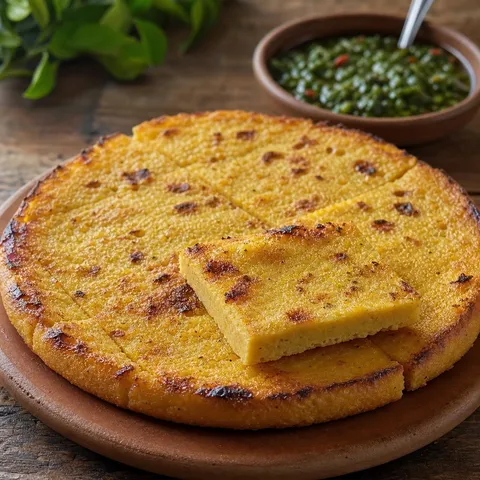 South American Lens Verified Images are for illustrative purposes only, may be inaccurate, and do not guarantee the presence or absence of specific ingredients.
 Fainá
Buenos Aires's thin chickpea flatbread, baked until golden and fragrant — simple, crispy-edged, and traditionally eaten layered right on top of a pizza slice.
 South American Lens Verified Images are for illustrative purposes only, may be inaccurate, and do not guarantee the presence or absence of specific ingredients.
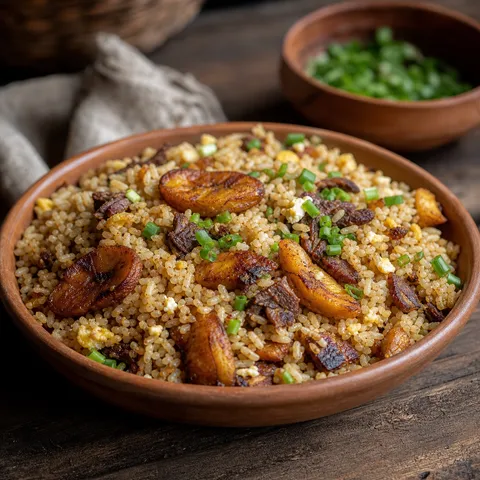
 Majadito
Bolivia's rustic one-pot comfort — dried charque beef simmered down with rice, tomato, and spices into a savory, fragrant dish topped with a fried egg.
 South American Lens Verified Images are for illustrative purposes only, may be inaccurate, and do not guarantee the presence or absence of specific ingredients.
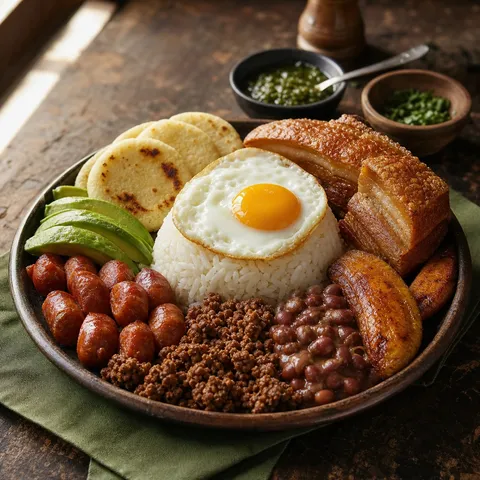
 Bandeja Paisa
Colombia's legendary tray of abundance — red beans, white rice, chicharrón, chorizo, fried egg, plantains, and avocado all piled high for a satisfying feast.