 Mediterranean Images are for illustrative purposes only, may be inaccurate, and do not guarantee the presence or absence of specific ingredients.
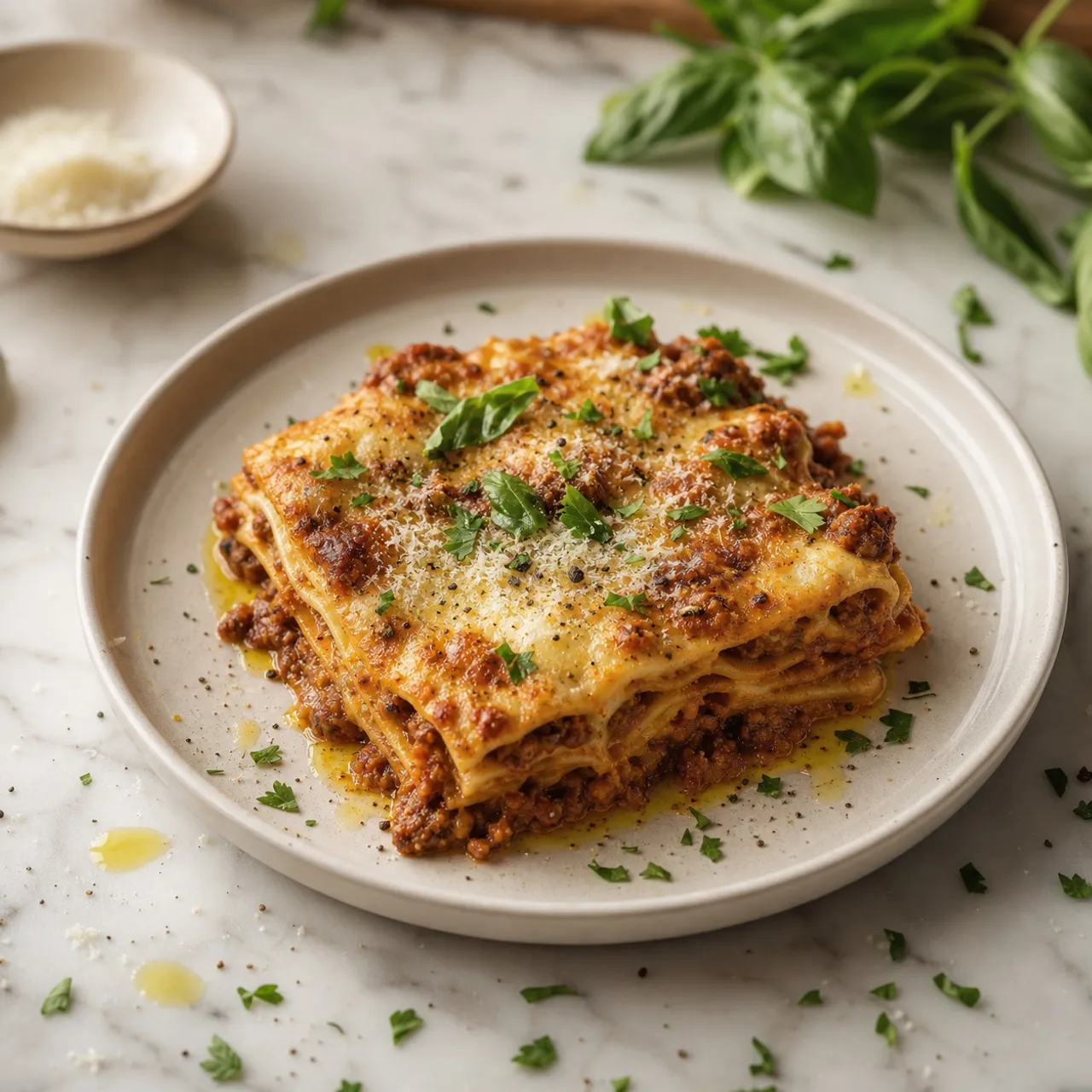
 Lasagna Bolognese
Layers of tender pasta, slow-simmered meat ragù, creamy béchamel, and melted cheese baked into a golden Italian masterpiece.
Contains common allergens
In the app, Listahan checks these against your household automatically.
Instructions
6 steps- 1
Heat 2 tbsp olive oil in a heavy pot over medium heat and sauté the onion, carrot, and celery for 8 minutes until softened, then add the ground beef and pork and brown for 10 minutes, breaking it up.
- 2
Stir in the crushed tomatoes, 1 tsp salt, and 1/2 tsp pepper, then reduce the heat to low and simmer the ragù uncovered for 45 minutes, stirring occasionally, until thick and rich.
- 3
Meanwhile make the béchamel by melting the butter in a saucepan, whisking in the flour to form a roux, then gradually whisking in the warm milk and cooking 5 minutes until thickened; season with salt and a pinch of nutmeg.
- 4
Cook the lasagna noodles in boiling salted water 2 minutes less than the package directs, then drain and lay flat on a towel.
- 5
In a 9x13-inch baking dish, layer a smear of ragù, noodles, more ragù, béchamel, and a sprinkle of mozzarella and Parmesan, repeating until you finish with béchamel and cheese on top.
- 6
Bake at 375°F for 35 to 40 minutes until bubbling and golden, then rest 15 minutes before slicing so the layers set cleanly.
Listahan Family Score™
63/100
Works for many families
Score reflects how well this recipe fits a typical busy household. In the app, your Family Score is personalized to your household's allergens, kids, and pantry.
Nutrition
per serving1195
Calories
65 g
Protein
114 g
Carbs
52 g
Fat
Estimated per serving. Actual values depend on the brands and portions you use.
Listahan cooking guide
Chef notes & practical guide
Technique notes, ingredient swaps, serve-alongside ideas, storage guidance, and equipment for this recipe.
Cultural context
Lasagna Bolognese descends from the Emilia-Romagna region of Italy, where a slow-simmered meat ragù and a silky béchamel are layered with pasta sheets and baked until golden. The Bologna style is distinct from tomato-heavy American versions in its reliance on béchamel rather than ricotta, giving the finished dish a creamier, more delicate character.
Listahan note
This version builds the ragù and béchamel as two fully separate components before layering, giving each one the full attention it needs rather than rushing either sauce.
Technique cues
- Sautéing the onion, carrot, and celery fully before adding the meat builds a sweeter, more rounded base flavor than adding everything to the pot at once.
- Simmering the ragù uncovered for the full 45 minutes lets excess liquid evaporate, concentrating the sauce into something thick enough to hold its own between the pasta layers.
- Cooking the noodles two minutes under package directions keeps them from turning mushy, since they'll continue softening as the lasagna bakes.
Kitchen flow
- Parallel prep
- Make the béchamel while the ragù simmers during its final stretch, so both sauces are ready to layer at the same time.
- Make-ahead
- The ragù and béchamel can both be made a day ahead and refrigerated separately, then assembled and baked fresh.
- Leftover move
- Leftover slices reheat well in a covered dish in the oven, which keeps the layers from drying out the way a microwave can.
- Cleanup rhythm
- Make the ragù and béchamel in sequence using the same pot, wiping it out between the two, to minimize dishes.
Ingredient brief
Role, handling, and swap guidance for each key ingredient.
Ground beef and ground pork
Main protein
Purpose: The combination gives the ragù more depth and richness than either meat alone.
Handling: Brown thoroughly, breaking it into small pieces, so it browns rather than steams in its own liquid.
Adaptation: Ground beef alone works fine if pork isn't available, though the sauce will be slightly leaner.
Onion, carrot, and celery
Aromatic base (soffritto)
Purpose: This classic Italian trio builds sweetness and depth into the ragù before the meat and tomatoes go in.
Handling: Dice finely and sauté until fully softened, about 8 minutes, before adding the meat.
Adaptation: A food processor can mince these quickly and finely if you want the vegetables to nearly disappear into the sauce.
Butter, flour, and warm milk
Béchamel components
Purpose: Together they form the creamy white sauce that layers between the pasta and ragù, giving Bolognese-style lasagna its signature richness.
Handling: Whisk the warm milk in gradually to the butter-flour roux to avoid lumps, cooking until thickened.
Adaptation: A splash of nutmeg in the béchamel is traditional and worth including if you have it on hand.
Mozzarella and Parmesan
Melting and finishing cheese
Purpose: They add the golden, bubbling top layer and a savory finish to each bite.
Handling: Sprinkle a portion between each layer, not just on top, so the cheese runs throughout the dish.
Adaptation: A blend of mozzarella and provolone gives a slightly sharper melted layer.
Technique notes
- Let the ragù simmer the full 45 minutes uncovered; a shorter simmer leaves it too watery to hold together between layers.
- Rest the baked lasagna for a full 15 minutes before slicing; cutting too soon causes the layers to slide apart on the plate.
- Layer the béchamel and cheese generously on top specifically, since that's what creates the golden, bubbling crust.
Ingredient swaps
- Lighter direction
- Use part-skim mozzarella and a leaner ground beef for a slightly lighter version without losing the layered structure.
- Vegetable addition
- Add a layer of sautéed spinach or mushrooms between the ragù and béchamel for extra texture and flavor.
- Make-ahead casserole direction
- Assemble the full lasagna a day ahead, refrigerate unbaked, and bake straight from the fridge, adding about 15 extra minutes.
Serve alongside
- Simple green salad
- Garlic bread
- Roasted vegetables
- Chianti
- Sparkling water
- Iced tea
Serving suggestions only — check pairings for your household's allergens.
Storage & reheating
- Refrigerate covered for up to 4 days.
- Reheat covered in a 350°F oven for about 20 minutes for the best texture; microwaving works but softens the top layer.
- Freeze baked or unbaked lasagna for up to 3 months, thawing overnight in the fridge before reheating.
Equipment
- 9x13-inch baking dish
- Large heavy pot for the ragù
- Saucepan for the béchamel
- Whisk
Make this household-aware
Listahan Pro checks this recipe against your household's allergens, finds pantry-aware swaps, builds the shopping list, and helps you plan the week around it.
Plan it in Listahan
Add Lasagna Bolognese to your week, check it against your household's allergens, and build the shopping list automatically.
More Mediterranean recipes
 Mediterranean Lens Verified Images are for illustrative purposes only, may be inaccurate, and do not guarantee the presence or absence of specific ingredients.
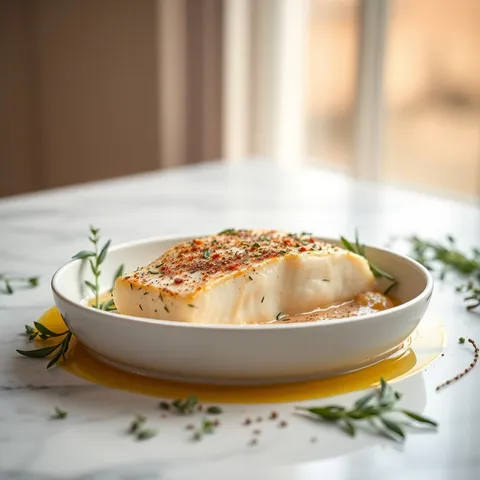
 Mediterranean Baked Cod
Cod fillets baked with cherry tomatoes, Kalamata olives, and capers in garlicky olive oil, a bright one-pan Mediterranean fish dinner finished with parsley and lemon.
 Mediterranean Lens Verified Images are for illustrative purposes only, may be inaccurate, and do not guarantee the presence or absence of specific ingredients.
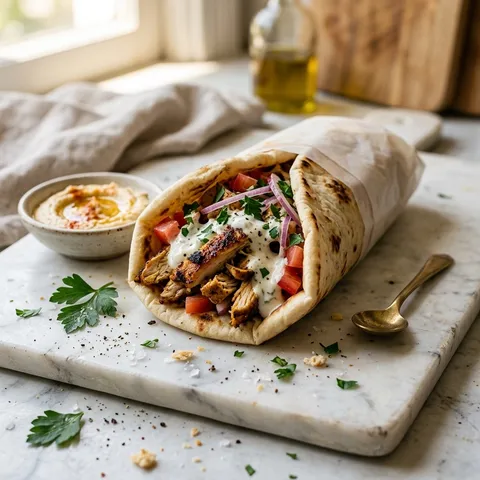
 Shawarma Wraps
Marinated, thinly sliced meat wrapped in a flatbread with vegetables.
 Mediterranean Lens Verified Images are for illustrative purposes only, may be inaccurate, and do not guarantee the presence or absence of specific ingredients.
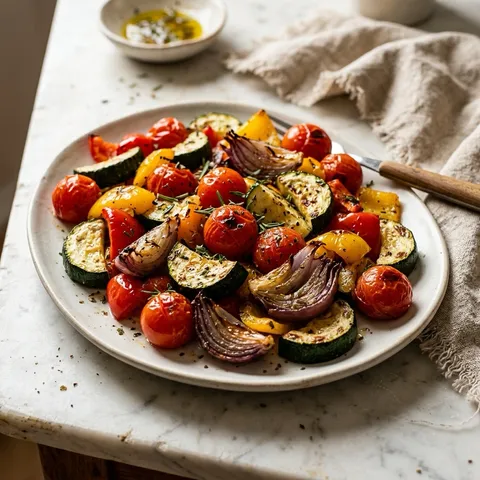
 Mediterranean Roasted Vegetables
A colorful side dish or main of caramelized oven-roasted veggies.