 Middle Eastern Images are for illustrative purposes only, may be inaccurate, and do not guarantee the presence or absence of specific ingredients.
  Serving Images are for illustrative purposes only, may be inaccurate, and do not guarantee the presence or absence of specific ingredients.
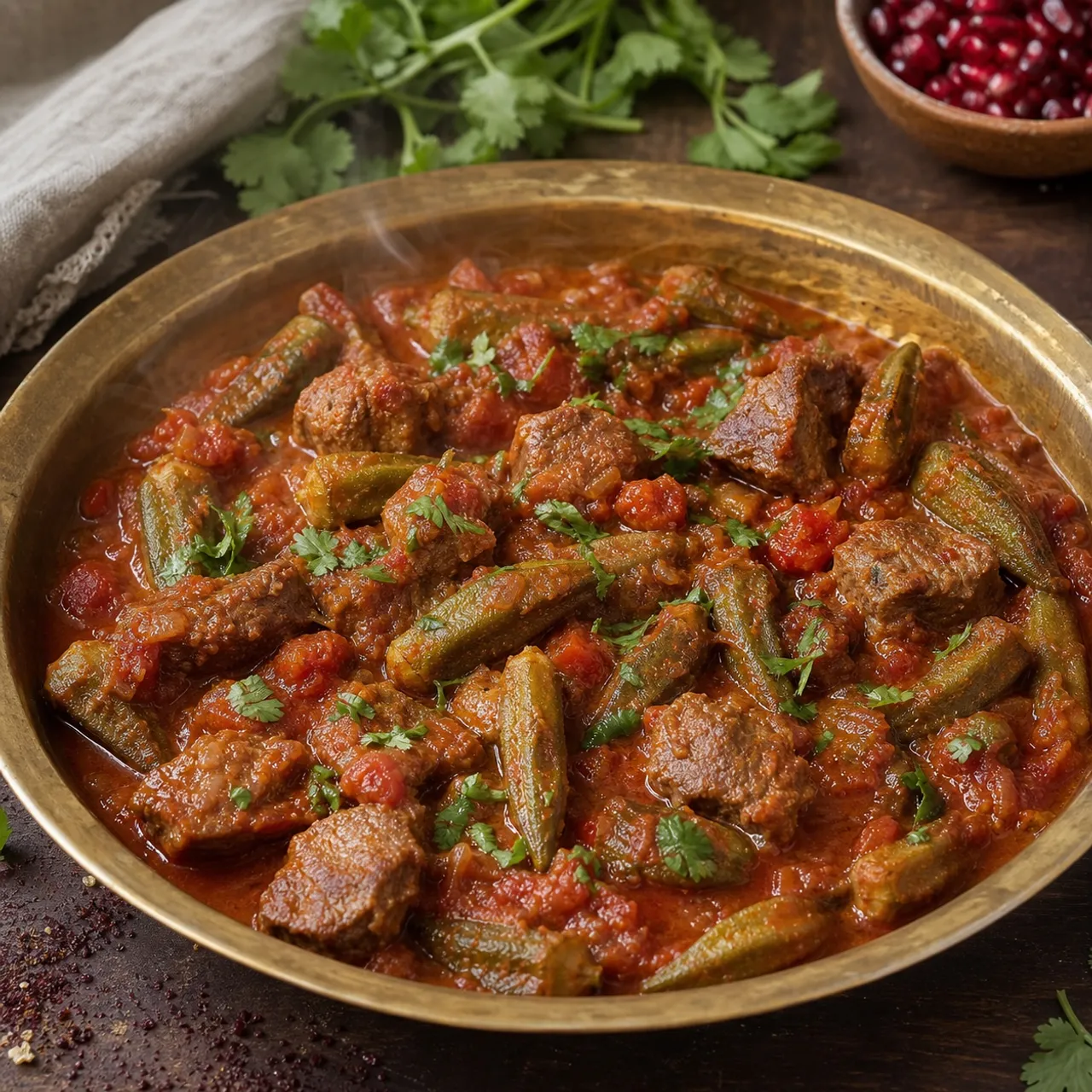
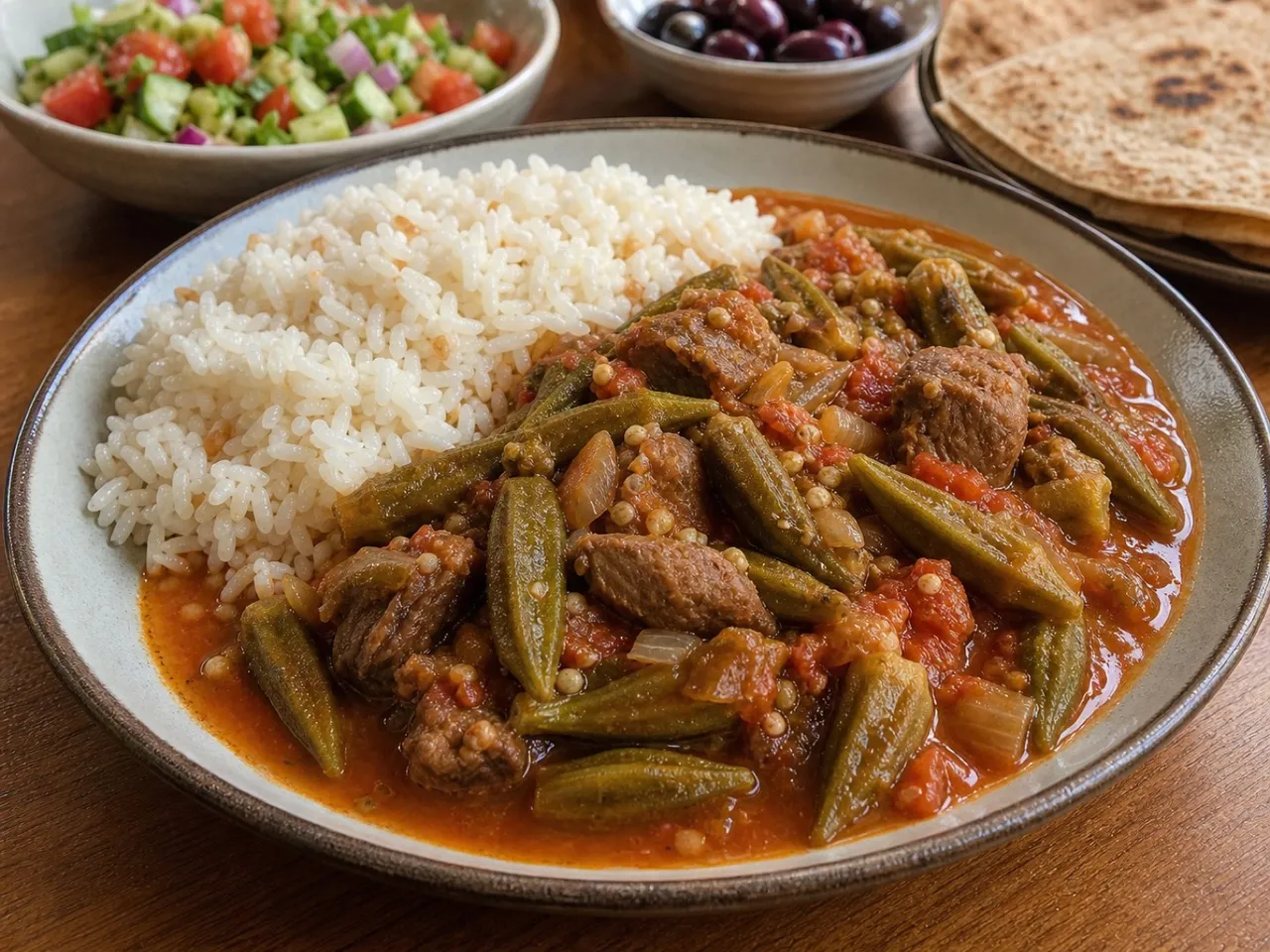
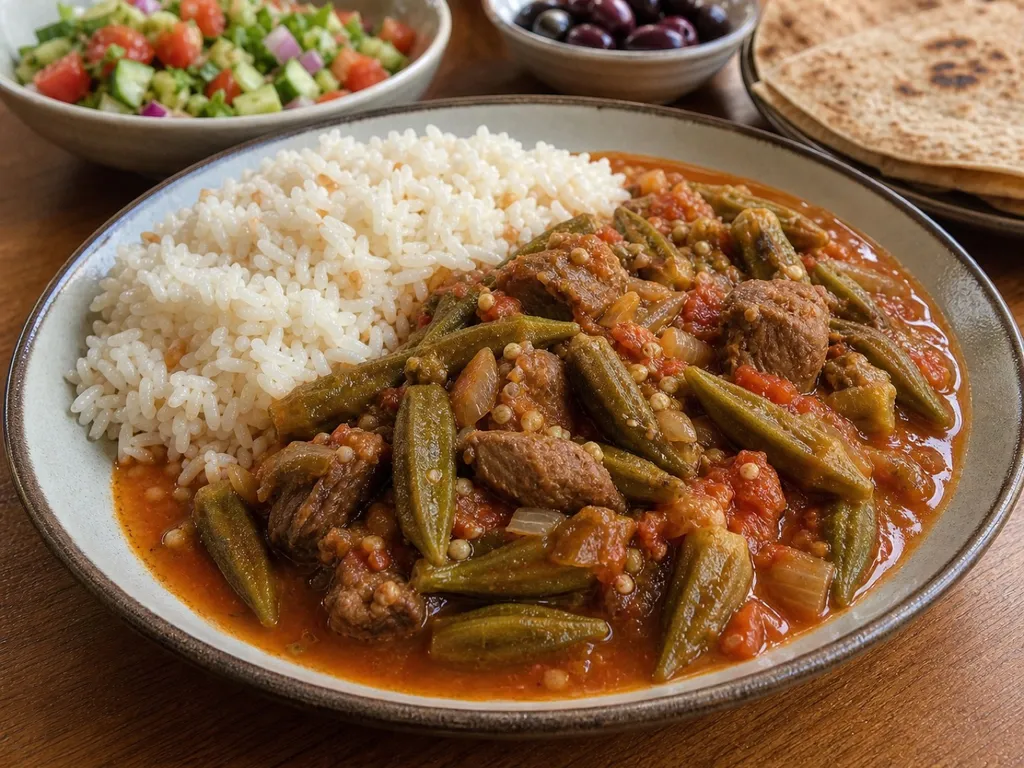
 Bamia
Lamb stewed with baby okra, tomatoes, and garlic into a hearty Middle Eastern stew, brightened with fresh cilantro.
No common allergens detected
Based on this recipe's ingredient list. Always verify with your own brands and labels.
Instructions
6 steps- 1
If using fresh okra, trim the hard stems without piercing the pods to prevent sliminess.
- 2
In a large pot, heat 1 tbsp olive oil over medium-high heat. Add the lamb chunks and brown well on all sides. Add the chopped onion and sauté for 5 minutes until soft.
- 3
Pour in enough water to cover the meat, bring to a boil, then reduce heat, cover, and simmer for 40 minutes until the lamb is tender.
- 4
In a separate skillet, heat the remaining 1 tbsp olive oil over medium heat. Sauté the okra for 5-7 minutes until lightly browned, then set aside (this helps eliminate sliminess).
- 5
Add the diced tomatoes and tomato paste to the pot with the lamb. Stir well, then gently fold in the sautéed okra. Simmer uncovered for 15 minutes.
- 6
In the same skillet used for the okra, quickly fry the minced garlic and chopped cilantro in a splash of oil for 1 minute until fragrant. Stir this mixture into the bamia, turn off the heat, and serve with rice.
 Images are for illustrative purposes only, may be inaccurate, and do not guarantee the presence or absence of specific ingredients.
 Listahan Family Score™
68/100
Works for many families
Score reflects how well this recipe fits a typical busy household. In the app, your Family Score is personalized to your household's allergens, kids, and pantry.
Nutrition
per serving615
Calories
42 g
Protein
20 g
Carbs
41 g
Fat
Estimated per serving. Actual values depend on the brands and portions you use.
Listahan cooking guide
Chef notes & practical guide
Technique notes, ingredient swaps, serve-alongside ideas, storage guidance, and equipment for this recipe.
Cultural context
Bamia is an okra stew found across the Middle East, from Iraq and Egypt to the Levant, where okra met the region's tomato and garlic cooking and became a staple. Okra travelled into the area from East Africa centuries ago and the word itself is the Arabic name for the vegetable. The dish is prized for the way okra thickens its own broth into a silky sauce, and cooks have long traded tricks for keeping the pods from turning slimy.
Listahan note
This version keeps the okra whole and treats it gently to manage texture, building a garlicky tomato sauce with tender pieces of lamb or beef. It is meant to be ladled over rice as a satisfying braise.
Technique cues
- Keep the okra pods whole and avoid over-stirring, because cutting and agitating them releases the mucilage that makes the stew slimy.
- A splash of lemon juice or a little dried lime in the pot helps cut the okra's sliminess and brightens the sauce.
- Brown the meat fully before building the sauce so the braise has a savory foundation rather than tasting only of tomato.
Kitchen flow
- Parallel prep
- Brown and simmer the meat first, and while it tenderizes, trim the okra and mince the garlic so the final assembly is quick.
- Make-ahead
- The meat and sauce base can be cooked a day ahead, with the okra added during the final reheat so it does not overcook.
- Leftover move
- Spoon leftover bamia over toasted bread or fold into a wrap with rice for a fast next-day meal.
- Cleanup rhythm
- It is a single braising pot, so wipe it down while the rice rests and you are finished.
Ingredient brief
Role, handling, and swap guidance for each key ingredient.
okra
star vegetable and thickener
Purpose: Okra both flavors the stew and naturally thickens the broth into a silky sauce.
Handling: Trim the stem end without cutting into the pod, and pat dry; frozen baby okra can go in straight from the bag.
Adaptation: Frozen whole okra is a reliable year-round stand-in for fresh when okra is out of season.
lamb stew meat
protein and richness
Purpose: Lamb gives bamia its traditional depth and turns it into a full main course.
Handling: Cut into bite-size pieces and brown well, then simmer until tender before the okra goes in.
Adaptation: Beef chuck works just as well, or omit the meat entirely for a vegetarian version.
garlic
aromatic base
Purpose: A generous hit of garlic, often fried with cilantro, defines the savory backbone of the stew.
Handling: Mince and saute until fragrant, traditionally with chopped cilantro as a flavor base called taqlia.
Adaptation: Use more garlic and skip cilantro if you prefer, or sub parsley for the herb.
tomato paste
sauce base and color
Purpose: It builds the rich red braising liquid that surrounds the okra and meat.
Handling: Fry briefly in oil to deepen it, then add water or stock.
Adaptation: Crushed tomatoes work with a longer reduction.
dried lime
souring agent
Purpose: Dried lime adds the tart, slightly fermented note common in Iraqi versions and helps tame the okra's texture.
Handling: Pierce a whole dried lime and drop it into the simmering pot, removing before serving.
Adaptation: Fresh lemon juice added near the end gives a comparable brightness.
Technique notes
- If you are nervous about texture, lightly saute the whole okra in oil first until the surface firms up, then add it to the sauce.
- Add the okra only in the last 15 to 20 minutes and stir as little as possible so the pods stay intact.
- Fry the garlic and cilantro together into a quick taqlia and stir it in near the end for a bright, traditional aromatic lift.
Ingredient swaps
- Weeknight shortcut
- Use frozen whole baby okra and pre-cut stew meat to skip most of the prep.
- Vegetarian direction
- Skip the meat and use vegetable stock, doubling the garlic-cilantro base for depth.
- Lower-sodium direction
- Use unsalted stock and no-salt tomato paste, relying on dried lime and garlic for flavor.
Serve alongside
- Vermicelli rice
- Shirazi cucumber-tomato salad
- Warm flatbread
- Plain yogurt
- Mint tea
- Ayran (salted yogurt drink)
- Lemon-mint cooler
Serving suggestions only — check pairings for your household's allergens.
Storage & reheating
- Refrigerate for up to 4 days in a sealed container and reheat gently on the stove with a splash of water. The okra softens further over time but the flavor holds well. Freeze for up to 2 months, though the okra texture will be softer after thawing; thaw overnight in the fridge before reheating.
Equipment
- Dutch oven or heavy pot
- Small skillet for the garlic taqlia
- Paring knife for trimming okra
- Ladle
Make this household-aware
Listahan Pro checks this recipe against your household's allergens, finds pantry-aware swaps, builds the shopping list, and helps you plan the week around it.
Plan it in Listahan
Add Bamia to your week, check it against your household's allergens, and build the shopping list automatically.
More Middle Eastern recipes
 Middle Eastern Lens Verified Images are for illustrative purposes only, may be inaccurate, and do not guarantee the presence or absence of specific ingredients.
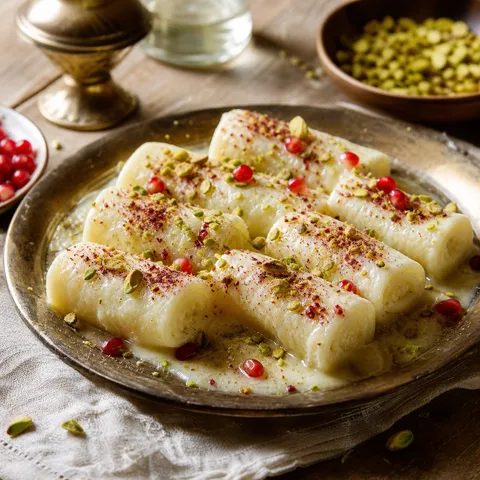
 Halawet El Jibn
A Levantine sweet cheese roll of stretched mozzarella and semolina dough wrapped around rose-scented clotted cream, topped with crushed pistachios and sugar syrup.
 Middle Eastern Lens Verified Images are for illustrative purposes only, may be inaccurate, and do not guarantee the presence or absence of specific ingredients.
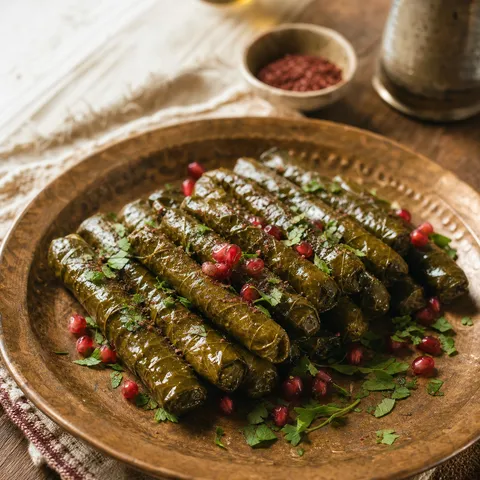
 Dolma (Warak Enab)
Grape leaves stuffed with a mixture of rice, meat, and herbs.
 Middle Eastern Lens Verified Images are for illustrative purposes only, may be inaccurate, and do not guarantee the presence or absence of specific ingredients.
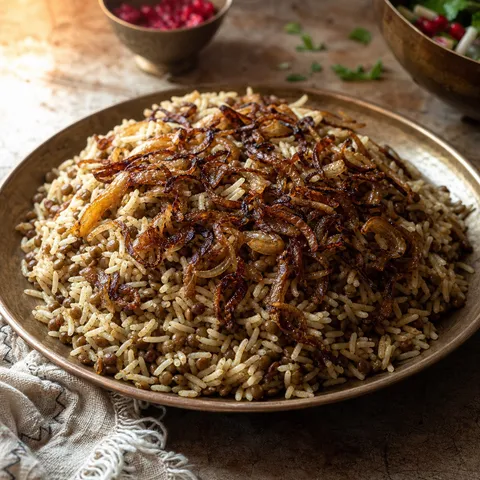
 Mujadara
A comforting dish of cooked lentils together with groats or rice, garnished with sautéed onions.