 Middle Eastern Images are for illustrative purposes only, may be inaccurate, and do not guarantee the presence or absence of specific ingredients.
  Serving Images are for illustrative purposes only, may be inaccurate, and do not guarantee the presence or absence of specific ingredients.
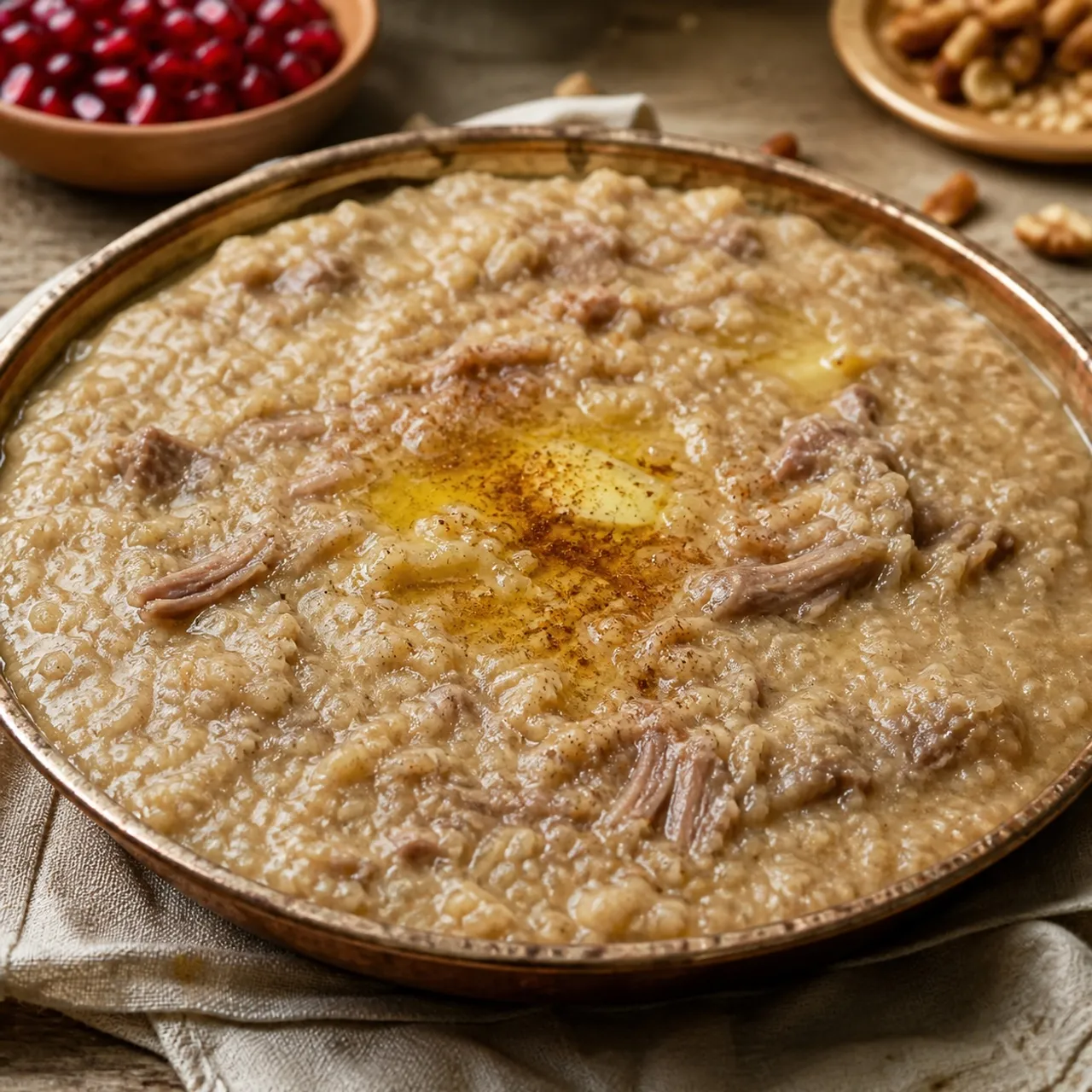
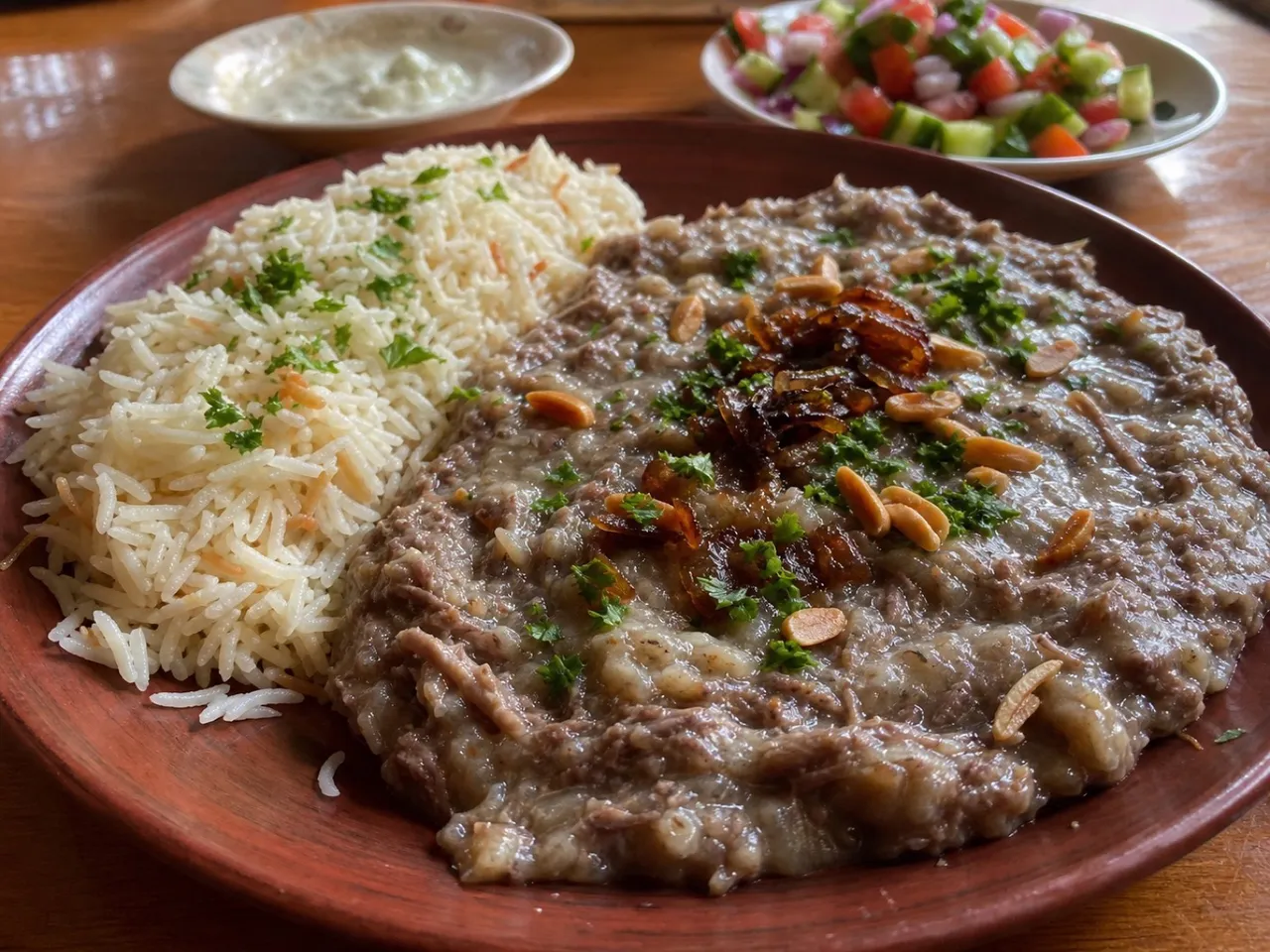
 Hareeseh (Meat)
A savory porridge made of beaten wheat and meat, common in the Levant.
Contains common allergens
In the app, Listahan checks these against your household automatically.
Good to know
- One-pot
Matched from this dish's own ingredients and timing. Browse more: one-pot dinners
Instructions
6 steps- 1
Drain the soaked wheat. In a large, heavy-bottomed pot, place the soaked wheat and the bone-in meat. Cover with 8 cups of water.
- 2
Bring the pot to a boil, skim off any foam that rises to the surface, and reduce the heat to the lowest possible setting.
- 3
Cover the pot tightly and simmer extremely slowly for 3 to 4 hours. Check occasionally and add a little hot water if it looks too dry. The wheat should burst open and the meat should fall completely off the bone.
- 4
Carefully remove all the bones from the pot and discard them. Add the salt.
- 5
Using a heavy wooden spoon, vigorously beat and mash the meat and wheat together against the sides of the pot for 10-15 minutes until it transforms into a smooth, stretchy, uniform paste.
- 6
Spread the hot Hareeseh onto a flat serving plate. Create a shallow pool in the center, pour in the melted ghee, and dust the entire surface generously with ground cinnamon.
 Images are for illustrative purposes only, may be inaccurate, and do not guarantee the presence or absence of specific ingredients.
 Listahan Family Score™
64/100
Works for many families
Score reflects how well this recipe fits a typical busy household. In the app, your Family Score is personalized to your household's allergens, kids, and pantry.
Nutrition
per serving480
Calories
43 g
Protein
0 g
Carbs
35 g
Fat
Estimated per serving. Actual values depend on the brands and portions you use.
Listahan cooking guide
Chef notes & practical guide
Technique notes, ingredient swaps, serve-alongside ideas, storage guidance, and equipment for this recipe.
Cultural context
Hareeseh, also known as harees or jareesh, is a slow-cooked porridge of wheat and meat that is one of the oldest dishes in the Arabian and Levantine repertoire, especially associated with Ramadan and large communal gatherings. The wheat and meat are simmered for hours and then beaten until they break down into a smooth, comforting paste. Its appeal is its plainness and patience, a dish defined more by texture and long cooking than by spices.
Listahan note
This version cooks cracked wheat and meat low and slow until they collapse into a creamy, spoonable porridge, finished with a pour of spiced browned butter. It is humble comfort food built on time rather than a long ingredient list.
Technique cues
- Cook it long and low with plenty of liquid, because the magic of hareeseh is the wheat and meat breaking down into one smooth mass.
- Beat or whisk the porridge vigorously near the end to shred the meat and dissolve the wheat into the signature creamy texture.
- Finish with a drizzle of butter or ghee browned with cinnamon, since that warm fat is what lifts an otherwise plain porridge.
Kitchen flow
- Parallel prep
- Soak the wheat the night before so the long simmer is the only active step the next day.
- Make-ahead
- Hareeseh reheats beautifully, so cook it ahead and warm it through with extra liquid before serving.
- Leftover move
- Thin leftover hareeseh with broth into a warming porridge for breakfast, topped with fresh browned butter.
- Cleanup rhythm
- It is a one-pot dish, so soak the pot right after serving since the starchy porridge sets as it cools.
Ingredient brief
Role, handling, and swap guidance for each key ingredient.
wheat
the porridge base
Purpose: Whole or cracked wheat breaks down over long cooking into the creamy body that defines the dish.
Handling: Soak whole wheat overnight; rinse cracked wheat and simmer until completely soft.
Adaptation: Pearled barley or coarse bulgur can stand in, with adjusted cooking time.
chicken
protein that melts in
Purpose: Bone-in chicken cooks until it falls apart and is shredded into the wheat, enriching the porridge.
Handling: Simmer with the wheat, then remove bones and shred the meat back into the pot.
Adaptation: Lamb or beef is traditional in many regions and gives a richer result.
cinnamon
warm finishing spice
Purpose: Cinnamon in the browned butter is the defining aroma drizzled over the finished porridge.
Handling: Warm in the butter as it browns so it perfumes the fat.
Adaptation: A pinch of baharat or allspice gives a similar warm note.
butter
finishing richness
Purpose: Browned butter or ghee poured over the top is the traditional crowning touch that carries the spice.
Handling: Melt and cook until golden and nutty, then pour over each bowl.
Adaptation: Ghee is the most traditional fat and is naturally lactose-light; olive oil works for a dairy-free finish.
Technique notes
- Use a slow cooker or low oven for the long simmer so you can walk away while the wheat softens completely.
- If the texture is still grainy, blend a portion briefly or mash hard against the side of the pot to smooth it out.
- Reserve some shredded meat to place on top of each bowl so there is a little texture against the smooth porridge.
Ingredient swaps
- Weeknight shortcut
- Use a pressure cooker to bring the hours-long simmer down to under an hour for the wheat and meat to soften.
- Dairy-free option
- Finish with olive oil browned with cinnamon instead of butter or ghee.
- Lower-sodium direction
- Build the porridge on unsalted broth and season lightly at the end, leaning on the spiced butter for flavor.
Serve alongside
- Dates
- Simple cucumber salad
- Pickled vegetables
- Warm flatbread
- Mint tea
- Laban (cultured milk drink)
- Tamarind juice
Serving suggestions only — check pairings for your household's allergens.
Storage & reheating
- Refrigerate for up to 4 days in a sealed container; it sets firm when cold, so reheat with added broth or water and stir until creamy again. Hareeseh freezes well for up to 2 months. Thaw overnight in the fridge and reheat gently with extra liquid, whisking to bring back the smooth texture.
Equipment
- Slow cooker or heavy lidded pot
- Whisk or potato masher for breaking down the porridge
- Small pan for browning butter
- Wooden spoon
Make this household-aware
Listahan Pro checks this recipe against your household's allergens, finds pantry-aware swaps, builds the shopping list, and helps you plan the week around it.
Plan it in Listahan
Add Hareeseh (Meat) to your week, check it against your household's allergens, and build the shopping list automatically.
More Middle Eastern recipes
 Middle Eastern Lens Verified Images are for illustrative purposes only, may be inaccurate, and do not guarantee the presence or absence of specific ingredients.
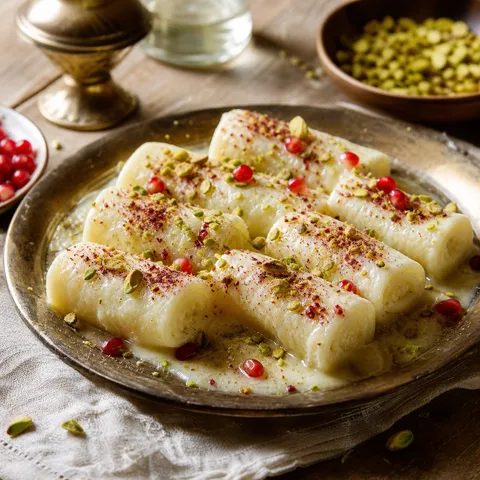
 Halawet El Jibn
A Levantine sweet cheese roll of stretched mozzarella and semolina dough wrapped around rose-scented clotted cream, topped with crushed pistachios and sugar syrup.
 Middle Eastern Lens Verified Images are for illustrative purposes only, may be inaccurate, and do not guarantee the presence or absence of specific ingredients.
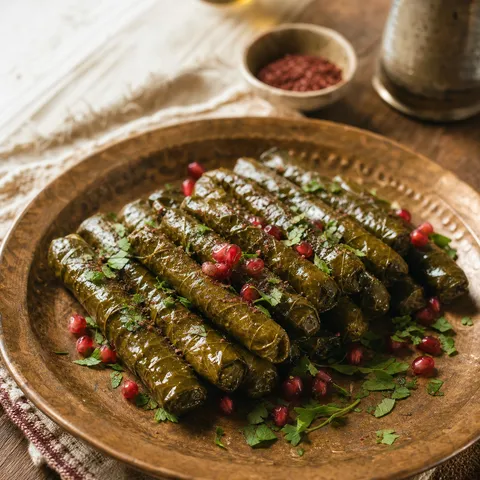
 Dolma (Warak Enab)
Grape leaves stuffed with a mixture of rice, meat, and herbs.
 Middle Eastern Lens Verified Images are for illustrative purposes only, may be inaccurate, and do not guarantee the presence or absence of specific ingredients.
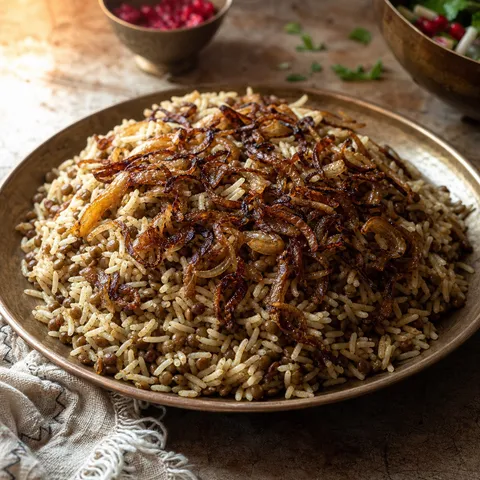
 Mujadara
A comforting dish of cooked lentils together with groats or rice, garnished with sautéed onions.